White House Chronicle

News Analysis With a Sense of Humor

  • Home
  • King’s Commentaries
  • Random Features
  • Photos
  • Public Speaker
  • WHC Episodes
  • About WHC
  • Carrying Stations
  • ME/CFS Alert
  • Contact Us

Soft Power, the Secret Sauce of the British Empire

July 17, 2026 by Llewellyn King Leave a Comment

When President Trump, on the first day of his second term, closed the U.S. Agency for International Development and began dismantling the Voice of America, he also severely curtailed what had been America’s soft power dominance in the world.

With those actions, we abandoned something of inestimable value: the ability to project Americanism, our ideals. Trump retired an entire diplomatic system that had served the United States well since we more or less inherited it from the British.

Soft power was codified as a concept by the late Harvard professor Joseph S. Nye, Jr. in four books published between 1990 and 2023.

While Nye made soft power his own — he coined the term in 1990 — and wrote, lectured and testified before Congress about it, he never totally convinced conservatives what a valuable weapon it was in the national armory.

The proof of that is in the current administration’s indifference to diplomatic and social muscle, and its lack of a mechanism to talk to the Iranian people in Farsi, their language.

Nye believed an important part of soft power was our educational system, and U.S.-educated foreign students going home and spreading the good news about America.

I believe, although it was never thought of that way, that soft power was one of the things that kept the British Empire together. I saw it in action in Africa as colonial rule waned.

James R. Schlesinger, who served as chairman of the Atomic Energy Commission, director of the CIA, secretary of defense, and secretary of energy, was a friend of mine throughout his public career and afterward. The one question he asked me constantly was how the British Empire was able to hold together with so few troops spread across so much of the world.

Schlesinger, a former history professor, wondered how those lessons might be applied to America in the late 20th century.

I told him that it was a combination of the hard power of the Royal Navy and British Army but also, importantly, of the then-unnamed soft power.

Take the massacre in Amritsar, in the northwestern Indian state of Punjab. This occurred on April 13, 1919, when a local British commander in the Punjab feared a meeting in a garden might turn violent and opened fire without warning on thousands of unarmed civilians. Official figures reported 379 dead and 1,200 injured; Indian estimates exceed 1,000 deaths.

This massacre hardened Mahatma Gandhi’s attitude to British rule over the subcontinent. His initial reaction, on hearing of the slaughter, was disbelief that the British would do such a thing. He had bought the soft-power assertion of British values, of decency.

Winston Churchill, then serving as the minister of war, told Parliament early the next year that the shooting was “unalterably monstrous.”

I tried to explain to Schlesinger over many evenings, over many years, what I had seen growing up in British Africa as the essence of British soft power.

To me, it boiled down to a kind of moral posture, a determination to project British justice as inviolate, British exceptionalism as a moral force, and a general admirable state of decency. The term soft power hadn’t yet been created, but it was the essential ingredient in British colonial administration.

When American commanders sought the “hearts and minds” of the Vietnamese, they might well have said they were seeking to establish “soft power.” But it was too late.

The concept of soft power and how it blossomed for America has wilted under the Trump administration. The posture now is that economic and military power are how we project influence and authority.

Ironically, while I think Nye did something of great value in identifying and promoting the concept of soft power, he and I didn’t enjoy a warm relationship. He had been President Jimmy Carter’s point man for nuclear disarmament and had favored an end to nuclear reprocessing as well as other aspects of the U.S. nuclear ecosystem.

In 1977, we debated in London, and the argument got so intense that we spilled into the street, shouting at each other.

Filed Under: King's Commentaries Tagged With: America, British, Churchill, educational, foreign, Gandhi, Iranian, national, nuclear, Nye, Punjab, social, trump

Microgrids Offer Community Solution to Electricity Challenge

June 5, 2026 by Llewellyn King Leave a Comment

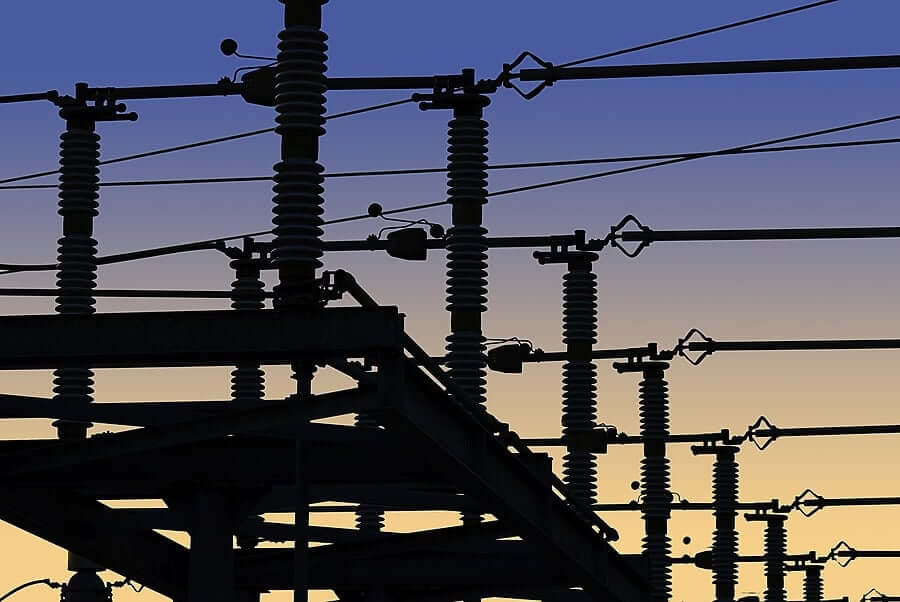
You may have heard of microgrids in passing, maybe at a town meeting or when the future of your electricity supply is under discussion. Mostly, they aren’t headliners like data centers.

However, microgrids are becoming an important part of the future electric infrastructure. They provide a valve to release some of the pressure building up to supply more electricity to data centers and transportation.

Burns & McDonnell, an architecture, engineering and construction firm, figures that by 2030, 50 percent of in-city deliveries will be made with electric vehicles of all types, and these will have to be charged daily.

There are 700 microgrids operating in the United States, and 7,000 are planned or under construction. While they got off to something of a slow start, they are now going full-speed ahead.

Originally, microgrids were seen as appropriate for military bases, college campuses, and other uses with a defense or social purpose, or for remote locations far from the grid.

Utilities were cool or actively hostile to them, although it can be argued that the first microgrid was established by Thomas Edison in Manhattan.

One utility executive said to me four years ago, “What is it about ‘micro’ that the promoters don’t understand?” Now utilities are beginning to embrace microgrids as part of the solution, not a raid on their customer base.

A microgrid, as explained by the futurist-entrepreneur Chase Weir, CEO of Distributed Sun and its spinoff truCurrent, is a way of bringing “kilowatt-hour liquidity” to the electricity industry, smoothing out the periods when demand meets maximum capacity, often beginning as the sun sets.

It is a self-contained electric generation and localized distribution entity, using storage, renewables, and, at times, traditional generation to create a grid that can operate either independently of the national grid or be connected to it. It is usually separated from but linked to a utility.

Oisin O’Brien, senior director of commercial solutions at truCurrrent, walked me through the dynamics of a microgrid that the company is building for a large food distribution company in Northern California.

Its assignment was to develop a charging station for 30 Daimler electric-tractor trailers used for food distribution. The challenge: To provide 2 megawatts of power for charging the Class 8 trucks during largely off-peak hours. Each truck has a 200-mile range on a single charge and must be charged daily.

On this project, O’Brien explained, truCurrent is working closely with the local utility, PG&E. “We were able to harness the utility’s flexible service program,” he said.

The full power plant — which is awaiting permission to operate from PG&E — will team 800 kilowatts of solar power with battery storage to create a contained system.

Currently, solar collectors are being installed on the facility’s roof, but two dozen of the company’s trucks are already using the charging points in the parking lot. The 180-kilovolt (which equals 1,000 volts) fast chargers can fully recharge a truck in three to four hours.

This first-of-a-kind pilot is remarkable in that it has brought “speed to power,” going from contracting to charging in 13 months. It meets the food distribution company’s need to charge when they need to, provides resilient backup and load flexibility, and provides a price hedge at a time of record-high diesel prices.

“Our solutions are only becoming more valuable as cost, reliability and power availability worsens,” Weir said.

According to O’Brien, truCurrent has plans to deploy microgrids nationwide, using a system of turnkey installations where the infrastructure is owned and operated by the local company or the community, but the planning, procurement and installation is provided by truCurrent.

“This project was driven by regulatory pressures in California, the company’s sustainability targets, and the increasing economic benefits with updated analysis, showing lower operating costs for electric fleets compared to diesel (pre-Iran war calculations),” O’Brien said.

The truCurrent project is for transportation usage, but there is a growing demand for microgrid deployment in suburbs and even in apartment complexes.

It is an example of Weir’s vision for the electrical grid of the future, which, in addition to liquidity and speed, must be designed for abundance and affordability.

The project “turned every challenge into an advantage for the developer, the customer, the utility and capital markets,” Weir said.

Shared prosperity with a microgrid: What’s not to like?

Filed Under: King's Commentaries Tagged With: California, data centers, electric vehicles, electricity, grid, Infrastructure, Manhattan, microgrids, social, truCurrent

How Loneliness Became a Pandemic and What You Can Do

February 27, 2026 by Llewellyn King Leave a Comment

You don’t have to be sitting by yourself on an island to be lonely. Loneliness is everywhere.

Studies from universities, governments and public health groups find that the world is in the grip of a loneliness pandemic. More than half the U.S. population is said to be suffering from loneliness. It is classified globally as a mental health problem.

Paradoxically, the studies place most of the blame on our interconnected society and social media: If we communicate electronically, we isolate ourselves. The COVID-19 pandemic also increased our social isolation, and working from home accelerated the trend.

I would suggest that we have been drifting toward loneliness for a long time. Years ago, I wrote about what I called the “box culture.”

In the box culture, people live in a box (apartment), ride down in a box (elevator), get into a box with wheels (car), drive to a stack of boxes (building), ride up in a box (elevator), enter another box (office), and stare into a box (computer).

That, I believe, led to greater isolation. No common dwelling; no common transportation, like a bus or train; and little common work habitat.

The phrase “my space” began to be part of the conversational language. A social networking service named Myspace was launched in 2003.

Email and texting gave isolation a boost even before COVID-19 gave it a massive steroid shot. Now we might be inhabiting “my isolated space.”

Adding to this world of paradox is perhaps the biggest paradox of all — the death of the telephone for the purpose it was invented: talking.

Not only has the telephone declined to near-oblivion as a way of talking to others, but it has also become something of a burden. I find that when I suggest a telephone call, the recipients want to set a time.

When did setting times for calls creep into our lives? It wrings the pleasure out of the telephone, which was always a spontaneous instrument.

When Irving Berlin wrote the song “All Alone by the Telephone” in 1924, he didn’t envisage that people would make appointments to talk.

We have robbed ourselves of the glorious spontaneity, or heartbreak, of the telephone. I have always thought of it as the instrument that can transmute life’s leaden metal into gold unexpectedly, as Omar Khayyam wrote, or as a ray of sunshine you didn’t expect to break through the fog, as Noel Coward wrote. Even just the laughter of an old friend can break out the sunlight on a dismal day.

I can’t catch the laughter in a text. Email is fine for a joke, but it fails where the telephone succeeds: catching the sublimity of laughter, the warmth of love.

Another source of isolation has been the conversion from shopping — the operative part of that word is “shop” — to online buying, a different experience. Or rather, another way of removing the warmth of human interchange from the transaction.

If you are among the legions of the lonely, I would like to suggest, aside from the highly recommended places people meet, like volunteering at a charity or an amateur theater group, going to a pub or to church, do something radical: Speak to a stranger.

My wife and I became friends with two people and their families because I spoke to a stranger in a hotel in Washington, and we spoke to one at a concert in Rhode Island.

We have friends who met while standing in line at an ATM and married not long after. Weight Watchers, when they held meetings, was recommended among the cognoscenti as a place to meet people.

These suggestions may sound trivial, but they are the commerce of life, some of which we have shelved in favor of electronic communications.

In particular, I feel for those who are shut-in by disease and suffer terrible loneliness. They are the loneliest of the lonely.

For many years, I have written and broadcast about Chronic Fatigue Syndrome, also known as Myalgic Encephalomyelitis. It is a terrible disease whose victims have no energy, get no refreshment from sleep, and suffer a plethora of pain, usually for life.

Electronics may have robbed us of much human contact and caused a pandemic of loneliness, but not for those sentenced to loneliness by disease.

Filed Under: King's Commentaries Tagged With: Classified, COVID-19, disease, health, island, isolate, loneliness, pandemic, social, telephone, Washington

White House Chronicle on Social

  • Facebook
  • Twitter
  • Vimeo
  • YouTube
Soft Power, the Secret Sauce of the British Empire

Soft Power, the Secret Sauce of the British Empire

Llewellyn King

When President Trump, on the first day of his second term, closed the U.S. Agency for International Development and began dismantling the Voice of America, he also severely curtailed what had been America’s soft power dominance in the world. With those actions, we abandoned something of inestimable value: the ability to project Americanism, our ideals. […]

A British Immigrant’s Defense of Immigration

A British Immigrant’s Defense of Immigration

Llewellyn King

Migration, people moving to new lands, is as old as human history, and as fraught. Today it is a global problem complete with layered hypocrisy, cruelty and, always, hope among those on the move. War and extreme poverty collude in driving people to seek a livable future. There is no simple solution, no slogan that […]

The Birth of a New Reactor: Thorium Past and Present

The Birth of a New Reactor: Thorium Past and Present

Llewellyn King

If you are designing a car from scratch, there are certain essentials to begin with. You need to start with the wheels on the corners, for example. But when it comes to building a nuclear reactor, things are different. There are hundreds and maybe thousands of ways of doing it. The constant is that you […]

Air Conditioning Costs Threaten Summer of Sun Belt Catastrophe

Air Conditioning Costs Threaten Summer of Sun Belt Catastrophe

Llewellyn King

The summer of our discontent is at hand. When I asked a professional weather forecaster what we might expect this season, he said, “Hades.” That was as disturbing as everything else in this disturbing year. America has a summer culture. You could say the whole of the Northern Hemisphere has one, but there is a […]

Copyright © 2026 · White House Chronicle Theme on Genesis Framework · WordPress · Log in