White House Chronicle

News Analysis With a Sense of Humor

  • Home
  • King’s Commentaries
  • Random Features
  • Photos
  • Public Speaker
  • WHC Episodes
  • About WHC
  • Carrying Stations
  • ME/CFS Alert
  • Contact Us

Memories of PDVSA: The Same Problems, Just Worse Now

January 9, 2026 by Llewellyn King Leave a Comment

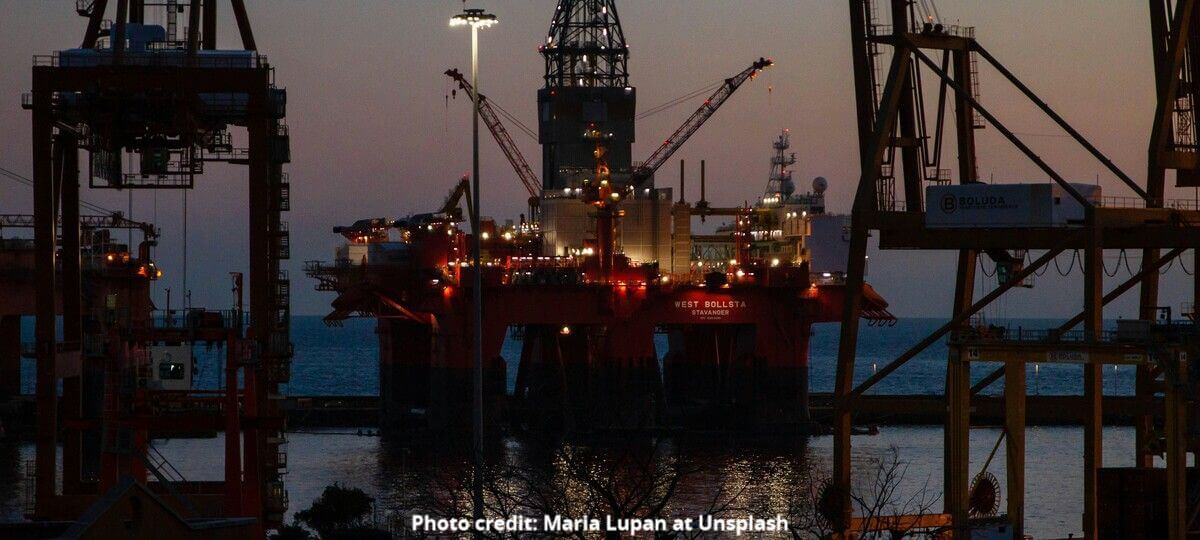
In 1991, the state oil company of Venezuela, Petroleos de Venezuela, S.A., known as PDVSA, invited the international energy press to visit.

I was one of the reporters who flew to Caracas and later to Lake Maracaibo, the center of oil production, and then to a very fancy party on a sandbar in the Caribbean.

They were, as a British journalist said, “putting on the dog.”

At that time, PDVSA executives were proud of the way they had maintained the standards and practices which had been in force before nationalization in 1976. The oil company was, we were assured, a lean, mean machine, producing about 3.5 million barrels per day.

They were keen to claim they had maintained the same esprit under state ownership as they had had when they were privately owned by American companies.

They had kept political interference at arm’s length, executives claimed.

PDVSA’s interest then, as it has always been, was more investment, particularly in its natural gas, known as the Cristobal Colon project.

In President Donald Trump’s takeover of Venezuela’s moribund oil sector, natural gas hasn’t been much mentioned — although there may eventually be more demand for natural gas from Venezuela than for its oil.

We had a meeting with Venezuela’s president, Carlos Andres Perez, who was called CAP. He painted a rosy future for the country and its oil and gas industry.

CAP believed the oil revenues would modernize the country. Particularly, he said that technology was needed to make the heavy oil more accessible and manageable.

And there’s the rub. While everyone is quick to point out that Venezuela’s oil reserves are the largest in the world, all oil isn’t equal.

Venezuela’s oil is difficult to deal with. It doesn’t just bubble out of the ground. Instead, 80% of it is highly viscous, more like tar than a free-flowing liquid. And it has a high sulfur content.

In other words, it is the oil that most oil companies, unless they have special production and refining facilities, want to avoid. It takes special coaxing to extract the oil from the ground and ship it.

Venezuelan oil has a high “lifting cost” which makes it expensive to begin with. At present, that cost is about $23 per barrel compared to about $13 per barrel for Saudi Arabian oil.

During the energy crisis, which unfolded in the fall of 1973 with the Arab oil embargo, U.S. utilities considered pumping it with a surfactant (a thinner) to Florida and burning it directly in boilers like coal.

As evidence that the oil operation hadn’t been damaged by nationalization, executives proudly told us that PDVSA produced more oil with 12,000 employees than the state oil company of Mexico, PEMEX, produced with 200,000.

In other words, the Venezuelans had been able to resist the temptation to turn the oil company into a kind of social welfare program, employing unneeded droves of people.

Now I read the workforce of PDVSA stands at more than 70,000 and oil production has slipped to about 750,000 barrels a day.

By 1991, the oil shortage which had endured since the Arab oil embargo had eased, and PDVSA was worried about its future and whether its heavy oil could find a wider market.

Particularly, it was worried about the day when it would run out of the lighter crudes and would be left only with its viscous reserves.

Two oil companies have been shipping oil to the United States during the time of revolution and sanctions: Citgo, a PDVSA-owned operator of gas stations in the United States, and Chevron. Both have waivers issued by the United States, although Citgo is under orders to divest and is set to be bought by Elliott Company (owned by Paul Singer, a Trump supporter), which may play a big role going forward in Venezuela as its expertise is in lifting.

About that party on a sandbank. Well, PDVSA wanted to show the press that it could spend money as lavishly as any oil major.

We were flown in a private jet to an island, then transported on speedboats to a sandbank, where a feast worthy of a potentate was set up under tents. The catering staff had been taken off the sandbank, so the effect was that the party had miraculously emerged from the Caribbean Sea.

Filed Under: King's Commentaries Tagged With: American, British, Caracas, Caribbean, Chevron, embargo, oil, PDVSA, Saudi, trump, Venezuela

How Europe Stole Christmas and Promoted Snow

December 12, 2025 by Llewellyn King Leave a Comment

The Grinch didn’t steal Christmas. Europe did. Filched it, packed it up and moved it north, where it snows.

In this wholesale looting of the world’s greatest holiday, the U.S., Canada and some other non-European northern habitats were also complicit.

I grew up in the Southern Hemisphere in faraway Zimbabwe — then called Southern Rhodesia, a British colony — and we had to bear Northern hegemony at Christmas. We had to bear it the rest of the year as well, but this is about Christmas and that symbol of the North: snow.

In subequatorial Africa, snow was a distant European asset. We had learned to associate it with Christmas, and we would celebrate the holiday by singing the carol about the good Bohemian King Wenceslas, looking out “on the feast of Stephen, when the snow lay round about, deep and crisp and even.”

Cotton wool was our snow substitute. When we decorated for Christmas, we couldn’t have it lying about “deep and crisp and even.” We just put cotton wool puffs on Christmas trees (another symbol of European expansionism), picture rails and window frames.

The shops used glitter and cotton wool in Christmas window scenes that were out of Victorian-period Europe, not the Holy Land.

Only nativity scenes in churches were exempt from the scourge of cotton wool. Well, mostly. As kids we were confused by the snow mania, and sometimes we tried to embellish the straw in manger scenes with cotton wool.

My mother, who never visited anywhere north of the equator, was a campaigner, in her way, against the theft of Christmas. She would lecture people on what the temperature was at Christmas in Bethlehem. She said it was very hot.

There was no way she could have known what the actual temperature was in Bethlehem, but she didn’t let that inhibit her argument against the Northern appropriation of something that was rooted in the Levant.

In fact, Christmas is the beginning of the coolest time of year in Jerusalem and Bethlehem; the temperature hovers around 40 F. It isn’t a winter wonderland in the way that Christmas is portrayed in Europe and America.

And all that hoopla about sales and shopping till you drop came from those delightful Christmas markets, which you see all over continental Europe at this time of year.

You can blame the Germans for Christmas trees and the Scandinavians for reindeer, but it seems to me that the Brits, my people, have done a rather good job of Christmas appropriation.

Put aside that they have tried to grab the entire concept of the people of Israel. Yes, the British Israelite movement postulates the British are descendants of the 10 lost tribes of Israel.

This is an attempted act of cultural appropriation on a massive scale, and it hasn’t succeeded, but it still has its adherents.

The great English poet William Blake has been more successful. His poem “Jerusalem,” which he wrote in 1804, was put to music by Hubert Parry in 1916 to aid the World War I effort and has become a second British national anthem. People prefer it to “God Save the King” — and it has a better tune.

Blake wrote:

“I will not cease from Mental Fight/ Nor shall my Sword sleep in my hand:/Till we have built Jerusalem,/ In England’s green & pleasant Land.”

Well, that is a very ambitious attempt to steal a legend, and it makes cotton wool seem rather timid in the struggle to own Christmas.

I wish you, yes, a white Christmas. I like the white stuff — snow, not cotton wool.

Filed Under: King's Commentaries Tagged With: Africa, Bethlehem, British, Christmas, Europe, Germany, Grinch, Jerusalem, snow, William Blake

Old Journalism Is Coming in Shiny New Wrappers

October 17, 2025 by Llewellyn King Leave a Comment

If you know what is going on in Gaza, it is because a journalist told you.

If you know Health and Human Services Secretary Robert F. Kennedy Jr.’s latest comment about autism, it is because a journalist told you.

If you know that there was a tsunami off the coast of Indonesia, it is because a journalist told you.

If you know that Taylor Swift and Travis Kelce are planning to marry, it is because a journalist told you — in print, over the air or on the web.

Yet when “the media” is discussed, you would think that what is essential isn’t journalism, but rather the means of delivery. The death of newspapers is high on the woeful list.

I am a newspaperman through and through. Although I have been involved, often simultaneously, with broadcasting, my heart and soul are in newspapers.

I first set foot in a newsroom when I was 14 — and I left part of me there.

I learned a lot about hot type in my youth, and I love the mechanics of newspapers. At The Washington Post, where I had a roving assignment, I often worked on “the stone,” where the type was put in the pages by artisans of extraordinary skill.

But that has gone. Hot type is history. If you want to savor it, tour the Museum of Printing in Haverhill, Massachusetts.

Sadly, I must confess that no printed newspaper is delivered to my home every day. I subscribe to the digital versions of four newspapers, four magazines and several online-only outlets, and I suffer jabs of guilt when I sit before a computer screen.

Nearly all major newspapers and many smaller ones have online editions. The largest ones are grabbing much of the subscription money.

That is a repeat of what happened in big cities toward the end of the golden days of words printed on paper: The winners took all.

The New York Times drove out the Herald Tribune. The Washington Post drove out The Washington Star and The Washington Daily News.

In the case of printed newspapers, those with just a slightly larger circulation corralled all the advertising. Today’s chances are that those with a greater offering will drive out those with a robust offering, but not as dominant as, say, The Times.

Big newspapers have adopted the paywall as the model for the future, and others have had to follow. It will be a pity if that prevails.

A better model would be a pay-to-read arrangement where you join a collective such as Visa or MasterCard and pay for what you want to read. That would provide a stable future for journalism and enable much of the innovation that is going on to be on a sound financial footing.

There is innovation aplenty in how the precious commodity, journalism, is brought to you.

The magazines have morphed into something more: They have become daily newspapers with their emailed editions. The New Yorker, The Economist, The Atlantic and The Spectator have taken this path, among others. Even Vanity Fair has an emailed edition.

Additionally, British newspapers have invaded the United States with some spritely email offerings. The Daily Mirror, The Independent, The Guardian and The Daily Mail are among them.

Then there are many new entries of purely internet vintage. These include but aren’t limited to the leaders, Axios and Semafor — although Axios, with revenues of over $100 million, is the clear winner to date.

This suggests that journalism is alive and well and that its future is online, but its revenue stream isn’t certain. One hopes that the winner-takes-all history won’t repeat itself and that a vibrant new order of journalism, tempting to talent, grows in importance. After all, at one time big cities had many newspapers; New York had more than 20 daily newspapers.

The threshold of entry for internet publishing is low. A pay-per-view rather than a paywall would establish a new golden era in which skill and talent would carry the day and where the right content would propel its authors and the publications to success.

As to my world of great presses, raging like livid monsters in the middle of night, well, there will be some for a long time. But the new carriers of that critical commodity known as journalism will carry the day.

Filed Under: King's Commentaries Tagged With: authors, Axios, British, Gaza, journalism, Kennedy, media, newspapers, Taylor Swift, web

PBS Has a Future by Leaving the Past Behind

July 25, 2025 by Linda Gasparello Leave a Comment

Over the years, I have often been critical of the Public Broadcasting Service. That in spite of the fact that for 28 years, I have produced and hosted a program, “White House Chronicle,” which is carried by many PBS stations.

It is an independent program for which I find all the funding and decide its direction, content and staffing.

My argument with PBS — brought to mind by the administration’s canceling of $1.1 billion in funding for it and National Public Radio — is that it is too cautious, that it is consciously or by default lagging rather than leading.

Television needs creativity, change and excitement. Old programs, carefully curated travel, and cooking shows don’t really don’t cut it. News and public affairs shows are not enough. Cable does them 24/7.

My co-host on “White House Chronicle,” Adam Clayton Powell III, a savant of public broadcasting, having held executive positions at NPR and PBS, assures that they aren’t going away, although some stations will fail.

I believe PBS has often been too careful because of the money, which has been dribbled out by the Corporation for Public Broadcasting. Some conservatives have been after PBS since its launch.

It is reasonable to look to the British Broadcasting Corp. when discussing PBS because the BBC is the source of so much of the programming that is carried by PBS — although not all the British programming is from the BBC. Two of the most successful imports were from the UK — “Upstairs, Downstairs,” which aired in the 1970s, and, more recently, “Downton Abbey” — were developed by British commercial television, not by the BBC.

Even so, the BBC is a force that has played a major role in shaping state broadcasters in many countries. At its best, it is formidable in news, in drama and in creativity. It is also said to be left-of-center and woke. Both of these are things PBS is accused of, but I have never found bias in the news products. What I have found is a kind of genteel poverty.

I once asked the head of a major PBS station why they didn’t do more original American drama. “It would cost too much,” was the response in a flash. Yet, there are local theater companies aplenty who would love to craft something for PBS if they were invited.

Sometimes the idea is more important than the money. Get that right, and PBS will have something it can sell around the world. It should be an on-ramp for talent.

Maybe, stirred by its newly induced poverty, PBS can lead the television world into a new business paradigm.

First, of course, take advertising and don’t be coy about it, as “Masterpiece Theater” is about Viking cruises. Take the advertising.

Second, see what is happening across the television firmament, where more TV is now viewed on YouTube than on TV sets. This happens at a time of the viewer’s choosing. PBS needs to jump on this and create a pay-per-view paradigm so that when it has a big show, as it did with Ken Burns’ “Civil War” years ago, it can prosper, as well as selling the show around the globe.

PBS is a confederation of stations, each one independent but tethered to PBS in Washington, which provides what is known as the hard feed. These are programs pre-approved for central distribution by PBS. Independent producers aren’t acknowledged on this, nor do they get listed as being PBS programs.

I remember how I had heard that WHUT, Howard University’s television station, was open to new programs. So I took a pilot over to WHUT. One young woman said “yes” and a program was born.

PBS needs to open its doors to new talent, new shows and uses of new technologies. Leading the pack in broadcasting innovation would be the best revenge. New money will follow.

NPR is a different story. Its product is successful. It needs to be open to new funding, including much better acknowledged corporate funding. If Google or some other cash-laden entity wants to underwrite a day of broadcasting, let it. Don’t give it the editor’s chair, just a seat in accounting.

Filed Under: King's Commentaries Tagged With: BBC, British, Cable, conservatives, Google, Masterpiece, NPR, PBS, television, woke, YouTube

VOA Pure Because it Wasn’t Beholden, Despite Its U.S. Funding

March 22, 2025 by Llewellyn King 1 Comment

It was a quiet voice in the night in Southern Rhodesia, a radio broadcast. But it let in the world: a world beyond the horizons of my family, and even the demanding British public school-inspired academy I attended. 

The broadcast was the BBC Transcription Service. I had to keep the radio on low because it was carried after midnight by the local radio network, which itself was based on the BBC model.

There was only one channel and no television in  Southern Rhodesia in the 1950s, so the BBC Transcription Service was very important, especially to me in my teens.

To this day, I recall a scientific program on the frontal lobes of the brain and a dramatization of John Galsworthy’s novel “The Man of Property.”

I didn’t need to listen to those broadcasts to get information left out by an oppressive government’s censorship. There was none then; it was long before Ian Smith’s premiership. I didn’t have to be afraid of the police at the door because I was listening to the radio.

Behind the Iron Curtain, or in any other oppressed country, say Salazar’s Portugal, listening to the unbridled BBC and its spiritual sister, the Voice of America, required courage as you risked arrest. 

But listen they did. First to the BBC in Nazi Germany and its occupied countries, and to VOA, later during World War II and in the countries under Soviet influence or control, and in Mao’s China.

Now this great voice, the Voice of America (so appropriately named in reality and metaphor) has been silenced after 83 years by the Trump administration for no discernible reason. What Stalin and Mao couldn’t silence — with jamming, long prison sentences and ubiquitous policing — President Trump has done with a pen stroke.

What VOA and its services — including Radio Free Europe/Radio Liberty, Radio Free Asia, Radio Marti and the Middle East Broadcasting Networks — did was to offer high-quality journalism and entertainment uncontaminated by propaganda. 

Paradoxically, VOA was free of government messaging because it was financed by the government. An act of law guaranteed that, and its highly professional staff of 900, broadcasting in more than 40 languages, were on guard against propaganda. 

Yes, the government paid for it to be free. Consequently, it was practicing a pure broadcasting that might have reached the apex of achievable objectivity.

Commercial broadcasting is not free in that way and is often biased for commercial reasons. Think Fox and MSNBC or the pinnacle from which CNN has fallen.

The BBC, like VOA, is government-funded with a special tax called the “licensing fee.” But because the bulk of its output is domestic, it is constantly berated by politicians, frequently in the House of Commons. 

The BBC World Service is financed separately through the UK Foreign Office, but is wholly owned and operated by the BBC, thus keeping the government at arm’s length; another paradox in which pure journalism is taxpayer financed.

I have personal knowledge of both the BBC and VOA. I worked for the BBC television news in London and did occasional radio broadcasts for its overseas service in the early 1960s.

At VOA in Washington, I was sometimes interviewed by Branko Mikasinovich for the Serbian and Russian services. I found the experience as professional and questions as objective as any I have experienced from any news outlet anywhere. (It was also fun.)

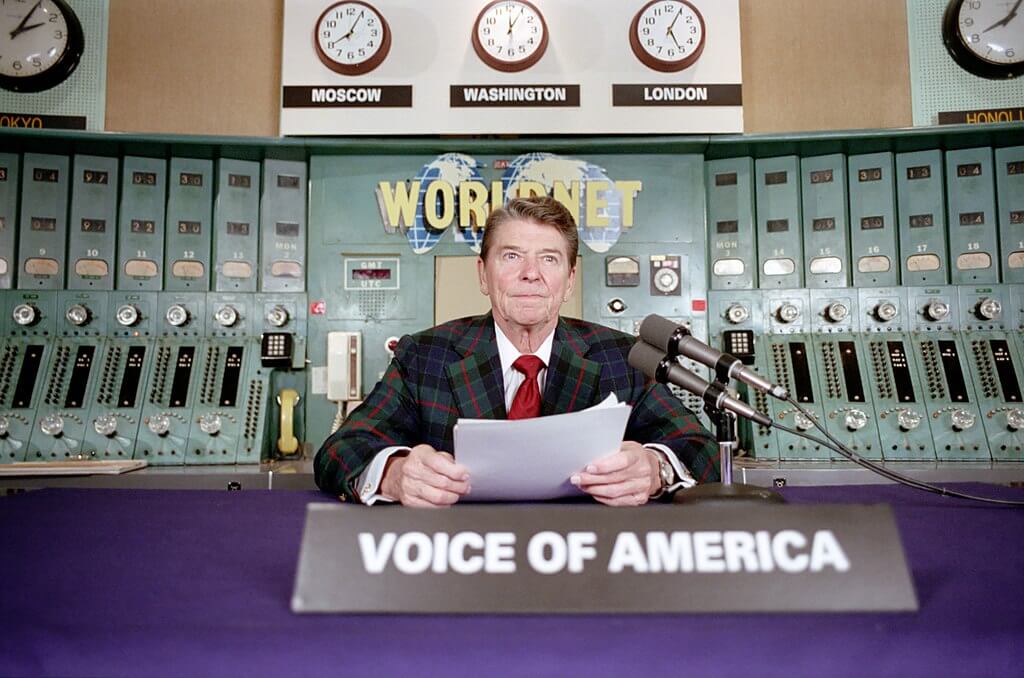
For two decades, my weekly news and public affairs television program, “White House Chronicle,” was carried by VOA globally in English — and at one time was translated into Chinese. It was dropped during the first Trump administration, but VOA started distributing it again in the Biden years. Mostly it deals with the nexus of science and society, such as AI’s anticipated impact on jobs.

I have simply given the program to VOA as a public service and no money has ever changed hands.

Apart from the hard news, VOA gave the world a window into democratic America: our struggles and triumphs, our values, our of freedom, our luxury of choice, and those aspects of American life that make us the nation we are —  at best aspiring to be Ronald Reagan’s “shining city upon a hill.”

The Trump administration hasn’t only denied 70 percent of the world that lives under authoritarian rule the opportunity to hear the truth, but they have also robbed America of the second of its two great soft power tools; the first was USAID, the helping agency.

We aren’t only telling the world that we don’t care about it, but we are also retreating from it into inconsequence.

Filed Under: King's Commentaries Tagged With: BBC, British, broadcast, Chinese, Funding, Rhodesia, russian, trump, VOA

America, for So Long a State of Mind, Is Losing Its Sense of Mission

March 14, 2025 by Llewellyn King 1 Comment

America isn’t just a piece of remarkably fertile real estate between two great oceans. It is also a state of mind.

Even when America has done wrong things (think racism) or stupid things (think Prohibition), it has still shone brightly to the world as the citadel of free expression, abundant opportunity, and a place where laws are obeyed.

When I was a teen in a British colony in Africa, long before I imagined I would spend most of my life in America, I met a man who had seen the promised land. He wasn’t a native-born American or even a citizen, but he had lived in “the States.”

I badgered this man with questions about everything, but mostly things derived from books and movies: Could ordinary people really drive Cadillacs?  As a British writer later said, were taxis in New York “great yellow projectiles”? Did they really have universities where you could study anything, like ice cream manufacturing? Did American policemen actually carry guns?

Our adulation of America was fed by its products. They were everywhere the best. American pickup trucks were the gold standard of light trucks, and American cars — so big — fascinated, although they weren’t ubiquitous like the trucks. Brands such as Frigidaire and General Electric meant reliability, quality and evidence that Americans did things better.

No one thought the streets in the United States were paved with gold, but they did believe they were paved with possibility.

There was criticism, like that of the alleged American hold on the price of gold or the fear of nuclear war. The “shining city upon a hill” idea was paramount long before President Ronald Reagan said it.

And it has been so for the world since the end of World War II. For 80 years, the United States has led the world; even when it spread its mistakes, like the Vietnam War, it led.

America was the bulwark of the liberal democracies — a grouping of European nations, Canada, Australia and much of Asia — that shared many values and outlooks. Call it what it is, or was, Western Civilization, based on decency, informed by Christianity, and shaped by tradition and common expectation.

Central to this was America; central with ideas, with wealth, with technological leadership and, above all, with decency. Now, all of this may be in the past.

This structure has been shaken in less than three months of President Trump’s second administration. It is near breaking point.

This may be the end of days for the Western Alliance, led by America in the ways of democracy and free trade.

Writing in the British monthly magazine Prospect, Andrew Adonis, a peer who sits in the House of Lords as Baron Adonis, states: “Trump doesn’t believe in democracy, just in winning at all costs. He doesn’t believe in an international order based on respect for human rights. He is an authoritarian, lawless plutocrat who admires similar characters at home and abroad.”

Additionally, Adonis says in his article that, unlike the first Trump term, the checks and balances have weakened: “The Republican Party has become a cipher. The Democrats are shell-shocked and demoralized. The courts, the military and Congress are browbeaten, packed with Trump supporters or otherwise compliant.”

I find it hard to argue with this assessment. Why would Trump persist with a tariff regime that was proven not to work with the Smoot-Hawley Tariff Act of 1930, which triggered the Great Depression? Why would he rile up Canada by threatening its independence? Why would he reopen, without a good reason, the issue of the control of the Panama Canal?

Why is he destroying the civil service in thought-free ways? Why is he going after the constitutional freedom of the press and the rights enshrined over millennia for lawyers to represent those who need them regardless of politics? Why is he leading us into a recession: the Trump Slump?

Either the president has no coherent plans, or those plans are devious and not to be shared with the people.

I believe that he enjoys power and testing its limits, that he has no knowledge base and so relies on hearsay to formulate policy. In the end, he may be listed along with Roman emperors who ran amok like Nero and Caligula.

The Western Alliance is at stake, and America is giving away its global leadership. When trust is lost, it is gone forever.

Filed Under: King's Commentaries Tagged With: Africa, America, British, Caligula, Canada, Democrat, gold, New York, Prohibition, Reagan, Republican

U.S. Is in Golden Age, Despite Brexit-Type Sentimentality

(CREDIT: Gage Skidmore, via Wikipedia)

October 18, 2024 by Llewellyn King 1 Comment

(Photo Credit: Gage Skidmore, via Wikipedia)

The social and cultural forces behind MAGA in the United States and those that led the British in 2016 to vote to leave the European Union — by a small margin of 51.9 percent to 48.1 percent — are closely linked. I know those forces, and I feel connected to them.

They reflect common yearning, shared frustration, and a vague but deep belief that once things were better. That once for their nation, there was a time of contentment, prosperity and certainty all wrapped up in patriotism or, more accurately, nationalism.

“Great” is a word with meaning for those who get caught up in this deep desire to find a kind of national fulfillment, which they feel, and feel deeply, is missing.

In Britain, all the years from Britain’s entry into the European Economic Community (EEC) on Jan. 1, 1973, to the fateful vote, there was a feeling among many people, but especially men, that the nation had abandoned its hereditary path of greatness for domination by Europe. They wanted the term Great Britain (officially adopted after the Acts of Union with Scotland in 1707) to mean something.

Their romantic nostalgia was for some amalgam of history when they felt Britain was “great”: maybe the last days of the Empire in the 1950s, maybe the late Victorian era. It was a moveable feast of yearning for something other than multicultural, essentially woke, Britain.

In America, that yearning, as deeply felt and real, is centered on some romanticized appreciation of the 1950s.

The hard thing for people dreaming of an imaginary past of plenty and happiness is that they never existed for everyone and that the golden age for the ordinary people of Britain was the EU years and the present is a unique golden age for America.

With AI, in which we are the global leader (China has technical parity but is limited by its closed, top-down-controlled society), we are about to see history’s largest surge in knowledge, productivity and health. The giant killers like heart disease and cancer may fall, and life expectancy will increase.

The challenge isn’t to transmute this gold into lead, not to seek the future in a sentimental myth, not to relegate America to being just another striving country.

Britain left a dominant position in the councils of Europe for the status of an island nation with an awesome history but a shaky future.

Behind Britain’s prosperity through the years (a prosperity that is now faltering badly) and America’s massive economic muscle (currently, we have the best-performing economy in the world) lay democracy, open markets and free trade.

Those also were the bedrock values of conservatism on both sides of the Atlantic. In today’s political confusion, they have been forgotten or put on a back burner.

MAGA supporters and those who voted Britain out of the EU share a common sense that there was a better time. Brexiteers said Britain had lost its “sovereignty” without anyone defining the loss.

When I was 21 years old, I worked in London in the movement to keep Britain out of what was then the EEC, precursor of the EU, believing it would be a big economic mistake. Not long after its entry, I changed my mind: It was a bonanza for the financial markets, the farmers, and all those who had goods to sell.

The forces of Brexit and MAGA were always present, but it took two Pied Pipers to fire them up, to shape them as voting blocks, and to have them take over the conservative politics in both nations.

Britain’s Pied Piper was Boris Johnson, who kept up a steady and often dishonest flow of anti-European information when he was the Brussels correspondent of the conservative Daily Telegraph. These fabrications remained alive throughout the Brexit campaign. So, when David Cameron, the Conservative prime minister, offered Britain a referendum on EU membership, Johnson, then a member of parliament, was ready.

Donald Trump rode into the presidency on four words: Make America Great Again.

Besides being larger-than-life and often clownish figures, Johnson and Trump are quite different people. They both rose to corral the loyalty of those yearning for a different reality, one that would inadvertently damage those they sought to lead.

They would effectively seek to transmute gold into lead and tell everyone it was platinum.

I don’t ridicule MAGA supporters, but I fear the power of false narratives. The past is prologue; it isn’t the future.

Filed Under: King's Commentaries Tagged With: Boris Johnson, Brexit, British, Economy, EEC, European Union, MAGA, nationalism, patriotism, Scotland

White House Chronicle on Social

  • Facebook
  • Twitter
  • Vimeo
  • YouTube
Memories of PDVSA: The Same Problems, Just Worse Now

Memories of PDVSA: The Same Problems, Just Worse Now

Llewellyn King

In 1991, the state oil company of Venezuela, Petroleos de Venezuela, S.A., known as PDVSA, invited the international energy press to visit. I was one of the reporters who flew to Caracas and later to Lake Maracaibo, the center of oil production, and then to a very fancy party on a sandbar in the Caribbean. […]

A Conversation With 2026 on America’s Meaning to the World

A Conversation With 2026 on America’s Meaning to the World

Llewellyn King

Come on in, 2026. Welcome. I am glad to see you because your predecessor year was not to my liking. Yes, I know there is always something going on in the world that we wish were not going on. Paul Harvey, the conservative broadcaster, said, “In times like these, it helps to recall that there […]

Postcard from the Queen Mary 2: Holiday Cruise to the Caribbean

Postcard from the Queen Mary 2: Holiday Cruise to the Caribbean

Linda Gasparello

My husband, Llewellyn King, and I chose a Christmas-to-New Year’s cruise on the Queen Mary 2, titled Caribbean Celebration, because there were so many days at sea. We love the feelings of lethargy, languor and disengagement that fill us on those days. But the sea days — and there were three since we left New […]

New Year’s Resolutions Are Bad — Slough Off Instead

New Year’s Resolutions Are Bad — Slough Off Instead

Llewellyn King

A remarkable autobiography by Anthony Inglis, the English conductor and musicologist, is titled, “Sit Down, Stop Waving Your Arms About!” Quite so. This admonition occurred while Inglis was conducting a musical. Someone sitting in the front row tapped him on the shoulder and told him to sit down and stop waving his arms about. My […]

Copyright © 2026 · White House Chronicle Theme on Genesis Framework · WordPress · Log in