White House Chronicle

News Analysis With a Sense of Humor

  • Home
  • King’s Commentaries
  • Random Features
  • Photos
  • Public Speaker
  • WHC Episodes
  • About WHC
  • Carrying Stations
  • ME/CFS Alert
  • Contact Us

Summer Is Too Important for Politics to Steal

April 3, 2026 by Llewellyn King Leave a Comment

If you can get your mind off the wars in the Middle East and Ukraine, if you can stop checking your 401(K), which seems to have taken off for the dark side of the moon, if you can turn off the cable news channels and do a quick personal inventory, noting that your arms, legs and enough of your mind are still functioning, then you are ready for the balm of summer.

I had always thought that summer culture was epitomized by the French fleeing Paris during August. But the summer migration that renews, whether it is to Myrtle Beach, South Carolina, or to Botswana, is just as important to Americans.

People need to get away. Staycation is an oxymoron, like airline food.

Americans live for summer and nothing will keep them from the beaches, lakes, mountains and resorts of their bounteous native land. But an increasing number go abroad.

Beware. We might not be as welcome in that great bistro in Montmartre where we often supped, or on the delightful beach in Crete where we once sunned. There are just too many tourists trying to do the same things all over Europe, and more are planning to go.

Americans are part of a new phenomenon, known as overtourism. We were the first mass tourists in the world, but we have since been joined by people of other nationalities, many of whom think they must see Venice, visit the Acropolis, and walk Britain’s Lake District. Not in high summer you won’t, and if you do, you will pay high fees and face various gentle disincentives.

The problem is that more and more people can afford to travel, and they do.

In his 1961 musical “Sail Away,” Noel Coward wrote, “Why do the wrong people travel?” If Coward were alive today, he might write, “Why do so many people travel?”

Curious Germans and inquiring Americans have long since been joined by regiments of Japanese picture-taking tourists. Now the Chinese, too, feel they must gaze upon the Mona Lisa, and the Indians want to see the Highland cattle of Scotland, affectionately referred to as “hairy coos.”

The solution: Go early or go late, if Europe is your destination. There is much to enjoy in what the professionals of the travel industry call the “shoulder season,” which is from about now until late June — and from September to October. Some places like Dubrovnik and Venice are unable to accommodate mass tourism in the summer, and have prevented cruise ships from docking.

About cruising: My wife, Linda Gasparello, and I used to build our vacations around horseback riding, taking our boots and hats with us wherever we went in the world. Then, reluctantly, we took our first cruise. We had misgivings about cruise ships, thinking of them as floating holiday camps. In fact, cruising is a way of taking the hotel with you.

Our first cruise, not long after the collapse of the Soviet Union, was from Greece through the Bosporus and into the Black Sea, and it was magnificent. We went to places we would never have seen if left to ourselves, like Yalta, Odesa, and Constanta, and we had great tours in all of them. We were enchanted from the moment we stepped on board in Athens to our disembarkation in Venice. Also, I was able to visit Istanbul for the first time.

Another memorable cruise was around Cape Horn from Argentina to Chile with plenty of stops in some of the most delightful and unusual towns such as Punta Arenas, Ushuaia and Puerto Montt. To be cruising the treacherous body of water at the bottom of the world, where so many mariners perished, in a luxury liner, is to marvel at technology and your own good luck.

Our most delightful cruise, perhaps, was last year when we took Cunard’s stately Queen Mary 2 across the Atlantic from New York to Southampton. This cruise reached levels that were near ecstasy for us.

The crossing entertainment featured conductor Anthony Inglis with members of the UK’s National Symphony Orchestra. Inglis assembled a passenger choir — complete with auditions and rehearsals — which gave two rousing concerts.

In the interests of harmony, I stayed in the audience, but my wife made it into the chorus and was elated that her long-unused gifts as a soprano were still there.

You have to love a man who travels with an orchestra. That, as they say, is class. And to think that we were once snobbish about cruising.

We learned that Inglis will conduct the NSO on the Sept. 5 to 12 QM2 crossing from New York to Southampton. This was music to our ears.
Filed Under: King's Commentaries Tagged With: Americans, beach, Chile, cruise, Noel Coward, Paris, resorts, Staycation, summer, tourism, Ukraine

Loving Ireland on St. Patrick’s Day — for Its Contradictions

March 6, 2026 by Llewellyn King Leave a Comment

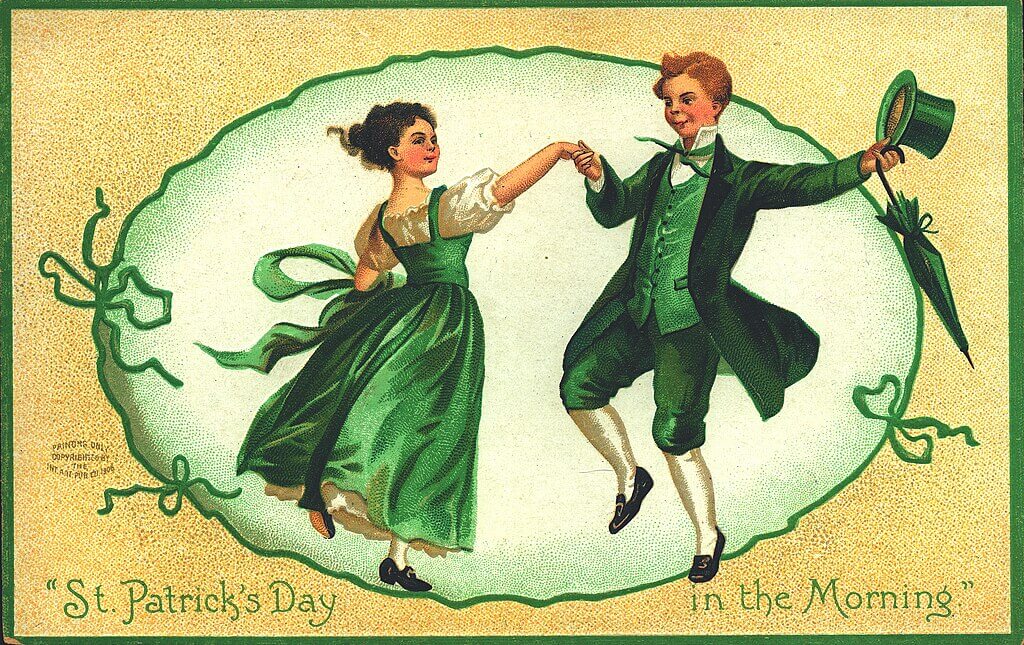
I won’t let St. Patrick’s Day pass without wearing something green and reaching for a glass of something that has been produced through fermentation or distillation. It is the least I can do for all the ways the Irish have enriched the world, but especially the English language, and me.

When it comes to writing, the Irish have what might be termed an ethnic advantage, from the literary game-changers in the last century — George Bernard Shaw, James Joyce, Samuel Beckett and Brendan Behan — to two of the top practitioners of novel-writing today, Sally Rooney, who is only 35, and the prolific and so-readable John Banville.

When it comes to poets, William Butler Yeats is, to my mind, seated among the immortals.

Yet, as I enjoy my St. Patrick’s Day libation, I shall reflect on the contradictions that are Ireland. These are summed up in a personal experience.

I was, for over 20 years, the American organizer of the Humbert Summer School in Ballina, Co. Mayo. One of my missions was to take Americans — often Irish Americans who had never been to their ancestral land — to Ireland and the school.

Summer schools in Ireland are akin to Renaissance weekends or Aspen Institute meetings in America. Some are literary, like the Yeats Summer School in Sligo, or political, like the Parnell Summer School in Co. Wicklow, or musical, like the Willy Clancy Summer School in Co. Clare.

Mine, alas, is defunct, but it was named after the French General Jean Joseph Humbert who landed in Killala Bay to help the United Irishmen’s rebellion against the British in 1798, which was celebrated in Thomas Flanagan’s novel “The Year of the French,” and the movie based on it.

The Humbert School was the creation of its director, John Cooney, a distinguished journalist and major historian. Its mission was to discuss Ireland’s future at home and abroad.

Before the start of one year’s summer school, I briefed my Irish American charge, Ray Connolly, on just how awfully the British, my people, had behaved in the northwest of Ireland, from colonization in 1611 to the 1798 rebellion, to the famine of 1846, when so many perished or fled in the great diaspora, to the notorious Black and Tans after World War I. They were a paramilitary force formed in 1920 to reinforce police posts, act as escorts, and conduct counter-insurgency operations. But their cruelty caused many Irish people to join the Irish Republican Army.

I spared nothing in the telling of Albion’s perfidy in Ireland.

After the weeklong summer school, on our drive to Dublin Airport and our flight back to Washington, we stopped in a pub. When the publican heard my English accent, he asked, ”How’s the weather over there?” I knew he meant in England. I had to explain that I was now an American and had been for years.

The publican threw his arms around me and declared, “God bless you. You never lost your accent.”

Our exchange confused Ray. He reminded me that I had recounted the full litany of English horror in the northwest of Ireland including, after the 1798 rebellion, how Gen. Charles Cornwallis, chagrined after his defeat in America, hanged 20 Irish rebels per day.

“That,” I said of the enthusiastic publican, “is part of the wonder of Ireland: its contradictions.”

Ireland’s relationship with Britain is a fine example of those.

Britain is a prime destination for work and for career opportunities for the Irish. They talk of London with affection, although they may still sing rebel songs with gusto, and mention the horrors of the past as though they were last week.

Under a treaty, the Common Travel Agreement (CTA), Irish citizens have the right of abode in England. For them, there is no frontier; although, I learn, that may change as people who have acquired Irish citizenship, but aren’t Irish-born, are abusing it, adding to the immigration woes in Britain.

If the CTA should end, Britain will lose much, just as America is set to lose Irish talent because of immigration restrictions.

When talking about the impact of Ireland on America – 23 presidents were of Irish descent — it should be noted that America has also had an impact on Ireland.

On the downside, there is fast food. When I asked a cab driver in Dublin about where to get good fish and chips, he said he preferred Kentucky Fried Chicken.

On the upside, there is the celebration of St. Patrick’s Day, which started in America.

But before Americans went crazy for all things Irish on March 17, it was a quiet religious day in Ireland. Now it is more of a celebration there, as it is here and much of the world. Sláinte!

Filed Under: King's Commentaries Tagged With: Americans, Army, British, citizenship, Cornwallis, English, Irish, rebellion, Renaissance, St. Patrick's Day, Yeats

White House Chronicle on Social

  • Facebook
  • Twitter
  • Vimeo
  • YouTube
Democratic Graybeards Detail Tools Trump May Use To Negate Midterms

Democratic Graybeards Detail Tools Trump May Use To Negate Midterms

Llewellyn King

After two long, dark years, there is an optimism afoot among Democrats, many independents, and a few old-school Republicans that the clouds will part and the sun will shine brightly again on Nov. 4. Most votes in the midterms will be counted, and Democrats believe the House will have flipped Democratic with a decent majority. […]

Summer Is Too Important for Politics to Steal

Summer Is Too Important for Politics to Steal

Llewellyn King

If you can get your mind off the wars in the Middle East and Ukraine, if you can stop checking your 401(K), which seems to have taken off for the dark side of the moon, if you can turn off the cable news channels and do a quick personal inventory, noting that your arms, legs […]

Tech Giants Will Boost Nuclear but Won’t Help With Your Bill

Tech Giants Will Boost Nuclear but Won’t Help With Your Bill

Llewellyn King

There is an abiding faith that if someone is good at one thing, they must be good at many things. At heart, it is a belief that outside the metaphorical box, there is much greater ability than inside it. This is once again on display with widespread enthusiasm for the idea that the looming shortage […]

Women Face Massive Layoffs as AI Use Spreads in the U.S.

Women Face Massive Layoffs as AI Use Spreads in the U.S.

Llewellyn King

March is Women’s History Month and a time to take a look at how women are progressing, or otherwise. Alas, the news for women in the United States isn’t good, and the future is foreboding as they are about to lose 6 million jobs to artificial intelligence. Work traditionally done by women — secretaries, receptionists, […]

Copyright © 2026 · White House Chronicle Theme on Genesis Framework · WordPress · Log in