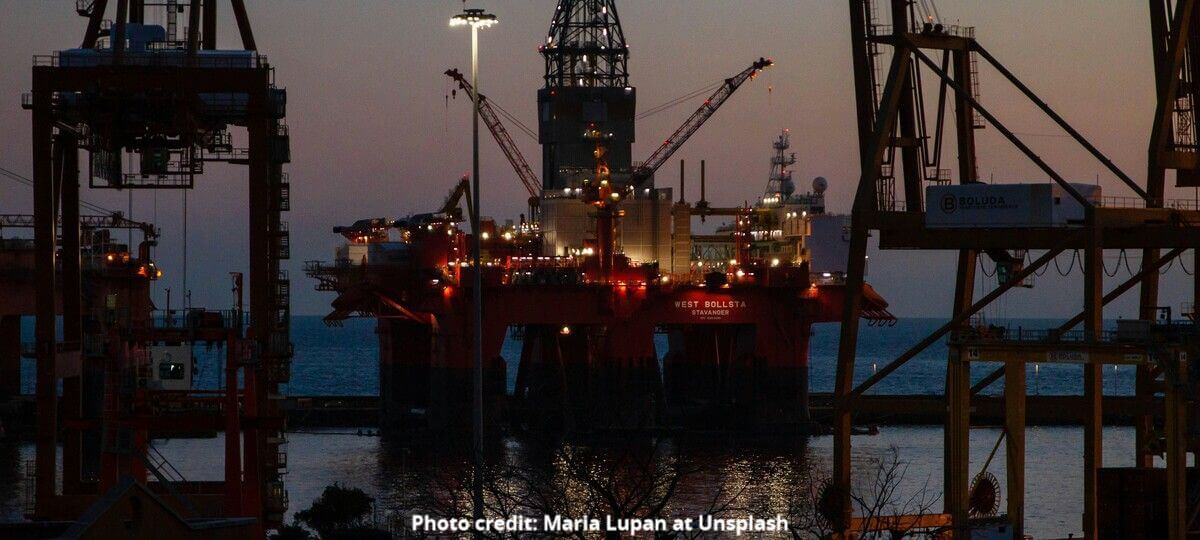
In 1991, the state oil company of Venezuela, Petroleos de Venezuela, S.A., known as PDVSA, invited the international energy press to visit.
I was one of the reporters who flew to Caracas and later to Lake Maracaibo, the center of oil production, and then to a very fancy party on a sandbar in the Caribbean.
They were, as a British journalist said, “putting on the dog.”
At that time, PDVSA executives were proud of the way they had maintained the standards and practices which had been in force before nationalization in 1976. The oil company was, we were assured, a lean, mean machine, producing about 3.5 million barrels per day.
They were keen to claim they had maintained the same esprit under state ownership as they had had when they were privately owned by American companies.
They had kept political interference at arm’s length, executives claimed.
PDVSA’s interest then, as it has always been, was more investment, particularly in its natural gas, known as the Cristobal Colon project.
In President Donald Trump’s takeover of Venezuela’s moribund oil sector, natural gas hasn’t been much mentioned — although there may eventually be more demand for natural gas from Venezuela than for its oil.
We had a meeting with Venezuela’s president, Carlos Andres Perez, who was called CAP. He painted a rosy future for the country and its oil and gas industry.
CAP believed the oil revenues would modernize the country. Particularly, he said that technology was needed to make the heavy oil more accessible and manageable.
And there’s the rub. While everyone is quick to point out that Venezuela’s oil reserves are the largest in the world, all oil isn’t equal.
Venezuela’s oil is difficult to deal with. It doesn’t just bubble out of the ground. Instead, 80% of it is highly viscous, more like tar than a free-flowing liquid. And it has a high sulfur content.
In other words, it is the oil that most oil companies, unless they have special production and refining facilities, want to avoid. It takes special coaxing to extract the oil from the ground and ship it.
Venezuelan oil has a high “lifting cost” which makes it expensive to begin with. At present, that cost is about $23 per barrel compared to about $13 per barrel for Saudi Arabian oil.
During the energy crisis, which unfolded in the fall of 1973 with the Arab oil embargo, U.S. utilities considered pumping it with a surfactant (a thinner) to Florida and burning it directly in boilers like coal.
As evidence that the oil operation hadn’t been damaged by nationalization, executives proudly told us that PDVSA produced more oil with 12,000 employees than the state oil company of Mexico, PEMEX, produced with 200,000.
In other words, the Venezuelans had been able to resist the temptation to turn the oil company into a kind of social welfare program, employing unneeded droves of people.
Now I read the workforce of PDVSA stands at more than 70,000 and oil production has slipped to about 750,000 barrels a day.
By 1991, the oil shortage which had endured since the Arab oil embargo had eased, and PDVSA was worried about its future and whether its heavy oil could find a wider market.
Particularly, it was worried about the day when it would run out of the lighter crudes and would be left only with its viscous reserves.
Two oil companies have been shipping oil to the United States during the time of revolution and sanctions: Citgo, a PDVSA-owned operator of gas stations in the United States, and Chevron. Both have waivers issued by the United States, although Citgo is under orders to divest and is set to be bought by Elliott Company (owned by Paul Singer, a Trump supporter), which may play a big role going forward in Venezuela as its expertise is in lifting.
About that party on a sandbank. Well, PDVSA wanted to show the press that it could spend money as lavishly as any oil major.
We were flown in a private jet to an island, then transported on speedboats to a sandbank, where a feast worthy of a potentate was set up under tents. The catering staff had been taken off the sandbank, so the effect was that the party had miraculously emerged from the Caribbean Sea.