You don’t have to be sitting by yourself on an island to be lonely. Loneliness is everywhere.
Studies from universities, governments and public health groups find that the world is in the grip of a loneliness pandemic. More than half the U.S. population is said to be suffering from loneliness. It is classified globally as a mental health problem.
Paradoxically, the studies place most of the blame on our interconnected society and social media: If we communicate electronically, we isolate ourselves. The COVID-19 pandemic also increased our social isolation, and working from home accelerated the trend.
I would suggest that we have been drifting toward loneliness for a long time. Years ago, I wrote about what I called the “box culture.”
In the box culture, people live in a box (apartment), ride down in a box (elevator), get into a box with wheels (car), drive to a stack of boxes (building), ride up in a box (elevator), enter another box (office), and stare into a box (computer).
That, I believe, led to greater isolation. No common dwelling; no common transportation, like a bus or train; and little common work habitat.
The phrase “my space” began to be part of the conversational language. A social networking service named Myspace was launched in 2003.
Email and texting gave isolation a boost even before COVID-19 gave it a massive steroid shot. Now we might be inhabiting “my isolated space.”
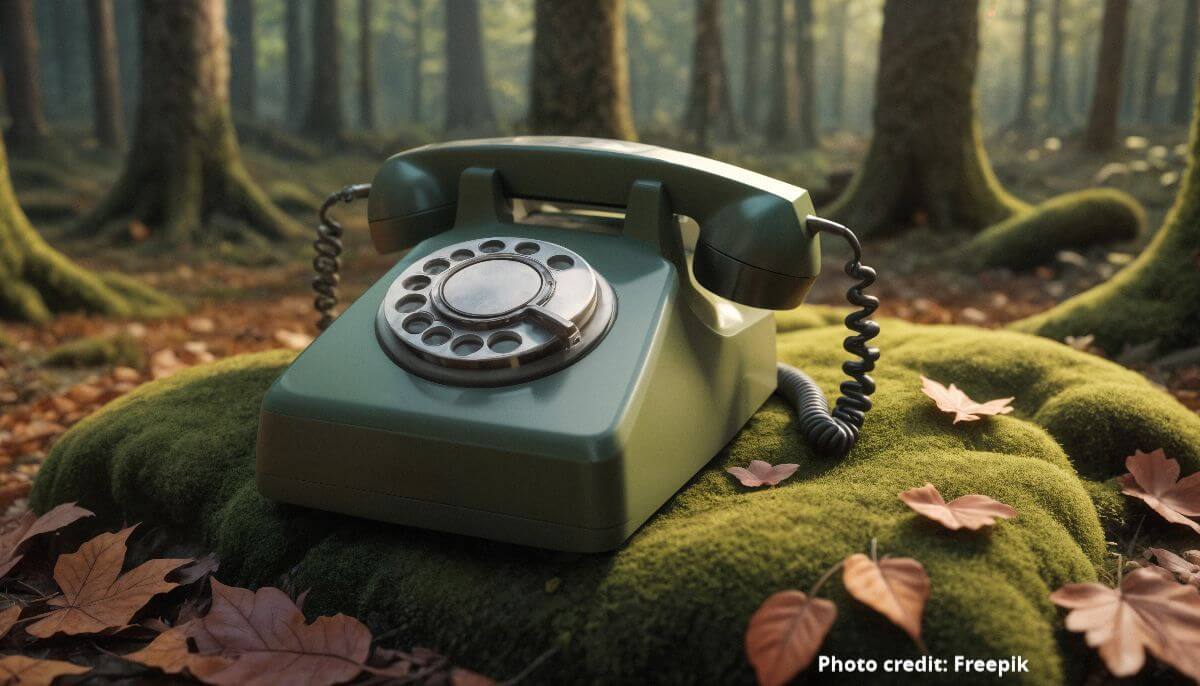
Adding to this world of paradox is perhaps the biggest paradox of all — the death of the telephone for the purpose it was invented: talking.
Not only has the telephone declined to near-oblivion as a way of talking to others, but it has also become something of a burden. I find that when I suggest a telephone call, the recipients want to set a time.
When did setting times for calls creep into our lives? It wrings the pleasure out of the telephone, which was always a spontaneous instrument.
When Irving Berlin wrote the song “All Alone by the Telephone” in 1924, he didn’t envisage that people would make appointments to talk.
We have robbed ourselves of the glorious spontaneity, or heartbreak, of the telephone. I have always thought of it as the instrument that can transmute life’s leaden metal into gold unexpectedly, as Omar Khayyam wrote, or as a ray of sunshine you didn’t expect to break through the fog, as Noel Coward wrote. Even just the laughter of an old friend can break out the sunlight on a dismal day.
I can’t catch the laughter in a text. Email is fine for a joke, but it fails where the telephone succeeds: catching the sublimity of laughter, the warmth of love.
Another source of isolation has been the conversion from shopping — the operative part of that word is “shop” — to online buying, a different experience. Or rather, another way of removing the warmth of human interchange from the transaction.
If you are among the legions of the lonely, I would like to suggest, aside from the highly recommended places people meet, like volunteering at a charity or an amateur theater group, going to a pub or to church, do something radical: Speak to a stranger.
My wife and I became friends with two people and their families because I spoke to a stranger in a hotel in Washington, and we spoke to one at a concert in Rhode Island.
We have friends who met while standing in line at an ATM and married not long after. Weight Watchers, when they held meetings, was recommended among the cognoscenti as a place to meet people.
These suggestions may sound trivial, but they are the commerce of life, some of which we have shelved in favor of electronic communications.
In particular, I feel for those who are shut-in by disease and suffer terrible loneliness. They are the loneliest of the lonely.
For many years, I have written and broadcast about Chronic Fatigue Syndrome, also known as Myalgic Encephalomyelitis. It is a terrible disease whose victims have no energy, get no refreshment from sleep, and suffer a plethora of pain, usually for life.
Electronics may have robbed us of much human contact and caused a pandemic of loneliness, but not for those sentenced to loneliness by disease.
 Follow

Leave a Reply