White House Chronicle

News Analysis With a Sense of Humor

  • Home
  • King’s Commentaries
  • Random Features
  • Photos
  • Public Speaker
  • WHC Episodes
  • About WHC
  • Carrying Stations
  • ME/CFS Alert
  • Contact Us

The Age of Dichotomy Is Tearing Up America

October 24, 2025 by Llewellyn King Leave a Comment

We live in an age of dichotomy.

The rich are getting richer and the poor are getting poorer.

We have more means of communication, but there is a pandemic of loneliness.

We have unprecedented access to information, but we seem to know less, from civics to the history of the country.

We are beginning to see artificial intelligence displacing white-collar workers in many sectors, but there is a crying shortage of skilled workers, including welders, electricians, pipe fitters and ironworkers.

If your skill involves your hands, you are safe for now.

New data centers, hotels and mixed-use structures, factories and power plants are being delayed because of worker shortages. But the government is expelling undocumented immigrants, hundreds of thousands who have skills.

Thoughts about dichotomy came to me when Adam Clayton Powell III and I were interviewing Hedrick Smith, a journalist in full: a Pulitzer Prize-winning reporter and editor, an Emmy Award-winning producer/correspondent and a bestselling author.

We were talking with Smith on “White House Chronicle,” the weekly news and public affairs program on PBS for which I serve as executive producer and co-host.

The two dichotomies that struck me were Smith’s explanation of the decline of the middle class as the richest few rise, and the way Congress has drifted into operating more like the British Parliament with party-line votes than the body envisaged by the founders.

Echoing Benjamin Disraeli, the great British prime minister who said in 1845 that Britain had become “two nations,” rich and poor, Smith said: “Since 1980, a wedge has been driven. We have become two Americas economically.”

On the chronic dysfunction in Congress, Smith said: “When I came to Washington in 1962, to work for The New York Times, budgets got passed routinely. Congress passed 13 appropriations bills for different parts of the government. It happened every year.”

This routine congressional action happened because there were compromises, he said, noting, “There were 70 Republicans who voted for Medicare along with 170 Democrats. (There was) compromise on the national highway system, sending a man to the moon in competition with the Russians. Compromise on a whole slew of things was absolutely common.”

Smith remembered those days in Washington of order, bipartisanship and division over policy, not party. There were Southern Democrats and Northern Republicans, and Congress divided that way, but not routinely by party line.

He said, “There were gypsy moth Republicans who voted with Democratic presidents and boll weevil Democrats who voted with Republican presidents.”

In fact, Smith said, there wasn’t a single party-line vote on any major issue in Congress from 1945 to 1993.

“The Founding Fathers would never have imagined that we would have what the British call ‘party government.’ Our system is constructed to require compromise, while we now have a political system that is gelled in bipartisanship.”

On the dichotomy between the rich and the poor, Smith said that in the period from World War II up until 1980, the American middle class was experiencing a rise in its standard of living roughly keeping up with what was happening to the rich.

But since 1980, he said, “The upper 1%, and even the top 10%, have been soaring and the rest of the country has fallen off the cliff.”

This dichotomy, according to Smith, has had huge political consequences.

In 2016, he said, Donald Trump ran for president as an advocate of the working class against the establishment Republicans: “He had 15 Republican (contenders) who were pro-business; they were pro-suburban Republicans who were well-educated, well-off. Trump had run on the other side, trying to grab the people who were aggrieved and left out by globalization. But we forget that,” he said.

Smith went on to say that Bernie Sanders, the Democratic presidential candidate in 2016, did the same thing: “He was a 70-year-old, white-haired socialist who came from Vermont, with its three electoral votes, but he ran against the establishment candidate, Hillary Clinton … and he damn near took the nomination away from her.”

Smith said that result showed “there was rebellion against the establishment.”

That rebellion, in my mind, has resulted in a worsening separation between and within the parties. They aren’t making compromises which, as in times past, would offer a way forward.

A final dichotomy: The United States is the richest country the world has ever seen, and the national debt has just reached $38 trillion dollars.

Filed Under: King's Commentaries Tagged With: America, Artificial intelligence, Britain, Congress, data centers, dichotomy, Disraeli, Hedrick Smith, pandemic, Pulitzer

How Crowdfunding Brought a New Wind Technology to Market

July 11, 2025 by Llewellyn King Leave a Comment

A California company, Wind Harvest, is in high gear to change the dynamics of wind energy and to vastly improve the economics of wind farms. 

But the company wouldn’t be marketing to large energy users and wind farm operators today if it hadn’t used crowdfunding for its recent rounds of financing. Crowdfunding can get a startup over the hill.

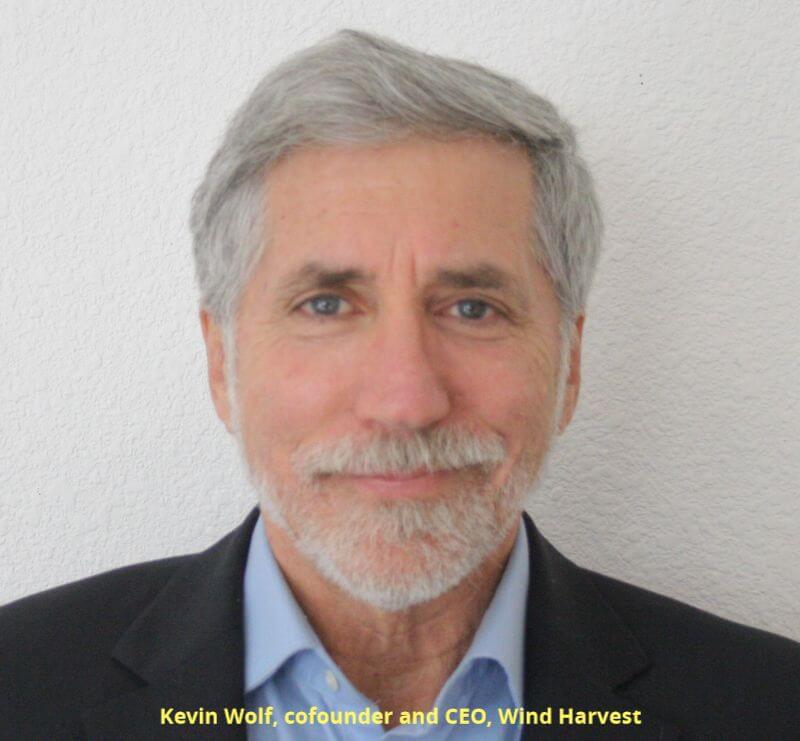
Kevin Wolf, Wind Harvest co-founder and CEO, explained that developers of hardware face a double problem when it comes to financing: The banks won’t finance their customers’ projects until the technology has been certified and, in Wind Harvest’s case, dozens of their unique wind turbines have been operating for at least a year which requires money.

Wolf said, “It takes about two years to complete a ‘technology readiness level,’ unless a company is well-funded. Six months to have all the components arrive, six months to a year to install and fully test the prototype, and then another six months to complete the new design.” Meantime, a team of engineers and the bills have to be paid.

Venture capitalists have shown a decided disinclination to finance hardware, preferring computer-related software products, he said.

But with crowdfunding, often through a special-purpose company, thousands of individuals have become venture capitalists in companies like Wind Harvest. Many of those investors have hit it big. 

Two standout companies which grew into multi-billion dollar ones: Oculus VR and Peloton.

Oculus, the virtual reality technology company, used crowdfunding to raise $250,000 in 2012. Two years later, it was acquired by Facebook for $2 billion.

Peloton, the fitness company, started with crowdfunding of $307,000, achieved a valuation of $8.1 billion its initial public offering, and rose to astronomically high valuations during the Covid pandemic. It has now fallen back considerably, after many difficulties in the fitness industry.

Wind Harvest is essentially offering new infrastructure which, should it catch on, would give it a steady and fairly predictable path forward as both a wind turbine Original Equipment Manufacturer and as a renewable energy project developer.

The company’s product, trademarked as Wind Harvester, is a vertical-axis wind turbine (VAWT): The drive shaft and the electrical generator are aligned vertical to the ground. In traditional wind turbines, those components are horizontal to the ground. 

The most famous vertical-axis wind turbine is the Darrieus, named after a French engineer who patented it in 1926. It has an elegant, eggbeater shape almost like a fine outdoor sculpture. But it ran into problems with vibration and other technical drawbacks and wasn’t a commercial success.

At the outset of the energy crisis in 1973, Sandia National Laboratory in New Mexico, one of the jewels in the crown of the national laboratory system, did considerable theoretical work on wind turbines, concentrating on vertical-axis designs. But when the research was moved to another laboratory, the horizontal-axis wind turbine (HAWT) became the focus.

The codes developed at Sandia are foundational to the Wind Harvest design. Wolf explained that the choice between VAWTs and HAWTs isn’t an either-or choice, except where wind shears are high and wind near the ground slows down. Then tall, horizontal-axis wind turbines have the advantage.

Wind Harvest turbines are designed to capture the wind on ridgelines, hills and mountain passes where wind funnels and accelerates turbines under the tall horizontal-axis turbines. VAWTs can take advantage of the powerful wind that swirls around near the ground. This turbulent wind at the surface is an unused resource now.

With the bottom of their blades between 25 feet and 50 feet off the ground and installed in pairs 3 feet apart from each, Wind Harvest turbines can double the output of electricity from a wind farm while still leaving enough clearance for agriculture, whether it is grazing animals or growing crops. So, add efficiency to the virtues of these turbines: better use of the wind resources, land and infrastructure. 

Thanks to crowdfunding in four tranches, Wind Harvest is now ready to go to market with utility scale installations.

Wolf listed these additional virtues for VAWTs: 

  • They can be entirely made in America. Right now their blades are extruded by Step-G in Germany.
  • They are designed to withstand the 180 mph wind gusts from a Category 5 hurricane.
  • Because they are short, they can use larger permanent magnet generators (PMGs) not made of rare earth magnets. For example, their PMGs can use ferrite magnets which are iron-based. 
  • Wind Harvest installations have a fatigue life of 75 years with maintenance and periodic refurbishment. Most turbines now in use must be replaced after about 25 years.

The first Wind Harvesters to be put into service are planned for a dredge spoil-created peninsula on St. Croix, the largest of the U.S. Virgin Islands, located in the Caribbean Sea. The entire output of the first phase of the project will be bought by the oil refinery adjacent to the project site and replace the burning of costly propane for generation.

Big ideas now have funding sources besides “Shark Tank,” venture capital, and the banks.

Filed Under: King's Commentaries Tagged With: America, Caribbean, COVID, Crowdfunding, Facebook, Harvest, Kevin Wolf, Oculus, pandemic, Peloton, Sandia, technology, wind

White House Chronicle on Social

  • Facebook
  • Twitter
  • Vimeo
  • YouTube
The Robots Are Coming — Sooner Than You Think

The Robots Are Coming — Sooner Than You Think

Llewellyn King

The next big thing is robots. They are, you might say, on the move. Within five years, robots will be doing a lot of things that people now do. Simple repetitive work, for example, is doomed. Already, robots weld, bolt and paint cars and trucks. The factory of the future will have very few human […]

The Billionaires Will Rule Down Through the Generations

The Billionaires Will Rule Down Through the Generations

Llewellyn King

Sarah Wynn-Williams’ book “Careless People” takes aim at Facebook (parent company Meta) and tells a tale of its potentate, Mark Zuckerberg, as a man who is sought after by the great and the powerful and who lacks social consciousness or real interest in anything beyond himself and his company. Wynn-Williams is the New Zealander who […]

‘Whacking the Cut’: A Different View of the BBC Crisis

‘Whacking the Cut’: A Different View of the BBC Crisis

Llewellyn King

The BBC has fallen on its sword. The director general has resigned and so has the head of news over the splicing of tape of President Donald Trump’s rambling speech on Jan. 6, 2021, which preceded the sacking of the Capitol. The editor and the technician who did the deed for the esteemed BBC program […]

It Isn’t the Stress That Gets To Air Traffic Controllers

It Isn’t the Stress That Gets To Air Traffic Controllers

Llewellyn King

If you don’t know about the stress air traffic controllers are reportedly under, then maybe you are an air traffic controller. The fact is that air traffic controllers love what they do — love it and wouldn’t do anything else. The stress comes with long hours, Federal Aviation Administration bureaucracy and a general lack of […]

Copyright © 2025 · White House Chronicle Theme on Genesis Framework · WordPress · Log in