
White House Chronicle

News Analysis With a Sense of Humor

  • Home
  • King’s Commentaries
  • Random Features
  • Photos
  • Public Speaker
  • WHC Episodes
  • About WHC
  • Carrying Stations
  • ME/CFS Alert
  • Contact Us

How Loneliness Became a Pandemic and What You Can Do

February 27, 2026 by Llewellyn King Leave a Comment

You don’t have to be sitting by yourself on an island to be lonely. Loneliness is everywhere.

Studies from universities, governments and public health groups find that the world is in the grip of a loneliness pandemic. More than half the U.S. population is said to be suffering from loneliness. It is classified globally as a mental health problem.

Paradoxically, the studies place most of the blame on our interconnected society and social media: If we communicate electronically, we isolate ourselves. The COVID-19 pandemic also increased our social isolation, and working from home accelerated the trend.

I would suggest that we have been drifting toward loneliness for a long time. Years ago, I wrote about what I called the “box culture.”

In the box culture, people live in a box (apartment), ride down in a box (elevator), get into a box with wheels (car), drive to a stack of boxes (building), ride up in a box (elevator), enter another box (office), and stare into a box (computer).

That, I believe, led to greater isolation. No common dwelling; no common transportation, like a bus or train; and little common work habitat.

The phrase “my space” began to be part of the conversational language. A social networking service named Myspace was launched in 2003.

Email and texting gave isolation a boost even before COVID-19 gave it a massive steroid shot. Now we might be inhabiting “my isolated space.”

Adding to this world of paradox is perhaps the biggest paradox of all — the death of the telephone for the purpose it was invented: talking.

Not only has the telephone declined to near-oblivion as a way of talking to others, but it has also become something of a burden. I find that when I suggest a telephone call, the recipients want to set a time.

When did setting times for calls creep into our lives? It wrings the pleasure out of the telephone, which was always a spontaneous instrument.

When Irving Berlin wrote the song “All Alone by the Telephone” in 1924, he didn’t envisage that people would make appointments to talk.

We have robbed ourselves of the glorious spontaneity, or heartbreak, of the telephone. I have always thought of it as the instrument that can transmute life’s leaden metal into gold unexpectedly, as Omar Khayyam wrote, or as a ray of sunshine you didn’t expect to break through the fog, as Noel Coward wrote. Even just the laughter of an old friend can break out the sunlight on a dismal day.

I can’t catch the laughter in a text. Email is fine for a joke, but it fails where the telephone succeeds: catching the sublimity of laughter, the warmth of love.

Another source of isolation has been the conversion from shopping — the operative part of that word is “shop” — to online buying, a different experience. Or rather, another way of removing the warmth of human interchange from the transaction.

If you are among the legions of the lonely, I would like to suggest, aside from the highly recommended places people meet, like volunteering at a charity or an amateur theater group, going to a pub or to church, do something radical: Speak to a stranger.

My wife and I became friends with two people and their families because I spoke to a stranger in a hotel in Washington, and we spoke to one at a concert in Rhode Island.

We have friends who met while standing in line at an ATM and married not long after. Weight Watchers, when they held meetings, was recommended among the cognoscenti as a place to meet people.

These suggestions may sound trivial, but they are the commerce of life, some of which we have shelved in favor of electronic communications.

In particular, I feel for those who are shut-in by disease and suffer terrible loneliness. They are the loneliest of the lonely.

For many years, I have written and broadcast about Chronic Fatigue Syndrome, also known as Myalgic Encephalomyelitis. It is a terrible disease whose victims have no energy, get no refreshment from sleep, and suffer a plethora of pain, usually for life.

Electronics may have robbed us of much human contact and caused a pandemic of loneliness, but not for those sentenced to loneliness by disease.
Filed Under: King's Commentaries Tagged With: Classified, COVID-19, disease, health, island, isolate, loneliness, pandemic, social, telephone, Washington

Will AI Stimulate Shadow Government?

August 15, 2025 by Llewellyn King Leave a Comment

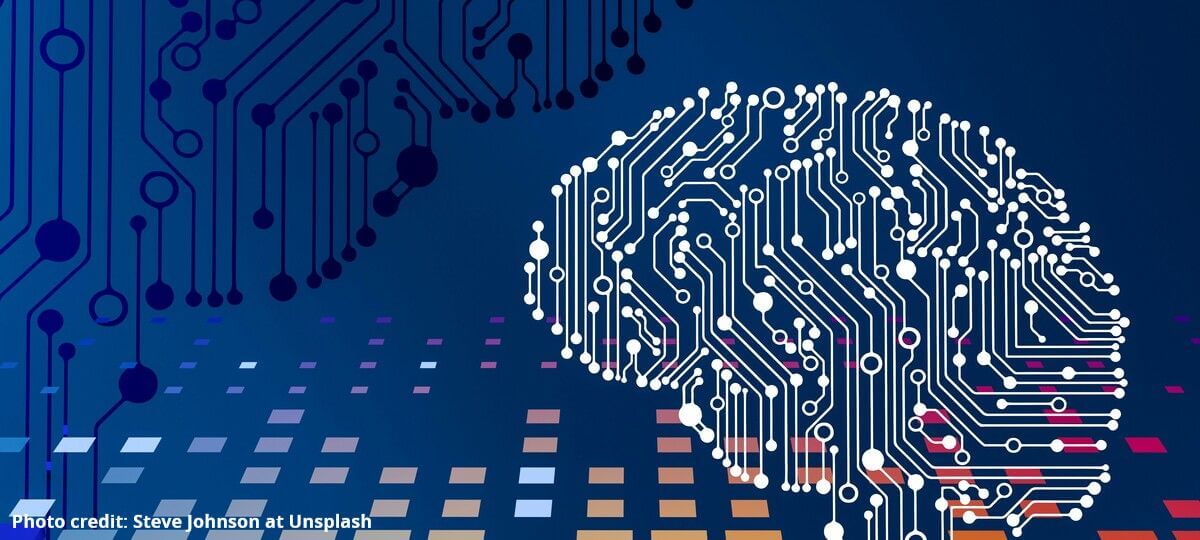
“This Time It’s Different” is the title of a book by Omar Hatamleh on the impact of artificial intelligence on everything.

Hatamleh, who is NASA Goddard Space Flight Center’s chief artificial intelligence officer, means that we shouldn’t look to previous technological revolutions to understand the scope and the totality of the AI revolution. It is, he believes, bigger and more transformative than anything that has yet happened.

He says AI is exponential and human thinking is linear. I think that means we can’t get our minds around it.

Jeffrey Cole, director of the Center for the Digital Future at the USC Annenberg School for Communication and Journalism, echoes Hatamleh.

Cole believes that AI will be as impactful as the printing press, the internet and COVID-19. He also believes 2027 will be a seminal year: a year in which AI will batter the workforce, particularly white-collar workers.

For journalists, AI presents two challenges: jobs lost to AI writing and editing, and the loss of truth. How can we identify AI-generated misinformation? The New York Times said simply: We can’t.

But I am more optimistic.

I have been reporting on AI since well before ChatGPT launched in November 2022. Eventually, I think AI will be able to control itself, to red flag its own excesses and those who are abusing it with fake information.

I base this rather outlandish conclusion on the idea that AI has a near-human dimension which it gets from absorbing all published human knowledge and that knowledge is full of discipline, morals and strictures. Surely, these are also absorbed in the neural networks.

I have tested this concept on AI savants across the spectrum for several years. They all had the same response: It is a great question.

Besides its trumpeted use in advancing medicine at warp speed, AI could become more useful in providing truth where it has been concealed by political skullduggery or phony research.

Consider the general apprehension that President Donald Trump may order the Bureau of Labor Statistics to cook the books.

Well, aficionados in the world of national security and AI tell me that AI could easily scour all available data on employment, job vacancies and inflation and presto: reliable numbers. The key, USC’s Cole emphasizes, is inputting complete prompts.

In other words, AI could check the data put out by the government. That leads to the possibility of a kind of AI shadow government, revealing falsehoods and correcting speculation.

If AI poses a huge possibility for misinformation, it also must have within it the ability to verify truth, to set the record straight, to be a gargantuan fact-checker.

It could be a truth central for the government, immune to insults, out of the reach of the FBI, ICE or the Justice Department — and, above all, a truth-speaking force that won’t be primaried.

The idea of shadow government isn’t confined to what might be done by AI but is already taking shape where DOGE-ing has left missions shattered, people distraught and sometimes an agency unable to perform. So, networks of resolute civil servants inside and outside government are working to preserve data, hide critical discoveries and keep vital research alive. This kind of shadow activity is taking place at the Agriculture, Commerce, Energy and Defense departments, the National Institutes of Health and those who interface with them in the research community.

In the wider world, job loss to AI — or if you want to be optimistic, job adjustment — has already begun. It will accelerate but can be absorbed once we recognize the need to reshape the workforce. Is it time to pick a new career or at least think about it?

The political class, all of it, is out to lunch. Instead of wrangling about social issues, it should be looking to the future, a future which has a new force. Much as automation was a force to be accommodated, this revolution can’t be legislated or regulated into submission, but it can be managed and prepared for. Like all great changes, it is redolent with possibility and fear.

Filed Under: King's Commentaries Tagged With: AI, ChatGPT, COVID-19, digital, employment, NASA, New York Times, Omar Hatamleh, revolution, trump

Nuclear Medicine: An Old Therapy Can Save COVID-19 Patients’ Lives

July 22, 2020 by Llewellyn King 1 Comment

Can a physical therapy which has been abandoned in favor of drugs be quickly revived to change the mortality statistics for COVID-19?

Nuclear scientists believe it can, according to Llewellyn King, a nationally syndicated columnist and executive producer and  host of “White House Chronicle” on PBS, SiriusXM Radio and other broadcast outlets.

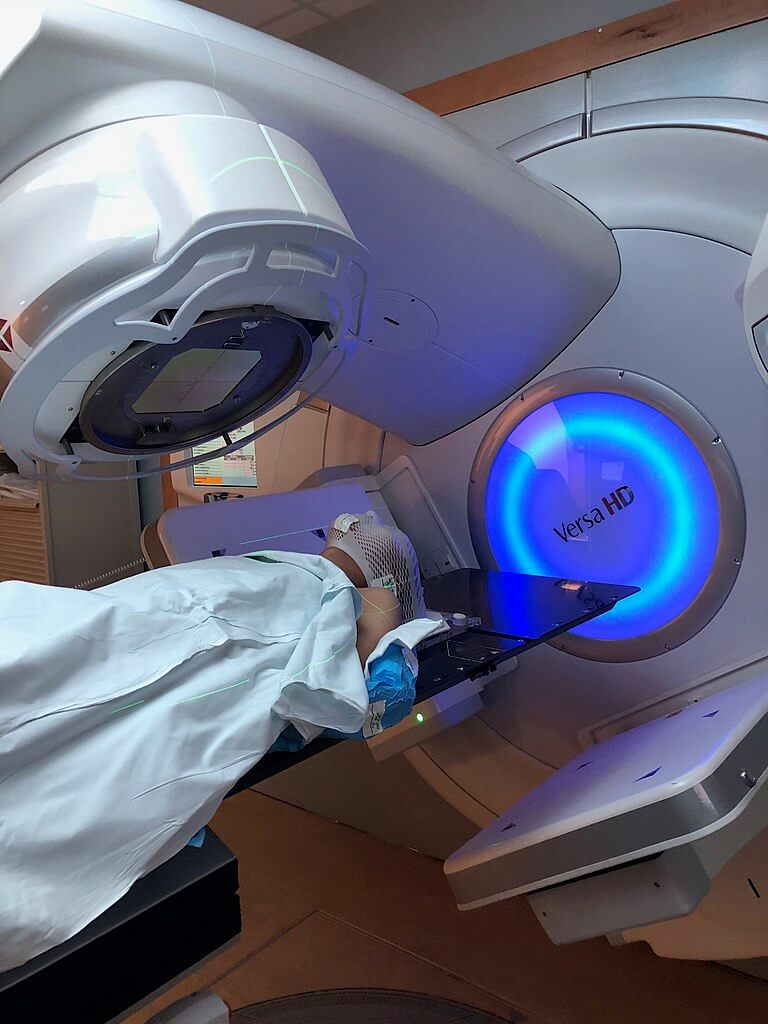
King argues in a column for InsideSources that an extremely low dose of radiation — about one hundredth of the treatment given to cancer patients — might save the lives of nearly all COVID-19 patients, depending on when certain symptoms emerge.

More than 70 years ago, radiation was used with great success in treating pneumonia. James Conca, a respected nuclear scientist from Richland, Washington, told King that 80 percent of pneumonia patients were saved with this therapy. However, it fell into disuse with the development of powerful antibiotics and public apprehension about radiation.

The beauty of the treatment, according to King, is that most hospitals have radiation departments and radiologists trained in treating cancer.

“According to my reporting,” King says, “the moment patients have difficulty breathing, they could be wheeled into radiology and given a low radiation dose to the chest for about 15 minutes. That will stop the ‘cytokine storm,’ the inflammation which is a feature of COVID-19 and pneumonia, which kills you.”

Conca told King that the treated patients can go home after a few days in the hospital — no ICU, no ventilators, and no lung damage.

The radiology departments of three major hospitals — Emory in Atlanta, Loyola near Chicago, and Massachusetts General in Boston — are conducting experiments, King reports.

“Radiation won’t prevent you from getting the disease, but it will dramatically improve your chances of living,” King says, adding, “Conca, whose wife has tested positive for the virus, as made arrangements with his local hospital for her to get radiation right away if she develops breathing difficulty.”

For more information, contact Llewellyn King at llewellynking1@gmail.com.

Filed Under: King's Commentaries Tagged With: COVID-19, nuclear medicine, radiation therapy

White House Chronicle on Social

  • Facebook
  • Twitter
  • Vimeo
  • YouTube
In the Turmoil, Challenges for Graduates in the Class of ’26

In the Turmoil, Challenges for Graduates in the Class of ’26

Llewellyn King

Dear Graduates of 2026, Welcome to the world you will be taking jobs in and where you will begin building careers, and at times shaping history. It isn’t the world of your parents, and it isn’t the world your college has taught you about, because it is changing too fast. It begins anew daily. As […]

Watch Out When the Political Class Forgets Cause and Effect

Watch Out When the Political Class Forgets Cause and Effect

Llewellyn King

Anyone who has spent time in criminal court knows this: One of the characteristics of lawbreakers is a poorly developed sense of cause and effect. At the low end, the folly of the defendants is always on display. The young man who takes a gun with him on a night of drinking. He has increased […]

The Electricity Future for New England: Uncertainty and High Prices

The Electricity Future for New England: Uncertainty and High Prices

Llewellyn King

These days, in terms of resources, New England is poorly positioned to make electricity. As Gregg Cornett, president of Rhode Island Energy, told me in an interview, it doesn’t sit on abundant coal reserves and natural gas — the critical fuel in today’s electricity generating mix — or hide beneath the surface, waiting for the […]

A Revolutionary Calls Out the Utility Industry

A Revolutionary Calls Out the Utility Industry

Llewellyn King

The demand for electricity continues to rise, and there is a wide recognition that there is going to be pressure on the grid as never before, and that it is time to think about the grid in new ways.  We need to think about how it operates, how it might operate, and the technologies — including artificial intelligence as […]

Copyright © 2026 · White House Chronicle Theme on Genesis Framework · WordPress · Log in