White House Chronicle

News Analysis With a Sense of Humor

  • Home
  • King’s Commentaries
  • Random Features
  • Photos
  • Public Speaker
  • WHC Episodes
  • About WHC
  • Carrying Stations
  • ME/CFS Alert
  • Contact Us

Can AI Clean Its Own House? There Are Signs It Can

November 7, 2025 by Llewellyn King Leave a Comment

For me, the big news isn’t the politics of the moment, the deliberations before the Supreme Court or even the news of the battlefront in Ukraine. No, it is a rather modest, careful announcement by Anthropic, the developer of the Claude suite of chatbots.

Anthropic, almost sotto voce, announced it had detected introspection in their models. Introspection.

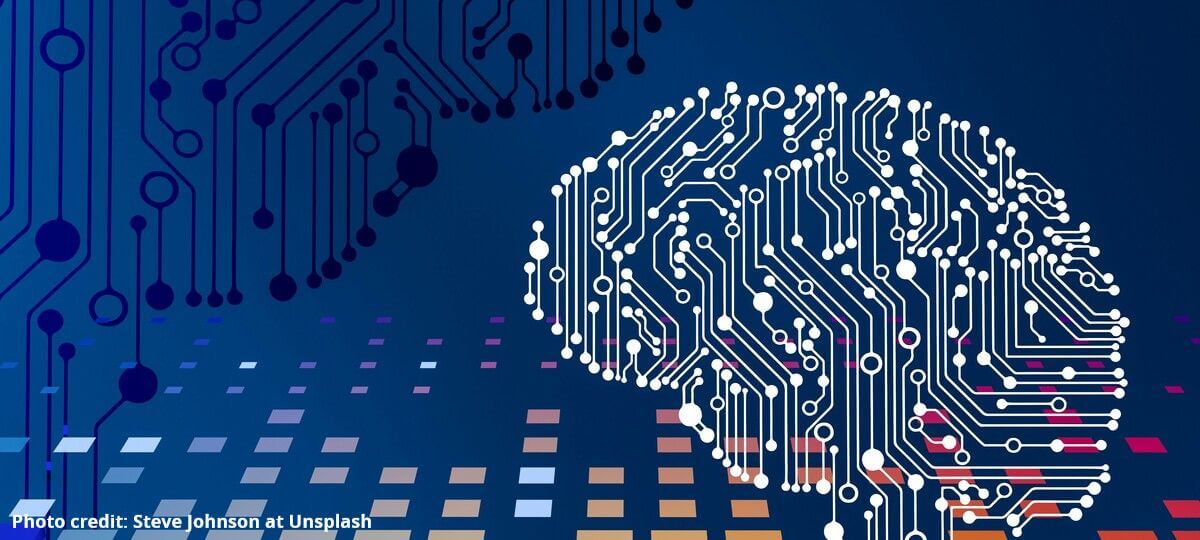
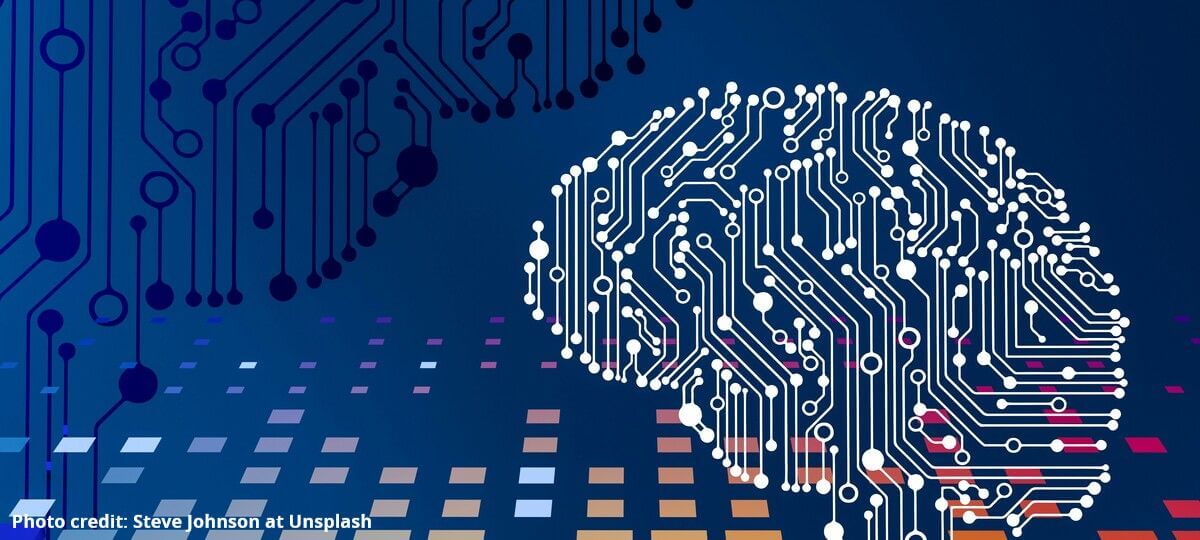
This means, experts point out, that artificial intelligence is adjusting and examining itself, not thinking. But I don’t believe this should diminish its importance. It is a small step toward what may lead to self-correction in AI, taking away some of the craziness.

There is much that is still speculation — and a great deal more that we don’t know about what the neural networks are capable of as they interact.

We don’t know, for example, why AI hallucinates (goes illogically crazy). We also don’t know why it is obsequious (tries to give answers that please).

I think the cautious Anthropic announcement is a step in justification of a theory about AI that I have held for some time: AI is capable of self-policing and may develop guidelines for itself.

A bit insane? Most experts have told me that AI isn’t capable of thinking. But I think Anthropic’s mention that introspection has been detected means that AI is, if not thinking, beginning to apply standards to itself.

I am not a computer scientist and have no significant scientific training. I am a newspaperman who never wanted to see the end of hot type and who was happier typing on a manual machine than on a word processor.

But I have been enthralled by the possibilities of AI, for better or worse, and have attended many conferences and interviewed dozens — yes, dozens — of experts across the world.

My argument is this: AI is trained on what we know, Western civilization, and it reflects the biases implicit in that. In short, the values and the facts are about white men because they have been the major input into AI so far.

Women get short shrift, and there is little about people of color. Most AI companies work to understand and temper these biases.

While the experiences of white men down through the centuries are what AI knows, there is enough concern about that implicit bias that it creates a challenge in using AI.

But what this body of work that has been fed into AI also reflects is human questioning, doubt and uncertainty.

At another level, it has a lot of standards, strictures, moral codes and opinions on what is right and wrong. These, too, are part of the giant knowledge base that AI calls upon when it is given a prompt.

My argument has been: Why would these not bear down on AI, causing it to struggle with values? The history of all civilizations includes a struggle for values.

We already know it has what is called obsequious bias: For reasons we don’t know, it endeavors to please, to angle its advice to what it believes we want to hear. To me, that suggests that something approximating the early stages of awareness is going on and indicates that AI may be wanting to edit itself.

The argument against this is that AI is inanimate and can’t think any more than an internal combustion engine can.

I take comfort in what my friend Omar Hatamleh, who has written five books on AI, told me: “AI is exponential and humans think in a linear way. We extrapolate.”

My interpretation: We have touched an elephant with one finger and are trying to imagine its size and shape. Good luck with that.

The immediate impact of AI on society is becoming one of curiosity and alarm.

We are curious, naturally, to know how this new tool will shape the future as the Industrial Revolution and then the digital revolution have shaped the present. The alarm is the impact it is beginning to have on jobs, an impact that hasn’t yet been quantified or understood.

I have been to five major AI conferences in the past year and have worked on the phones and made several television programs on AI. The consensus: AI will subtract from the present job inventory but will add new jobs. I hope that is true.

Filed Under: King's Commentaries Tagged With: AI, Anthropic, Artificial intelligence, civilization, Hatamleh, human, revolution, scientist, Ukraine

Will AI Stimulate Shadow Government?

August 15, 2025 by Llewellyn King Leave a Comment

“This Time It’s Different” is the title of a book by Omar Hatamleh on the impact of artificial intelligence on everything.

Hatamleh, who is NASA Goddard Space Flight Center’s chief artificial intelligence officer, means that we shouldn’t look to previous technological revolutions to understand the scope and the totality of the AI revolution. It is, he believes, bigger and more transformative than anything that has yet happened.

He says AI is exponential and human thinking is linear. I think that means we can’t get our minds around it.

Jeffrey Cole, director of the Center for the Digital Future at the USC Annenberg School for Communication and Journalism, echoes Hatamleh.

Cole believes that AI will be as impactful as the printing press, the internet and COVID-19. He also believes 2027 will be a seminal year: a year in which AI will batter the workforce, particularly white-collar workers.

For journalists, AI presents two challenges: jobs lost to AI writing and editing, and the loss of truth. How can we identify AI-generated misinformation? The New York Times said simply: We can’t.

But I am more optimistic.

I have been reporting on AI since well before ChatGPT launched in November 2022. Eventually, I think AI will be able to control itself, to red flag its own excesses and those who are abusing it with fake information.

I base this rather outlandish conclusion on the idea that AI has a near-human dimension which it gets from absorbing all published human knowledge and that knowledge is full of discipline, morals and strictures. Surely, these are also absorbed in the neural networks.

I have tested this concept on AI savants across the spectrum for several years. They all had the same response: It is a great question.

Besides its trumpeted use in advancing medicine at warp speed, AI could become more useful in providing truth where it has been concealed by political skullduggery or phony research.

Consider the general apprehension that President Donald Trump may order the Bureau of Labor Statistics to cook the books.

Well, aficionados in the world of national security and AI tell me that AI could easily scour all available data on employment, job vacancies and inflation and presto: reliable numbers. The key, USC’s Cole emphasizes, is inputting complete prompts.

In other words, AI could check the data put out by the government. That leads to the possibility of a kind of AI shadow government, revealing falsehoods and correcting speculation.

If AI poses a huge possibility for misinformation, it also must have within it the ability to verify truth, to set the record straight, to be a gargantuan fact-checker.

It could be a truth central for the government, immune to insults, out of the reach of the FBI, ICE or the Justice Department — and, above all, a truth-speaking force that won’t be primaried.

The idea of shadow government isn’t confined to what might be done by AI but is already taking shape where DOGE-ing has left missions shattered, people distraught and sometimes an agency unable to perform. So, networks of resolute civil servants inside and outside government are working to preserve data, hide critical discoveries and keep vital research alive. This kind of shadow activity is taking place at the Agriculture, Commerce, Energy and Defense departments, the National Institutes of Health and those who interface with them in the research community.

In the wider world, job loss to AI — or if you want to be optimistic, job adjustment — has already begun. It will accelerate but can be absorbed once we recognize the need to reshape the workforce. Is it time to pick a new career or at least think about it?

The political class, all of it, is out to lunch. Instead of wrangling about social issues, it should be looking to the future, a future which has a new force. Much as automation was a force to be accommodated, this revolution can’t be legislated or regulated into submission, but it can be managed and prepared for. Like all great changes, it is redolent with possibility and fear.

Filed Under: King's Commentaries Tagged With: AI, ChatGPT, COVID-19, digital, employment, NASA, New York Times, Omar Hatamleh, revolution, trump

How Technology Built the British Empire

May 17, 2025 by Llewellyn King Leave a Comment

As someone who grew up in the last days of the British Empire, I am often asked how it was that so few people controlled so much of the world for so long?

The simple answer is technology underpinned the British Empire, from its tentative beginnings in the 17th century to its global dominance in the 18th and 19th  centuries and most of the first half of the 20th century.

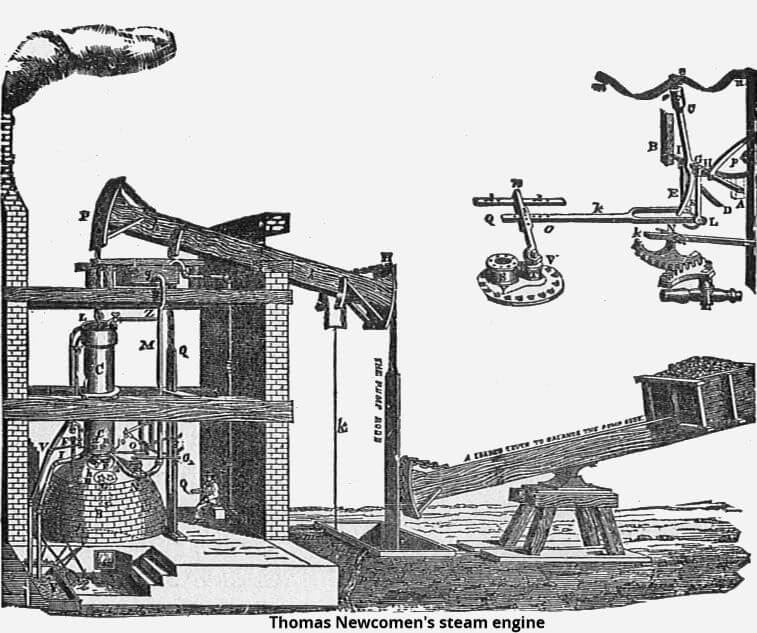
The first great tech leap forward was the steam engine, perfected in the 1760s by James Watt, but originally developed to pump water in coal mines by Thomas Newcomen in 1712. Steam was the workhorse of the Industrial Revolution, and the enabler of the management and expansion of the empire for Britain.

With steam, ships which had taken months to reach India got there in weeks and the great railways, whether in southern Africa or India, which were one of the hallmarks of the empire, were built.

Another invention which made communications throughout the empire possible was the electric telegraph, perfected by Samuel Morse in 1838.

But if there was one silver bullet, one invention that set Britain’s imperial ambitions ahead, it was the invention of the longitudinal chronometer, the first design of which was completed in 1730, but many modifications followed. The government had offered a substantial reward for a clock that could help its captains accurately establish their longitudinal positions. John Harrison’s chronometer gave British ships a great advantage: they knew where they were. 

Other technical innovations included copper-sheathed hulls and eventually steam engines and iron hulls, leading to steel ships. Henry Bessemer made steel an available commodity with the Bessemer furnace in 1860, and soon British steel hulls upgraded naval fleets.

In 1733, the flying shuttle was invented which made Britain rich and enabled British fabric mills to process local wool and cotton from around the world, including America, India and Egypt.

Imperial Britain was a mercantile country (government working hand in hand with commerce) that insisted that all raw materials had to be transported to Britain to be processed, including cotton and jute, and even agricultural products like tea. To this day, tea is packaged in Britain and Ireland but grown in China, India, Sri Lanka, Africa and other countries.

Weaponry, importantly, also got the Brit-tech boost and played its role in the expansion of the empire. First came rifling of muskets to improve accuracy. Then came breech-loaded artillery and toward the end of the 19th century, the deadly Maxim Gun, a forerunner of the machine gun. Mass weapons manufacture assured British dominance.

Advances in medicine were important as well, especially in treating malaria and understanding tropical diseases. The use of quinine enabled troops in malarial areas, particularly in Africa, to recover. Keep the troops healthy and ready for combat.

My paternal grandfather was one of those. He was shipped from London to India and then to South Africa where he was demobilized at the end of the Boer War, which is how I came to grow up in the last vestiges of the empire and to understand some of the complexities of British rule.

For example, when it came to local administration, one size did not fit all. India was the Raj, the jewel in the crown. Southern Rhodesia, where I grew up, was the only self-governing colony in all but external affairs. Kenya Colony was just that; Malawi (Nyasaland) was a protectorate, as was Zambia (Northern Rhodesia) and Bechuanaland (Botswana). If in doubt about a rock or a country, the Brits claimed it fell under the monarch’s suzerainty. Good enough. It was red on the map.

Despite some imperial rumblings lately, America shouldn’t want and wouldn’t benefit from trying to assemble even a modest empire this late in the game. But America has had the tech benefits of empire since the British one faded, starting with India’s independence in 1947.

America filled the gap left by Britain as the dominant force in the world, admired, copied and envied. But underpinning that state of esteem and financial ease was tech leadership, medical leadership, and cultural leadership through film and television. America became the techno supremo.

Now government research funding is being butchered across the board from advanced energy to, most shameful of all, the philistine slashing of the National Institutes of Health’s research budgets. 

Changing times doomed the British Empire, America’s future is at stake and it will be determined by technology and medicine. If we underfund research, the future is known.

Filed Under: King's Commentaries Tagged With: Bessemer, British Empire, chronometer, India, invention, James Watt, Raj, revolution, steam engine, technology, Thomas Newcomen, Zambia

Productivity To Surge with AI. Do the Politicians Know?

September 20, 2024 by Llewellyn King Leave a Comment

There is every chance that the world’s industrial economies may be about to enjoy an incredible surge in productivity, something like the arrival of steam power in the 18th century.

The driver of this will be artificial intelligence. Gradually, it will seep into every aspect of our working and living, pushing up the amount produced by individual workers and leading to general economic growth.

The downside is that jobs will be eliminated, probably mostly, and historically for the first time, white-collar jobs. Put simply, office workers are going to find themselves seeking other work, maybe work that is much more physical, in everything from hospitality to healthcare to the trades.

I have canvassed many super-thinkers on AI, and they believe in unison that its impact will be seminal, game-changing, never to be switched back. Most are excited and see a better, healthier, more prosperous future, justifying the upheaval.

Omar Hatamleh, chief AI officer at the National Aeronautics and Space Administration, and author of two books on AI and a third in preparation, misses no opportunity to emphasize that thinking about AI needs to be exponential not linear. Sadly, linear thinking is what we human beings tend to do. To my mind, Hatamleh is in the vanguard of AI thinkers,

The United States is likely to be the major beneficiary of the early waves of AI adoption and its productivity surge if we don’t try to impede the technology’s evolution with premature regulation or controls.

Economies which are sclerotic, as is much of Europe, can look to AI to get them back into growth, especially the former big drivers of growth in Europe like Germany, France and Britain, all of which are scratching their heads as to how to boost their productivity, and, hence, their prosperity.

The danger in Europe is that they will try to regulate AI prematurely and that their trades unions will resist reform of their job markets. That would leave China and the United States to duke it out for dominance of AI technology and to benefit from its boost to efficiency and productivity, and, for example, to medical research, leading to breakthroughs in longevity.

Some of the early fear of Frankenstein science has abated as early AI is being seamlessly introduced in everything from weather forecasting to wildfire control and customer relations. 

Salesforce, a leading software company that has traditionally focused on customer relations management, explains its role as connecting the dots by “layering in” AI. A visit to its website is enlightening. Salesforce has available or is developing “agents,” which are systems that operate on behalf of its customers.

If you want to know how your industry is likely to be affected, take a look at how much data it generates. If it generates scads of data — weather forecasting, electric utilities, healthcare, retailing and airlines — AI is either already making inroads or brace for its arrival. 

PFor society, the big challenge of AI isn’t going to be just the reshuffling of the workforce, but what is truth? This is not a casual question, and it should be at the forefront of wondering how to develop ways of identifying the origin of AI-generated information — data, pictures and sounds.

One way is watermarking, and it deserves all the support it can get from those who are leading the AI revolution –the big tech giants and the small startups that feed into their technology. It begs for study in the government’s many centers of research, including the Defense Advanced Research Projects Agency and the great national laboratories.

Extraordinarily, as the election bears down on us, there is almost no recognition in the political parties, and the political class as a whole, that we are on the threshold of a revolution. AI is a disruptive technology that holds promise for fabulous medicine, great science and huge productivity gains.

A new epoch is at hand, and it has nothing to do with the political issues of the day.

Please Note: I will be hosting a virtual press briefing, which I have organized for the United States Energy Association, on the impact of AI in the electric utility industry on Wednesday, Oct. 2, at 11 a.m. EDT. It is open to the press and the public.

Here is the registration link: 

https://us02web.zoom.us/webinar/register/WN_BbE_VO1bRo2PuiVl6g8IzQ#/registration

Filed Under: King's Commentaries Tagged With: AI, China, healthcare, jobs, linear, Omar Hatamleh, productivity, revolution, Salesforce, watermarking, workforce

White House Chronicle on Social

  • Facebook
  • Twitter
  • Vimeo
  • YouTube
Can AI Clean Its Own House? There Are Signs It Can

Can AI Clean Its Own House? There Are Signs It Can

Llewellyn King

For me, the big news isn’t the politics of the moment, the deliberations before the Supreme Court or even the news of the battlefront in Ukraine. No, it is a rather modest, careful announcement by Anthropic, the developer of the Claude suite of chatbots. Anthropic, almost sotto voce, announced it had detected introspection in their […]

A Reminder of Kings and Emperors To Rise at the White House

A Reminder of Kings and Emperors To Rise at the White House

Llewellyn King

President Donald Trump is building what will become one of the greatest snow-colored pachyderms in the history of the United States. Some of the nation’s biggest tycoons are going to pay for this ballroom, which will look like the box that the rest of the White House came in — a statement often made about […]

The Age of Dichotomy Is Tearing Up America

The Age of Dichotomy Is Tearing Up America

Llewellyn King

We live in an age of dichotomy. The rich are getting richer and the poor are getting poorer. We have more means of communication, but there is a pandemic of loneliness. We have unprecedented access to information, but we seem to know less, from civics to the history of the country. We are beginning to […]

Old Journalism Is Coming in Shiny New Wrappers

Old Journalism Is Coming in Shiny New Wrappers

Llewellyn King

If you know what is going on in Gaza, it is because a journalist told you. If you know Health and Human Services Secretary Robert F. Kennedy Jr.’s latest comment about autism, it is because a journalist told you. If you know that there was a tsunami off the coast of Indonesia, it is because […]

Copyright © 2025 · White House Chronicle Theme on Genesis Framework · WordPress · Log in