White House Chronicle

News Analysis With a Sense of Humor

  • Home
  • King’s Commentaries
  • Random Features
  • Photos
  • Public Speaker
  • WHC Episodes
  • About WHC
  • Carrying Stations
  • ME/CFS Alert
  • Contact Us

AI Is Interested in You, So You’d Best Be Interested in It

May 22, 2026 by Llewellyn King Leave a Comment

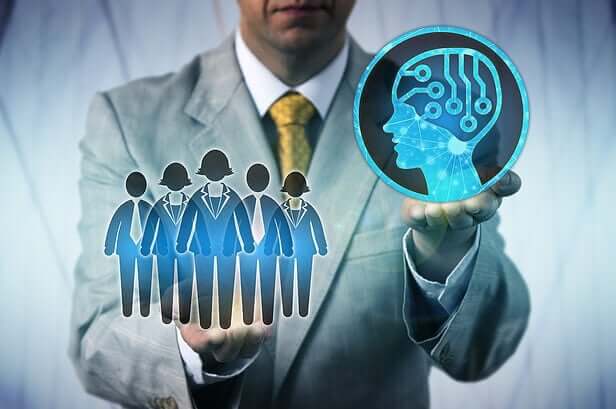
AI is everywhere. It is now affecting how people do their jobs and those jobs themselves.

The future is clearly with those who have found a way of making themselves indispensable by using AI, and not with those who resist or actively fight it. You may not be interested in AI, but AI is interested in you.

Even in jobs considered safe from automation, AI is shaping daily work, from running a hospital nurses’ station to helping an electrician check available replacement equipment.

I mention those two jobs because they are the most frequently listed as being secure and unlikely to be taken over by AI. That doesn’t mean they won’t be touched by the unseen hand of AI. It is everywhere and on the move.

Graduates now leaving the colleges and universities are having a tough time finding work. Many workers who thought they were set for life are refining their resumes, particularly those in the computer field.

Meta, owner of Facebook, has laid off 8,000 workers, and an additional 7,000 will be reassigned to AI-focused positions.

The job market isn’t only reflecting AI doing the work across industries, but also the immeasurable hesitation of companies to hire for jobs that may later be taken over by AI. “ Better to hold on and see” is a common attitude in firms that aren’t sure whether AI will, in fact, help them meet their needs.

Many savants in the AI industry have warned of job losses across the employment landscape as AI takes hold. These include Anthropic’s Dario Amodei and Open AI’s Sam Altman. The Economist writes about a job “catastrophe.”

My view, shared by many I have interviewed, is that there will be a sharp global drop in employment, followed by a post-revolution expansion of employment that allows for the flourishing of AI and its benefits. Open AI’s Altman has predicted a similar scenario, but he hasn’t identified when the upturn might occur — in years or decades?

There are those who believe that governments will have to provide a universal basic income to compensate for the inroads of AI. Unlikely.

The first impediment is that all the advanced countries are already spending beyond their means, including the United States and the United Kingdom. Where will the new money come from with fewer people paying taxes?

Affordability is only the first argument against a universal basic income. People are built to work. Without work, they get into trouble, deteriorate or go mad. Possibly all three.

The United Kingdom, which has many programs for the unemployed, is something of a laboratory on how not to help the jobless. A lot of people there simply haven’t tried working in a long time.

Collectively, UK social assistance programs are known as “benefits” and extend well beyond a substitute for a paycheck. They take care of everything from assisting with rent to, in some cases, assisting with entertainment.

My experience in interviewing and just knowing people who haven’t worked for a long time is that they are rootless, critical of the system that supports them and inclined to take drugs, drink or fall victim to mental illness.

Instead of state subsidies, we will likely see the gig economy boom — and it should be helped — and human creativity will flourish with it.

For that to happen, the political leadership, Democratic or Republican, needs to catch up with the fact that we may be entering into a new economic order where the old idea of employment is reduced, and waves of individual entrepreneurs are unleashed, doing everything from, say, creating new musical instruments to designing new homes from waste products, to restoring forests without uniformity.

Omar Hatamleh, who has written five books on AI, said that the challenge of AI is that it is exponential, and we think linearly. My hope is that the AI upheaval will inadvertently convert us from linear to exponential thinkers.

The political class has been notably missing from the AI fray aside from mumbling about regulating AI, which won’t help job creation.

It seems that making gig work easier and safer might be a good beginning. All the indications are that more of us will be working for ourselves going forward. The gig worker ought to be able to easily purchase Social Security insurance and access its benefits, including retirement.

It is a new time for the human race. It would be wonderful to feel that the politicians were aware of it.

We are in a political year, and AI isn’t a subject being debated, let alone eliciting new ideas. AI won’t wait.
Filed Under: King's Commentaries Tagged With: AI, automation, catastrophe, college, employment, future, Hatamleh, hospital, indispensable, jobs, United Kingdom

Can AI Clean Its Own House? There Are Signs It Can

November 7, 2025 by Llewellyn King Leave a Comment

For me, the big news isn’t the politics of the moment, the deliberations before the Supreme Court or even the news of the battlefront in Ukraine. No, it is a rather modest, careful announcement by Anthropic, the developer of the Claude suite of chatbots.

Anthropic, almost sotto voce, announced it had detected introspection in their models. Introspection.

This means, experts point out, that artificial intelligence is adjusting and examining itself, not thinking. But I don’t believe this should diminish its importance. It is a small step toward what may lead to self-correction in AI, taking away some of the craziness.

There is much that is still speculation — and a great deal more that we don’t know about what the neural networks are capable of as they interact.

We don’t know, for example, why AI hallucinates (goes illogically crazy). We also don’t know why it is obsequious (tries to give answers that please).

I think the cautious Anthropic announcement is a step in justification of a theory about AI that I have held for some time: AI is capable of self-policing and may develop guidelines for itself.

A bit insane? Most experts have told me that AI isn’t capable of thinking. But I think Anthropic’s mention that introspection has been detected means that AI is, if not thinking, beginning to apply standards to itself.

I am not a computer scientist and have no significant scientific training. I am a newspaperman who never wanted to see the end of hot type and who was happier typing on a manual machine than on a word processor.

But I have been enthralled by the possibilities of AI, for better or worse, and have attended many conferences and interviewed dozens — yes, dozens — of experts across the world.

My argument is this: AI is trained on what we know, Western civilization, and it reflects the biases implicit in that. In short, the values and the facts are about white men because they have been the major input into AI so far.

Women get short shrift, and there is little about people of color. Most AI companies work to understand and temper these biases.

While the experiences of white men down through the centuries are what AI knows, there is enough concern about that implicit bias that it creates a challenge in using AI.

But what this body of work that has been fed into AI also reflects is human questioning, doubt and uncertainty.

At another level, it has a lot of standards, strictures, moral codes and opinions on what is right and wrong. These, too, are part of the giant knowledge base that AI calls upon when it is given a prompt.

My argument has been: Why would these not bear down on AI, causing it to struggle with values? The history of all civilizations includes a struggle for values.

We already know it has what is called obsequious bias: For reasons we don’t know, it endeavors to please, to angle its advice to what it believes we want to hear. To me, that suggests that something approximating the early stages of awareness is going on and indicates that AI may be wanting to edit itself.

The argument against this is that AI is inanimate and can’t think any more than an internal combustion engine can.

I take comfort in what my friend Omar Hatamleh, who has written five books on AI, told me: “AI is exponential and humans think in a linear way. We extrapolate.”

My interpretation: We have touched an elephant with one finger and are trying to imagine its size and shape. Good luck with that.

The immediate impact of AI on society is becoming one of curiosity and alarm.

We are curious, naturally, to know how this new tool will shape the future as the Industrial Revolution and then the digital revolution have shaped the present. The alarm is the impact it is beginning to have on jobs, an impact that hasn’t yet been quantified or understood.

I have been to five major AI conferences in the past year and have worked on the phones and made several television programs on AI. The consensus: AI will subtract from the present job inventory but will add new jobs. I hope that is true.

Filed Under: King's Commentaries Tagged With: AI, Anthropic, Artificial intelligence, civilization, Hatamleh, human, revolution, scientist, Ukraine

White House Chronicle on Social

  • Facebook
  • Twitter
  • Vimeo
  • YouTube
Via AI, an Ancient Roman Historian’s Account of Trump II

Via AI, an Ancient Roman Historian’s Account of Trump II

Linda Gasparello

Via AI, an Ancient Roman Historian’s Account of Trump II If the Roman Emperor Caligula were alive today, you can bet that he would cheer the UFC fight on the South Lawn of the White House, which President Trump is hosting to mark his 80th birthday, and the nation’s 250th anniversary. Caligula, who reigned from […]

The Fun Is Running Out for Trump’s Presidency

The Fun Is Running Out for Trump’s Presidency

Llewellyn King

There is a powerful force that affects politics as much as it affects individual lives. It is fatigue. We just get darn tired of something, be it a job, a relationship, a hobby or a routine. We have been devoted to it for years, and suddenly we want out; we want to do something else. […]

Microgrids Offer Community Solution to Electricity Challenge

Microgrids Offer Community Solution to Electricity Challenge

Llewellyn King

You may have heard of microgrids in passing, maybe at a town meeting or when the future of your electricity supply is under discussion. Mostly, they aren’t headliners like data centers. However, microgrids are becoming an important part of the future electric infrastructure. They provide a valve to release some of the pressure building up […]

The Collision Between Money and News — We Lose

The Collision Between Money and News — We Lose

Llewellyn King

Trillions, as in trillions of dollars, are being bandied about in the way millions were, then billions. But take a look at 1 trillion expressed numerically: 1,000,000,000,000. Awesome, isn’t it? Twelve zeros. The national debt stands at $39 trillion, and the interest on that will top $1 trillion this year. Very soon, the first trillionaire […]

Copyright © 2026 · White House Chronicle Theme on Genesis Framework · WordPress · Log in