White House Chronicle

News Analysis With a Sense of Humor

  • Home
  • King’s Commentaries
  • Random Features
  • Photos
  • Public Speaker
  • WHC Episodes
  • About WHC
  • Carrying Stations
  • ME/CFS Alert
  • Contact Us

AI Is Interested in You, So You’d Best Be Interested in It

May 22, 2026 by Llewellyn King Leave a Comment

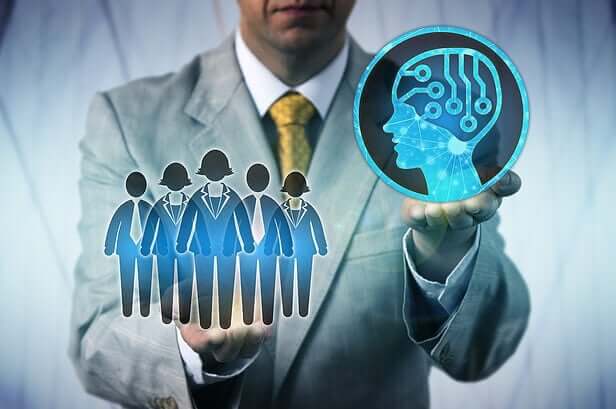
AI is everywhere. It is now affecting how people do their jobs and those jobs themselves.

The future is clearly with those who have found a way of making themselves indispensable by using AI, and not with those who resist or actively fight it. You may not be interested in AI, but AI is interested in you.

Even in jobs considered safe from automation, AI is shaping daily work, from running a hospital nurses’ station to helping an electrician check available replacement equipment.

I mention those two jobs because they are the most frequently listed as being secure and unlikely to be taken over by AI. That doesn’t mean they won’t be touched by the unseen hand of AI. It is everywhere and on the move.

Graduates now leaving the colleges and universities are having a tough time finding work. Many workers who thought they were set for life are refining their resumes, particularly those in the computer field.

Meta, owner of Facebook, has laid off 8,000 workers, and an additional 7,000 will be reassigned to AI-focused positions.

The job market isn’t only reflecting AI doing the work across industries, but also the immeasurable hesitation of companies to hire for jobs that may later be taken over by AI. “ Better to hold on and see” is a common attitude in firms that aren’t sure whether AI will, in fact, help them meet their needs.

Many savants in the AI industry have warned of job losses across the employment landscape as AI takes hold. These include Anthropic’s Dario Amodei and Open AI’s Sam Altman. The Economist writes about a job “catastrophe.”

My view, shared by many I have interviewed, is that there will be a sharp global drop in employment, followed by a post-revolution expansion of employment that allows for the flourishing of AI and its benefits. Open AI’s Altman has predicted a similar scenario, but he hasn’t identified when the upturn might occur — in years or decades?

There are those who believe that governments will have to provide a universal basic income to compensate for the inroads of AI. Unlikely.

The first impediment is that all the advanced countries are already spending beyond their means, including the United States and the United Kingdom. Where will the new money come from with fewer people paying taxes?

Affordability is only the first argument against a universal basic income. People are built to work. Without work, they get into trouble, deteriorate or go mad. Possibly all three.

The United Kingdom, which has many programs for the unemployed, is something of a laboratory on how not to help the jobless. A lot of people there simply haven’t tried working in a long time.

Collectively, UK social assistance programs are known as “benefits” and extend well beyond a substitute for a paycheck. They take care of everything from assisting with rent to, in some cases, assisting with entertainment.

My experience in interviewing and just knowing people who haven’t worked for a long time is that they are rootless, critical of the system that supports them and inclined to take drugs, drink or fall victim to mental illness.

Instead of state subsidies, we will likely see the gig economy boom — and it should be helped — and human creativity will flourish with it.

For that to happen, the political leadership, Democratic or Republican, needs to catch up with the fact that we may be entering into a new economic order where the old idea of employment is reduced, and waves of individual entrepreneurs are unleashed, doing everything from, say, creating new musical instruments to designing new homes from waste products, to restoring forests without uniformity.

Omar Hatamleh, who has written five books on AI, said that the challenge of AI is that it is exponential, and we think linearly. My hope is that the AI upheaval will inadvertently convert us from linear to exponential thinkers.

The political class has been notably missing from the AI fray aside from mumbling about regulating AI, which won’t help job creation.

It seems that making gig work easier and safer might be a good beginning. All the indications are that more of us will be working for ourselves going forward. The gig worker ought to be able to easily purchase Social Security insurance and access its benefits, including retirement.

It is a new time for the human race. It would be wonderful to feel that the politicians were aware of it.

We are in a political year, and AI isn’t a subject being debated, let alone eliciting new ideas. AI won’t wait.


Filed Under: King's Commentaries Tagged With: AI, automation, catastrophe, college, employment, future, Hatamleh, hospital, indispensable, jobs, United Kingdom

The Robots Are Coming — Sooner Than You Think

December 5, 2025 by Llewellyn King Leave a Comment

The next big thing is robots. They are, you might say, on the move.

Within five years, robots will be doing a lot of things that people now do. Simple repetitive work, for example, is doomed.

Already, robots weld, bolt and paint cars and trucks. The factory of the future will have very few human workers. Amazon distribution centers are almost entirely robot domains. Robots search the shelves, grab items, pack and send them to you — often seconds after you have placed your order.

Of course, these orders will be delivered in vans, which must be loaded carefully, even scientifically. The first out must be the last in; small items must nestle with large ones. Space is at a premium, so robotic brains will do the sorting and packing swiftly, efficiently and inexpensively.

Very soon, the van will be self-driving: a robot capable of navigating the traffic and finding your home. At first, it may not get further in the delivery chain than calling you to say that your package has arrived. Eventually, humanoid robots may ride in the vans and, yes, hand your package to you. No tipping, please.

When we think about robots, we tend to think of the robots that look like us. The internet is full of clips of them climbing stairs, playing sports and doing backflips.

There are reasons for humanoid robots: They are less intimidating with their humanlike heads, two arms with hands and two legs with feet than a machine with many arms or legs. Also, most of the tasks the robot is taking over are done by humans. The tasks are fitted to people, such as pumping gas, preparing vegetables or painting a wall.

The first big incursion may be robotaxis. Waymo taxis are already operating in five cities, and the company has plans to roll them out in 19 cities. Several cities are concerned about safety, including Houston and Seattle, and want to ban them. But there are state-city jurisdictional issues about implementing bans.

A likely scenario, as with other bans, is that the development will go elsewhere. Travelers tend to eschew places where Uber and Lyft aren’t allowed to operate in favor of those where they are.

You are already dealing with robots when you talk to a digital assistant at an airline, a bank, a credit card or insurance company, or any business where you call a helpline. That soothing, friendly voice that comes on immediately and asks practical questions may be a robot: the unseen voice of artificial intelligence.

In the years I have been writing about AI and its impact on society, I have consistently heard the AI revolution and its impact on jobs compared with the Industrial Revolution and automation. The one led to the other and in the end, many new jobs and whole new ecosystems flourished.

It isn’t clear that this will happen again and if so on what timetable. A lot of jobs are already in danger, from file clerks to delivery and taxi drivers, from warehouse workers to longshoremen.

AI is also changing the tech world. A whole new tier of companies is emerging to carry forward the AI-robot revolution. These are companies that make robots; companies that write software, which will give robots brainpower; and companies that will have a workforce that maintains robots.

These emerging companies will need a workforce with a different set of skills — skills that will keep the new AI economy humming.

What is missing is any sense that the political class has grasped the tsunami of change that is about to break over the nation. In just a few years, you may be riding in a robotaxi, watching a humanoid robot doing yard work or lying on a couch and chatting with your robot psychiatrist.

Our species is adaptable, and we have adapted everything from the wheel to the steam engine to electricity to the internet. And we have prospered.

Time to think about how to prosper with AI and its robots.

Filed Under: King's Commentaries Tagged With: AI, Amazon, automation, Economy, gas, Internet, jobs, revolution, robotic, robots, Uber

Life at the Bottom: the Real Minimum Wage Saga

March 3, 2014 by White House Chronicle 2 Comments

I once earned the minimum wage not because I needed an entry-level job, but because I needed the money. It was a minimum-wage job or a begging bowl and the street.
 
While I learned some interesting – and some disagreeable — things about life at the bottom, I never met anyone who was there because they were entering the workforce. Instead they were a community of the hapless; some of them on their way down, but more of them just on their way to nowhere.
 
Each day, they were hired through Manpower and were sent where they were needed, if there was work that day. The hiring hall was not a place of despair but of resignation. If you were considered a good worker you would get a semi-permanent assignment. But as with most temp work, employers were prohibited from offering you a permanent job.
 
It was the winter of 1965, and the minimum wage was $1.25 an hour. By the time deductions were taken, take-home pay was about $1 an hour, which was not enough to support a family, or even to think of little things like vacations or getting one's teeth fixed.
 
Teeth stand out in my memory for two reasons. First, because my co-workers had visibly terrible teeth. Second because I once bussed a table at the Horn & Hardart automat on 42nd Street in New York, and a customer had put her false teeth on a dirty plate and I had whisked it away.
 
About an hour later – people who ate at the automat ate there because you could sit for an hour without being bothered — she discovered her loss. The most awful crying and begging resulted. Over and over, she cried, “I'll never have teeth again. I can't afford new teeth.”
 
I went to the manager, who showed me dumpsters piled high with that day's garbage. He was a decent man and we tried to find the woman's teeth. It was hopeless. Utterly hopeless. Her teeth were irretrievably lost and she went out into the night shrieking. She would never have teeth again.
 
I got back into newspapering and moved on and up. Over the decades, though, I have retained an affinity for those who draw the minimum wage, and a certain knowledge that it needs to be higher and linked to the cost of living.
 
Even so, I think the minimum wage is a two-edged sword. I think in times of near full employment, employers use it to hold down what they otherwise would have to pay. But I also think that without it, there would be terrible exploitation at the bottom – sweatshops and the like.
 
I think the minimum wage is part of the social network where those who have not yet risen and those who have fallen in life can find precarious purchase.
 
Sadly the minimum-wage job is under threat not because the Obama administration wants to raise it to $10.10, but because of the computerization of the workplace. Simply, people will be replaced with computer-driven devices no matter what the minimum wage is.
 
A great gale of change is sweeping through the workplace. We get our money from machines; increasingly, we check ourselves out of the supermarket and the drugstore; we buy our airline and train tickets online.
 
The low-wage job as well as some better ones are going. Fast-food restaurants have introduced computerized ordering. Inexorably, business is committed to replacing workers with automation. That is not new.
 
What is new is that all the jobs in the service industries, which were considered exempt from automation, are now going the way of the coal miner, the stevedore, and more than half the people it used to take to make a car or a steel beam.
 
We are having the wrong discussion over the minimum wage. We need to talk about work; all work, including work for those at the bottom — those who cannot even think about dental work, vacations or college.
 
Raising the minimum wage will not drive employers to replace workers with machines. That has already reached flood stage. — For the Hearst-New York Times Syndicate

Filed Under: King's Commentaries Tagged With: automation, computers, employment, Manpower, minimum wage, service industry

White House Chronicle on Social

  • Facebook
  • Twitter
  • Vimeo
  • YouTube
Is Rubio Starting a Nuclear Arms Race in the Middle East?

Is Rubio Starting a Nuclear Arms Race in the Middle East?

Llewellyn King

The Trump administration has announced and appears to be crowing over an agreement with Saudi Arabia to help the kingdom not only to build nuclear power plants but also to enrich the uranium fuel. There is no reason for the Saudis to enrich uranium. There are plenty of willing suppliers of enriched uranium and more […]

Soft Power, the Secret Sauce of the British Empire

Soft Power, the Secret Sauce of the British Empire

Llewellyn King

When President Trump, on the first day of his second term, closed the U.S. Agency for International Development and began dismantling the Voice of America, he also severely curtailed what had been America’s soft power dominance in the world. With those actions, we abandoned something of inestimable value: the ability to project Americanism, our ideals. […]

A British Immigrant’s Defense of Immigration

A British Immigrant’s Defense of Immigration

Llewellyn King

Migration, people moving to new lands, is as old as human history, and as fraught. Today it is a global problem complete with layered hypocrisy, cruelty and, always, hope among those on the move. War and extreme poverty collude in driving people to seek a livable future. There is no simple solution, no slogan that […]

The Birth of a New Reactor: Thorium Past and Present

The Birth of a New Reactor: Thorium Past and Present

Llewellyn King

If you are designing a car from scratch, there are certain essentials to begin with. You need to start with the wheels on the corners, for example. But when it comes to building a nuclear reactor, things are different. There are hundreds and maybe thousands of ways of doing it. The constant is that you […]

Copyright © 2026 · White House Chronicle Theme on Genesis Framework · WordPress · Log in