White House Chronicle

News Analysis With a Sense of Humor

  • Home
  • King’s Commentaries
  • Random Features
  • Photos
  • Public Speaker
  • WHC Episodes
  • About WHC
  • Carrying Stations
  • ME/CFS Alert
  • Contact Us

Is Rubio Starting a Nuclear Arms Race in the Middle East?

July 25, 2026 by Llewellyn King Leave a Comment

The Trump administration has announced and appears to be crowing over an agreement with Saudi Arabia to help the kingdom not only to build nuclear power plants but also to enrich the uranium fuel.

There is no reason for the Saudis to enrich uranium. There are plenty of willing suppliers of enriched uranium and more are coming online.

Besides, it has always seemed curious that Saudi Arabia, with its huge fossil reserves and its abundant, reliable sunshine, should want to stress its industrial infrastructure with a nuclear power program when it clearly doesn’t need it. We are at war with Iran not because of nuclear power, but because it refuses to abandon its enrichment ambitions.

Enrichment raises the potency of uranium fuel by increasing the amount of the fissile isotope Uranium-235.

Today’s generation of light water reactors — the workhorses that provide about 20 percent of U.S. electricity — use uranium that has been enriched by 3 percent to 5 percent. The uranium for the new small modular reactors will be enriched by about 20 percent.

Weapons-grade enrichment is generally considered to be uranium that has been enriched by over 90 percent. But Ernie Moniz, who was secretary of energy in the Biden administration and is a nuclear physicist, told a conference organized by the Earthshot Foundation on June 8 that “you can make a pretty good bomb” with 60 percent- enriched uranium, a reference to the Iranian stockpile that we are trying to destroy.

I have been covering nuclear power — and by extension nuclear proliferation — for more than 50 years. For most of that time, Saudi Arabia has hankered for nuclear power and enrichment. The question is why.

When I began my coverage, there was great fear of nuclear proliferation — that more countries would get nuclear weapons. Those who have, in that time, are Pakistan and North Korea. China acquired a weapon in 1964.

Israel has never declared itself nuclear-armed, but the arms control community believes it has a weapon and that the United States helped it get one years ago.

The original nuclear weapons nations, the United States, Russia, Britain and France, held the technology close and were loath to see any country step in that direction.

Making civilian nuclear power available to the world has been a plank of U.S. foreign policy since President Dwight Eisenhower launched the “Atoms for Peace” program in 1953.

One of the beneficiaries of that program was Iran. In fact, before the Iranian Revolution of 1979, American companies, led by Bechtel, the giant engineering firm, were set to build reactors across Iran.

America’s global nuclear policy was, de facto, nuclear civilian power, yes, nuclear enrichment, no. It was pretty sensible and has worked well. Now it is set aside.

The U.S.-Saudi Arabia deal comes at a time when many nations would like to start down the weapons path. The wars in Ukraine and Iran are a stark inducement to go nuclear.

If Ukraine hadn’t given up its nuclear weapons, would Russia have invaded? Almost certainly not. If Iran had a proven bomb, would Israel and the United States have attacked? I think not.

Nonetheless, every nuclear weapon is a threat to world security. The danger isn’t only that desperate or ambitious countries will use them aggressively, but also that the danger of accidental detonation is ever-present.

The United States and the Soviet Union were so concerned about this that they shared safety technology. For example, when we developed an insensitive TNT for the trigger of a nuclear device, we shared this with the Russians. Neither side wanted a thermonuclear war triggered by someone dropping a weapon off a forklift.

Secretary of State Marco Rubio would seem to be so busy that he hasn’t had time to read up on the history of proliferation.

Rubio, declared about the U.S.-Saudi Arabia deal, “Suffice it to say that any agreement that we are going to make with any country in the world on civil nuclear is going to be one that will have safeguards in place to ensure that it can’t be turned into a weapons program.”

Rubio might want to take a few minutes to ponder these three things: How it is that we came to be at war with Iran, how Iran started with civilian power and went on to weapons, and how safeguards were bypassed.

Saudi Arabia’s neighbors in that volatile region will soon be at Rubio’s door looking for nuclear power — and enrichment. First up, expect Turkey, then Egypt.

If Congress approves Rubio’s deal, then a nuclear arms race in the Middle East is more or less assured. Is there a worse place to have that happen?

Filed Under: King's Commentaries Tagged With: fossil, Iran, Israel, nuclear, Rubio, Saudi Arabia, technology, trump, Ukraine, uranium

Soft Power, the Secret Sauce of the British Empire

July 17, 2026 by Llewellyn King Leave a Comment

When President Trump, on the first day of his second term, closed the U.S. Agency for International Development and began dismantling the Voice of America, he also severely curtailed what had been America’s soft power dominance in the world.

With those actions, we abandoned something of inestimable value: the ability to project Americanism, our ideals. Trump retired an entire diplomatic system that had served the United States well since we more or less inherited it from the British.

Soft power was codified as a concept by the late Harvard professor Joseph S. Nye, Jr. in four books published between 1990 and 2023.

While Nye made soft power his own — he coined the term in 1990 — and wrote, lectured and testified before Congress about it, he never totally convinced conservatives what a valuable weapon it was in the national armory.

The proof of that is in the current administration’s indifference to diplomatic and social muscle, and its lack of a mechanism to talk to the Iranian people in Farsi, their language.

Nye believed an important part of soft power was our educational system, and U.S.-educated foreign students going home and spreading the good news about America.

I believe, although it was never thought of that way, that soft power was one of the things that kept the British Empire together. I saw it in action in Africa as colonial rule waned.

James R. Schlesinger, who served as chairman of the Atomic Energy Commission, director of the CIA, secretary of defense, and secretary of energy, was a friend of mine throughout his public career and afterward. The one question he asked me constantly was how the British Empire was able to hold together with so few troops spread across so much of the world.

Schlesinger, a former history professor, wondered how those lessons might be applied to America in the late 20th century.

I told him that it was a combination of the hard power of the Royal Navy and British Army but also, importantly, of the then-unnamed soft power.

Take the massacre in Amritsar, in the northwestern Indian state of Punjab. This occurred on April 13, 1919, when a local British commander in the Punjab feared a meeting in a garden might turn violent and opened fire without warning on thousands of unarmed civilians. Official figures reported 379 dead and 1,200 injured; Indian estimates exceed 1,000 deaths.

This massacre hardened Mahatma Gandhi’s attitude to British rule over the subcontinent. His initial reaction, on hearing of the slaughter, was disbelief that the British would do such a thing. He had bought the soft-power assertion of British values, of decency.

Winston Churchill, then serving as the minister of war, told Parliament early the next year that the shooting was “unalterably monstrous.”

I tried to explain to Schlesinger over many evenings, over many years, what I had seen growing up in British Africa as the essence of British soft power.

To me, it boiled down to a kind of moral posture, a determination to project British justice as inviolate, British exceptionalism as a moral force, and a general admirable state of decency. The term soft power hadn’t yet been created, but it was the essential ingredient in British colonial administration.

When American commanders sought the “hearts and minds” of the Vietnamese, they might well have said they were seeking to establish “soft power.” But it was too late.

The concept of soft power and how it blossomed for America has wilted under the Trump administration. The posture now is that economic and military power are how we project influence and authority.

Ironically, while I think Nye did something of great value in identifying and promoting the concept of soft power, he and I didn’t enjoy a warm relationship. He had been President Jimmy Carter’s point man for nuclear disarmament and had favored an end to nuclear reprocessing as well as other aspects of the U.S. nuclear ecosystem.

In 1977, we debated in London, and the argument got so intense that we spilled into the street, shouting at each other.

Filed Under: King's Commentaries Tagged With: America, British, Churchill, educational, foreign, Gandhi, Iranian, national, nuclear, Nye, Punjab, social, trump

Tech Giants Will Boost Nuclear but Won’t Help With Your Bill

March 27, 2026 by Llewellyn King Leave a Comment

There is an abiding faith that if someone is good at one thing, they must be good at many things. At heart, it is a belief that outside the metaphorical box, there is much greater ability than inside it.

This is once again on display with widespread enthusiasm for the idea that the looming shortage of electricity can be solved by companies like Amazon, Google, Microsoft and Meta because they have been so wildly successful at what they do — and have mountains of cash to demonstrate it. Also, it is thought they will somehow do it better than the entrenched utilities.

The argument is that those who use vast new quantities of electricity for data centers will pay for its generation, and somehow the rest of the electricity supply system will be unaffected. It won’t.

The new dedicated generators will still buy steel, connectors (wires), transformers, switches, and the myriad bits that go to generating and transmitting electricity. They will still buy uranium, natural gas, strain the gas pipelines and the transmission system.

They will still buy available solar cells, wind turbines and dominate the competition to site these. They will be exerting four-square price pressure for all supplies, including utility-scale batteries.

The data center-dedicated generator will still compete in the labor marketplace for precious skilled workers, now in perilous short supply as the utility industry, without counting data center generators, spends well over $2 billion yearly on upgrading its systems.

I am not saying it isn’t a good thing to shake up the utility industry. I am saying not to expect magical new electricity developments that won’t affect everyone. The bills will still come, and they will be hefty.

Also, big tech will learn some sharp and costly lessons.

The thing about the internet and the world of computing is that they have been a zero-sum game. There are no rules, there is no legacy drag, and every invention, every step forward, enters the marketplace unencumbered.

There was nothing and no one to hold things back. There still isn’t, except for the availability of power for the data centers.

Not so in the electricity ecosphere. There are rules — local, state and federal. There is political oversight, and issues such as land use, water supply and air pollution must be factored in.

The new generation has to accommodate the rules of yesterday. It will be examined, debated, disputed and delayed.

For big tech and artificial intelligence, its latest frontier, everything is possible. But in their new role of making kilowatt hours, there are entrenched stakeholders and they are vociferous and opinionated, and NIMBY (Not In My Back Yard) is an ever-present reality.

Building a power plant isn’t like designing an algorithm. It isn’t done in secret and then released to the world, as ChatGPT did in November 2022. It must be collaborative and transparent at every step.

The tech giants are betting on nuclear power for their future power needs. Two of them, Microsoft and Google, are supporting restarting mothballed reactors, Three Mile Island in Pennsylvania and Duane Arnold in Iowa. All of them are interested in small modular reactors and have working arrangements with SMR developers.

In this way, the future of nuclear power may rest with the tech giants: They have the money to take the risk. Microsoft has even signed an agreement with Helion, a company planning to bring fusion power to market.

These developments favor a bright future for all electricity as the tech giants assume the challenges and risks of new nuclear technologies. But they won’t contain electric bills in the years ahead. These will continue to rise.

The utilities are doing what they can to contain these bills. The future demands significant expenditures, and, in some way, these will be reflected in consumer electricity costs.

The fact that the tech giants with money aplenty are going to shoulder greater risks doesn’t mean that their presence as ever more demanding electricity consumers won’t affect the commodity’s cost.

The war with Iran will affect global electricity demand. Countries will seek to substitute electricity for oil and gas where they can, thereby straining already-tight supply chains for generation and transmission components.

The essentiality of electricity is growing, as is the household outlay on it. Ouch!

Filed Under: King's Commentaries Tagged With: Amazon, electricity, gas, generators, Google, Internet, Meta, Microsoft, nuclear, tech, transmission

Iran War May Speed Nuclear Proliferation Elsewhere

March 13, 2026 by Llewellyn King Leave a Comment

The story goes that a weakling gets sand kicked in his face on the beach. He then joins a gym, pumps iron and returns to the beach, where all he has to do is flex his new muscles, and he is left alone.

That, it would seem, is one lesson of nuclear weapons. Small countries might be left alone if they had nuclear weapons, which would seem to be the case with North Korea: unloved but uninvaded.

In the case of Iran, which has sought a nuclear weapon for a long time, the fear was that it would do more than discourage aggression: It would move aggressively against Israel.

It also raises the question: Would Iran have been attacked by Israel and the United States if it already had a nuclear weapon?

Israel is a small country with 10.2 million people, and a land mass equivalent to New Jersey. By contrast, Iran has more than 90 million people and a land mass more than twice the size of Texas. It is a big place to sustain an attack and to hide men and materiel, to say nothing of secret weapons development centers.

Israel and the United States have attacked Iran, but when it ends, what kind of peace can they expect?

The Iran war — and the one by Russia against Ukraine — is making the case for smaller nations to get a nuclear weapon of their own.

Ukraine voluntarily gave up its weapons — the third-largest nuclear arsenal after Russia and the United States — after the collapse of the Soviet Union. In exchange, the United States, Britain and Russia would guarantee Ukraine’s security in a 1994 agreement known as the Budapest Memorandum.

Would the Russians have invaded if Ukraine still had its weapons?

The lesson of that war is clear: You could be attacked for assorted reasons, but if you have a nuclear weapon, that likelihood is diminished.

The case in point is North Korea and its oppressive and dangerous regime. It is a threat to its neighbors and has an asocial stance internationally. Yet, the United States, South Korea and Japan have never proposed attacking it.

Over the years, there have been many studies among these allies as to how its communist regime might be brought down with force. The fear that the North Koreans would launch a nuclear attack on Seoul, Tokyo or even the West Coast of the United States has always been uppermost in the planning. No American president has been asked to approve a takedown of the country. It is too dangerous.

Nuclear proliferation is again an issue that the nations of the world need to heed. Not only is it frighteningly real, but it may be easier than ever.

In a severe report last July, Alan J. Kuperman, coordinator of the Nuclear Proliferation Prevention Project at the University of Texas at Austin, raised the alarm that the drive for small modular reactors here and around the world would increase the chances of nuclear proliferation, and the Bulletin of the Atomic Scientists moved the “Doomsday Clock” forward.

The original nuclear weapons states were the United States, Russia, France and Britain. The world was shaken up when China joined the club in 1964, and again when India did so in 1974, Pakistan in 1998, and North Korea — the most worrying of all — in 2006.

Long term, more weapons make the world more dangerous, more subject to crazed governments and autocrats.

Concern about nuclear proliferation dominated U.S. nuclear policy for decades and was at a peak after the Chinese advance, and another peak when Pakistan became the first Muslim country to get a nuclear bomb.

President Jimmy Carter moved aggressively to avoid the risk that the United States could inadvertently contribute to proliferation. He cancelled the reprocessing of nuclear fuel, the breeder reactor program, and discouraged some new reactor ideas, which are, again, being developed.

Now, nuclear weapons are being considered by Poland, Saudi Arabia, Japan and South Korea, according to sources in the nuclear establishment.

Not only are nations looking again to nuclear weapons for their own defense, but designing and engineering them may also be easier with artificial intelligence, which can perform thousands of calculations instantly.

Edward Teller, father of the hydrogen bomb, once told me that calculations were the root of the whole weapons enterprise. In 1955, in records that are now declassified, he urged the development of “better computing machines” for nuclear weapons development.

Nuclear proliferation is a cause for deep alarm as mankind enters a new epoch where old treaties lose their meaning and where the vulnerable are seeking defense against the hegemons.

As Daniel Patrick Moynihan, the late, great senator from New York and former U.N. ambassador, said, “The world is a dangerous place.”

The war in the Middle East is making it more so.

Filed Under: King's Commentaries Tagged With: China, Communist, Edward Teller, fear, hydrogen, India, Iran, Israel, North Korea, nuclear, war, weapon

Energy and Government Are Inconstant Lovers

January 30, 2026 by Llewellyn King Leave a Comment

Politics and science are always falling in love, but they seldom live happily ever after. Quick to embrace, messy to separate is the pattern.

Nowhere has this been clearer than with energy, where projects are dependent on some form of government approval, endorsement, funding and sometimes direct involvement — for example, when the Army Corps of Engineers designs a hydroelectric project or the government’s commitment to take nuclear waste.

The late Financial Times science editor, David Fishlock, with whom I collaborated for many years, advised me to be wary of government falling in love with science, because of the catastrophe that ensues when government falls out of love with it.

Consider the love affair between successive administrations, from Dwight Eisenhower to Gerald Ford, and nuclear power. The administration of Jimmy Carter was cold to nuclear — a cooling that lasted long after he left office.

Carter, a nuclear engineer, delivered the lethal kiss when he described nuclear as the choice of last resort. He favored coal and conservation as the best energy policy, and created the U.S. Synthetic Fuels Corp. to exploit coal. Carter envisioned a time when coal would answer most energy needs: coal in the form of synthetic gas, liquid fuel for transportation, and plenty of coal-fired electricity.

Options were few.

I had worked with the Atomic Energy Commission’s Gorman Smith — who later became executive director of the U.S. Energy Association — on a study for President Richard Nixon on the crisis after the Arab Oil Embargo of 1973, and we found the energy cupboard bare. At that time, only nuclear and coal were options. Natural gas was believed to be a resource of the past — the first deputy energy secretary, Jack O’Leary, described it as “a depleted resource.”

Wind and solar were in the dream stage, although the national laboratories were doing yeoman’s work on them.

What wasn’t known was the extent to which technology would upend the energy ecosystem and take it from dearth to abundance.

While Ronald Reagan’s heart was with nuclear, his energy secretary, John Herrington, spooked the debate with his constant leaking to The New York Times about the problems with nuclear waste, and particularly with the large nuclear reservation in Hanford, Wash., where defense waste is stored, dating back to the early days of the Cold War.

Reagan significantly advanced natural gas by deregulating the market and easing the restrictions imposed on it.

Deregulation primed the pump for the explosion that was to come with the perfection of an old technology, fracking, and other technological breakthroughs, particularly horizontal drilling and 3D seismic imaging in gas and oil exploration. A final tech boost to gas was the surge in deployment of aeroderivative turbines — jet engines on the ground — in the late 1980s. They burn gas far more efficiently than placing it directly under boilers, a so-called thermal gas system.

The Joe Biden administration was committed to reducing greenhouse gas emissions, primarily carbon. It shifted dramatically away from coal and gas and embraced renewables. That administration’s embrace was part of a worldwide transition to renewables, sometimes with aggressive encouragement through loans and tax breaks.

Now with Donald Trump, we have an administration that worships gas, venerates coal, and has come down heavily against wind, especially offshore turbines, even as the world — including China and Europe — has embraced them. It has also criticized solar power, but with less vehemence than its criticism of wind generation.

Nuclear is a favorite now with Democrats and Republicans. However, the Trump administration continues to hamper wind energy, going so far as to cancel offshore leases, while trying to resuscitate the coal industry.

Politics is at work, orchestrating what the administration hopes will be the end of wind and solar.

It also puts them at odds with the big tech companies, which are desperately seeking more green power for their data centers.

Another victim of the administration’s energy policy is hydrogen, a darling of the environmental movement.

The utilities have been here before and have developed a quiet skill in appearing to go along even while they plan — which they do in 25-year cycles — against the four-year political horizon. They have chosen not to challenge the administration’s position with a collective voice.

At present, the administration’s official line is that there is no global warming. The president has called it a hoax and a con. However, utilities are struggling with extremes of winter cold and summer heat that they haven’t historically experienced.

Keep quiet and keep the lights on is the undeclared utility strategy.

Filed Under: King's Commentaries Tagged With: Biden, cold, deregulation, energy, fracking, government, Jimmy Carter, nuclear, Ronald Reagan, science, trump, utilities

This Isn’t the Time To Politicize Electricity Again

September 19, 2025 by Llewellyn King Leave a Comment

The future of electricity is being discussed in terms of how we make it: whether it should be generated by nuclear, wind and solar or by coal and natural gas.

Nuclear is favored by the utilities and the Trump administration, but it will take decades and untold billions of dollars to build up a sizable nuclear fleet.

The administration has muddied the situation by denouncing wind, halting most offshore wind development, and heavily favoring coal and natural gas.

The utility companies that make and deliver electricity favor what has been described as “all of the above,” weighted by regional resources and state laws.

Twenty-three states and Washington, D.C., have zero-carbon goals. Their laws say that by a certain date, carbon-emitting power plants must be phased out.

The administration says turn right, and the states say turn left. But the nation can ill afford a debate over electricity supply.

America needs more electricity now and will need much more in the near future, reflecting the growth in demand for transportation, manufacturing and, above all, the demands of data centers and artificial intelligence — demands that are growing relentlessly.

Changing how we manufacture electricity isn’t helpful if the nation is to avoid blackouts and brownouts. They could begin any time, depending on that great variable: weather.

It used to be that if you asked utility executives what kept them awake at night, they would say, “Cybersecurity.” Now they say, “Weather.” I know. I ask some of them regularly.

Electricity is fundamental. It is unlikely to be replaced. Its essentiality is uncontested. However, what we use to make it — hydro, wind, solar, natural gas, coal, geothermal and nuclear — is changeable. The methods can be superseded by something else.

It is impossible to conceive of electricity being replaced by another force. Electricity is in nature as well as the wall plug. In short, we may well have different kinds of cars, airplanes and homes in the future, but electricity will be the constant, as vital as water.

In recent years, as summers have gotten hotter and drier, electricity has become more and more important. With some places having temperatures of over 100 degrees for weeks and months, air conditioning has moved from being a source of comfort to being essential for life. In Arizona alone, heat deaths are running over 600 a summer — and it is hard to measure accurately who has died because of heat.

There is some good electricity news that doesn’t seem to have been politicized.

Batteries are getting better, and more of utility scale are being installed. The electricity systems operators in California and Texas — California ISO and ERCOT — have both said that in critical times, their systems have been saved by utility batteries. They are the silent heroes of the moment.

Likewise, another critical change has been the development of better transmission wires, known in the industry as connectors. Traditionally, they have been made with a steel core and the electricity moving in aluminum around the core, which provides strength and stability. The new connectors have light carbon fiber cores, which don’t sag when hot and carry nearly twice as much electricity as the steel-cored variety.

The so-called Big Beautiful Bill savages the renewable power sector by phasing out tax credits, which had become the building blocks of the sector. Now many solar and wind projects will evaporate, and some companies will fail.

Part of the genesis of today’s problem is that another kind of polarization hampered the ordered growth of nuclear power — the logical new frontier of electric generation — in the latter three decades of the 20th century. Fears over nuclear safety were fanned by politicians and the environmental movement.

The environmentalists favored coal over nuclear before wind and solar were perfected. That legacy means nuclear power is now in need of a whole new workforce and supply chain.

President Donald Trump wants to build 10 big nuclear plants of the kind that make up the present nuclear fleet of 95 reactors. He will find that the workers and expertise for that kind of effort are in perilously short supply and will take years to rebuild.

To take any power source off the table today for political reasons is to endanger the nation.

Filed Under: King's Commentaries Tagged With: coal, electricity, future, hydro, natural gas, nuclear, solar, trump, Washington, wind

The Shady, Sometimes Wacky World of State Secrets and Security Clearances

August 29, 2025 by Llewellyn King Leave a Comment

Beware: Classified documents don’t always hide state secrets, and security clearances are used as tools of manipulation and vengeance.

Before Xerox, if you wanted to keep a copy of something, you had to type it with a carbon sheet backing every page.

In 1969, I was commissioned by a long-gone consultancy, the Arctic Company, to write a paper on the use of hovercraft by the military, especially the infantry.

They were offering $500 for the job and, like most reporters, I was keen for the income, so I signed up.

It was a time when it was believed that hovercraft — vehicles that cover the ground on a cushion of air — would be widely deployed.

I had no great insight into the vehicles or how they might be used as chariots of war. But I did have a lively imagination and access to The Washington Post library. I gorged on newspaper clippings and wrote my commissioned piece.

After it had been accepted, and I was told by the company that the army was “very pleased” with it, I forgot about it.

Then someone unrelated asked if they could see it out of curiosity. I said I didn’t have a copy, but I had been told that it had been mimeographed and widely distributed in the Pentagon.

I asked the Arctic Company for a copy, and they referred me to the appropriate office in the Pentagon. I was rebuffed. They said that it was classified and I could only see it if I had security clearance.

The Joint Committee on Atomic Energy, which controlled the nuclear establishment, military and civilian, used classification and security clearances to keep other members of Congress and the press out of its business; it regarded itself as the only responsible custodian of the nation’s nuclear secrets.

I was told that they were so classification-obsessed they couldn’t discuss the contents of the papers they had assembled to discuss because they were marked “Eyes Only.”

When James Schlesinger became chairman of the Atomic Energy Commission in August 1971, he set about overhauling the classification of documents.

I was close to Schlesinger, and he told me that he thought more than half of the AEC documents shouldn’t be classified, and he set about declassifying them. His argument: If you classify the trivial, all classification is degraded.

Dixy Lee Ray, the last chair of the AEC, became a friend of mine. I invited her to dinner at the venerable Red Fox Inn & Tavern in Middleburg, Virginia, established in 1728. It is a pleasant place to dine and claims to be the oldest continuously operating inn in America.

Ray went everywhere with her two dogs (Ghillie, a Scottish Deerhound, and Jacques, a miniature poodle), and they were in her limousine wherever she went. The car also contained — as I am sure the secretary of energy’s car does today — the hotline that would be part of the launch procedure, in the event a nuclear attack was ordered by the president.

In her briefcase, Ray had an innocuous study she had wanted to give to me.

It was a blustery night, and her driver was waiting in the car in the parking lot with her briefcase on the back seat and both dogs on the front seat.

The moment Ray opened the rear door, two things happened: A great gust of wind arose and Ghillie leapt from the front seat to the back seat, upsetting the briefcase. Crisis!

All the papers in the briefcase, many of them marked with the big red X of classified documents, blew all over the parking lot.

The three of us, in panic mode, set about scouring the bushes for them in the dark, fearing that someone would find one of them and, so to speak, the jig would be up. We could imagine the headlines.

After an hour’s search, we figured we had gathered all the papers, and Ray did an inventory. Nonetheless, the next morning I drove out from Washington to make sure no nuclear secret was impaled on a bush branch.

From the time when J. Robert Oppenheimer lost his security clearance under murky circumstances, these have been used as a tool of manipulation and vengeance.

If a scientist or a manager loses their clearance, they can appeal in a long, difficult and expensive process. Even if the victim appeals, the damage is done; the subject is damaged goods, publicly humiliated as morally deficient and untrustworthy.

Filed Under: King's Commentaries Tagged With: America, Classified, documents, hovercraft, job, nuclear, Oppenheimer, Pentagon, Schlesinger, security, Xerox

Rare Earths Are a Crisis of Government Neglect

April 18, 2025 by Llewellyn King Leave a Comment

An old adage says “a stitch in time saves nine.” Indeed. But it is a lesson seldom learned by governments.

As you struggle through TSA screening at the airport, just consider this: It didn’t have to be this way. If the government had acted after the first wave of airplane hijackings in the early 1960s, we might never have had the Transportation Security Administration.

The government and the airlines should have done something very simple: Put locks on the cockpit doors. It was discussed among the airlines, at the Federal Aviation Administration, and at the White House Office of Science and Technology.

Then came Sept. 11, 2001, and governments acted. Massively — even too much too late.

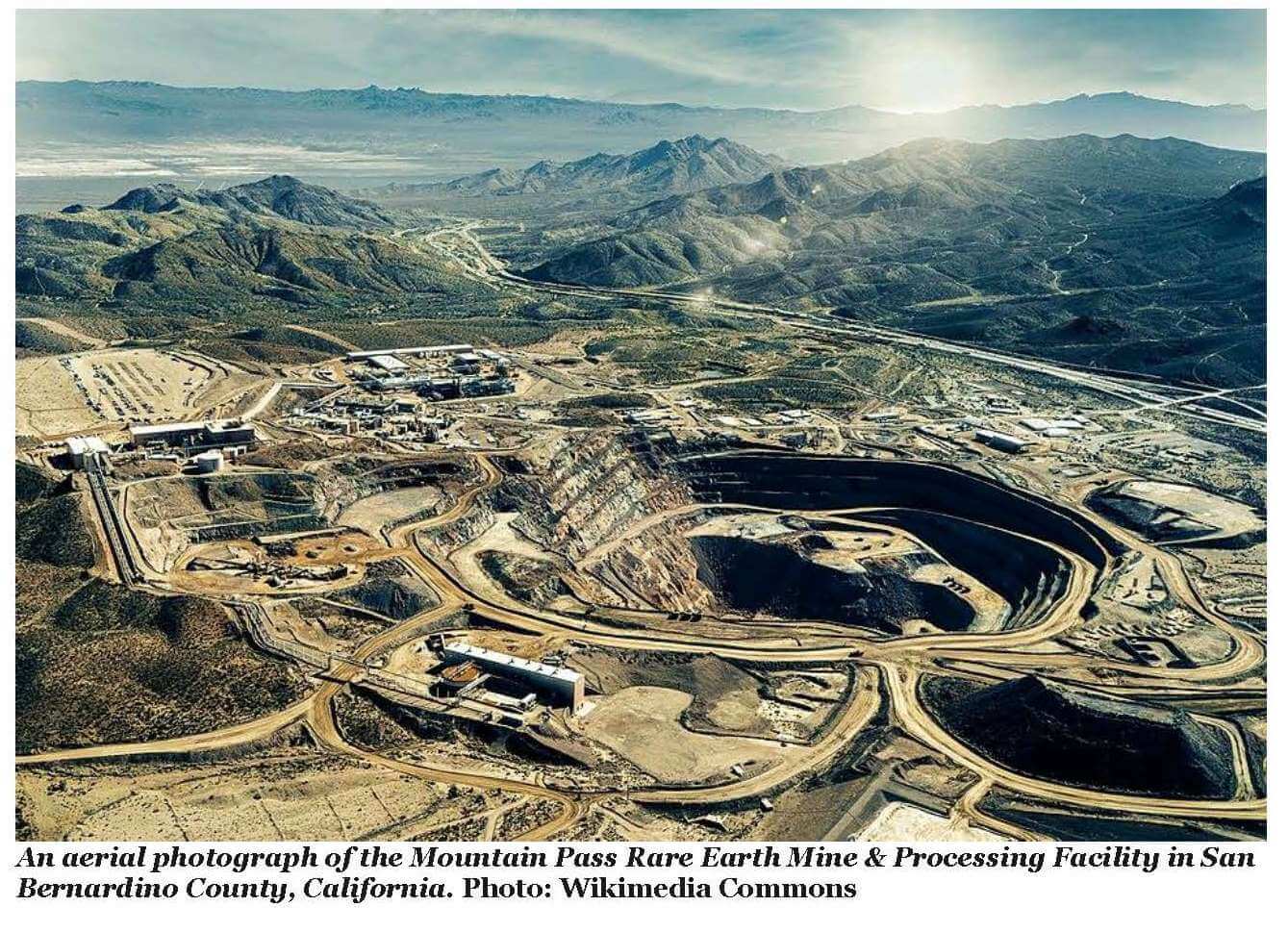
When it comes to the emerging crisis over rare earths, whose supply and processing is almost totally controlled by China, successive administrations have sighed and done nothing. 

As the uses for rare earths have increased dramatically, the calls for the United States to do something to alleviate this dependence have been constant and loud. Action hasn’t corresponded.

The modern world runs on the 17 rare earths which are great enhancers.

Notable for sounding the alarm has been John Kutsch, executive director of the Thorium Alliance, which promotes the use of thorium as a nuclear reactor fuel.

The need for rare earths is huge in the United States — as is our attendant vulnerability.

“There is no piece of modern technology that does not use rare earths or other technology metals. There are no drones, windmills, electric cars, computers, lasers, radar systems, magnets of quality, or medical devices, which are not 100-percent reliant on China for components using their critical materials,” Kutsch told me.

It is a giant vulnerability and Kutsch and his colleagues have been drawing attention to it for 15 years.

“We have been telling the decision makers in Washington and at the Pentagon for 15 years that China will use rare earths as an economic weapon. And we were always told that they would not. Well, now the U.S. is cut off,” he said.

According to Kutsch, and others, “rare earths aren’t rare at all.” They are difficult to mine and process and, as with much else, it has just been easier and cheaper to import them from China. 

Additionally, production in the U.S. has been hampered because rare earths are found in conjunction with thorium. Thorium is a fertile but not fissile nuclear material. That means that it can’t be used in a reactor, without having the reaction initiated by a fissile material, like uranium.

But its classification as a nuclear source material means it must be inventoried and stored as a nuclear material and is classified by the Nuclear Regulatory Commission as such. This makes mining and processing rare earths challenging and expensive in the U.S.

Kutsch lamented, “Every year, Florida produces enough rare earth ore to supply the western world’s needs. We choose not to process any of that rare earth material because it would create a small amount of slightly radioactive material.

“So, we have given up on any materials refining in the U.S. and have decided to put our entire economic and national security fate in the hands of our number one adversary.”

Even if the limiting factors of associated thorium were dealt with — a national thorium bank and registry has been proposed — rare earths wouldn’t begin to flow  overnight.

We simply don’t have the expertise in mining but especially in processing rare earths. Hell, it is hard enough to get our mouths around some of the names. Try saying Praseodymium and Neodymium.

The near-future looks like this:

1. We probably have enough stockpiles held by rare earth-using companies to last for several months, but shortages will start appearing after that.

2. The military is believed to have a better stockpile, enough for a year or longer.

3. Users initiate elaborate workarounds, like using a more plentiful but less effective metal.

3. Manufacturers may reduce the size or efficiency of systems that use rare earths, like a smaller motor in an electric car.

The essential role of rare earths is as a multiplier. A wind turbine produces at least five times more electricity because of the use of exceedingly small amounts of rare earths.

What does seem outrageous, is that the U.S. has embarked on a nasty trade war with China without understanding the People’s Republic has a grip below the belt. Ouch!

Filed Under: King's Commentaries Tagged With: airlines, China, electric cars, government, John Kutsch, nuclear, rare earths, thorium, TSA, windmills

Big Tech Needs to Step Up and Take the Risk on New Nuclear Plants

November 15, 2024 by Llewellyn King Leave a Comment

If it gets too hot or too cold for long next year or sometime in the next several years, you may find yourself in the dark, without air conditioning or heat, depending on the nature of the crisis. The electricity system is under stress — more so in some areas than others.

The electricity demand is rising rapidly. Onshoring of manufacturing, EVs (both private and commercial), and, most important, data centers serving the demand for AI are all staking their claim to more electricity.

AI gets most of the attention, and deservedly so. Data centers, essential to AI, are appearing everywhere, with a profusion in Virginia, Texas and California.

There is a critical need for more generation, and there is a general agreement that it should be provided, at least in part, by nuclear power. Seldom does an industry executive or a political figure talk about the electricity shortfall than they mention nuclear power and small modular reactors as a solution.

The big tech companies — think Amazon, Google, Facebook, Microsoft — are aware they may have to play a significant role in the future of the electricity supply, but they are selective.

The electricity-hungry tech giants — those building or have contracted to build data centers — are picky about the electricity they want.

The tech giants are keen to signal virtue. They want to be seen as using only carbon-free power, which means abundant and reliable natural gas isn’t an option for them.

They are buying all the wind and solar generation that is available. But for the great new additions that are going to be needed to support the exploding number of data centers and the nearly insatiable needs of AI, nuclear has to be the answer.

Despite the considerable attention given to Microsoft’s planned restart of Three Mile Island Unit 1, the tech giants have yet to really step up.

James Schaefer, senior managing director of Guggenheim Securities Investment Banking, thinks with their vast wealth and great electricity hunger, they should be leading the deployment of mall modular reactors and providing a path to the future. If not, there will have to be government-guaranteed insurance for the cost overruns that construction will likely face for the early generations of these reactors.

The solution is for the big tech companies to sign agreements with the developers to buy their power at generous and, maybe, flexible rates. In other words, they need to take the risk to bring their wealth to bear; otherwise, the risk will have to be taken by the government, which is unlikely to be favored in a conservative administration.

New nuclear plants face two problems: the risk of building the first-of-a-kind, always high, and the fact that the nuclear construction industry in America has been allowed to run down.

This was apparent with the delays and runaway costs experienced by the Southern Company when it added two old-style, big reactors at its Plant Vogtle near Waynesboro, Georgia. The costs and delays were wildly underestimated for the first unit, and the contractor, Westinghouse, went bankrupt during construction. The costs for the second unit also ran over its estimates, but less so than the first. Lessons had been learned, workers trained.

Schaefer believes the electric utility industry, acting in unison, needs to agree with the tech giants on how to provide a serious path to bring these exciting new reactor designs to market.

If the tech companies don’t shoulder a large part of the risk in new nuclear generation, that risk will fall on the industry and its customers and will be reflected in higher electricity rates when inflation has already taken a toll on household income.

Without a new path forward, the state commissions, which regulate electricity pricing, will be fighting for rates to remain low, well aware that inflation has already eaten into family budgets and a rise in the cost of electricity will have political consequences.

The can-do attitude of the incoming Trump administration will be seriously tested in the electricity field. It won’t want people sweating or shivering, and it may have to nudge tech biggies into doing more than peripheral things — and looking green — to provide for a demand they are creating.

Filed Under: King's Commentaries Tagged With: big tech, crisis, electricity, James Schaefer, nuclear, Onshoring, reactors, trump

Fusion Power Is Now a Possible Dream

June 21, 2024 by Llewellyn King Leave a Comment

Fusion power, the Holy Grail of nuclear energy for decades, may finally be within our grasp.

If the scientists and engineers at Commonwealth Fusion Systems (CFS), a company with close ties to the Massachusetts Institute of Technology Plasma Science and Fusion Center, are right, fusion is nearly ready for power market entry. In Devens, Mass., CFS says it will be ready to ship its first devices in the early 2030s.

That is astounding news, which has been so long in the making that much of the nuclear industry has failed to grasp it.

I first started writing about fusion power in the 1970s. Having been on hand for many of its false starts, I was one of the doubters.

However, after I visited the CFS factory in Devens and saw the precision production of the giant magnets, which are the key to the company’s system, I am on my way to being a believer.

I think CFS can likely manufacture a device it can ship to users — utilities or big data centers — in the early 2030s. If so, the news is huge; it is a moment in science history, like the first telephone call or incandescent light bulb.

Governments, grasping the potential for clean and essentially limitless power without weapons proliferation or radioactive waste, have lavished billions of dollars on fusion energy research worldwide. Intergovernmental efforts in recent years have concentrated on the Joint European Torus, which has wrapped up in Britain, and the International Thermonuclear Experimental Reactor, a mega-project involving 35 nations. Both are firmly in the category of scientific research.

However, in the commercial world, there is a sense that fusion power is at hand, and many companies have raised money and are pressing forward. CFS is on the front of that pack.

There are two technologies chasing the fusion dream: magnetic fusion energy (MFE) and inertial fusion energy (IFE). The former contains plasma at millions of degrees in a magnetic bottle. The trick here isn’t in the plasma but in the bottle.

A version of MFE, called the tokamak, is the technology expected to produce the first fusion power plant. Worldwide, dozens of startups are looking at fusion, and in the United States, eight are considered frontline.

The other method, IFE, consists of hitting a small target pellet with an intense beam of energy, which can come from a laser or other device. It is still in the realm of research.

CFS has raised more than $2 billion and is seen by many as the frontrunner in the fusion power stakes.  Italian energy giant ENI supported it from its inception in 2018. Bill Gates’ ubiquitous Breakthrough Energy is an investor. Altogether, there are 60 investors, mostly looking for a huge return as CFS begins to sell its devices.

According to Brandon Sorbom, co-founder and chief scientist at CFS, the big advance has been in the superconducting magnets that create containment bottles for plasma. He told me this had enabled them to design a device many times smaller than had previously been possible.

What makes CFS magnets different and revolutionary is the superconducting wire wound to make the magnets.

Think of the tape in a tape recorder, and you have an idea of the flat wire, called HTS, that is wound into each magnet. The HTS tape is first wound into VIPER cable, or NINT pancakes — acronyms for two types of magnet technology developed by MIT in conjunction with CFS. Then, the VIPER cable, or NINT pancakes, are assembled into magnets that make up the tokamak.

This superconducting wire enables a large amount of current to course through the magnet at many times the previously unavailable levels. This means the device can be smaller — about the size of a large truck.

The next stage is completing the first full demonstration device at CFS, known as SPARC. It is already half-built and should become operational next year.

After that will come the first commercial fusion device, called ARC, which may be deployed in a decade. It will contain, as Sorbom said, “a star in a bottle using magnetic fields in a tokamak design,” and perchance, bring abundant zero-carbon energy to users near you.

Filed Under: King's Commentaries Tagged With: Brandon Sorbom, Commonwealth Fusion Systems, Devens, Fusion power, magnetic, magnets, nuclear, scientists, superconducting, tokamak

  • 1
  • 2
  • Next Page »

White House Chronicle on Social

  • Facebook
  • Twitter
  • Vimeo
  • YouTube
Foreign Aid That Works — the Malawi Story

Foreign Aid That Works — the Malawi Story

Llewellyn King

In 2005, Gordon Brown, British chancellor of the exchequer, later prime  minister, was in Washington, seeking to raise $50 billion annually in  additional international aid for Africa. I hosted a press event for Brown at the National Press Club, and I  asked him how all this money would get to the people who needed it? […]

Is Rubio Starting a Nuclear Arms Race in the Middle East?

Is Rubio Starting a Nuclear Arms Race in the Middle East?

Llewellyn King

The Trump administration has announced and appears to be crowing over an agreement with Saudi Arabia to help the kingdom not only to build nuclear power plants but also to enrich the uranium fuel. There is no reason for the Saudis to enrich uranium. There are plenty of willing suppliers of enriched uranium and more […]

Soft Power, the Secret Sauce of the British Empire

Soft Power, the Secret Sauce of the British Empire

Llewellyn King

When President Trump, on the first day of his second term, closed the U.S. Agency for International Development and began dismantling the Voice of America, he also severely curtailed what had been America’s soft power dominance in the world. With those actions, we abandoned something of inestimable value: the ability to project Americanism, our ideals. […]

A British Immigrant’s Defense of Immigration

A British Immigrant’s Defense of Immigration

Llewellyn King

Migration, people moving to new lands, is as old as human history, and as fraught. Today it is a global problem complete with layered hypocrisy, cruelty and, always, hope among those on the move. War and extreme poverty collude in driving people to seek a livable future. There is no simple solution, no slogan that […]

Copyright © 2026 · White House Chronicle Theme on Genesis Framework · WordPress · Log in