An old adage says “a stitch in time saves nine.” Indeed. But it is a lesson seldom learned by governments.
As you struggle through TSA screening at the airport, just consider this: It didn’t have to be this way. If the government had acted after the first wave of airplane hijackings in the early 1960s, we might never have had the Transportation Security Administration.
The government and the airlines should have done something very simple: Put locks on the cockpit doors. It was discussed among the airlines, at the Federal Aviation Administration, and at the White House Office of Science and Technology.
Then came Sept. 11, 2001, and governments acted. Massively — even too much too late.
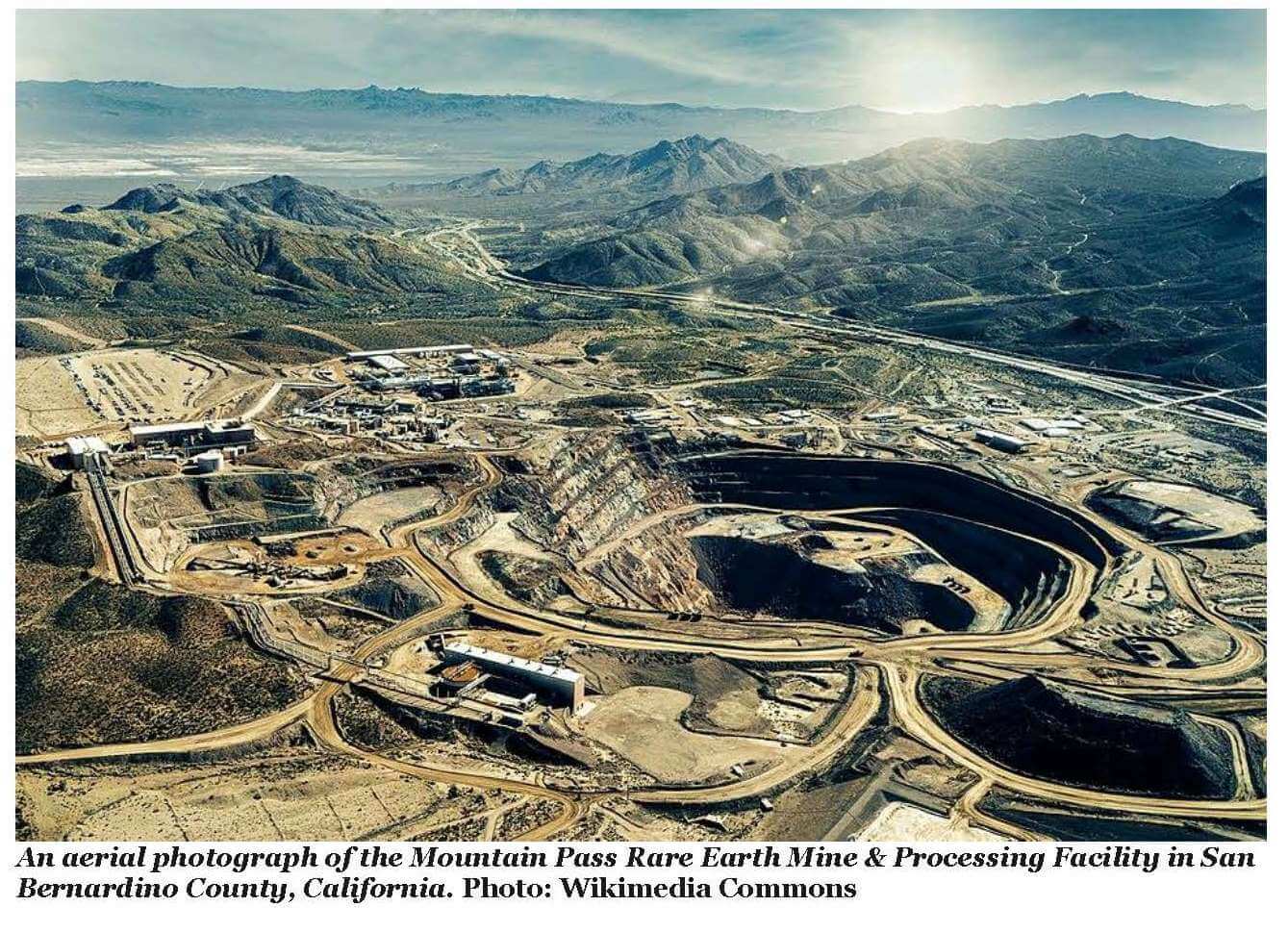
When it comes to the emerging crisis over rare earths, whose supply and processing is almost totally controlled by China, successive administrations have sighed and done nothing.
As the uses for rare earths have increased dramatically, the calls for the United States to do something to alleviate this dependence have been constant and loud. Action hasn’t corresponded.
The modern world runs on the 17 rare earths which are great enhancers.
Notable for sounding the alarm has been John Kutsch, executive director of the Thorium Alliance, which promotes the use of thorium as a nuclear reactor fuel.
The need for rare earths is huge in the United States — as is our attendant vulnerability.
“There is no piece of modern technology that does not use rare earths or other technology metals. There are no drones, windmills, electric cars, computers, lasers, radar systems, magnets of quality, or medical devices, which are not 100-percent reliant on China for components using their critical materials,” Kutsch told me.
It is a giant vulnerability and Kutsch and his colleagues have been drawing attention to it for 15 years.
“We have been telling the decision makers in Washington and at the Pentagon for 15 years that China will use rare earths as an economic weapon. And we were always told that they would not. Well, now the U.S. is cut off,” he said.
According to Kutsch, and others, “rare earths aren’t rare at all.” They are difficult to mine and process and, as with much else, it has just been easier and cheaper to import them from China.
Additionally, production in the U.S. has been hampered because rare earths are found in conjunction with thorium. Thorium is a fertile but not fissile nuclear material. That means that it can’t be used in a reactor, without having the reaction initiated by a fissile material, like uranium.
But its classification as a nuclear source material means it must be inventoried and stored as a nuclear material and is classified by the Nuclear Regulatory Commission as such. This makes mining and processing rare earths challenging and expensive in the U.S.
Kutsch lamented, “Every year, Florida produces enough rare earth ore to supply the western world’s needs. We choose not to process any of that rare earth material because it would create a small amount of slightly radioactive material.
“So, we have given up on any materials refining in the U.S. and have decided to put our entire economic and national security fate in the hands of our number one adversary.”
Even if the limiting factors of associated thorium were dealt with — a national thorium bank and registry has been proposed — rare earths wouldn’t begin to flow overnight.
We simply don’t have the expertise in mining but especially in processing rare earths. Hell, it is hard enough to get our mouths around some of the names. Try saying Praseodymium and Neodymium.
The near-future looks like this:
1. We probably have enough stockpiles held by rare earth-using companies to last for several months, but shortages will start appearing after that.
2. The military is believed to have a better stockpile, enough for a year or longer.
3. Users initiate elaborate workarounds, like using a more plentiful but less effective metal.
3. Manufacturers may reduce the size or efficiency of systems that use rare earths, like a smaller motor in an electric car.
The essential role of rare earths is as a multiplier. A wind turbine produces at least five times more electricity because of the use of exceedingly small amounts of rare earths.
What does seem outrageous, is that the U.S. has embarked on a nasty trade war with China without understanding the People’s Republic has a grip below the belt. Ouch!
 Follow
Leave a Reply