White House Chronicle

News Analysis With a Sense of Humor

  • Home
  • King’s Commentaries
  • Random Features
  • Photos
  • Public Speaker
  • WHC Episodes
  • About WHC
  • Carrying Stations
  • ME/CFS Alert
  • Contact Us

MET Group Advocates for Europe-Wide Energy Bank

December 17, 2025 by Llewellyn King Leave a Comment

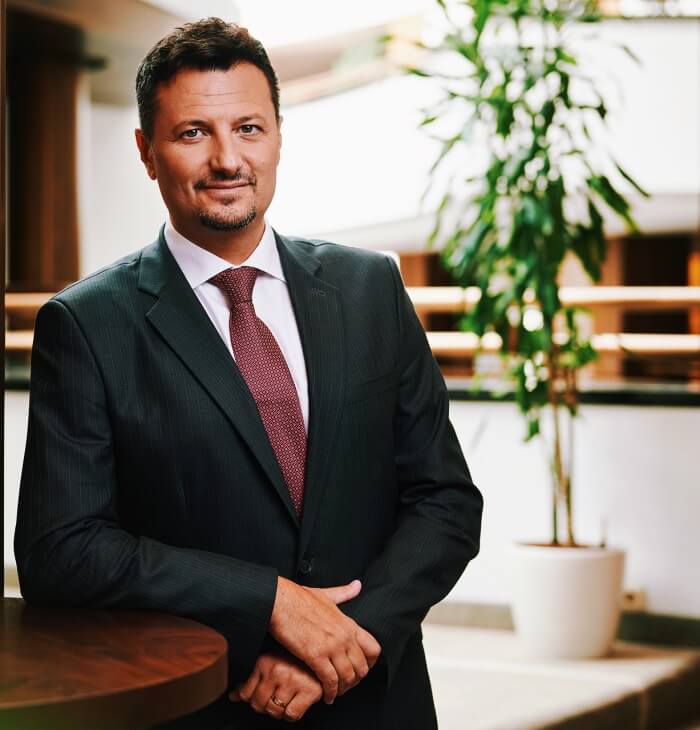
When Benjamin Lakatos speaks, energy people listen in Europe and increasingly farther afield.

Recently Lakatos, chairman and Group CEO of MET Group, has been speaking out strongly in favor of a European energy bank to correct some of the chaos which often convulses European energy markets and leads to general instability.

As laid out by Lakatos, in an interview with Mlex, an energy news service which is part of LexisNexis, the energy bank could be modeled on a central bank.

Since the Russian invasion of Ukraine in 2022, there has been a lot of chaos with prices and supplies yo-yoing, often reflecting geopolitical uncertainty and state actions.

Some of the normal market protections, like long-term contracts, haven’t been effective, largely because vendors and buyers have found the market so unstable that they have been reluctant to enter into binding, long-term commitments.

MET Group, which is based in Zug, Switzerland, points out that the idea of a European energy bank is far from universal acceptance, but there have been adjacent ideas. One idea is that the energy bank could grow out of the European Central Bank, be an offspring enterprise.

The idea of a European energy bank has also been advancing in think tanks and in policy workshops.

“The ‘energy bank’ would have tools analogous to central banks: liquidity injections, ‘circuit breakers’ in trading, easing margin calls, guarantees, and counter party support,” Lakatos told Mlex.

Lakatos, just 49 years old, is the dynamic leader of MET Group, an integrated European energy conglomerate, which has grown from a gas trading company in 2007 to its current status as a heavyweight active in 21 countries, 33 national energy markets and 44 trading hubs.

Originally, MET Group was a subsidiary of MOL, a Hungarian energy company. It became an independent company in a management buyout in 2018.

The headquarters were moved to Zug because Lakatos, who headed the buyout and is MET Group’s largest stockholder, felt it was a better base for raising capital, from a tax point of view and quite possibly, but he didn’t say so, from a political one.

MET Group is a purchaser of U.S. liquified natural gas for distribution in Europe. From its base in natural gas, MET Group is heavily involved in renewables, wind and solar, and storage. It has endorsed the concept of energy transition from fossil fuels to renewables and has become a leader in solar, wind and storage.

The company embraces forward-thinking and is 90 percent employee-owned with the remaining 10 percent held by Singapore’s Keppel Infrastructure.

In January 2026, Lakatos will move from Group CEO to his new role as executive chairman with emphasis on future strategies.

Lakatos seems to have no illusions about the size of the undertaking in persuading European institutions to sign onto the creation of an energy bank or the potential lethargy of government and established entities.

Lakatos’s concept of an energy bank is remarkably far- reaching and has no exact precedent anywhere. However, there are echoes of when Henry Kissinger created the International Energy Agency in 1974.

At that time, it was believed the IEA would act, in part, as an oil bank and that it would take an active role in opposing OPEC and monopolists controlling oil, after the Arab oil embargo in the fall of 1973. As time wore on, the mission of the IEA changed and it became more of a noticeboard agency than an executive one.

The story of the buffeting volatility of the European energy markets is told in MET Group’s own revenues.

Last year, it reported consolidated revenue of $17.9 billion. But in 2022, the year of the great shortages, its revenues were a staggering $40.5 billion. Its 2023 revenues were also high at $24.5 billion.

Interestingly, the call for an energy bank comes at a time when thought leaders are seeking to enhance the idea of European identity.

At a fall meeting of the Jean Monnet Association in France, at which I was present, there was a detailed examination of how those living in the 27-member European Union could feel a greater sense of common European identity. More clearly defined, Europe-wide institutions would help, the association’s members thought.


Filed Under: King's Commentaries Tagged With: Benjamin Lakatos, European Energy Bank, gas, IAEA, Jean Monnet Association, MET Group, renewables, solar, storage, wind

How Europe Stole Christmas and Promoted Snow

December 12, 2025 by Llewellyn King Leave a Comment

The Grinch didn’t steal Christmas. Europe did. Filched it, packed it up and moved it north, where it snows.

In this wholesale looting of the world’s greatest holiday, the U.S., Canada and some other non-European northern habitats were also complicit.

I grew up in the Southern Hemisphere in faraway Zimbabwe — then called Southern Rhodesia, a British colony — and we had to bear Northern hegemony at Christmas. We had to bear it the rest of the year as well, but this is about Christmas and that symbol of the North: snow.

In subequatorial Africa, snow was a distant European asset. We had learned to associate it with Christmas, and we would celebrate the holiday by singing the carol about the good Bohemian King Wenceslas, looking out “on the feast of Stephen, when the snow lay round about, deep and crisp and even.”

Cotton wool was our snow substitute. When we decorated for Christmas, we couldn’t have it lying about “deep and crisp and even.” We just put cotton wool puffs on Christmas trees (another symbol of European expansionism), picture rails and window frames.

The shops used glitter and cotton wool in Christmas window scenes that were out of Victorian-period Europe, not the Holy Land.

Only nativity scenes in churches were exempt from the scourge of cotton wool. Well, mostly. As kids we were confused by the snow mania, and sometimes we tried to embellish the straw in manger scenes with cotton wool.

My mother, who never visited anywhere north of the equator, was a campaigner, in her way, against the theft of Christmas. She would lecture people on what the temperature was at Christmas in Bethlehem. She said it was very hot.

There was no way she could have known what the actual temperature was in Bethlehem, but she didn’t let that inhibit her argument against the Northern appropriation of something that was rooted in the Levant.

In fact, Christmas is the beginning of the coolest time of year in Jerusalem and Bethlehem; the temperature hovers around 40 F. It isn’t a winter wonderland in the way that Christmas is portrayed in Europe and America.

And all that hoopla about sales and shopping till you drop came from those delightful Christmas markets, which you see all over continental Europe at this time of year.

You can blame the Germans for Christmas trees and the Scandinavians for reindeer, but it seems to me that the Brits, my people, have done a rather good job of Christmas appropriation.

Put aside that they have tried to grab the entire concept of the people of Israel. Yes, the British Israelite movement postulates the British are descendants of the 10 lost tribes of Israel.

This is an attempted act of cultural appropriation on a massive scale, and it hasn’t succeeded, but it still has its adherents.

The great English poet William Blake has been more successful. His poem “Jerusalem,” which he wrote in 1804, was put to music by Hubert Parry in 1916 to aid the World War I effort and has become a second British national anthem. People prefer it to “God Save the King” — and it has a better tune.

Blake wrote:

“I will not cease from Mental Fight/ Nor shall my Sword sleep in my hand:/Till we have built Jerusalem,/ In England’s green & pleasant Land.”

Well, that is a very ambitious attempt to steal a legend, and it makes cotton wool seem rather timid in the struggle to own Christmas.

I wish you, yes, a white Christmas. I like the white stuff — snow, not cotton wool.

Filed Under: King's Commentaries Tagged With: Africa, Bethlehem, British, Christmas, Europe, Germany, Grinch, Jerusalem, snow, William Blake

Anatomy of a Utility: How CPS Energy Is Getting Ahead of Challenges Facing U.S. Utilities

December 10, 2025 by Llewellyn King Leave a Comment

CPS Energy, which serves San Antonio and surrounding areas, as one observer said, “has gotten out in front of its problems.”

So much so that the utility, the nation’s largest gas and electric municipal power company, with nearly 400,000 gas customers and over 970,000 electric customers, has become something of a model for other utilities. Not problem-free but buoyant, and with low rates.

CPS Energy, like many utilities across the country, has been dealing with the rapid growth in demand, both from residential customers and from increased industrial activity around the San Antonio region, to say nothing of the long line of data centers and other commercial and industrial businesses queued up for power.

According to Elaina Ball, chief strategy officer, CPS Energy has been able to keep ahead of demand by buying gas-fired generating facilities as part of their community-led and board- approved generation plan, aligned with their Vision 2027 strategy.

This strategy has provided opportunities for the utility to avoid the stress of building new plants with attendant supply chain problems, and the cost of new infrastructure.

Ball told me their latest purchase was 34 gas turbines at four sites in the Houston area. These were bought from a private equity company, but are well-sited for incorporation into CPS Energy. Mostly, they are quick start-peaking units, she said.

A collateral gain from this purchase has been that the units can burn hydrogen in a mixture, as two of the turbine facilities are located near a hydrogen supply pipeline in the Houston area.

The nearly $1.4 billion purchase was debt-financed. Cory Kuchinsky, chief financial officer and treasurer, said he was very satisfied with the financing arrangement, and that it had been oversubscribed.

“We’re pleased with the purchases because they’re all fairly young units,” Ball said of the Houston area units. A year earlier, CPS Energy was able to do another favorable, big deal when it bought 1,710 megawatts of gas-fired turbines from Talen Energy for $785 million.

CPS Energy is a diversified utility and ranks first in solar and second in wind power in Texas. It was an early supporter of nuclear power and owns 40 percent of the South Texas Project, a two-unit nuclear power plant southwest of Houston. They also announced plans to purchase an additional 2-percent stake, which is expected to close in the near future.

CPS Energy is closely watching the development of small modular reactors and is also open to being a partner in large nuclear plants, Ball said.

It has a long coal history and is contemplating retiring one of its units, Spruce 1, and keeping Spruce 2, which is only 15 years old. Ball said of the older unit, “It is ready for an AARP card and a move to the Caribbean.” The utility has plans to convert Spruce 2 to natural gas.

When I asked Rudy D. Garza, CPS Energy president and CEO, about the Trump administration’s antipathy to renewables and its desire to keep every coal plant burning coal, he said he needed “every electron from any place I can get it and without discrimination.”

Garza said, “There are a lot of things I can’t control that impact my business. An administration coming in and arbitrarily telling us they don’t like renewables …. that makes it harder for me to do my job.”

The utility is proud of its investments in wind, solar and batteries, and it plans to add to all three.

“We excel in a lot of areas. We’re one of the most reliable utilities in the state of Texas,” Garza said.

He added, “CPS Energy has the lowest electric rates in Texas and that, together with the effects of being city-owned, keeps us in good shape with our customers.”

Senior executives like Garza, Ball and Kuchinsky are proud of the culture of the utility.

“Everyone I hire has to be grounded in how electricity is generated and transmitted …. whether you are an attorney, or an accountant, or a call center rep, you have to understand the utility business, and you have to learn the utility business,” Garza said.

As for management, Garza believes he can’t run CPS Energy in a top-down way. His philosophy: If you can’t keep the lights on today, there is no use in worrying about what you are going to do in five years.

Garza, an engineer with political and lobbying experience, oversees day-to-day operations and long-term strategy, and partakes in the social obligations, like the United Way, which CEOs are called on to do in the community.

CPS Energy is sticking with its plans to continue to add solar, wind and storage to its mix. Its current record peak generation is 5,860 megawatts and demand is growing at 2% to 4% annually over the medium term.

Here is how CPS Energy’s generation mix breaks down approximately: Gas, 57 percent; Coal, 12 percent; Nuclear, 9 percent; Renewables, 20 percent; and other purchased power (not generation specific) make up the rest.

Kuchinsky adds, “We have thousands of megawatts of large load wanting to connect with us.” He said these were industrial customers as well as data centers.

San Antonio is a magnet for visitors who want to enjoy its colonial-era architecture, visit the Alamo, sit and dine along its River Walk, and listen to Tejano music.

But it is also a magnet for power-hungry, high-tech companies which are flooding into the area it serves, a common theme across the state.

Filed Under: King's Commentaries Tagged With: CPS Energy, electric utility, Rudy D. Garza, San Antonio, Texas

The Robots Are Coming — Sooner Than You Think

December 5, 2025 by Llewellyn King Leave a Comment

The next big thing is robots. They are, you might say, on the move.

Within five years, robots will be doing a lot of things that people now do. Simple repetitive work, for example, is doomed.

Already, robots weld, bolt and paint cars and trucks. The factory of the future will have very few human workers. Amazon distribution centers are almost entirely robot domains. Robots search the shelves, grab items, pack and send them to you — often seconds after you have placed your order.

Of course, these orders will be delivered in vans, which must be loaded carefully, even scientifically. The first out must be the last in; small items must nestle with large ones. Space is at a premium, so robotic brains will do the sorting and packing swiftly, efficiently and inexpensively.

Very soon, the van will be self-driving: a robot capable of navigating the traffic and finding your home. At first, it may not get further in the delivery chain than calling you to say that your package has arrived. Eventually, humanoid robots may ride in the vans and, yes, hand your package to you. No tipping, please.

When we think about robots, we tend to think of the robots that look like us. The internet is full of clips of them climbing stairs, playing sports and doing backflips.

There are reasons for humanoid robots: They are less intimidating with their humanlike heads, two arms with hands and two legs with feet than a machine with many arms or legs. Also, most of the tasks the robot is taking over are done by humans. The tasks are fitted to people, such as pumping gas, preparing vegetables or painting a wall.

The first big incursion may be robotaxis. Waymo taxis are already operating in five cities, and the company has plans to roll them out in 19 cities. Several cities are concerned about safety, including Houston and Seattle, and want to ban them. But there are state-city jurisdictional issues about implementing bans.

A likely scenario, as with other bans, is that the development will go elsewhere. Travelers tend to eschew places where Uber and Lyft aren’t allowed to operate in favor of those where they are.

You are already dealing with robots when you talk to a digital assistant at an airline, a bank, a credit card or insurance company, or any business where you call a helpline. That soothing, friendly voice that comes on immediately and asks practical questions may be a robot: the unseen voice of artificial intelligence.

In the years I have been writing about AI and its impact on society, I have consistently heard the AI revolution and its impact on jobs compared with the Industrial Revolution and automation. The one led to the other and in the end, many new jobs and whole new ecosystems flourished.

It isn’t clear that this will happen again and if so on what timetable. A lot of jobs are already in danger, from file clerks to delivery and taxi drivers, from warehouse workers to longshoremen.

AI is also changing the tech world. A whole new tier of companies is emerging to carry forward the AI-robot revolution. These are companies that make robots; companies that write software, which will give robots brainpower; and companies that will have a workforce that maintains robots.

These emerging companies will need a workforce with a different set of skills — skills that will keep the new AI economy humming.

What is missing is any sense that the political class has grasped the tsunami of change that is about to break over the nation. In just a few years, you may be riding in a robotaxi, watching a humanoid robot doing yard work or lying on a couch and chatting with your robot psychiatrist.

Our species is adaptable, and we have adapted everything from the wheel to the steam engine to electricity to the internet. And we have prospered.

Time to think about how to prosper with AI and its robots.

Filed Under: King's Commentaries Tagged With: AI, Amazon, automation, Economy, gas, Internet, jobs, revolution, robotic, robots, Uber

The Billionaires Will Rule Down Through the Generations

November 28, 2025 by Llewellyn King Leave a Comment

Sarah Wynn-Williams’ book “Careless People” takes aim at Facebook (parent company Meta) and tells a tale of its potentate, Mark Zuckerberg, as a man who is sought after by the great and the powerful and who lacks social consciousness or real interest in anything beyond himself and his company.

Wynn-Williams is the New Zealander who went to lengths to get hired at Facebook because she believed in its ability to do good. She ended up in the company’s inner circle of management as director of global public policy.

Zuckerberg was of keen interest to heads of state because of Facebook’s influence in their countries. A meeting with Zuckerberg would confer status on them, even if they were the heads of quite important nations.

Additionally, they were paying homage to wealth, something that happens throughout society. If you are rich enough, you get the bended-knee treatment.

It occurs to Wynn-Williams, while once looking at these leaders, sitting around a table, waiting for Zuckerberg (he doesn’t get out of bed before noon for anyone), that none of them will be in power in a decade, but Zuckerberg will still be there.

That is sobering.

We live in a time of billionaires, and their impact shouldn’t be minimized. Nor should the impact of their billions down through the generations.

The heirs to today’s billions will shape the future for decades, possibly centuries.

Money has staying power. In the 1700s, the Grosvenor family began developing property in what is now the West End of London, the most exclusive area which includes Mayfair and Belgravia. The duke of Westminster, heir to the Grosvenor fortune, still owns large amounts of some of the most expensive real estate in the world.

In the last century, some very wealthy people lost their money, but none of them had the kind of wealth we are talking about today.

Huntington Hartford, heir to the A&P grocery chain fortune, and Barbara Hutton, who inherited part of the Woolworth five-and-dime store fortune, both squandered enormous amounts and ended up nearly broke.

Today’s fortunes are so much larger that even if the same mistakes were made with inflation-adjusted dollars, large fortunes would remain, fortunes that will be heard from as the heirs take charge.

Wynn-Williams, in her very readable book — which The Economist listed as one of the best reads of 2025 — paints a picture of the extraordinary power of Zuckerberg and his money: power that seeks only extension and self-perpetuation. Zuckerberg emerges as shallow, self-centered and self-regarding.

My take is that the inherited wealth story this time is different. It is different, say, from the railroad oligarchs.

They sought control of the railway technology which had made them rich. The new tech giants seek to control new technology as it is invented: to scoop up startups, so long as they promise tech dominance. Think of Facebook and WhatsApp.

The current attempt by Zuckerberg to spend hundreds of billions of dollars on AI is an attempt to secure for himself and his family the same status in the future as he has in the present.

Leaders come and go, but money goes on forever.

There are over 1,100 American billionaires today who accumulated their wealth in their lifetimes, although some may have had a running start from family, such as Rupert Murdoch.

As this wealth — more money than the world has ever seen — moves down through the generations, it will have an ever-present impact on how we live and how we are governed.

The Washington Post has done some revelatory reporting on the impact of the richest people in politics. Mostly they support Republicans, in the belief that that will be the best way of protecting their wealth, according to the Post.

To the left of the political stage, there is always talk of wealth taxes or, as might be said in private, “soaking the rich.” This is easy to say and hard to do.

Punitive taxation sends money flooding overseas and its owners changing their abodes. Switzerland, Monaco, the Channel Islands and other offshore destinations make billions and their owners feel welcome.

Benjamin Disraeli, who was to become prime minister as a Conservative, said in his 1845 novel “Sybil” that Britain had become two nations: the rich and the poor.

In the United States, we are becoming three nations: the ultra-rich, the comfortable and the lamentably poor. Is this the American dream or the beginning of a long, sleepless, distorted night?

Filed Under: King's Commentaries Tagged With: AI, billionaires, Disraeli, Facebook, Grosvenor, London, money, technology, wealth, Zuckerberg

‘Whacking the Cut’: A Different View of the BBC Crisis

November 21, 2025 by Llewellyn King Leave a Comment

The BBC has fallen on its sword. The director general has resigned and so has the head of news over the splicing of tape of President Donald Trump’s rambling speech on Jan. 6, 2021, which preceded the sacking of the Capitol.

The editor and the technician who did the deed for the esteemed BBC program “Panorama” haven’t been publicly identified.

Agreed, they shouldn’t have done what they did. But was there malice?

Journalism is a business of serial judgment. It is replete with mistakes — things that we who practice the craft wish we hadn’t done.

I have worked as an editor in film, with tape and on newspapers, and I have seen how the paranoia of politicians can cast a whole news organization as a biased enemy when that wasn’t the intent.

Before a single sentence or an article appears in a newspaper or a video appears on television, dozens of judgments have been made — not by teams of academics or by ethicists or by juries, but by individuals responding to time pressure and what they judge to be newsworthy.

The unsaid pressure to keep it interesting, to have news worth something, is always there. The reader has to be kept reading or the viewer watching.

After something is published or broadcast, it can be beacon-clear what should have been done or corrected, but in the moment, those defects are opaque.

Let me take you behind the veil.

It is a hot night in 1972. There is a presidential election brewing and among those running for the Democratic nomination is Henry “Scoop” Jackson, the well-known Democratic senator from the state of Washington.

I am working in the composing room of The Washington Post as the editor in charge of liaising between the printers and the editors. The job is sometimes called a stone editor after the “stone,” big metal tables that held the pages and where the newspaper was assembled in the days of hot type.

It was a busy news night, and it was when David Broder was the political reporter without rival. He was industrious and thorough, dedicated and prolific. As the night wore on, Broder would often add new stuff to his story, and it would grow in length.

In desperation when things got tough and deadlines were pressing, we would cut back the size of the photos, which had run in the first edition. The editor on duty would just ask the printers to do this: It was known as “whacking the cut.”

In short, the photo would be reduced in size by cutting it down physically. The engraving would be put in a guillotine and some of it would be cut off, whacked.

That night, we had a large photo of Jackson addressing a large crowd.

But as the night wore on and different editions and mini editions, known as replates, were assembled, I ordered the cut whacked and whacked again. The result was that by the time the main edition went to press, the good senator was talking to a much smaller audience — although it did suggest that many more were there but not seen.

Jackson thought this was a deliberate bias by The Post to suggest that he couldn’t draw a large audience, and he called the legendary editor Ben Bradlee.

Bradlee asked the national editor, Ben Bagdikian, who was to become an authority on newspaper ethics, what happened. When they came to me, I explained how we trimmed the pictures.

While Bradlee was amused, Bagdikian added it to his concern about newspaper ethics.

Journalism is executed by individuals under pressure. It is a business of multiple judgments made sequentially, often without a lot of contemplation.

I once worked at the BBC in London, and the same pressures were present. I was scriptwriter and editor on the evening news. You made decisions all the time: This frame in, those 20 frames out. An outsider might imagine prejudice and foul intent in the way one clip was used and others were not.

In the news trade, judgments trip you up, but judgment is essential. Later the judge is judged, as at the BBC.

Filed Under: King's Commentaries Tagged With: BBC, Ben Bagdikian, business, David Broder, Democratic, journalism, news, politicians, television, trump, video

It Isn’t the Stress That Gets To Air Traffic Controllers

November 14, 2025 by Llewellyn King Leave a Comment

If you don’t know about the stress air traffic controllers are reportedly under, then maybe you are an air traffic controller.

The fact is that air traffic controllers love what they do — love it and wouldn’t do anything else.

The stress comes with long hours, Federal Aviation Administration bureaucracy and a general lack of recognition, not with moving airplanes safely about the sky.

Of course, I haven’t interviewed every controller, but I have talked to a lot of them over the years and have been in many control towers.

Controllers love the essentiality of it. They love aviation in all its forms.

They love the man-and-machine interface, which is at the heart of modern aviation. They love the sense of being part of a great system — the power, the language, the satisfaction.

They love the trust that every pilot puts in them. It is rewarding to be trusted in anything, but more so when the price of failure is known.

Nearly everything that is true of pilots is true of controllers. At its heart, the job is about flight, arguably the greatest achievement of mankind, the fulfillment of millennia of yearning.

There is a saying often attributed to Winston Churchill that was actually said by a pilot and insurance executive in the 1930s: “Aviation in itself is not inherently dangerous. But to an even greater degree than the sea, it is terribly unforgiving of any carelessness, incapacity or neglect.”

That is true both of pilots and those at the consoles on the ground, who co-fly with them.

After President Ronald Reagan fired more than 11,000 striking controllers in 1981, some of the saddest people I knew were air traffic controllers.

They were denied the right to do the work they loved and suffered immeasurably for that. A few were able to get work overseas, but mostly it was a light that went out and stayed out.

I ran into one former controller, working as a baggage handler. He said he just wanted to be near the action even if he couldn’t go into the tower anymore and do his dream job.

My only major criticism of Reagan has always been that he didn’t rehire the strikers after he had won, proving that they were wrong in striking illegally and that they weren’t above the law.

Reagan was a compassionate man, but he showed the controllers no compassion. I think if he had understood the psychological pain he had inflicted, he would have relented.

Controllers have explained to me that if a controller finds the job stressful, then he or she shouldn’t be a controller.

About one-third of the candidates for controllers’ school, most of whom are trained at the FAA Academy in Oklahoma City flunk out.

It takes longer to train a controller than a pilot — maybe not to work in the cockpit of a passenger jet, but certainly to fly an aircraft, including jets. It takes at least four years of schooling, simulator and then supervised controlling to qualify to be an FAA controller. Some controllers come from the military.

There is just one movie about air traffic control, released in 1999, “Pushing Tin.” It flopped at the box office but has a cult following among pilots and controllers. It is funny and accurate. Pushing tin is controllers’ jargon for what they do: push airplanes around the sky.

The fabled stress, in my mind, is the adrenaline factor. It is present in air traffic control, and it is present in the cockpit of everything that leaves the ground, from single-engine Cessnas to Boeing 777s — and in ATC facilities.

It interests me that pilots never mention stress. It is, however, always mentioned by people writing about or talking about air traffic control. I would venture that the most stress controllers deal with is the stress imposed on them by the FAA.

I will aver that in the government shutdown, the largest source of stress for controllers was how they were going to put food on the table and pay their bills, not the stress they feel at the console, pushing tin and keeping flying safe. Now they are stressed about back pay.

Filed Under: King's Commentaries Tagged With: air traffic, airplanes, aviation, Boeing, Churchill, FAA, pilot, president, Reagan, Stress

Can AI Clean Its Own House? There Are Signs It Can

November 7, 2025 by Llewellyn King Leave a Comment

For me, the big news isn’t the politics of the moment, the deliberations before the Supreme Court or even the news of the battlefront in Ukraine. No, it is a rather modest, careful announcement by Anthropic, the developer of the Claude suite of chatbots.

Anthropic, almost sotto voce, announced it had detected introspection in their models. Introspection.

This means, experts point out, that artificial intelligence is adjusting and examining itself, not thinking. But I don’t believe this should diminish its importance. It is a small step toward what may lead to self-correction in AI, taking away some of the craziness.

There is much that is still speculation — and a great deal more that we don’t know about what the neural networks are capable of as they interact.

We don’t know, for example, why AI hallucinates (goes illogically crazy). We also don’t know why it is obsequious (tries to give answers that please).

I think the cautious Anthropic announcement is a step in justification of a theory about AI that I have held for some time: AI is capable of self-policing and may develop guidelines for itself.

A bit insane? Most experts have told me that AI isn’t capable of thinking. But I think Anthropic’s mention that introspection has been detected means that AI is, if not thinking, beginning to apply standards to itself.

I am not a computer scientist and have no significant scientific training. I am a newspaperman who never wanted to see the end of hot type and who was happier typing on a manual machine than on a word processor.

But I have been enthralled by the possibilities of AI, for better or worse, and have attended many conferences and interviewed dozens — yes, dozens — of experts across the world.

My argument is this: AI is trained on what we know, Western civilization, and it reflects the biases implicit in that. In short, the values and the facts are about white men because they have been the major input into AI so far.

Women get short shrift, and there is little about people of color. Most AI companies work to understand and temper these biases.

While the experiences of white men down through the centuries are what AI knows, there is enough concern about that implicit bias that it creates a challenge in using AI.

But what this body of work that has been fed into AI also reflects is human questioning, doubt and uncertainty.

At another level, it has a lot of standards, strictures, moral codes and opinions on what is right and wrong. These, too, are part of the giant knowledge base that AI calls upon when it is given a prompt.

My argument has been: Why would these not bear down on AI, causing it to struggle with values? The history of all civilizations includes a struggle for values.

We already know it has what is called obsequious bias: For reasons we don’t know, it endeavors to please, to angle its advice to what it believes we want to hear. To me, that suggests that something approximating the early stages of awareness is going on and indicates that AI may be wanting to edit itself.

The argument against this is that AI is inanimate and can’t think any more than an internal combustion engine can.

I take comfort in what my friend Omar Hatamleh, who has written five books on AI, told me: “AI is exponential and humans think in a linear way. We extrapolate.”

My interpretation: We have touched an elephant with one finger and are trying to imagine its size and shape. Good luck with that.

The immediate impact of AI on society is becoming one of curiosity and alarm.

We are curious, naturally, to know how this new tool will shape the future as the Industrial Revolution and then the digital revolution have shaped the present. The alarm is the impact it is beginning to have on jobs, an impact that hasn’t yet been quantified or understood.

I have been to five major AI conferences in the past year and have worked on the phones and made several television programs on AI. The consensus: AI will subtract from the present job inventory but will add new jobs. I hope that is true.

Filed Under: King's Commentaries Tagged With: AI, Anthropic, Artificial intelligence, civilization, Hatamleh, human, revolution, scientist, Ukraine

A Reminder of Kings and Emperors To Rise at the White House

October 31, 2025 by Llewellyn King Leave a Comment

President Donald Trump is building what will become one of the greatest snow-colored pachyderms in the history of the United States.

Some of the nation’s biggest tycoons are going to pay for this ballroom, which will look like the box that the rest of the White House came in — a statement often made about the Kennedy Center looking like the container the adjacent Watergate complex came in.

Those favor-seeking tycoons won’t be around to maintain the building as it stands mostly empty through the decades. Buildings that stand empty deteriorate rapidly. This piece of megalomania, expressed in stone, concrete and gold leaf, will be a burden to taxpayers.

Its ostensible purpose is for state dinners, where heads of state we as a nation want to flatter are dined. They should be called state ingratiation events.

When the president of the United States gives you a state dinner, you are exalted, whether it is haute cuisine in a gilded neoclassical building that looks like a 19th-century railroad station or in a tent. The office of the president doesn’t need gold leaf and vaulted ceilings to embellish it.

“Location, location, location,” say the realtors, and there’s the rub. The White House is, by design, inaccessible.

I can say this with authority because for years I had a so-called White House hard pass and could gain entry quite easily. Even with it, my personal belongings and I had to pass through scanners at the visitor gates.

If you don’t have a hard pass, you will have a hard time. You need an escort, and that must be arranged. Things lighten up a bit for events such as the Christmas parties. If you want to be there in time to have your picture taken shaking hands with the president, get there extra early.

The White House gates are a nightmare, and sometimes precleared names are lost mysteriously in the computer system. This happened to a reporter who worked for me who was invited to a press picnic held on the South Lawn during the Clinton administration. The poor fellow had to stand outside the gate like an untouchable while the rest of us got through.

Eventually, he got in. President Bill Clinton — who had an extraordinary ability to find a discomforted person in any situation and make them feel good — put his arm around the reporter in no time. When you have had difficulty getting into the White House, you mostly just feel rejected. The Secret Service makes a person waiting to be cleared for entry at the gates feel inferior or implies that they are up to no good.

My wife, Linda Gasparello, a fully accredited White House correspondent at the time, used her influence to get the crooner Vic Damone, who had an appointment, past the implacably suspicious gatekeepers. He was nearly in tears of frustration from the way he was treated.

The envisioned shimmering excess at 1600 Pennsylvania Avenue won’t lend itself to being used for charity events or non-White House galas. It will be just too difficult to get in.

Washington isn’t short on big, fancy spaces. I believe the biggest (besides armories and hangars) is the ballroom of the Walter E. Washington Convention Center. That room can seat over 2,700 and hold 4,600 for non-dinner events.

The Trump Ballroom would accommodate 1,000, we are told, presumably seated. So, it is too small for one kind of event and possibly too big for other events that might take place at the White House, if the attendees can get through the security barriers.

Washington isn’t London or Paris. It isn’t overstocked with grandiose ceremonial structures built by kings and emperors for their own aggrandizement. Instead, it has fun spaces that are pressed into service for formal affairs, such as the Spy Museum, the National Building Museum or the Air and Space Museum, in keeping with a nation that prizes its citizens over its leaders.

It seems to me that it is wholly appropriate for the United States to show national humbleness, as befits a country which threw off a king and his grandeur 250 years ago.

I have always thought that the tents put up for state dinners at the White House had a particularly American charm — a modest reproach to the world of dictators and fame-seekers, an unsaid rebuke to ostentation.

Filed Under: King's Commentaries Tagged With: ballroom, Christmas, Clinton, Emperors, Kings, Secret Service, trump, tycoons, Watergate, White House

The Age of Dichotomy Is Tearing Up America

October 24, 2025 by Llewellyn King Leave a Comment

We live in an age of dichotomy.

The rich are getting richer and the poor are getting poorer.

We have more means of communication, but there is a pandemic of loneliness.

We have unprecedented access to information, but we seem to know less, from civics to the history of the country.

We are beginning to see artificial intelligence displacing white-collar workers in many sectors, but there is a crying shortage of skilled workers, including welders, electricians, pipe fitters and ironworkers.

If your skill involves your hands, you are safe for now.

New data centers, hotels and mixed-use structures, factories and power plants are being delayed because of worker shortages. But the government is expelling undocumented immigrants, hundreds of thousands who have skills.

Thoughts about dichotomy came to me when Adam Clayton Powell III and I were interviewing Hedrick Smith, a journalist in full: a Pulitzer Prize-winning reporter and editor, an Emmy Award-winning producer/correspondent and a bestselling author.

We were talking with Smith on “White House Chronicle,” the weekly news and public affairs program on PBS for which I serve as executive producer and co-host.

The two dichotomies that struck me were Smith’s explanation of the decline of the middle class as the richest few rise, and the way Congress has drifted into operating more like the British Parliament with party-line votes than the body envisaged by the founders.

Echoing Benjamin Disraeli, the great British prime minister who said in 1845 that Britain had become “two nations,” rich and poor, Smith said: “Since 1980, a wedge has been driven. We have become two Americas economically.”

On the chronic dysfunction in Congress, Smith said: “When I came to Washington in 1962, to work for The New York Times, budgets got passed routinely. Congress passed 13 appropriations bills for different parts of the government. It happened every year.”

This routine congressional action happened because there were compromises, he said, noting, “There were 70 Republicans who voted for Medicare along with 170 Democrats. (There was) compromise on the national highway system, sending a man to the moon in competition with the Russians. Compromise on a whole slew of things was absolutely common.”

Smith remembered those days in Washington of order, bipartisanship and division over policy, not party. There were Southern Democrats and Northern Republicans, and Congress divided that way, but not routinely by party line.

He said, “There were gypsy moth Republicans who voted with Democratic presidents and boll weevil Democrats who voted with Republican presidents.”

In fact, Smith said, there wasn’t a single party-line vote on any major issue in Congress from 1945 to 1993.

“The Founding Fathers would never have imagined that we would have what the British call ‘party government.’ Our system is constructed to require compromise, while we now have a political system that is gelled in bipartisanship.”

On the dichotomy between the rich and the poor, Smith said that in the period from World War II up until 1980, the American middle class was experiencing a rise in its standard of living roughly keeping up with what was happening to the rich.

But since 1980, he said, “The upper 1%, and even the top 10%, have been soaring and the rest of the country has fallen off the cliff.”

This dichotomy, according to Smith, has had huge political consequences.

In 2016, he said, Donald Trump ran for president as an advocate of the working class against the establishment Republicans: “He had 15 Republican (contenders) who were pro-business; they were pro-suburban Republicans who were well-educated, well-off. Trump had run on the other side, trying to grab the people who were aggrieved and left out by globalization. But we forget that,” he said.

Smith went on to say that Bernie Sanders, the Democratic presidential candidate in 2016, did the same thing: “He was a 70-year-old, white-haired socialist who came from Vermont, with its three electoral votes, but he ran against the establishment candidate, Hillary Clinton … and he damn near took the nomination away from her.”

Smith said that result showed “there was rebellion against the establishment.”

That rebellion, in my mind, has resulted in a worsening separation between and within the parties. They aren’t making compromises which, as in times past, would offer a way forward.

A final dichotomy: The United States is the richest country the world has ever seen, and the national debt has just reached $38 trillion dollars.

Filed Under: King's Commentaries Tagged With: America, Artificial intelligence, Britain, Congress, data centers, dichotomy, Disraeli, Hedrick Smith, pandemic, Pulitzer

  • « Previous Page
  • 1
  • 2
  • 3
  • 4
  • 5
  • …
  • 71
  • Next Page »

White House Chronicle on Social

  • Facebook
  • Twitter
  • Vimeo
  • YouTube
Democratic Graybeards Detail Tools Trump May Use To Negate Midterms

Democratic Graybeards Detail Tools Trump May Use To Negate Midterms

Llewellyn King

After two long, dark years, there is an optimism afoot among Democrats, many independents, and a few old-school Republicans that the clouds will part and the sun will shine brightly again on Nov. 4. Most votes in the midterms will be counted, and Democrats believe the House will have flipped Democratic with a decent majority. […]

Summer Is Too Important for Politics to Steal

Summer Is Too Important for Politics to Steal

Llewellyn King

If you can get your mind off the wars in the Middle East and Ukraine, if you can stop checking your 401(K), which seems to have taken off for the dark side of the moon, if you can turn off the cable news channels and do a quick personal inventory, noting that your arms, legs […]

Tech Giants Will Boost Nuclear but Won’t Help With Your Bill

Tech Giants Will Boost Nuclear but Won’t Help With Your Bill

Llewellyn King

There is an abiding faith that if someone is good at one thing, they must be good at many things. At heart, it is a belief that outside the metaphorical box, there is much greater ability than inside it. This is once again on display with widespread enthusiasm for the idea that the looming shortage […]

Women Face Massive Layoffs as AI Use Spreads in the U.S.

Women Face Massive Layoffs as AI Use Spreads in the U.S.

Llewellyn King

March is Women’s History Month and a time to take a look at how women are progressing, or otherwise. Alas, the news for women in the United States isn’t good, and the future is foreboding as they are about to lose 6 million jobs to artificial intelligence. Work traditionally done by women — secretaries, receptionists, […]

Copyright © 2026 · White House Chronicle Theme on Genesis Framework · WordPress · Log in