White House Chronicle

News Analysis With a Sense of Humor

  • Home
  • King’s Commentaries
  • Random Features
  • Photos
  • Public Speaker
  • WHC Episodes
  • About WHC
  • Carrying Stations
  • ME/CFS Alert
  • Contact Us

It Isn’t the Stress That Gets To Air Traffic Controllers

November 14, 2025 by Llewellyn King Leave a Comment

If you don’t know about the stress air traffic controllers are reportedly under, then maybe you are an air traffic controller.

The fact is that air traffic controllers love what they do — love it and wouldn’t do anything else.

The stress comes with long hours, Federal Aviation Administration bureaucracy and a general lack of recognition, not with moving airplanes safely about the sky.

Of course, I haven’t interviewed every controller, but I have talked to a lot of them over the years and have been in many control towers.

Controllers love the essentiality of it. They love aviation in all its forms.

They love the man-and-machine interface, which is at the heart of modern aviation. They love the sense of being part of a great system — the power, the language, the satisfaction.

They love the trust that every pilot puts in them. It is rewarding to be trusted in anything, but more so when the price of failure is known.

Nearly everything that is true of pilots is true of controllers. At its heart, the job is about flight, arguably the greatest achievement of mankind, the fulfillment of millennia of yearning.

There is a saying often attributed to Winston Churchill that was actually said by a pilot and insurance executive in the 1930s: “Aviation in itself is not inherently dangerous. But to an even greater degree than the sea, it is terribly unforgiving of any carelessness, incapacity or neglect.”

That is true both of pilots and those at the consoles on the ground, who co-fly with them.

After President Ronald Reagan fired more than 11,000 striking controllers in 1981, some of the saddest people I knew were air traffic controllers.

They were denied the right to do the work they loved and suffered immeasurably for that. A few were able to get work overseas, but mostly it was a light that went out and stayed out.

I ran into one former controller, working as a baggage handler. He said he just wanted to be near the action even if he couldn’t go into the tower anymore and do his dream job.

My only major criticism of Reagan has always been that he didn’t rehire the strikers after he had won, proving that they were wrong in striking illegally and that they weren’t above the law.

Reagan was a compassionate man, but he showed the controllers no compassion. I think if he had understood the psychological pain he had inflicted, he would have relented.

Controllers have explained to me that if a controller finds the job stressful, then he or she shouldn’t be a controller.

About one-third of the candidates for controllers’ school, most of whom are trained at the FAA Academy in Oklahoma City flunk out.

It takes longer to train a controller than a pilot — maybe not to work in the cockpit of a passenger jet, but certainly to fly an aircraft, including jets. It takes at least four years of schooling, simulator and then supervised controlling to qualify to be an FAA controller. Some controllers come from the military.

There is just one movie about air traffic control, released in 1999, “Pushing Tin.” It flopped at the box office but has a cult following among pilots and controllers. It is funny and accurate. Pushing tin is controllers’ jargon for what they do: push airplanes around the sky.

The fabled stress, in my mind, is the adrenaline factor. It is present in air traffic control, and it is present in the cockpit of everything that leaves the ground, from single-engine Cessnas to Boeing 777s — and in ATC facilities.

It interests me that pilots never mention stress. It is, however, always mentioned by people writing about or talking about air traffic control. I would venture that the most stress controllers deal with is the stress imposed on them by the FAA.

I will aver that in the government shutdown, the largest source of stress for controllers was how they were going to put food on the table and pay their bills, not the stress they feel at the console, pushing tin and keeping flying safe. Now they are stressed about back pay.
Filed Under: King's Commentaries Tagged With: air traffic, airplanes, aviation, Boeing, Churchill, FAA, pilot, president, Reagan, Stress

Airlines: The Uncomfortable, Dangerous Skies

July 21, 2017 by Llewellyn King 1 Comment

According to Greek legend, Procrustes was a rogue blacksmith who had an iron bed that he would invite to travelers to use, except that if they were too short, he would stretch them until they fit it and if they were too long, he would amputate the offending limbs.

Well, over at American Airlines, the spirit of Procrustes is alive and well.

They’re planning to reward you for your business by putting you in even smaller seats than you’re now squeezed into. They’re going to lop two inches off the space you’re getting on their new Boeing 737 MAX airplanes.

In fairness, I must point out that Spirit Airlines already has customers on their aircraft squeezed into the smaller seats. Others will follow suit.

Unbelievably, American and some airlines are going to compound their hostility to their customers by making the toilets even smaller than they are now. Soon they may reduce service to a kind of communal bedpan; that way they could cram in more seats.

But that’s not all. The airlines are already discussing a sub-coach fare, where you’d get the tiny seat and the dolls-house toilet, and you wouldn’t get any space in the overhead bins and your flight wouldn’t qualify for frequent-flyer miles.

The plan here is to get you to upgrade to a slightly larger seat, allowing you to carry your bag on board. The wise will take that option because otherwise, it looks like you’ll be paying a fee for your small bag to go into the hold. Crafty.
All this is glorious fun for late-night comedians — none of whom would be caught dead in coach, by the way. They’re all up front, if a private plane isn’t available.

But there’s a big safety issue here which the airlines, in their desire to get more bodies jammed into the wretched space available, don’t talk about. If there were an accident — and there will be one because safe as airline travel is, there are always accidents — people will be stuck in their seats because the gangways will be too crowded. Crowding makes for chaos.

The worst scenario – and I’ve discussed this with aviation experts aplenty over many years — is what would happen in those precious moments, either after a very hard landing with a collapse of the gear or a collision on the ground, before fire breaks out? Precious seconds when people in panic in the rear of the plane will most likely be fighting each other to get to the escape routes. And, of course, there will be some fool trying to get his or her suitcase out of the overhead bin.

Hijacking goes back to the earliest days of airplanes, but ramped up in the 1960s with hijackings to Cuba, and then the Middle East got into the game.

Pilots, airlines and the government knew there was a simple way of frustrating this: harden the cockpits with locks and steel bars. The White House knew about the fix, as did the FAA: I raised it with the White House, and friends raised it with the FAA.

But the airlines said it would be too expensive, which is always the first line of argument from people who don’t want to do something; the existential fear of spending money.

After 9/11, the cockpits were hardened almost overnight. I asked a former White House science adviser why the fix couldn’t have been done earlier, when people in aviation had suggested it. He told me, “I should have pushed that one harder.” Indubitably.

The unconscionable crowding of airliners, like the hardening of cockpits, will have to wait until the aviation community, the FAA and the public realizes that not only is flying in coach on an airliner today a horrible experience, but it’s also potentially dangerous, very dangerous.


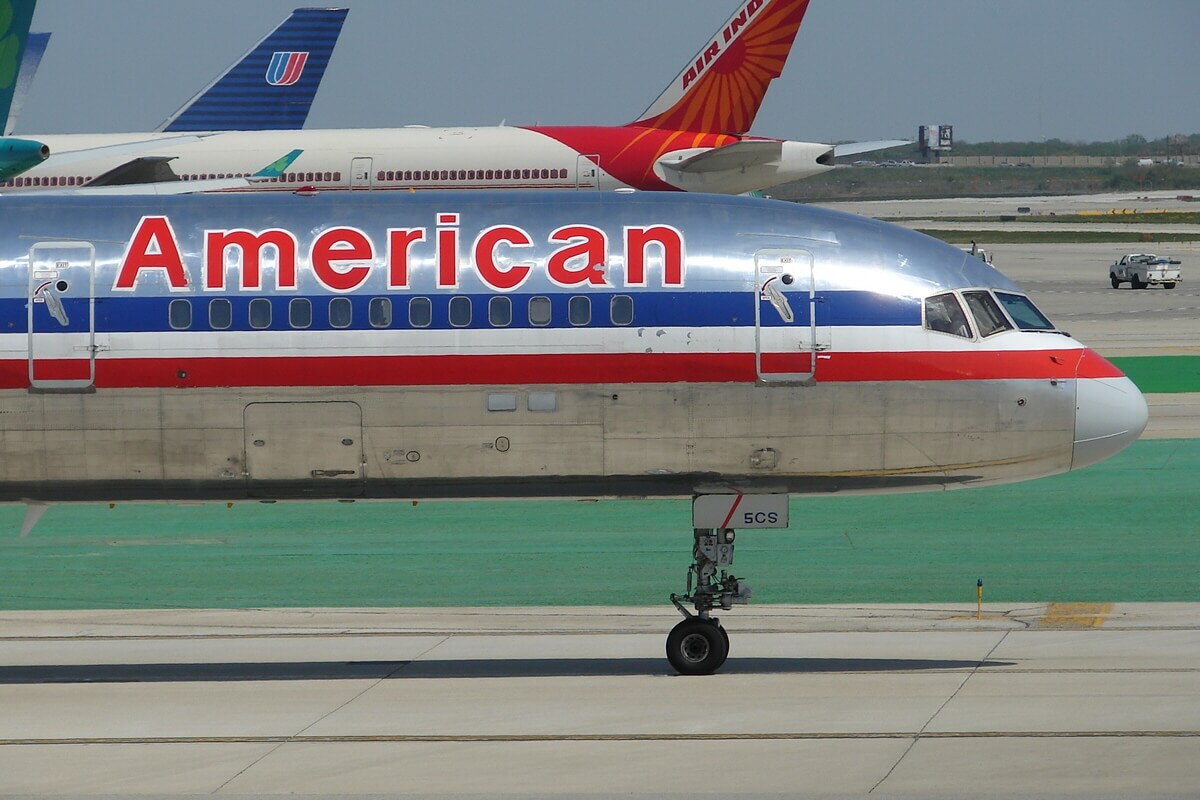
Photo: “A true workhorse, the 757” 12 May 2009, 14:47 Cory W. Watts from Madison, Wisconsin, United States of America. This file is licensed under the Creative Commons Attribution-Share Alike 2.0 Generic license.

Filed Under: King's Commentaries Tagged With: air travel, aviation, FAA, flying, travel

White House Chronicle on Social

  • Facebook
  • Twitter
  • Vimeo
  • YouTube
Soft Power, the Secret Sauce of the British Empire

Soft Power, the Secret Sauce of the British Empire

Llewellyn King

When President Trump, on the first day of his second term, closed the U.S. Agency for International Development and began dismantling the Voice of America, he also severely curtailed what had been America’s soft power dominance in the world. With those actions, we abandoned something of inestimable value: the ability to project Americanism, our ideals. […]

A British Immigrant’s Defense of Immigration

A British Immigrant’s Defense of Immigration

Llewellyn King

Migration, people moving to new lands, is as old as human history, and as fraught. Today it is a global problem complete with layered hypocrisy, cruelty and, always, hope among those on the move. War and extreme poverty collude in driving people to seek a livable future. There is no simple solution, no slogan that […]

The Birth of a New Reactor: Thorium Past and Present

The Birth of a New Reactor: Thorium Past and Present

Llewellyn King

If you are designing a car from scratch, there are certain essentials to begin with. You need to start with the wheels on the corners, for example. But when it comes to building a nuclear reactor, things are different. There are hundreds and maybe thousands of ways of doing it. The constant is that you […]

Air Conditioning Costs Threaten Summer of Sun Belt Catastrophe

Air Conditioning Costs Threaten Summer of Sun Belt Catastrophe

Llewellyn King

The summer of our discontent is at hand. When I asked a professional weather forecaster what we might expect this season, he said, “Hades.” That was as disturbing as everything else in this disturbing year. America has a summer culture. You could say the whole of the Northern Hemisphere has one, but there is a […]

Copyright © 2026 · White House Chronicle Theme on Genesis Framework · WordPress · Log in