White House Chronicle

News Analysis With a Sense of Humor

  • Home
  • King’s Commentaries
  • Random Features
  • Photos
  • Public Speaker
  • WHC Episodes
  • About WHC
  • Carrying Stations
  • ME/CFS Alert
  • Contact Us

Memories of PDVSA: The Same Problems, Just Worse Now

January 9, 2026 by Llewellyn King Leave a Comment

In 1991, the state oil company of Venezuela, Petroleos de Venezuela, S.A., known as PDVSA, invited the international energy press to visit.

I was one of the reporters who flew to Caracas and later to Lake Maracaibo, the center of oil production, and then to a very fancy party on a sandbar in the Caribbean.

They were, as a British journalist said, “putting on the dog.”

At that time, PDVSA executives were proud of the way they had maintained the standards and practices which had been in force before nationalization in 1976. The oil company was, we were assured, a lean, mean machine, producing about 3.5 million barrels per day.

They were keen to claim they had maintained the same esprit under state ownership as they had had when they were privately owned by American companies.

They had kept political interference at arm’s length, executives claimed.

PDVSA’s interest then, as it has always been, was more investment, particularly in its natural gas, known as the Cristobal Colon project.

In President Donald Trump’s takeover of Venezuela’s moribund oil sector, natural gas hasn’t been much mentioned — although there may eventually be more demand for natural gas from Venezuela than for its oil.

We had a meeting with Venezuela’s president, Carlos Andres Perez, who was called CAP. He painted a rosy future for the country and its oil and gas industry.

CAP believed the oil revenues would modernize the country. Particularly, he said that technology was needed to make the heavy oil more accessible and manageable.

And there’s the rub. While everyone is quick to point out that Venezuela’s oil reserves are the largest in the world, all oil isn’t equal.

Venezuela’s oil is difficult to deal with. It doesn’t just bubble out of the ground. Instead, 80% of it is highly viscous, more like tar than a free-flowing liquid. And it has a high sulfur content.

In other words, it is the oil that most oil companies, unless they have special production and refining facilities, want to avoid. It takes special coaxing to extract the oil from the ground and ship it.

Venezuelan oil has a high “lifting cost” which makes it expensive to begin with. At present, that cost is about $23 per barrel compared to about $13 per barrel for Saudi Arabian oil.

During the energy crisis, which unfolded in the fall of 1973 with the Arab oil embargo, U.S. utilities considered pumping it with a surfactant (a thinner) to Florida and burning it directly in boilers like coal.

As evidence that the oil operation hadn’t been damaged by nationalization, executives proudly told us that PDVSA produced more oil with 12,000 employees than the state oil company of Mexico, PEMEX, produced with 200,000.

In other words, the Venezuelans had been able to resist the temptation to turn the oil company into a kind of social welfare program, employing unneeded droves of people.

Now I read the workforce of PDVSA stands at more than 70,000 and oil production has slipped to about 750,000 barrels a day.

By 1991, the oil shortage which had endured since the Arab oil embargo had eased, and PDVSA was worried about its future and whether its heavy oil could find a wider market.

Particularly, it was worried about the day when it would run out of the lighter crudes and would be left only with its viscous reserves.

Two oil companies have been shipping oil to the United States during the time of revolution and sanctions: Citgo, a PDVSA-owned operator of gas stations in the United States, and Chevron. Both have waivers issued by the United States, although Citgo is under orders to divest and is set to be bought by Elliott Company (owned by Paul Singer, a Trump supporter), which may play a big role going forward in Venezuela as its expertise is in lifting.

About that party on a sandbank. Well, PDVSA wanted to show the press that it could spend money as lavishly as any oil major.

We were flown in a private jet to an island, then transported on speedboats to a sandbank, where a feast worthy of a potentate was set up under tents. The catering staff had been taken off the sandbank, so the effect was that the party had miraculously emerged from the Caribbean Sea.

Filed Under: King's Commentaries Tagged With: American, British, Caracas, Caribbean, Chevron, embargo, oil, PDVSA, Saudi, trump, Venezuela

How Fear Came to America in 2025

December 19, 2025 by Llewellyn King Leave a Comment

Of all the things that happened in 2025 — a year dominated by the presidency of Donald Trump — not the least is that fear came to America.

It’s reminiscent of the fear that African Americans knew in the days of the lynch mob, or that Jews have felt from time to time, or that Hollywood felt during the blacklist of the 1940s and 1950s, or the fear that people of Japanese descent from the West Coast, who were mostly U.S. citizens, felt when they were rounded up and interred following the attack on Pearl Harbor.

For some, it is a low-grade fear of reprisals, financial ruin and humiliation. And for some, it is a fear of ruin by litigation. But for others, it is fear of faceless arrest, the jail cell and plastic handcuffs.

All of this has made us a nation in fear and removed our faith in our laws, our Constitution, and our plain decency.

This is a new kind of fear which is acute in places, such as immigrant communities, but more universal than in the past.

It isn’t the fear of a foreign power or an alien ideology or a disease, but a fear generated domestically — generated by our own government. Fear in our workplaces, our schools, our movie studios, our newsrooms and our universities.

For the first time, this year we saw troops on the streets of cities when there was no civil unrest — as there was, for example, during the riots of 1968 which followed the assassination of Martin Luther King Jr.

We saw troops deployed in cities where they weren’t wanted, opposed by the local government and local people. But those cities got the troops courtesy of a claim by the president that troops can manage law enforcement better than the local police. Or was there some more sinister purpose?

For the first time, we saw arrests without charge or evidence, carried out by masked ICE agents, of people simply suspected of being here illegally.

Often the suspicion is no more than the color of the arrestee’s skin, their dress and their demeanor. No crime needs to be proved by this army of the state, dressed to intimidate. To the ICE men and women, appearance is tantamount to conviction.

Nightly on television we watched agents drag away men, women and children without due process; they would be held and deported without charge, trial or having any avenue of appeal. Justice denied, nonoperational. Often deportees go to countries that are alien or different from their homelands.

Fear has come home.

Immigrants are frightened even if they are citizens. If you have olive-toned skin, you can be dragged and held incommunicado. No appeal, no trial, no court appearance, no access to help. Habeas corpus suspended.

Pinch yourself and ask: Is this the America we cherish for its freedom, its justice and its generosity of spirit?

The fear isn’t confined to those who might be swept up in the mindless cruelty of ICE but extends throughout society. People with stature fear that if they speak out, if they do what at other times they might have seen as their civic duty, they will endanger themselves and their families. All the government has to do is to start an investigation or threaten one and the damage is done, the first level of punishment is delivered.

Investigations can target anything from how you filled out a mortgage application to whether you wrote something which may be viewed as objectionable, and the punishment begins.

Fear stalks the schools where teachers and professors can be punished for what they say or teach, and where the institutions of higher learning are subject to political scrutiny. Politics has become the law, capricious and savage.

There is fear in business where so many companies rely on government loan guarantees or tax credits for their growth. There is fear that if they say anything that can be construed as disloyal, they will be punished.

Political opponents fear that their mortgage applications may be deemed to be irregular and they are to be censured or prosecuted. Political prosecution is now a government tool.

Others just fear that Trump will ridicule them in public with his schoolyard denigrations, particularly members of Congress. They fear they will be reprimanded and marked for defeat in the polls.

There is an awful completeness about the Trump rampage: his systematic ignoring of norms, shredding of the rights of the individual, destroying families and bringing about untold misery.

A question for all America: How is the spreading of fear — sometimes an acute fear and sometimes low-grade fear — throughout society beneficial and to whom?

We, the people, deserve to know.

Filed Under: King's Commentaries Tagged With: 2025, America, Congress, Constitution, fear, government, ICE, ideology, immigrant, trump, universities

‘Whacking the Cut’: A Different View of the BBC Crisis

November 21, 2025 by Llewellyn King Leave a Comment

The BBC has fallen on its sword. The director general has resigned and so has the head of news over the splicing of tape of President Donald Trump’s rambling speech on Jan. 6, 2021, which preceded the sacking of the Capitol.

The editor and the technician who did the deed for the esteemed BBC program “Panorama” haven’t been publicly identified.

Agreed, they shouldn’t have done what they did. But was there malice?

Journalism is a business of serial judgment. It is replete with mistakes — things that we who practice the craft wish we hadn’t done.

I have worked as an editor in film, with tape and on newspapers, and I have seen how the paranoia of politicians can cast a whole news organization as a biased enemy when that wasn’t the intent.

Before a single sentence or an article appears in a newspaper or a video appears on television, dozens of judgments have been made — not by teams of academics or by ethicists or by juries, but by individuals responding to time pressure and what they judge to be newsworthy.

The unsaid pressure to keep it interesting, to have news worth something, is always there. The reader has to be kept reading or the viewer watching.

After something is published or broadcast, it can be beacon-clear what should have been done or corrected, but in the moment, those defects are opaque.

Let me take you behind the veil.

It is a hot night in 1972. There is a presidential election brewing and among those running for the Democratic nomination is Henry “Scoop” Jackson, the well-known Democratic senator from the state of Washington.

I am working in the composing room of The Washington Post as the editor in charge of liaising between the printers and the editors. The job is sometimes called a stone editor after the “stone,” big metal tables that held the pages and where the newspaper was assembled in the days of hot type.

It was a busy news night, and it was when David Broder was the political reporter without rival. He was industrious and thorough, dedicated and prolific. As the night wore on, Broder would often add new stuff to his story, and it would grow in length.

In desperation when things got tough and deadlines were pressing, we would cut back the size of the photos, which had run in the first edition. The editor on duty would just ask the printers to do this: It was known as “whacking the cut.”

In short, the photo would be reduced in size by cutting it down physically. The engraving would be put in a guillotine and some of it would be cut off, whacked.

That night, we had a large photo of Jackson addressing a large crowd.

But as the night wore on and different editions and mini editions, known as replates, were assembled, I ordered the cut whacked and whacked again. The result was that by the time the main edition went to press, the good senator was talking to a much smaller audience — although it did suggest that many more were there but not seen.

Jackson thought this was a deliberate bias by The Post to suggest that he couldn’t draw a large audience, and he called the legendary editor Ben Bradlee.

Bradlee asked the national editor, Ben Bagdikian, who was to become an authority on newspaper ethics, what happened. When they came to me, I explained how we trimmed the pictures.

While Bradlee was amused, Bagdikian added it to his concern about newspaper ethics.

Journalism is executed by individuals under pressure. It is a business of multiple judgments made sequentially, often without a lot of contemplation.

I once worked at the BBC in London, and the same pressures were present. I was scriptwriter and editor on the evening news. You made decisions all the time: This frame in, those 20 frames out. An outsider might imagine prejudice and foul intent in the way one clip was used and others were not.

In the news trade, judgments trip you up, but judgment is essential. Later the judge is judged, as at the BBC.

Filed Under: King's Commentaries Tagged With: BBC, Ben Bagdikian, business, David Broder, Democratic, journalism, news, politicians, television, trump, video

A Reminder of Kings and Emperors To Rise at the White House

October 31, 2025 by Llewellyn King Leave a Comment

President Donald Trump is building what will become one of the greatest snow-colored pachyderms in the history of the United States.

Some of the nation’s biggest tycoons are going to pay for this ballroom, which will look like the box that the rest of the White House came in — a statement often made about the Kennedy Center looking like the container the adjacent Watergate complex came in.

Those favor-seeking tycoons won’t be around to maintain the building as it stands mostly empty through the decades. Buildings that stand empty deteriorate rapidly. This piece of megalomania, expressed in stone, concrete and gold leaf, will be a burden to taxpayers.

Its ostensible purpose is for state dinners, where heads of state we as a nation want to flatter are dined. They should be called state ingratiation events.

When the president of the United States gives you a state dinner, you are exalted, whether it is haute cuisine in a gilded neoclassical building that looks like a 19th-century railroad station or in a tent. The office of the president doesn’t need gold leaf and vaulted ceilings to embellish it.

“Location, location, location,” say the realtors, and there’s the rub. The White House is, by design, inaccessible.

I can say this with authority because for years I had a so-called White House hard pass and could gain entry quite easily. Even with it, my personal belongings and I had to pass through scanners at the visitor gates.

If you don’t have a hard pass, you will have a hard time. You need an escort, and that must be arranged. Things lighten up a bit for events such as the Christmas parties. If you want to be there in time to have your picture taken shaking hands with the president, get there extra early.

The White House gates are a nightmare, and sometimes precleared names are lost mysteriously in the computer system. This happened to a reporter who worked for me who was invited to a press picnic held on the South Lawn during the Clinton administration. The poor fellow had to stand outside the gate like an untouchable while the rest of us got through.

Eventually, he got in. President Bill Clinton — who had an extraordinary ability to find a discomforted person in any situation and make them feel good — put his arm around the reporter in no time. When you have had difficulty getting into the White House, you mostly just feel rejected. The Secret Service makes a person waiting to be cleared for entry at the gates feel inferior or implies that they are up to no good.

My wife, Linda Gasparello, a fully accredited White House correspondent at the time, used her influence to get the crooner Vic Damone, who had an appointment, past the implacably suspicious gatekeepers. He was nearly in tears of frustration from the way he was treated.

The envisioned shimmering excess at 1600 Pennsylvania Avenue won’t lend itself to being used for charity events or non-White House galas. It will be just too difficult to get in.

Washington isn’t short on big, fancy spaces. I believe the biggest (besides armories and hangars) is the ballroom of the Walter E. Washington Convention Center. That room can seat over 2,700 and hold 4,600 for non-dinner events.

The Trump Ballroom would accommodate 1,000, we are told, presumably seated. So, it is too small for one kind of event and possibly too big for other events that might take place at the White House, if the attendees can get through the security barriers.

Washington isn’t London or Paris. It isn’t overstocked with grandiose ceremonial structures built by kings and emperors for their own aggrandizement. Instead, it has fun spaces that are pressed into service for formal affairs, such as the Spy Museum, the National Building Museum or the Air and Space Museum, in keeping with a nation that prizes its citizens over its leaders.

It seems to me that it is wholly appropriate for the United States to show national humbleness, as befits a country which threw off a king and his grandeur 250 years ago.

I have always thought that the tents put up for state dinners at the White House had a particularly American charm — a modest reproach to the world of dictators and fame-seekers, an unsaid rebuke to ostentation.

Filed Under: King's Commentaries Tagged With: ballroom, Christmas, Clinton, Emperors, Kings, Secret Service, trump, tycoons, Watergate, White House

This Isn’t the Time To Politicize Electricity Again

September 19, 2025 by Llewellyn King Leave a Comment

The future of electricity is being discussed in terms of how we make it: whether it should be generated by nuclear, wind and solar or by coal and natural gas.

Nuclear is favored by the utilities and the Trump administration, but it will take decades and untold billions of dollars to build up a sizable nuclear fleet.

The administration has muddied the situation by denouncing wind, halting most offshore wind development, and heavily favoring coal and natural gas.

The utility companies that make and deliver electricity favor what has been described as “all of the above,” weighted by regional resources and state laws.

Twenty-three states and Washington, D.C., have zero-carbon goals. Their laws say that by a certain date, carbon-emitting power plants must be phased out.

The administration says turn right, and the states say turn left. But the nation can ill afford a debate over electricity supply.

America needs more electricity now and will need much more in the near future, reflecting the growth in demand for transportation, manufacturing and, above all, the demands of data centers and artificial intelligence — demands that are growing relentlessly.

Changing how we manufacture electricity isn’t helpful if the nation is to avoid blackouts and brownouts. They could begin any time, depending on that great variable: weather.

It used to be that if you asked utility executives what kept them awake at night, they would say, “Cybersecurity.” Now they say, “Weather.” I know. I ask some of them regularly.

Electricity is fundamental. It is unlikely to be replaced. Its essentiality is uncontested. However, what we use to make it — hydro, wind, solar, natural gas, coal, geothermal and nuclear — is changeable. The methods can be superseded by something else.

It is impossible to conceive of electricity being replaced by another force. Electricity is in nature as well as the wall plug. In short, we may well have different kinds of cars, airplanes and homes in the future, but electricity will be the constant, as vital as water.

In recent years, as summers have gotten hotter and drier, electricity has become more and more important. With some places having temperatures of over 100 degrees for weeks and months, air conditioning has moved from being a source of comfort to being essential for life. In Arizona alone, heat deaths are running over 600 a summer — and it is hard to measure accurately who has died because of heat.

There is some good electricity news that doesn’t seem to have been politicized.

Batteries are getting better, and more of utility scale are being installed. The electricity systems operators in California and Texas — California ISO and ERCOT — have both said that in critical times, their systems have been saved by utility batteries. They are the silent heroes of the moment.

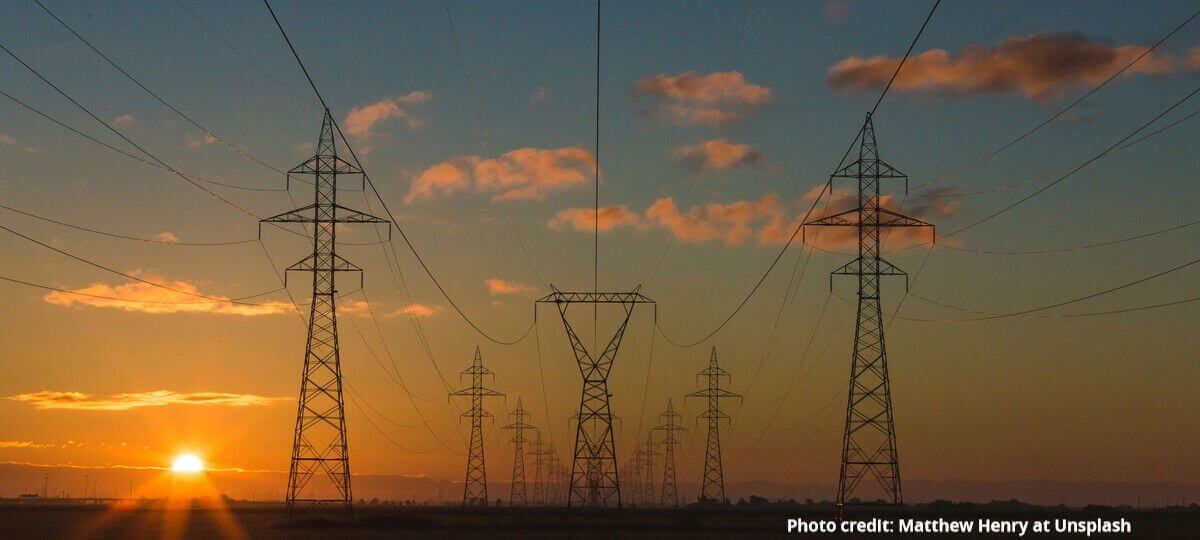
Likewise, another critical change has been the development of better transmission wires, known in the industry as connectors. Traditionally, they have been made with a steel core and the electricity moving in aluminum around the core, which provides strength and stability. The new connectors have light carbon fiber cores, which don’t sag when hot and carry nearly twice as much electricity as the steel-cored variety.

The so-called Big Beautiful Bill savages the renewable power sector by phasing out tax credits, which had become the building blocks of the sector. Now many solar and wind projects will evaporate, and some companies will fail.

Part of the genesis of today’s problem is that another kind of polarization hampered the ordered growth of nuclear power — the logical new frontier of electric generation — in the latter three decades of the 20th century. Fears over nuclear safety were fanned by politicians and the environmental movement.

The environmentalists favored coal over nuclear before wind and solar were perfected. That legacy means nuclear power is now in need of a whole new workforce and supply chain.

President Donald Trump wants to build 10 big nuclear plants of the kind that make up the present nuclear fleet of 95 reactors. He will find that the workers and expertise for that kind of effort are in perilously short supply and will take years to rebuild.

To take any power source off the table today for political reasons is to endanger the nation.

Filed Under: King's Commentaries Tagged With: coal, electricity, future, hydro, natural gas, nuclear, solar, trump, Washington, wind

The Stateless in America Would Face a Kind of Damnation

September 12, 2025 by Llewellyn King Leave a Comment

I have only known one stateless person. You don’t get a medal for it or wear a lapel pin.

The stateless are the hapless who live in the shadows, in fear.

They don’t know where the next misadventure will come from: It could be deportation, imprisonment or an enslavement of the kind the late Johnny Prokov suffered as a shipboard stowaway for seven years.

His story ended well, but few do.

When I knew Johnny, he was a revered bartender at the National Press Club in Washington. By then, he had American citizenship, was married and lived a normal life.

It hadn’t always been that way. He told me he had come from Dalmatia, when that area was so poor people took their clothes to a specialist who would kill the lice in the seams with a little wooden mallet, which wouldn’t damage the cloth.

To escape that extreme poverty, Prokov became a stowaway on a ship.

So began his seven-year odyssey of exploitation and fear of violence. The captains took advantage of the free labor and total servitude of the stowaways.

Eventually, Prokov jumped ship in Mexico. He made his way to the United States, where a life worth living was available.

I don’t know the details of how he became a citizen, but he dreamed the American dream — and it came true for him.

An odd legacy of his years at sea was that Prokov had become a brilliant chess player. He would often have as many as a dozen chess games going along the bar in the National Press Club. He always won. He had had time to practice.

The United Nations says there are 4 million stateless people in the world, but that is a massive undercount. Many of those who are stateless are refugees and have no idea if they are entitled to claim citizenship of the countries they are desperate to escape from. Citizenship in Gaza?

Now the Trump administration wants to add to the number of stateless people by denying birthright citizenship to children born of illegal immigrants in the United States.

It wants to deny people — who are in all ways Americans — their constitutional right of citizenship. Their lives will be lived on a lower rung than their friends and contemporaries. They will be denied passports, maybe education, possibly medical care, and the ability to emigrate to any country that otherwise might have received them.

Instead, they will live their lives in the shadows, children of a lesser God, probably destined to have children of their own who might also be deemed noncitizens. They didn’t choose the womb that bore them, nor did they sanction the actions of their parents.

The world is awash in refugees fleeing war, crime and violence, and environmental collapse. Those desperate people will seek refuge in countries which can’t absorb them and will take strong actions to keep them out, as have the United States and, increasingly, countries in Europe.

There is a point, particularly in Europe, where the culture and established religion is threatened by different cultures and clashing religions.

But when it comes to children born in America to mothers who live in America, why mint a new class of stateless people, condemned to a second-class life here, or deport them to some country, such as Rwanda or Uganda, where its own people are already living in abject poverty?

All immigrants can’t be accommodated, but the cruelty that now passes for policy is hurtful to those who have worked hard and dared to seek a better life for themselves and their children.

It is bad enough that millions of people are seeking somewhere to live and perchance a better life, due to war or crime or drought or political follies.

To extend the numbers by denying citizenship to the children of parents who live and work here isn’t good policy. It is also unconstitutional.

If the Supreme Court rules in favor of the administration, it will add social instability of haunting proportions.

Children are proud of their native lands. What will the new second class be proud of — the home that denied them?

Filed Under: King's Commentaries Tagged With: America, citizenship, Dalmatia, Europe, immigrants, Mexico, refuge, stateless, trump, Washington

How the Special Relationship Became the Odd Couple

September 5, 2025 by Llewellyn King Leave a Comment

Through two world wars, it has been the special relationship: the linkage between the United States and Britain. It is a linkage forged in a common language, a common culture, a common history and a common aspiration to peace and prosperity.

The relationship, always strong, was burnished by President Ronald Reagan and Prime Minister Margaret Thatcher.

Now it looks as though the special relationship has morphed into the odd couple.

Britain, it can be argued, went off the rails in 2016 when, by a narrow majority, it voted to pull out of the European Union.

With a negative growth rate, and few prospects of an economic spurt, Britons can now ponder the high price of chauvinism and the vague comfort of untrammeled sovereignty. Americans could ponder that, too, in the decades ahead.

Will tariffs — which have already driven China, Russia and India into a kind of who-needs-America bloc — be the United States’ equivalent of Brexit? This economic idea doesn’t work but has emotional appeal; it is isolating, confining and antagonizing.

A common thread in the national dialogues is immigration.

Britain is swamped. It is dealing with an invasion of migrants that has changed and continues to change the country.

In 2023, according to the U.K. Office for National Statistics, 1.326 million migrants moved to Britain; last year, the number was 948,000. There has been a steady flow of migrants over the past 50 years, but it has increased dramatically due to wars around the globe.

Among European countries, Britain, to its cost, has had the best record for assimilating new arrivals. It is a migrant heaven, but that is changing with immigrants being blamed for a rash of domestic problems, from housing shortages to vastly increased crime.

In the 1960s, Britain had very little violent crime and street crime was slight. Now crime of all kinds — especially using knives — is rampant, and British cities rival those across America — although crime seems to be declining in America, while it is rising in Britain.

Britain has a would-be Donald Trump: Nigel Farage, leader of the Reform U.K. party, which is immigrant-hostile and seeks to return Britain to the country it was before migrants started crossing the English Channel, often in small boats.

Farage has been feted by conservatives in Congress, where he has been railing against the draconian British hate-speech laws, which he sees as woke in overdrive.

Britain has been averaging 30 arrests a day for hate speech and related hate crimes, few of which result in convictions.

Two recent events highlight the severity of these laws. Lucy Connolly, the 42-year-old wife of a conservative local politician, took issue with the practice of housing immigrants in hotels; she said the hotels should be burned down. Connolly was sentenced to 31 months in jail. She has been released, after serving 40% of her sentence.

A very successful Irish comedy writer for British television, Graham Linehan, posted attacks on transgender women on X. On Sept. 1, after a flight from Arizona, he was met by five armed police officers and arrested at London’s Heathrow Airport.

Britain’s hate laws, which are among the most severe in the world, run counter to a long tradition of free speech, dating back to the Magna Carta in 1215. An attempt to get more social justice has resulted in less justice and abridged the right to speak out. It’s a crisis in a country without a formal constitution.

On Sept. 17, Trump is due to begin a state visit to Britain. Fireworks are expected. Trump’s British supporters, despite Farage and his hard-right party, are still few and public antipathy is strong.

Trump, for his part, will seek to make his visit a kind of triumphal event, gilded with overnight posts on Truth Social on how Britain should emulate him.

The British press will be ready with vituperative rebukes; hate speech be damned.

It is unlikely that the Labor government, whose membership is as diverse and divided as that of the Democratic Party, will find anything to call hate speech about attacks on Trump. A good dust-up will be enjoyed by all.

Isolated, the odd couple have each other.

Filed Under: King's Commentaries Tagged With: Brexit, Britain, crime, European Union, Farage, immigration, Margaret Thatcher, odd, Ronald Reagan, trump, United States

Will AI Stimulate Shadow Government?

August 15, 2025 by Llewellyn King Leave a Comment

“This Time It’s Different” is the title of a book by Omar Hatamleh on the impact of artificial intelligence on everything.

Hatamleh, who is NASA Goddard Space Flight Center’s chief artificial intelligence officer, means that we shouldn’t look to previous technological revolutions to understand the scope and the totality of the AI revolution. It is, he believes, bigger and more transformative than anything that has yet happened.

He says AI is exponential and human thinking is linear. I think that means we can’t get our minds around it.

Jeffrey Cole, director of the Center for the Digital Future at the USC Annenberg School for Communication and Journalism, echoes Hatamleh.

Cole believes that AI will be as impactful as the printing press, the internet and COVID-19. He also believes 2027 will be a seminal year: a year in which AI will batter the workforce, particularly white-collar workers.

For journalists, AI presents two challenges: jobs lost to AI writing and editing, and the loss of truth. How can we identify AI-generated misinformation? The New York Times said simply: We can’t.

But I am more optimistic.

I have been reporting on AI since well before ChatGPT launched in November 2022. Eventually, I think AI will be able to control itself, to red flag its own excesses and those who are abusing it with fake information.

I base this rather outlandish conclusion on the idea that AI has a near-human dimension which it gets from absorbing all published human knowledge and that knowledge is full of discipline, morals and strictures. Surely, these are also absorbed in the neural networks.

I have tested this concept on AI savants across the spectrum for several years. They all had the same response: It is a great question.

Besides its trumpeted use in advancing medicine at warp speed, AI could become more useful in providing truth where it has been concealed by political skullduggery or phony research.

Consider the general apprehension that President Donald Trump may order the Bureau of Labor Statistics to cook the books.

Well, aficionados in the world of national security and AI tell me that AI could easily scour all available data on employment, job vacancies and inflation and presto: reliable numbers. The key, USC’s Cole emphasizes, is inputting complete prompts.

In other words, AI could check the data put out by the government. That leads to the possibility of a kind of AI shadow government, revealing falsehoods and correcting speculation.

If AI poses a huge possibility for misinformation, it also must have within it the ability to verify truth, to set the record straight, to be a gargantuan fact-checker.

It could be a truth central for the government, immune to insults, out of the reach of the FBI, ICE or the Justice Department — and, above all, a truth-speaking force that won’t be primaried.

The idea of shadow government isn’t confined to what might be done by AI but is already taking shape where DOGE-ing has left missions shattered, people distraught and sometimes an agency unable to perform. So, networks of resolute civil servants inside and outside government are working to preserve data, hide critical discoveries and keep vital research alive. This kind of shadow activity is taking place at the Agriculture, Commerce, Energy and Defense departments, the National Institutes of Health and those who interface with them in the research community.

In the wider world, job loss to AI — or if you want to be optimistic, job adjustment — has already begun. It will accelerate but can be absorbed once we recognize the need to reshape the workforce. Is it time to pick a new career or at least think about it?

The political class, all of it, is out to lunch. Instead of wrangling about social issues, it should be looking to the future, a future which has a new force. Much as automation was a force to be accommodated, this revolution can’t be legislated or regulated into submission, but it can be managed and prepared for. Like all great changes, it is redolent with possibility and fear.

Filed Under: King's Commentaries Tagged With: AI, ChatGPT, COVID-19, digital, employment, NASA, New York Times, Omar Hatamleh, revolution, trump

Trump Hostility To Wind And Solar Has Utilities Treading Softly

August 1, 2025 by Llewellyn King Leave a Comment

This commentary was originally published in Forbes.

President Donald Trump reiterated his hostility to wind generation when he arrived in Scotland for what was ostensibly a private visit. “Stop the windmills,” he said.

But the world isn’t stopping its windmill development and neither is the United States, although it has become more difficult and has put U.S. electric utilities in an awkward position: It is a love that dare not speak its name, one might say.

Utilities love that wind and solar can provide inexpensive electricity, offsetting the high expense of battery storage.

It is believed that Trump’s well-documented animus to wind turbines is rooted in his golf resort in Balmedie, near Aberdeen, Scotland. In 2013, Trump attempted to prevent the construction of a small offshore wind farm — just 11 turbines — located roughly 2.2 miles from his Trump International Golf Links, but was ultimately unsuccessful. He argued that the wind farm would spoil views from his golf course and negatively impact tourism in the area.

Trump seemingly didn’t just take against the local authorities, but against wind in general and offshore wind in particular.

Yet fair winds are blowing in the world for renewables.

Francesco La Camera, director general of the International Renewable Energy Agency, an official United Nations observer, told me that in 2024, an astounding 92 percent of new global generation was from wind and solar, with solar leading wind in new generation. We spoke recently when La Camera was in New York.

My informal survey of U.S. utilities reveals they are pleased with the Trump administration’s efforts to simplify licensing and its push to natural gas, but they are also keen advocates of wind and solar.

Simply, wind is cheap and as battery storage improves, so does its usefulness. Likewise, solar. However, without the tax advantages that were in President Joe Biden’s signature climate bill, the Inflation Reduction Act, the numbers will change, but not enough to rule out renewables, the utilities tell me.

China leads the world in installed wind capacity of 561 gigawatts, followed by the United States with less than half that at 154 GW. The same goes for solar installations: China had 887 GW of solar capacity in 2024 and the United States had 239 GW.

China is also the largest manufacturer of electric vehicles. This gives it market advantage globally and environmental bragging rights, even though it is still building coal-fired plants.

While utilities applaud Trump’s easing of restrictions, which might speed the use of fossil fuels, they aren’t enthusiastic about installing new coal plants or encouraging new coal mines to open. Both, they believe, would become stranded assets.

Utilities and their trade associations have been slow to criticize the administration’s hostility to wind and solar, but they have been publicly cheering gas turbines.

However, gas isn’t an immediate solution to the urgent need for more power: There is a global shortage of gas turbines with waiting lists of five years and longer. So no matter how favorably utilities look on gas, new turbines, unless they are already on hand or have set delivery dates, may not arrive for many years.

Another problem for utilities is those states that have scheduled phasing out fossil fuels in a given number of years. That issue – a clash between federal policy and state law — hasn’t been settled.

In this environment, utilities are either biding their time or cautiously seeking alternatives.

For example, facing a virtual ban on new offshore wind farms, veteran journalist Robert Whitcomb wrote in his New England Diary that the New England utilities are looking to wind power from Canada, delivered by undersea cable. Whitcomb wrote a book, “Cape Wind: Money, Celebrity, Energy, Class, Politics and the Battle for Our Energy Future,” about offshore wind, published in 2007.

New England is starved of gas as there isn’t enough pipeline capacity to bring in more, so even if gas turbines were readily available, they wouldn’t be an option. New pipelines take financing, licensing in many jurisdictions, and face public hostility.

Emily Fisher, a former general counsel for the Edison Electric Institute, told me, “Five years is just a blink of an eye in utility planning.”

On July 7, Trump signed an executive order which states: “For too long the Federal Government has forced American taxpayers to subsidize expensive and unreliable sources like wind and solar.

“The proliferation of these projects displaces affordable, reliable, dispatchable domestic energy resources, compromises our electric grid, and denigrates the beauty of our Nation’s natural landscape.”

The U.S. Energy Information Administration puts electricity consumption growth at 2 percent nationwide. In parts of the nation, as in some Texas cities, it is 3 percent.


Filed Under: King's Commentaries Tagged With: battery, China, electricity, Golf, renewables, Scotland, solar, trump, utilities, wind, windmills

Notebook: Requiem for American Justice

July 19, 2025 by Llewellyn King Leave a Comment

I have loads of my words to eat, a feast of kingly proportions.

I don’t know when I started, but it must have been back when I was traveling on the speaking circuit. It doesn’t matter.

This tale of getting it wrong starts in London, where I was asked to address a conference on investing in America. Most of the questions weren’t — as I imagined they would be — about investment and returns on it, or taxes, or the exportability of profits. Instead, the questions were about the U.S. legal system; how litigious we are and what that is like.

My response was that our courts are fair, there is less day-to-day litigation than you might think, and the courts can serve you as well as those who dispute your actions. I said, “Don’t be afraid of litigation. It could be your friend.”

Next stop: New Delhi. The question was how can we get more U.S. investment? My answer: Fix your courts. They are famous for how slow they are to reach a decision. Americans are used to predictable legal speed.

In Moscow, during the halcyon Mikhail Gorbachev days, I was asked about how to get U.S. companies to invest in Russia. My answer: Make sure the courts work fairly and, above all, are clear of politics.

In Ireland, I debated Martin McGuinness, the late IRA leader. It went well, despite my English accent. My contribution was to tell McGuinness that if there ever is a united Ireland, make sure the constitution doesn’t hide anything under the mat (I was thinking of slavery in America) and make sure the court system looks to that constitution, not to politics.

Why am I eating on my words? Why am I shoveling them down my throat by the (Imperial) bushel?

The front page of The Washington Post for July 18 tells the story: Three pieces there add up to up a requiem for American justice.

Exhibit 1, this headline: “In deadly raid DOJ eyes 1-day sentence.”

Exhibit 2: “Thousands here legally have 60 days to leave.”

Exhibit 3: “Brazil judge in Trump’s sights.”

Two of these shameful reports show that neither the judicial process nor the laws of the United States are sacrosanct anymore.

The third shows that the Trump administration not only doesn’t respect our own judicial processes, but also those of other countries.

The perversion of justice isn’t a domestic matter anymore.

******

The Trump budget cuts are moving through the system, like a virus. There are clusters of damage and some slow lower infection, but nonetheless are capable of inflicting severe harm.

I was reminded of this when at a Newport Classical Music Festival concert last week, the deputy chairman announced that they needed $40,000 to make up for the termination in National Endowment for the Humanities’ funding.

Now you could argue that Newport Classical will get by, and divine music will continue to echo through the Gilded Age mansions — known as “cottages” — without the government’s help.

But what about less-affluent places where concerts, plays and ramp-on for young people in the arts will be reduced or ended due to a lack of government support?

******

Some things take a long  time to invent.

Take cup holders in cars. No technology was needed but it wasn’t until the 1980s that a convenience store chain realized that their hot coffee needed a place of rest in cars.

They came up with a plastic device that hooked over a window. Okay unless you opened the window inadvertently, in which case the coffee or other liquid would land squarely in the customer’s lap. Ouch!

Detroit saw the possibilities and soon you were urged to buy an automobile based on how many drinks could be stowed safely in built-in cup holders during travel. Not to be outdone by Detroit, and all the other car manufacturers, recreational boats were next to secure drinks in holders.

One has to wonder why this wasn’t done in carriages or stagecoaches a long time before the automobile?

******

I flew from Rhode Island to Washington this week and I am writing this on my return trip on the train — unquestionably, a superior way of making this trip.

Of course, predictably, the plane was late, but I was feeling smugly superior. I had scored a first-class seat. My wife found me a first-class fare that was cheaper than coach. I think the term of art for this is: Go figure.

For my lucky break up front, I had nice service and a choice of protein bars or Biscoff cookies. For this people pay a lot of money?  Go figure.

Filed Under: King's Commentaries Tagged With: American, Brazil, Gorbachev, Justice, New Delhi, Politics, requiem, trump, Washington

  • « Previous Page
  • 1
  • 2
  • 3
  • 4
  • Next Page »

White House Chronicle on Social

  • Facebook
  • Twitter
  • Vimeo
  • YouTube
Is Rubio Starting a Nuclear Arms Race in the Middle East?

Is Rubio Starting a Nuclear Arms Race in the Middle East?

Llewellyn King

The Trump administration has announced and appears to be crowing over an agreement with Saudi Arabia to help the kingdom not only to build nuclear power plants but also to enrich the uranium fuel. There is no reason for the Saudis to enrich uranium. There are plenty of willing suppliers of enriched uranium and more […]

Soft Power, the Secret Sauce of the British Empire

Soft Power, the Secret Sauce of the British Empire

Llewellyn King

When President Trump, on the first day of his second term, closed the U.S. Agency for International Development and began dismantling the Voice of America, he also severely curtailed what had been America’s soft power dominance in the world. With those actions, we abandoned something of inestimable value: the ability to project Americanism, our ideals. […]

A British Immigrant’s Defense of Immigration

A British Immigrant’s Defense of Immigration

Llewellyn King

Migration, people moving to new lands, is as old as human history, and as fraught. Today it is a global problem complete with layered hypocrisy, cruelty and, always, hope among those on the move. War and extreme poverty collude in driving people to seek a livable future. There is no simple solution, no slogan that […]

The Birth of a New Reactor: Thorium Past and Present

The Birth of a New Reactor: Thorium Past and Present

Llewellyn King

If you are designing a car from scratch, there are certain essentials to begin with. You need to start with the wheels on the corners, for example. But when it comes to building a nuclear reactor, things are different. There are hundreds and maybe thousands of ways of doing it. The constant is that you […]

Copyright © 2026 · White House Chronicle Theme on Genesis Framework · WordPress · Log in