It sounds like an admonition from a senior detective to a junior colleague: Assume nothing.
Right now, across America, a lot of political assuming is going on, mostly among Democrats. The first assumption is that the Democrats will win the midterms. It is dangerous to assume the winner of any race until the winning post has clearly been passed. Nonetheless, a certain lightheadedness has taken over Democrats and those who are planning to vote with them.
The Democrats are also assuming victory not only in November 2026, but also victory in November 2028. They are dreaming of changes, cosmetic and profound.
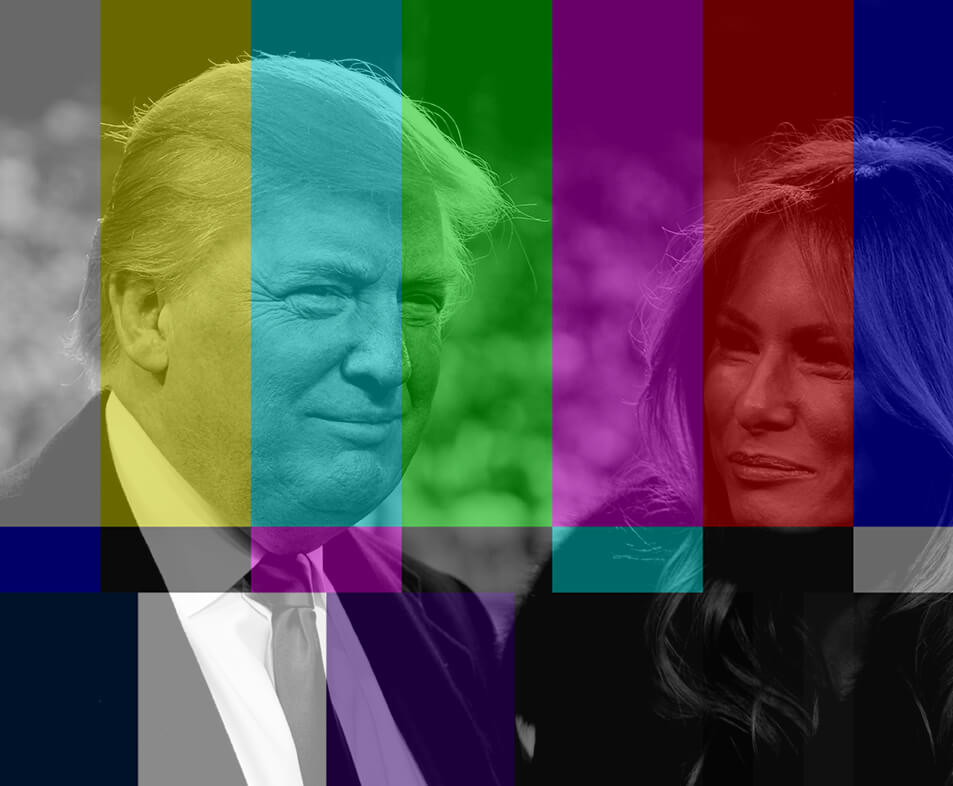
Cosmetically, they assume some of the extremes of President Trump’s architectural bric-a-brac in Washington will be torn down — especially the ballroom at the White House and the arch he is dead set on building at Memorial Bridge. Trouble is that people may like the arch and take it to heart. Also, the cost of taking it down will matter.
The ballroom will survive because, well, what could replace it? The East Wing of the White House has gone, and a replica would be an expensive undertaking. Nothing — a gaping hole — isn’t an option.
If he razes the Kennedy Center, the Democrats will rebuild it. The Kennedy name remains dear to them.
The new face of Washington is to be one built by Trump: the ballroom, the arch, and many monuments.
Expect to see these on selfies, postcards and as location identifiers in movies, like the way the London Eye, a Ferris wheel, has come to be the modern symbol of London, taking over from Tower Bridge.
Should a Republican win the presidency in 2028, other Trump changes, like renaming the Gulf of Mexico the Gulf of America and Lake Ontario Lake America, will create optics and likely trigger legal challenges. A Democratic president will turn that clock back with relish, restoring the old names as the beginning of accommodations with Mexico and Canada.
The heavy lifting, as usual, won’t be the optics but the substance. There is a new world order, and future administrations will have to find America’s place in it — while still facing off against China.
The Democrats, suffering from lightheadedness based on the assumption of victory in the midterms and further victory in 2028, assume that by some magic time travel, the status quo ante will return and the world will be put back together again as it was before Trump 2. Magical thinking.
They should contemplate the significance of Lady Macbeth’s declaration, “What’s done cannot be undone.”
Consider two seemingly irrevocable changes affecting two very different nations, Canada and Iran.
Canada, which has been a constant friend to America throughout its history, is riled as never before. The astute Canadian prime minister, Mark Carney, has sought to align his vast underpopulated country with Europe. There is even talk of Canada joining the European Union as its 28th member. That is Canadian lightheadedness.
First, the EU isn’t in great shape and has failed to coalesce into a country-like entity. It is riven with national interests and rivalries.
Second, there is the problem of the Atlantic. Whereas most of the EU is contiguous, Canada is far away, and its borders are determined not by a customs post but by an ocean — and by oceans of other differences.
Somehow, despite the loss of trust over torn-up treaties, Canada and the United States need each other.
While at war with America, Iran has discovered a compelling advantage in the region: the Strait of Hormuz. Control of the strait means control of a major asset, affecting the production and export of oil and gas in much of the Middle East. One-third of the world’s fertilizer passes through the strait.
The Trump administration believes America can control the strait and operate it as though it were the Panama Canal before President Jimmy Carter handed it over to Panama.
Sadly, this assumption belies reality. The Iran war has awakened the sleeping dog at the gate, and it is unlikely to obey a new owner or go back to sleep.
I believe we will win the war in the conventional sense, but we can never carry home the prize — that remains a territorial possession of Iran.
Trump’s mark on Washington and the world, like Lady Macbeth’s stain, is indelible.