White House Chronicle

News Analysis With a Sense of Humor

  • Home
  • King’s Commentaries
  • Random Features
  • Photos
  • Public Speaker
  • WHC Episodes
  • About WHC
  • Carrying Stations
  • ME/CFS Alert
  • Contact Us

Energy and Government Are Inconstant Lovers

January 30, 2026 by Llewellyn King Leave a Comment

Politics and science are always falling in love, but they seldom live happily ever after. Quick to embrace, messy to separate is the pattern.

Nowhere has this been clearer than with energy, where projects are dependent on some form of government approval, endorsement, funding and sometimes direct involvement — for example, when the Army Corps of Engineers designs a hydroelectric project or the government’s commitment to take nuclear waste.

The late Financial Times science editor, David Fishlock, with whom I collaborated for many years, advised me to be wary of government falling in love with science, because of the catastrophe that ensues when government falls out of love with it.

Consider the love affair between successive administrations, from Dwight Eisenhower to Gerald Ford, and nuclear power. The administration of Jimmy Carter was cold to nuclear — a cooling that lasted long after he left office.

Carter, a nuclear engineer, delivered the lethal kiss when he described nuclear as the choice of last resort. He favored coal and conservation as the best energy policy, and created the U.S. Synthetic Fuels Corp. to exploit coal. Carter envisioned a time when coal would answer most energy needs: coal in the form of synthetic gas, liquid fuel for transportation, and plenty of coal-fired electricity.

Options were few.

I had worked with the Atomic Energy Commission’s Gorman Smith — who later became executive director of the U.S. Energy Association — on a study for President Richard Nixon on the crisis after the Arab Oil Embargo of 1973, and we found the energy cupboard bare. At that time, only nuclear and coal were options. Natural gas was believed to be a resource of the past — the first deputy energy secretary, Jack O’Leary, described it as “a depleted resource.”

Wind and solar were in the dream stage, although the national laboratories were doing yeoman’s work on them.

What wasn’t known was the extent to which technology would upend the energy ecosystem and take it from dearth to abundance.

While Ronald Reagan’s heart was with nuclear, his energy secretary, John Herrington, spooked the debate with his constant leaking to The New York Times about the problems with nuclear waste, and particularly with the large nuclear reservation in Hanford, Wash., where defense waste is stored, dating back to the early days of the Cold War.

Reagan significantly advanced natural gas by deregulating the market and easing the restrictions imposed on it.

Deregulation primed the pump for the explosion that was to come with the perfection of an old technology, fracking, and other technological breakthroughs, particularly horizontal drilling and 3D seismic imaging in gas and oil exploration. A final tech boost to gas was the surge in deployment of aeroderivative turbines — jet engines on the ground — in the late 1980s. They burn gas far more efficiently than placing it directly under boilers, a so-called thermal gas system.

The Joe Biden administration was committed to reducing greenhouse gas emissions, primarily carbon. It shifted dramatically away from coal and gas and embraced renewables. That administration’s embrace was part of a worldwide transition to renewables, sometimes with aggressive encouragement through loans and tax breaks.

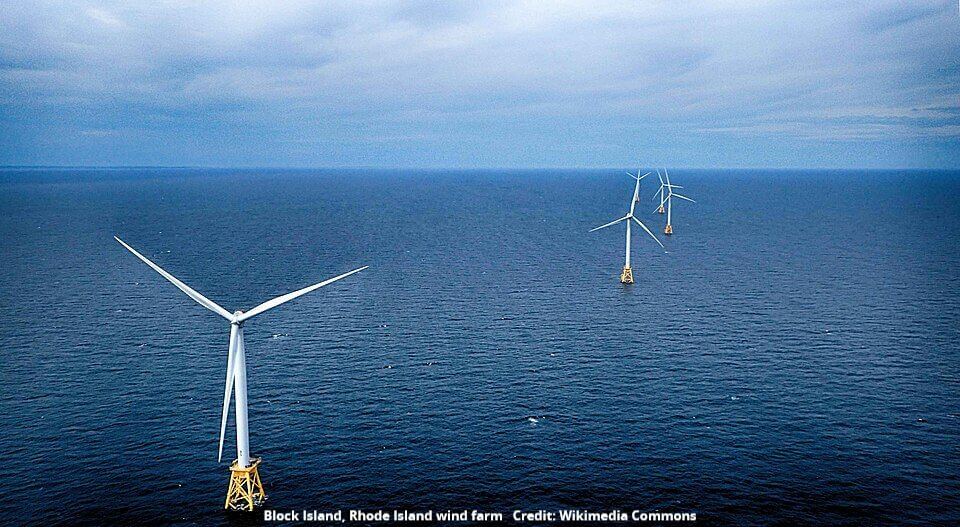
Now with Donald Trump, we have an administration that worships gas, venerates coal, and has come down heavily against wind, especially offshore turbines, even as the world — including China and Europe — has embraced them. It has also criticized solar power, but with less vehemence than its criticism of wind generation.

Nuclear is a favorite now with Democrats and Republicans. However, the Trump administration continues to hamper wind energy, going so far as to cancel offshore leases, while trying to resuscitate the coal industry.

Politics is at work, orchestrating what the administration hopes will be the end of wind and solar.

It also puts them at odds with the big tech companies, which are desperately seeking more green power for their data centers.

Another victim of the administration’s energy policy is hydrogen, a darling of the environmental movement.

The utilities have been here before and have developed a quiet skill in appearing to go along even while they plan — which they do in 25-year cycles — against the four-year political horizon. They have chosen not to challenge the administration’s position with a collective voice.

At present, the administration’s official line is that there is no global warming. The president has called it a hoax and a con. However, utilities are struggling with extremes of winter cold and summer heat that they haven’t historically experienced.

Keep quiet and keep the lights on is the undeclared utility strategy.
Filed Under: King's Commentaries Tagged With: Biden, cold, deregulation, energy, fracking, government, Jimmy Carter, nuclear, Ronald Reagan, science, trump, utilities

The Case for Prescribed Burning: Fighting Fire With Fire

August 22, 2025 by Llewellyn King 1 Comment

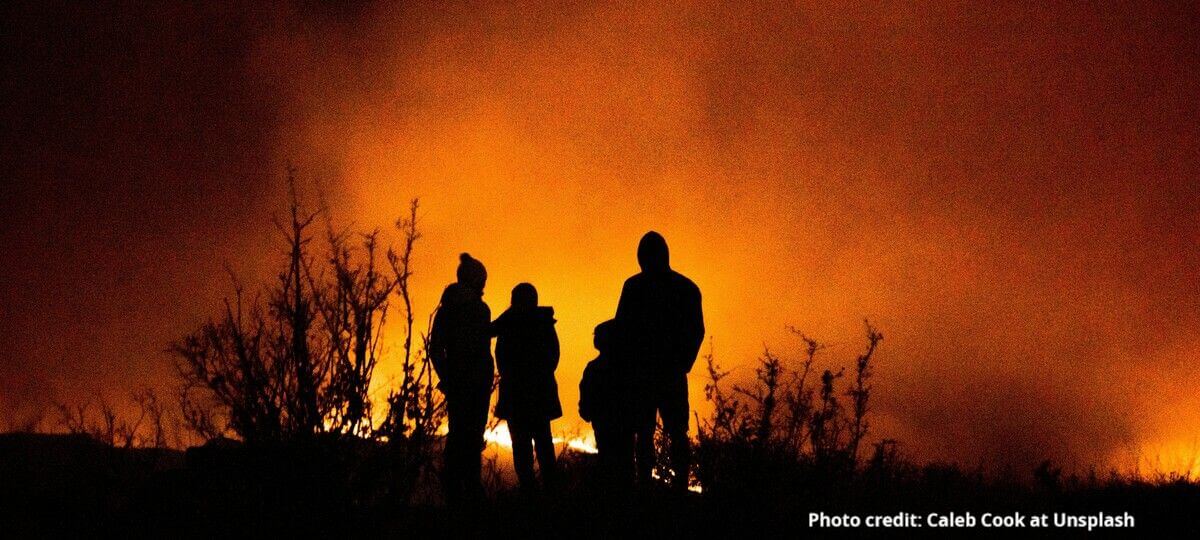
Wildfire takes no prisoners, has no mercy, knows no boundaries, respects no nation and is a clear and present danger this and every summer as summers grow drier and hotter.

The American West is burning; across Canada there are wildfires; and swaths of France, Spain, Portugal and Greece are ablaze. In 2022, faraway Siberia was ablaze.

California bears the scars of where wildfires and humans have collided and the humans and their homes have lost, recently and devastatingly in Los Angeles’ Pacific Palisades neighborhood. Experts say that even in the formerly moist East, conditions for wildfire are growing.

The damage to lives and livelihoods here and abroad is beyond calculation.

Olive oil and wine from Europe will be more expensive this year because so many trees and vines have burned. Humankind’s ancient enemy stalks the world: irrational, brutal and very hard to stop.

One of the largest U.S. electric utilities, Pacific Gas and Electric, facing an estimated $30 billion in liabilities from 2017 and 2018 wildfires believed to have been caused by their equipment, filed for bankruptcy protection in 2019. Utilities have been on the forefront of wildfire suppression because some fires are started by sparking from overhead lines.

An army of people and technology is deployed in the United States to fight wildfires and still it comes up short; these tools include AI and drones, aircraft and, of course, the indefatigable but inevitably limited intervention of firefighters on the ground.

There is an additional tool: Fighting fire with fire with so-called prescribed burning or controlled burning.

I learned about this technique from J. Morgan Varner, director of research and senior scientist at Tall Timbers in Tallahassee, Florida.

For 60 years, Tall Timbers, a nonprofit group, has been doing prescribed burning — the controlled application of fire to a specific area of land to achieve defined management objectives — in southern Georgia and northern Florida. Now their expertise on this traditional and effective tool for maintaining ecosystems and reducing wildfire risks is widely sought.

Even so, Varner said, the technique has its critics, mostly from those who have sought to suppress or avoid fire as the first line of defense.

Varner explained that this has led to decades of fuel (made up of dead trees and vegetation) accumulation on forest floors. When this burns, it burns with great heat and destroys everything; in a prescribed burn, the damage is less severe and more of a forest’s natural infrastructure survives.

I didn’t see a burn in progress, but I did see the aftermath of one on a hunting estate in southern Georgia, where the landlord worked with Tall Timbers. There was a strong smell of burning and some residual smoldering logs, but the land was ready for natural rejuvenation.

The idea is that with careful burning, the land is returned to its natural rhythm. This region of Georgia along the Florida border, known as the Red Hills, has seen controlled burning for a long time, and the forests and the wildlife are both healthy.

Wildlife is one of the concerns about deliberate burning, but Varner says animals are naturally fire sensitive and very adept at getting out of the way.

A prescribed burn is a carefully managed event. Conditions must be exactly right: wind, humidity, the nature of the vegetation and the amount of fuel on the ground.

Varner says that the ideal burn area is 40 acres, and burning is done in the spring or the fall, not in the summer heat. A team of experts surveys the area of the burn and calculates the behavior of the fire before ignition.

Although prescribed burning has ancient history and a lot of scientific evidence supporting it, it isn’t everyone’s solution. I asked the president of a West Coast utility about using it and got a curt reply: “No way.”

Looking at a beautiful stand of trees, I find it hard to imagine deliberately setting it alight. However, I am convinced that fire has to be used to fight fire and that periodically in nature there is wildfire, and it is part of a natural cycle. I’m beginning to take note of the dead trees among the living ones.

If summers get even hotter and drier, more radical solutions to fire will have to be employed, including fire.

Filed Under: King's Commentaries Tagged With: Burning, California, Canada, controlled burning, Electric, Europe, J. Morgan Varner, Siberia, utilities, Wildfires

Trump Hostility To Wind And Solar Has Utilities Treading Softly

August 1, 2025 by Llewellyn King Leave a Comment

This commentary was originally published in Forbes.

President Donald Trump reiterated his hostility to wind generation when he arrived in Scotland for what was ostensibly a private visit. “Stop the windmills,” he said.

But the world isn’t stopping its windmill development and neither is the United States, although it has become more difficult and has put U.S. electric utilities in an awkward position: It is a love that dare not speak its name, one might say.

Utilities love that wind and solar can provide inexpensive electricity, offsetting the high expense of battery storage.

It is believed that Trump’s well-documented animus to wind turbines is rooted in his golf resort in Balmedie, near Aberdeen, Scotland. In 2013, Trump attempted to prevent the construction of a small offshore wind farm — just 11 turbines — located roughly 2.2 miles from his Trump International Golf Links, but was ultimately unsuccessful. He argued that the wind farm would spoil views from his golf course and negatively impact tourism in the area.

Trump seemingly didn’t just take against the local authorities, but against wind in general and offshore wind in particular.

Yet fair winds are blowing in the world for renewables.

Francesco La Camera, director general of the International Renewable Energy Agency, an official United Nations observer, told me that in 2024, an astounding 92 percent of new global generation was from wind and solar, with solar leading wind in new generation. We spoke recently when La Camera was in New York.

My informal survey of U.S. utilities reveals they are pleased with the Trump administration’s efforts to simplify licensing and its push to natural gas, but they are also keen advocates of wind and solar.

Simply, wind is cheap and as battery storage improves, so does its usefulness. Likewise, solar. However, without the tax advantages that were in President Joe Biden’s signature climate bill, the Inflation Reduction Act, the numbers will change, but not enough to rule out renewables, the utilities tell me.

China leads the world in installed wind capacity of 561 gigawatts, followed by the United States with less than half that at 154 GW. The same goes for solar installations: China had 887 GW of solar capacity in 2024 and the United States had 239 GW.

China is also the largest manufacturer of electric vehicles. This gives it market advantage globally and environmental bragging rights, even though it is still building coal-fired plants.

While utilities applaud Trump’s easing of restrictions, which might speed the use of fossil fuels, they aren’t enthusiastic about installing new coal plants or encouraging new coal mines to open. Both, they believe, would become stranded assets.

Utilities and their trade associations have been slow to criticize the administration’s hostility to wind and solar, but they have been publicly cheering gas turbines.

However, gas isn’t an immediate solution to the urgent need for more power: There is a global shortage of gas turbines with waiting lists of five years and longer. So no matter how favorably utilities look on gas, new turbines, unless they are already on hand or have set delivery dates, may not arrive for many years.

Another problem for utilities is those states that have scheduled phasing out fossil fuels in a given number of years. That issue – a clash between federal policy and state law — hasn’t been settled.

In this environment, utilities are either biding their time or cautiously seeking alternatives.

For example, facing a virtual ban on new offshore wind farms, veteran journalist Robert Whitcomb wrote in his New England Diary that the New England utilities are looking to wind power from Canada, delivered by undersea cable. Whitcomb wrote a book, “Cape Wind: Money, Celebrity, Energy, Class, Politics and the Battle for Our Energy Future,” about offshore wind, published in 2007.

New England is starved of gas as there isn’t enough pipeline capacity to bring in more, so even if gas turbines were readily available, they wouldn’t be an option. New pipelines take financing, licensing in many jurisdictions, and face public hostility.

Emily Fisher, a former general counsel for the Edison Electric Institute, told me, “Five years is just a blink of an eye in utility planning.”

On July 7, Trump signed an executive order which states: “For too long the Federal Government has forced American taxpayers to subsidize expensive and unreliable sources like wind and solar.

“The proliferation of these projects displaces affordable, reliable, dispatchable domestic energy resources, compromises our electric grid, and denigrates the beauty of our Nation’s natural landscape.”

The U.S. Energy Information Administration puts electricity consumption growth at 2 percent nationwide. In parts of the nation, as in some Texas cities, it is 3 percent.


Filed Under: King's Commentaries Tagged With: battery, China, electricity, Golf, renewables, Scotland, solar, trump, utilities, wind, windmills

Stand Up to NIMBY — and Create Jobs

February 7, 2011 by White House Chronicle 2 Comments

In Britain, they call it “DADA.” It means Decide. Announce. Defend. Abandon.

In America we call it “NIMBY” — “not in my back yard.”

It applies to all kinds of infrastructure construction, from airports to roads. But it is electric and gas utilities that feel the brunt of local opposition.

These localized forces of “no” have caused the buildup of a substantial backlog of infrastructure projects, not only for sexy green-energy technologies but also for the traditional needs of energy production and distribution — pipelines, power lines, replacement of aging equipment and the construction of new facilities to meet new loads and move the energy infrastructure into the 21st century.

It also includes old-fashioned technology — meters, switches, transformers — to get new green electricity to the consumer.

A new study, from a group advocating upgrading energy facilities, says the pent-up need for utilities to start these projects is so great that if the impediments can be dealt with, 250,000 jobs can be created almost immediately, without action from Congress or a raid on the federal treasury.

The group, Build America Now, is headed by a veteran utility consultant Steven Mitnick, who has advised the governor of New York, headed his own electric transmission company, and was a senior strategist in the electric and gas practice of McKinsey & Co., the consulting firm.

According to Mitnick, the backlog buildup in the utility sector could be a bonanza for the Obama administration. He calculates that if the Gulliver of energy projects can be freed from the Lilliputian ties of local regulatory opposition, unemployment would be reduced by two-tenths of 1 percent. Not inconsiderable.

Mitnick told me the beauty of pushing these utility projects is that they would be financed by the utilities and “they really are shovel-ready.” Whereas Obama’s much-discussed green jobs will one day pay off, Mitnick believes these more traditional jobs — which he calls “backbone” jobs — are in the starter’s gate.

The study provides lists of utilities and gas companies and their projects that stretch across the energy field. In essence, Mitnick is saying that there are jobs in energy here and now and that they deserve a political shove, especially at the state level.

Here are some examples:

•In Minnesota, five transmission lines have been proposed, creating 7,800 jobs.

•In New Jersey, Spectra Energy has proposed to build a gas pipeline, creating 700 new jobs.

•In Texas, Panda Energy is building a power plant using natural gas, creating 500 jobs.

•In Colorado, Xcel Energy is retiring some coal-fired plants, installing pollution-control equipment in others and building new natural gas plants, creating 1,254 jobs.

The biggest job growth by far is associated with shale gas in the states of New York, Pennsylvania and West Virginia: a whopping 165,000 jobs.

When I asked Mitnick why these projects and others have been allowed to back up, he calculated that naysayers, the NIMBY folk, had swarmed state regulators for years, forcing the companies into defensive inaction.

But the midterm elections may have changed all that.

“Governors and state legislators were elected to put job-creation and economic development as priority No. 1,” Mitnick said. Therefore, in the new climate, opponents of growth can be reasoned with or sidestepped when jobs are at stake.

“The governors simply need to get the word out to state regulators that the world has changed and regulators need to make job-creation and economic growth part of the equation,” Mitnick said.

So it is back to the future, according to Mitnick, who taught economics at Georgetown University early in his career.

“Throughout the 20th century, utilities and energy companies were engines of growth because they could efficiently finance infrastructure growth,” he said.

Will an explosion of energy infrastructure jobs push up utility bills? Not much, Mitnick said, because most of an energy bill is for fuel and taxes. Besides, there would be an efficiency premium for the consumer, he added.

The idea here is not that it is green vs. brown, but now vs. later.

Filed Under: King's Commentaries Tagged With: DADA, energy companies, energy infrastructure, jobs, NIMBY, state energy regulators, Steven Mitnick, utilities

White House Chronicle on Social

  • Facebook
  • Twitter
  • Vimeo
  • YouTube
Loving Ireland on St. Patrick’s Day — for Its Contradictions

Loving Ireland on St. Patrick’s Day — for Its Contradictions

Llewellyn King

I won’t let St. Patrick’s Day pass without wearing something green and reaching for a glass of something that has been produced through fermentation or distillation. It is the least I can do for all the ways the Irish have enriched the world, but especially the English language, and me. When it comes to writing, […]

How Loneliness Became a Pandemic and What You Can Do

How Loneliness Became a Pandemic and What You Can Do

Llewellyn King

You don’t have to be sitting by yourself on an island to be lonely. Loneliness is everywhere. Studies from universities, governments and public health groups find that the world is in the grip of a loneliness pandemic. More than half the U.S. population is said to be suffering from loneliness. It is classified globally as […]

Inside the Civil War: New Letter Trove Takes You Among Soldiers, Widows, and the Enslaved

Inside the Civil War: New Letter Trove Takes You Among Soldiers, Widows, and the Enslaved

Llewellyn King

J. Mark Powell’s new book, “Witness to War,” tells the story of the Civil War objectively through the letters of everyday people who endured it. WASHINGTON, DC, UNITED STATES, February 24, 2026 /EINPresswire.com/ — J. Mark Powell, a journalist with the InsideSources syndicate, became fascinated with the Civil War when he was just 9 years […]

Absolute Power Corrupts Absolutely, Including at the Tech Giants

Absolute Power Corrupts Absolutely, Including at the Tech Giants

Llewellyn King

For me, the most remarkable thing about Facebook boss Mark Zuckerberg’s appearance at a Los Angeles court, to answer questions about the addictive aspects of social media, was that he was there at 8:30 a.m. wearing a suit. Sarah Wynn-Williams, in her excellent book about Facebook, “Careless People: A Cautionary Tale of Power, Greed and […]

Copyright © 2026 · White House Chronicle Theme on Genesis Framework · WordPress · Log in