White House Chronicle

News Analysis With a Sense of Humor

  • Home
  • King’s Commentaries
  • Random Features
  • Photos
  • Public Speaker
  • WHC Episodes
  • About WHC
  • Carrying Stations
  • ME/CFS Alert
  • Contact Us

Five Things That Underlie the Anxiety That Is Gripping the Nation

June 1, 2024 by Llewellyn King Leave a Comment

They say Generation Z is a generation of anxiety. Prima facie, I say they should get a grip. They are self-indulgent, self-absorbed and spoiled — just like every other generation.

Yet, they reflect a much broader societal anxiety. It isn’t confined to those on the threshold of their lives. I would highlight five causes of this anxiety:

—The presidential election.

—Climate change.

—Fear of wider war in Europe and the Middle East.

—The effect of AI on everything, from job losses to knowing real from fake.

—The worsening housing shortage.

The election weighs on all these issues. There is a feeling that the nation is headed for a train wreck, no matter who wins.

President Biden and former president Donald Trump are known quantities. And there’s the rub. Biden is an old man who has failed to convey strength either against Israeli Prime Minister Benjamin Netanyahu or the pro-Russia movement in Congress.

Biden has led on climate change but failed to tell the story. He has been unable to use the bully pulpit of his presidency and layout, with clear and convincing rhetoric, where the nation should be headed and how he will lead it there.

And if his health should further deteriorate, there is the prospect of Vice President Kamala Harris taking over. She has distinguished herself by walking away from every assignment Biden has given her, in a cloud of giggles. She has no base, just Biden’s support.

Trump inspires that part of the electorate that makes up his base, primarily working people who have a sense of loss and disgruntlement. They really believe Trump, the most unlikely man ever to climb the ramparts of American politics, will miraculously mend their world.

More reprehensible are those members of the Republican Party who are scared of Trump, who have hitched their wagon to his star because they fear him and love holding on to power at any price.

You will know them by their refusal to acknowledge the last election was honest and or to commit to accepting the result of the next election. In doing this, they are supporting a silent platform of insurrection.

The heat of summer has arrived early, and it is not the summer of our memories, of gentle winds, warm sun and wondrous beaches.

The sunshine of summer has turned into an ugly, frightening harbinger of a future climate that won’t support the life we have known. Before May was over, heat and related tornados took lives and spread destruction across Texas and elsewhere.

I wonder about children who have to stay indoors all summer in parts of Texas, the South and West, where you can get burned by touching an automobile and where sports must be played at dawn or after dusk. That should make us all anxious about climate change and the strength and security of the electric grid as we depend more and more on 24/7 air conditioning.

The wars in Europe and the Middle East are troubling in new ways, ways beyond the carnage, the incalculable suffering, and the buildings and homes fallen to bombs and shells.

Our belief that peace had come to Europe for all time has fallen. Surely, as the Russians marched into Ukraine, they will march on unless they are stopped. Who will stop them? Isolation has a U.S. constituency it hasn’t had for 90 years.

In the Middle East, a war goes on, suffering is industrial and relentless in its awful volume, and the dangers of a broader conflict have grown exponentially. Will there ever be a durable peace?

Artificial intelligence is undermining our ability to contemplate the future. It is so vast in its possibilities, so unknown even to its aficionados, and such a threat to jobs and veracity that it is like a frontier of old where people feared there were demons living. Employment will change, and the battle for the truth against the fake will be epic.

Finally, there is housing: the quiet crisis that saps expectations. There aren’t enough houses.

A nation that can’t house itself isn’t fulfilled. However, the political class is so busy with its own housekeeping that it has lost sight of the need for housing solutions.

There are economic consequences that will be felt in time, the largest of which might be a loss of labor mobility — always one of the great U.S. strengths. We followed the jobs. Now we stay put, worried about shelter should we move.

This is, ultimately, the decade of anxiety, mainly because it is a decade in which we feel we are losing what we had. Time for us to get a grip.

Filed Under: King's Commentaries Tagged With: anxiety, Biden, employment, Europe, Generation Z, housing, Russians, summer, trump, Ukraine

Hey, Travelers, Summer Isn’t the Only Great Time to Visit Europe

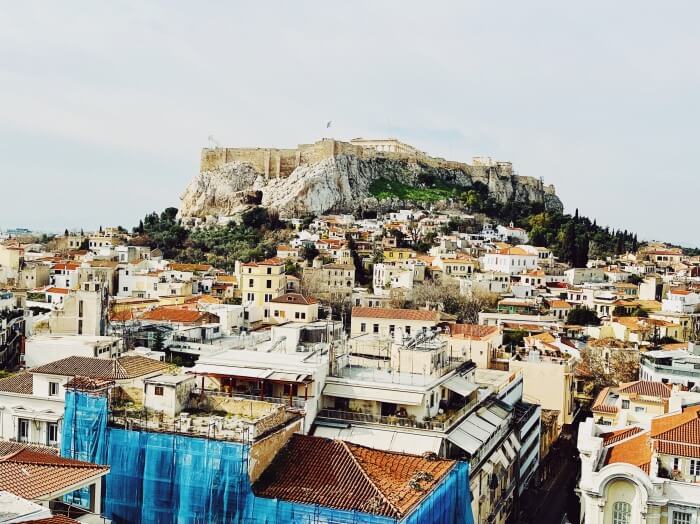
A view of the Acropolis and the Parthenon.

March 13, 2024 by Llewellyn King Leave a Comment

The people of the world are planning to descend on Europe this summer. Not, I hasten to say, as migrants but as tourists.

They will jam the sidewalks of Paris, their buses will be bumper-to-bumper in England’s Lake District, and it will be nigh impossible to get into Venice.

It isn’t that Europe is too small to accommodate the surge of tourists but that a few sights are too popular with tourists from the West and now tourists from China. The history and culture of Europe are a magnet, drawing and delivering for tourists, whether they are first-timers or bucket-listers.

Greece is a jewel in this crown, a place of sparkling wonder of human endeavor and natural formations. The country is ground zero for Western civilization, where visitors can trace the origins of Western arts and sciences, as well as democracy. Visitors can also experience the natural beauty of its coasts, mountains and islands.

I met with the Greek minister of tourism, Olga Kefalogianni, in Athens last month, and we discussed the blessings and challenges of tourism, including the problem of what some call “overtourism.” Not only has Greece attracted tourists for millennia, but it also has a huge capacity to absorb visitors. It would just like to spread them out over the year and the country.

Clearly, Kefalogianni loves her job and was, to an extent, born to it. She is the scion of a very prominent Greek family that owns hotels in Crete, the largest and one of the most inviting of the Greek islands.

The last thing Kefalogianni, who did a stint as a lawyer in New York, wants to do is to discourage tourism. It accounts for 20 percent of Greece’s economy, and the country can absorb untold hundreds of thousands more tourists than it already does.

But there are choke points. And in future planning, the minister told me, she is working to enhance the industry by promoting Greek food, wine and its wide-open spaces for safe outdoor recreation like hiking, climbing and canoeing.

The first thing, she said, is to tell the world how diverse Greece is and how much it has to offer not only in terms of its history but also natural beauty and simple things like walking in its villages.

She wants visitors to spread out and enjoy all of Greece. “Do you know you can ski in Greece?” she asked me. Indeed, the country has 25 ski resorts.

She also said Europe has much to offer year-round besides the summer. In truth, the summer in southern Europe can be extremely hot.

One challenge for the Mediterranean ports is the cruise ships, which are now to be found all over the sea: vast, floating cities with eager sightseers, keen to disembark and spend a few hours in a destination.

They are becoming a challenge for host countries. They dock and disgorge their eager passengers, but they bring problems, from pollution to stressed port infrastructure. Also, the cruisers are ashore so briefly that they spend very little money, considering how many there are: Many prefer to eat all their meals on board, and their principal expenditure is on souvenirs and bus tours.

The cruise ships need more regulation, Kefalogianni said. Recently, I observed the problem firsthand. I — yes, on a cruise — fetched up in Santorini when five other huge ships did likewise. A cable car (or foot or donkey) at the port takes people up and down from Fira, the island’s capital. Well, with thousands in line, the result was chaos. Instead of a visit to a heavenly place, it was a version of hell.

Also, Greece and other European countries’ cities want the ships to base at their ports, provision there, and embark and disembark their passengers there. The beneficial economic effect would be greater that way.

The tourism minister wants visitors to know that Greece (and I would add the rest of tourist-haven Europe) has year-round attractions. She noted that the shoulder seasons of spring and fall offer all the summer attractions with fewer people. On the mainland and on the Greek islands — there are 6,000 of them; 227 are inhabited and 100 have more developed tourism facilities — you can swim early in the year and late as well. In February, I saw people swimming at a beach near Athens. They allowed the water to be cold, but not impossibly cold.

Mediterranean Europe is a place for all seasons. As the British writer Christopher Hitchens told me once, “It’s where it all began.”

Filed Under: King's Commentaries Tagged With: cruise ships, Europe, Greece, Mediterranean, overtourism, summer, tourism

The Ghost of Jimmy Carter Haunts Natural Gas Decisions

January 27, 2024 by Llewellyn King 1 Comment

The ghost of Jimmy Carter may be stalking energy policy in the White House and the Department of Energy.

In the Carter years, the struggle was for nuclear power. Today, it is for natural gas and America’s booming liquefied natural gas future.

The decisions that Carter took during his presidency are still felt. Carter believed that nuclear energy was the resource of last resort. Although he didn’t overtly oppose it, he did damn it with faint praise. Carter and the environmental movement of the time advocated for coal.

The first secretary of energy, James Schlesinger, a close friend of mine, struggled to keep nuclear alive. But he had to accept the reprocessing ban and the cancellation of the fast breeder reactor program with a demonstration reactor in Clinch River, Tennessee. Breeder reactors are a way of burning nuclear waste.

More important, Carter, a nuclear engineer, believed the reprocessing of nuclear fuel — then an established expectation — would lead to global proliferation. He thought if we put a stop to reprocessing at home, it would curtail proliferation abroad. Reprocessing saves up to 97 percent of the uranium that hasn’t been burned up the first time, but the downside is that it frees bomb-grade plutonium.

Rather than chastening the world, Carter essentially broke the world monopoly on nuclear energy enjoyed — outside of the Soviet bloc — by the United States. Going forward, we weren’t seen as a reliable supplier.

Now, the Biden administration is weighing a move that will curtail the growth in natural gas exports, costing untold wealth to America and weakening its position as a stable, global supplier of liquified natural gas. It is a commodity in great demand in Europe and Asia and pits the United States against Russia as a supplier.

What it won’t do is curtail so much as 1 cubic foot of gas consumption anywhere outside of the United States.

The argument against gas is that it is a fossil fuel and fossil fuels contribute to global warming. But gas is the most benign of the fossil fuels, and it beats burning coal or oil hands down. Also, technology is on the way to capture the carbon in natural gas at the point of use.

But some environmentalists — duplicating the folly of environmentalism in the Carter administration — are out to frustrate the production, transport and export of LNG in the belief that this will help save the environment.

The issue the White House and the Energy Department are debating is whether the department should permit a large, proposed LNG export terminal in Louisiana at Calcasieu Pass, known as CP2, and 16 other applications for LNG export terminals.

The recent history of U.S. natural gas and LNG has been an industrial and scientific success: a very American story of can-do.

At a press conference in 1977, the then-deputy secretary of energy, Jack O’Leary, declared natural gas to be a depleted resource. He told a reporter not to ask about it anymore because it wasn’t in play.

Deregulation and technology, much of it developed by the U.S. government in conjunction with visionary George Mitchell and his company, Mitchell Energy, upended that. The drilling of horizontal wells using 3D seismic data, a new drill bit, and better fracking with an improved fracking liquid changed everything. Add to that a better turbine, developed from aircraft engines, and a new age of gas abundance arrived.

Now, the United States is the largest exporter of LNG, and it has become an important tool in U.S. diplomacy. It was American LNG that was rushed to Europe to replace Russian gas after Russia’s invasion of Ukraine.

In conversations with European gas companies, I am told they look to the United States for market stability and reliability.

Globally, gas is a replacement fuel for coal, sometimes oil, and it is essential for warming homes in Europe. There is no alternative.

The idea of curbing LNG exports, advanced by the left wing of the Democratic Party and their environmental allies, won’t keep greenhouse gases from the environment. It will simply hand the market to other producers like Qatar and the United Arab Emirates.

To take up arms against yourself, Carter-like, is a flawed strategy.

Filed Under: King's Commentaries Tagged With: climate change, CP2, DOE, environmentalists, Europe, greenhouse gas emissions, liquefied natural gas, LNG, natural gas, President Jimmy Carter, Qatar, Russia, U.S. Department of Energy, Ukraine, United Arab Emirates

Electricity Can Help Africa’s Growing Population Crisis

September 17, 2017 by White House Chronicle Leave a Comment

A population catastrophe is in the making in Africa that could engulf the world, Europe first. The United Nations predicts that between now and 2050 the populations of 26 African countries are expected to at least double their current size. Nigeria will overtake the United States to become the world’s third most populous country in 2050.

By the year 2050, according to the United Nations, annual increases will exceed 42 million people per year and total population will have doubled to 2.4 billion. “This comes to 3.5 million more people per month, or 80 additional people per minute. At that point, African population growth would be able to refill an empty London five times a year,” Britain’s Guardian newspaper calculates. Poor Africa, with so little to support a doubling population, is on its way to new horrors of food shortage, lack of jobs and misery.

This is not just crisis for Africa but very much one for Europe, and in time one for other countries.

African migrants, fleeing broken societies and imminent famine, have been crossing the Mediterranean in rickety craft, flooding Europe. This flood will grow and it will be joined by people seeking survival from deeper in Africa; not just from the north, but from the center and the south.

Desperate people move. Take the Royhinga refugees, walking with what they can carry from Myanmar to Bangladesh: a journey from unsafe to unwelcome. It is already happening in Africa and it will dominate in future.

India, which knows something about population explosions (the population there has grown from 400 million, when the British pulled out in 1947, to 1.3 billion), has looked for a way of improving expectations as a means of population stabilization. Their solution has not been droves of family planners with suitcases of condoms, but rather a bold, high-tech solution: electricity and lots of it.

In New Delhi, this strategy was explained to me by a professor at the University of Delhi. As an American, I was aghast at the poverty and the minimal lives lived by tens of millions. Almost verbatim, this is what I was told, “We have a solution to this misery: an electric grid. When we electrify a village, everything changes. Someone gets a television — maybe an old black-and-white one, but Indians are good at keeping things running — and then expectations go up, hygiene improves, and birth rates go down.”

He added, “It works.”

That, maybe, is why today India is one of the leaders in building electric capacity of all kinds, including an ambitious nuclear program.

Electricity provides a solution in Africa, but much of the installed electric capacity is old, serves only urban areas and dates back to the colonial era.

In Africa and South America, I have seen electricity transform lives. An electric supply leads to the ability of villages to move basically from the Iron Age to the Ion Age.

I saw this acutely in my childhood in Africa. An electrified village can keep its food supply from rotting, grind its grain instead of shipping it to a mill, allow local businesses to get a footing, and limit family size. But mostly the young, whether through television or radio, are inspired to greater expectations, to horizons beyond the squalor and poverty that has been their inheritance.

The European media have been covering the African population flood with intensity, particularly the BBC. Yet much of this has had a hand-wringing quality.

As we see the lethality of electricity failure in Florida, following Irma, we again get a sharp lesson in the value to human life of electricity, unique in service to human kind.

If Africa is not to become a huge and permanent humanitarian crisis, affecting the whole world, it needs to get in on the electric solution. Ideally, this should be first with the fuels available: sun and wind. These are peculiarly suited to Africa: poor, desperate Africa where people hurt so much, every day.


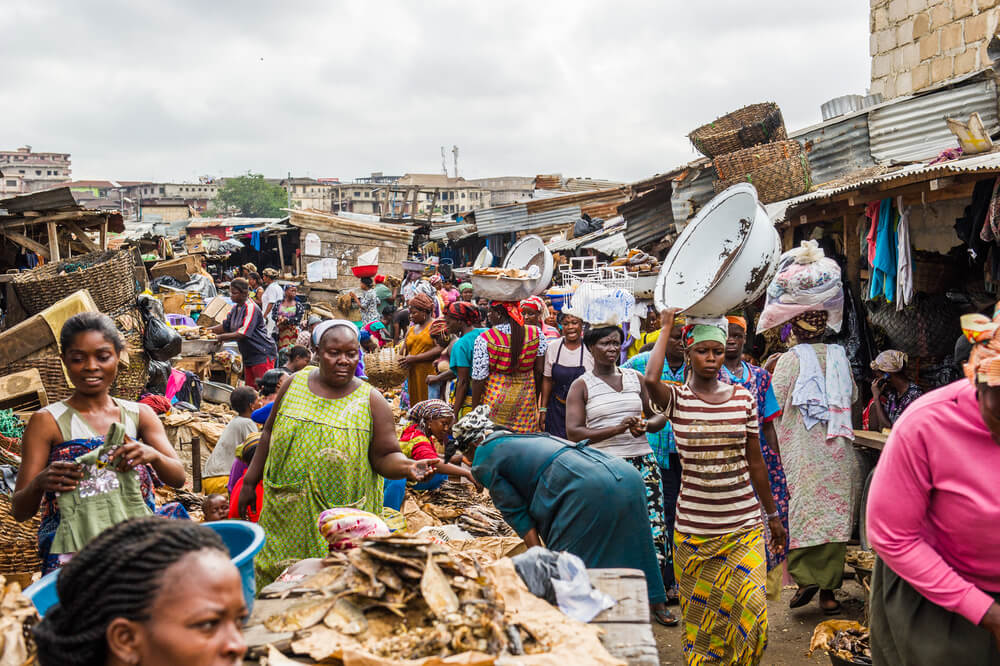
Photo: ACCRA, GHANA – MARCH 4, 2012: Unidentified Ghanaian people at the market in Ghana. People of Ghana suffer of poverty due to the unstable economic situation. Credit: Anton_Ivanov / Shutterstock.com

Filed Under: King's Commentaries Tagged With: Africa, electricity, energy, Europe, humanitarian, population

Llewellyn King on SiriusXM POTUS Channel

July 10, 2017 by Linda Gasparello Leave a Comment

Llewellyn King on SiriusXM, POTUS Channel 124

Listen below for the segment, where Llewellyn discusses his column, “Europeans Feel They Can’t Trust U.S. in the Time of Trump” which can be read on this website, or on HuffPost here: http://www.huffingtonpost.com/entry/europeans-feel-they-cant-trust-us-in-the-time-of_us_595f8399e4b0cf3c8e8d57e2

Press the play button below to listen.

http://whchronicle.com/wp-content/uploads/2017/07/07-07-17-Llewellyn-King-w.Kent-Klein.mp3

Filed Under: King's Commentaries, Random Features Tagged With: Donald Trump, Europe, Poland, SiriusXM, Trump Speech

The Myth of Immigrant Assimilation

March 26, 2016 by Llewellyn King 1 Comment

By Llewellyn King

In the aftermath of the Brussels attacks, critics are blaming Belgium for not assimilating immigrants from the Middle East and North Africa.

The fact is that Europe does not do assimilation. Europeans widely practice what might be called “anti-assimilation.” Instead of engagement with their immigrants, they practice a kind of look-the-other-way stance.

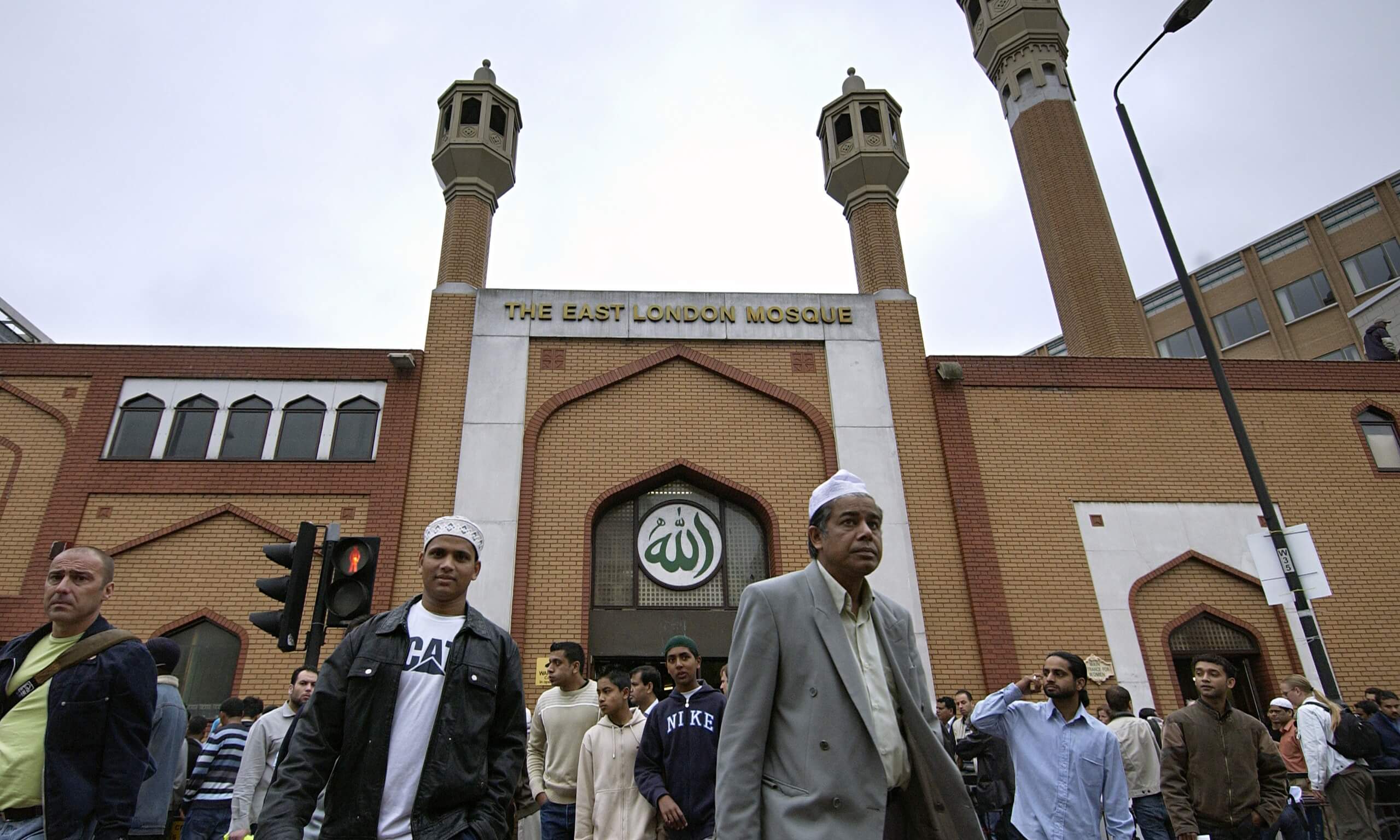
Muslim immigrants on the whole do not seek to integrate into European societies, but rather to demand that European societies adopt their ways. In Belgium, which has three official languages, Dutch, French and German, there are constant demands that Arabic become a fourth. Muslims in Britain, and throughout Europe, demand shari’a, or Islamic law, for their communities. Muslims in Europe, and the United States, demand that Eid al-Adha (Feast of the Sacrifice) be accorded the same recognition as a public holiday as Christmas.

Muslim defenders, after the bombings in Brussels, insist that Western countries with large Muslim minorities should do more to integrate them into national life. But this integration mostly means that the host culture should bow to the insurgent one.

In ancient lands, like Britain and France, this is an affront; as though the extraordinary traditions of those countries should be shoved aside to accommodate the cultural demands of an a very antagonistic minority. That is asking too much.

Europe has mostly dealt with the challenge by hoping that new generations born in Europe and subjected to the influence of European education, the arts and media will become little Europeans: little Frenchmen, little Belgians, little Englishmen, versed in European history and imbued with European values. There are such people throughout Europe, from those of Turkish descent in Germany to those of Indian descent in Britain and North African descent in France.

But by and large the Muslim minorities remain separate, unequal and belligerently hostile to the countries that have given them shelter and opportunity. Rather than the generations born in Europe adopting European norms, they have ended in an unfortunate place where they are outcasts by their own inclinations and by the difficulties posed by European societies, which are quietly nationalistic, closed, eyes-averted.

If anything, the separation has grown worse for generations that know no life other than the one they lead in Europe. This is often marginal, lived in ghettos like the banlieues, the suburbs to the north of Paris, the troubled Brussels neighborhood of Molenbeek, or Bradford in the north of England.

The original immigrants could look back to what they had escaped, whether it was war and persecution in Algeria, in the case of those who migrated to France, or the grinding poverty that prevailed in Pakistan, in the British case. People move for safety or for a better life. They do not move because they want a new food or a new religion: They want the old food and the old religion in a better place.

Trouble is that three or four generations on, the immigrant descendants may not feel they are in a better place. They are isolated, largely unemployed and subjected to the preaching of murderous extremists.

Once in Brussels, my wife and I were walking down a side street not far from the Grand Place. My wife, who lived in the Middle East and speaks Arabic, remarked that we had left Europe within a few streets and entered North Africa.

As we passed some young men standing outside a cafe, she heard one say to another in Arabic, “What are they doing here? They don’t belong here.”

When the London suburb of Brixton was becoming a black enclave, favored by West Indian immigrants, I lived nearby. “Don’t go there. Maybe they will leave one day,” my neighbors said when I wanted to go there.

No-go areas are not always that: they also are not-want-to-go areas. Someone has to want assimilation, if that is the answer. — For InsideSources


Filed Under: King's Commentaries Tagged With: assimilation, banlieues, Belgium, Bradford, Brussels, Brussels attacks, England, Europe, France, immigrants, immigration, integration, King Commentary, London, Molenbeek, Muslims, Paris, Paris attacks

The Future of Britain is on the Ballot

January 18, 2016 by Llewellyn King Leave a Comment

By Llewellyn King

Long before our election in November, a much greater upheaval may hit Britain. Probably in late June, the country will vote on whether to stay in the European Union. Leaving is called “Brexit” in the British press.

While polls have consistently shown that voters favor Britain remaining a member of the 28-nation bloc, there are signs that things are changing. British business, which has until now seen its future as being in the EU, is beginning to rethink its support for British membership. A recent poll shows industry believing it could prosper out of the EU.

This is a big problem for British Prime Minister David Cameron. He has promised dramatic changes in Britain’s membership, which will be announced at the European summit next month.

Britain wants less-oppressive regulations and a change in immigration policy. It wants an end to what has been a fundamental part of the European structure: the freedom of movement between countries. In short: no more immigration to Britain from Europe.

It is a complex negotiation which Cameron believes he can win; particularly when Europe is in shaky shape after the economic crisis in Greece and from the surge of migrants from the Middle East and North Africa.

Although Europe’s political elites may have to hold their refined noses, the chances are better today than ever that they would rather their unruly island neighbors stay in than further damage the European project by withdrawing.

Predictably some economists say that Britain will do just fine without Europe, while others see dire economic consequences.

When the referendum comes, it will be a free vote with about half of Cameron’s Conservative Party voting to withdraw. These are the rambunctious “Euroskeptics” that have bedeviled British elections for generations and have made the role of Conservative prime ministers particularly trying.

The opposition Labor Party is divided on a Brexit. But Labor has so imploded under the extreme leftist Jeremy Corbyn that it is likely to go along and lend its support — feeble though it is — to the forces wishing to stay in the EU.

The Scottish Nationalists will also support continued membership. They hope that if they break away from the United Kingdom, they will get succor from the EU.

But the forces for exiting the EU are powerful and articulate. They are emboldened by Europe’s problems and the fact that they will no longer be bound by the dictates of, as they say, “faceless bureaucrats in Brussels.”

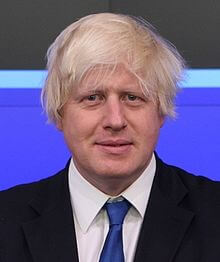
The wild card in the referendum may be England’s wild man: Alexander Boris de Pfeffel Johnson.

Now finishing his term as mayor of London, Boris Johnson is a lovable version of Donald Trump. He has gone from scrape to scrape and has come out ahead of the game. For instance, three years after having won a seat in Parliament in 2001, Johnson was sacked by the Tory leader at the time, Michael Howard, for allegedly lying over an affair with journalist Petronella Wyatt. Johnson called newspaper stories about the affair “an inverted pyramid of piffle.” He was also sacked from his editorship of The Spectator, where the piffle took place.

But being elected to higher office is such a compensation, so Johnson, a bicycle-riding, tradition-loving maverick got himself elected mayor of London. In this office he saved the iconic double-decker buses, presided over the 2012 Summer Olympics, and endeared himself to an even wider audience.

The British revere Johnson’s eccentricity and voted him back into Parliament in the last election. Now people talk openly of him being Cameron’s successor after the referendum.

Johnson has hedged his bets on British membership in the EU. Just this week he declared that he will not lead the “Out” forces, but he does not totally endorse the “In” forces.

Here is the possible scenario: Cameron has to produce a deal that satisfies some of the Euroskeptics and set a date for referendum. Then the vote. Then the hangover, one way or another. Then Johnson makes his move – unless some schemer, like the current Chancellor of the Exchequer George Osborne, has not outmaneuvered the charming and brilliant Boris.

Cleverly Johnson has written a long political treatise comparing London to Athens, and leaving room for people to believe he has the qualities of Pericles, without actually claiming the great Greek’s mantle. Then, just to be safe, he has knocked off a highly laudatory biography of Churchill, which invites the idea that Johnson shares some of his hero’s traits.

This kind of effrontery makes British politics a perpetual night in the pub. Cheers! — For Inside Sources

Filed Under: King's Commentaries Tagged With: Alexander Boris de Pfeffel Johnson, Boris Johnson, Brexit, Britain, British prime minister, Conservative Party, David Cameron, Europe, European Union, Euroskeptics, Labor Party, Mayor of London, The Spectator, United Kingdom

Europe Faces Winter on the Edge of the Abyss

November 3, 2014 by White House Chronicle 1 Comment

BURGENLAND, Austria –There is another world crisis brewing – and one for which President Obama cannot be blamed. The Europeans and have made a mess of things, and now the wolves are at the door.

The first snarling wolf is deflation. Europe’s economies are so weak, so close to recession, that the very real danger of deflation – falling prices – has its economists petrified. It ought also to have its politicians in anguish, but whether it does is less clear.

Europe’s big-driver economy, Germany, as well as France and Italy, are on the edge. The German miracle is ailing, and Berlin may have been writing the wrong prescriptions for the rest of the 18 countries that share the euro as their currency. It has been aided in this effort by the International Monetary Fund.

That prescription, which often seems to harm the patient, as in Greece and Spain, is for austerity – which appears to work better on paper than in the real world. Germany worries about profligate borrowing throughout the European Union. But if the German economy is to escape recession, Chancellor Angela Merkel may have to borrow some money herself and inject it into infrastructure spending to keep Germany competitive and its workers on the job.

The European Central Bank (ECB) has been slow to institute a badly needed program of buying qualified bonds, known as quantitative easing. In the United States, the Federal Reserve, in a program that is now ending, has pumped more than $1 trillion into the economy and helped pull the economy out of recession. But ECB has been timid because it has no clear direction from the European political establishment — pointing up how cumbersome and directionless the European Union structure has become. It has a parliament, which has no power, and is increasingly attracting members who are actually opposed to the European project.

The European Commission has arguably too much power centered in the bureaucracy in Brussels, but no clear direction form its controller, the Council of Ministers. Trouble is the ministers can disagree and veto needed courses of action.

The economic crisis points up the ungovernable nature of Europe and its present institutions. If Washington is gridlocked, Europe is by structures that cannot deal with crisis and what often appear to reflect as many policies as there are members (28) in the EU.

But it is not just the economic wolf that is at Europe’s door. The Russian bear is there, too. Already there is an undeclared war raging in Ukraine.

At the Association of European Journalists' meeting here, a spokesman from the Ukrainian government, who asked not to be identified by name, expressed the sense in Ukraine that it has been betrayed by EU bungling.

“Europe sees Ukraine as its European neighborhood partner. But in Ukraine, the truth is different: Ukraine’s view is that Europe let us down. We are hurt, bleeding. We have been betrayed by a neighbor that, six months ago, we saw as a brotherly nation,” he said.

What was not said was that Europe may freeze this winter if the Putin regime — a growling wolf — wants to punish Ukraine and its neighbors. Europe is hopelessly dependent on Russian gas, which is used mostly for heating. Germany gets 40 percent of its gas from Russia, and Finland, Estonia, Latvia and Slovakia get 90 percent. Russian gas makes its way — largely through Ukraine — down into Italy, and even the United Kingdom has some small exposure.

If the gas goes off, Europe freezes and its economies go south in an avalanche. The most hopeful thing for Europe this winter is that with the world oil price falling, Russia’s own fragile economy may dictate that it keeps the gas flowing — but it will force up the price where it can.

Washington, with a new Congress, might want to brace for Europe’s winter of crisis and disaster. If Europe goes into severe recession, can the U.S. economy escape major harm? The new Congress will be on a sharp learning curve. — For the Hearst-New York Times Syndicate

Filed Under: King's Commentaries Tagged With: Association of European Journalists, austerity, Europe, European Central Bank, European Commission, European Union, German Chancellor Angela Merkel, Germany, King Commentary, oil, Russia, Russian gas, U.S.Congress, Ukraine

The Shadow of 1914

December 31, 2013 by White House Chronicle Leave a Comment

The new year is beginning with the shadow of an old year flitting around the retina of our consciousness. That year is 1914; the year that Europe was convulsed in the world's worst war – 9 million dead.
 
It was also the war from which the world never fully recovered. In its destruction of the old order in Europe, World War I laid the blueprint for the rest of the century; its emancipations and its enslavements, its triumphs and its horrors.

The century following World War I has been a century in which blood and ideas have flowed freely. As a consequence of the war and the Treaty of Versailles which ended it:

1. The Russian Revolution ushered in communism, and later the Cold War.

2. Britain and France carved up the Middle East with boundaries that created new countries, such as Iraq and Saudi Arabia, without regard to the promises that had been made to the Arabs during the war or regard for their sensibilities.

3. The Ottoman Empire fell, making way for modern Turkey.

4. The Austro-Hungarian Empire fell, changing the face of central and eastern Europe.

5. Monarchical rule ended in Europe.

6. Germany was so emasculated by the peace that the ascent of Adolf Hitler was possible.

7. Mechanized war was perfected with industrialized killing by gun, bomb and, for the first time, aircraft was unleashed.

8. The combatants lost the cream of their crop of young men, many of who would have risen to affect the 20th century after the war. The consequences of the loss of a generation of a young men can be speculated upon, but not calculated.

9. The stage was set for the United States — which played a decisive role in the war from the spring of 1917 on, but was not as deeply affected as the European powers — to become the dominant nation in the later part of the 20th century and to this day.

10. The social order throughout Europe began to liberalize. Its feudal underpinnings would remain until World War II, but there was a loosening of the old bonds of class across Europe.

11.  Women were beginning to share their gifts with society.

12. African colonies were taken from Germany and handed to Britain for a kind of safe-keeping, but not for the imperial expansion that Britain had been enjoying for two centuries. Britain, France, Portugal and Holland remained the colonial powers — Britain's possessions were many times greater than the rest put together.

13. Fury at the colonial system was building, especially against British control of what are now India, Pakistan, Bangladesh and Sri Lanka. The beginning of the end of the colonial concept had begun, but it had many hurdles and another world war to go before it all ended in an avalanche of independencies.

 
World War I began with the assassination of Archduke Franz Ferdinand of Austria, heir presumptive to the Austro-Hungarian throne and his wife, Sophie, in Sarajevo. The Balkans were the tinder for the war, but the fuel was everywhere: it was the growth in nationalism and its arrogance; a lack of enough understanding of what a modern war would look like; militarism in many countries, and especially in Germany, where the high command found a fatal friend in Kaiser Wilhem II.
 
As tensions in Europe escalated, the players scrambled for allies and these alliances led to the broader war. For example, the German High Command did not think that Britain would join the war, despite Britain's commitments to France and Russia: It thought Britain could and would remain neutral.
 
The great myth of the time was that the European powers were so intertwined in their trading relationships that war would cost too much and so peace was secure. Yet all the ingredients of combustion were present in 1914, and they were abetted by a lack of great leaders in all the countries that would fling themselves at each other.
 
It was a time of crushing mediocrity in European governance. That may have been the real cause of the world's greatest, most terrible miscalculation, 100 years ago: a leadership vacuum. Beware. Happy New Year. –For the Hearst-New York Times Syndicate


Filed Under: King's Commentaries Tagged With: 1914, 2014, Europe, governance, leadership, World War I

The Economy Is Righting, but Does Congress Get It?

January 31, 2013 by White House Chronicle Leave a Comment

The great thing about being a pessimist is that something awful may still happen tomorrow. There are still plenty of pessimists about the economy, saying that we are spending our way into perdition; that the Great Reckoning is just around the corner, unless we do draconian things.
 
However on Wall Street, there is hopefulness — even optimism. The stock market is up, the housing market is showing real life and corporate confidence has increased since the Congress delayed action on the fiscal cliff through a bit of old-fashioned give-and-take. Some economists are saying encouraging things, so are the business magazines.
 
There is evidence that the economy, which was heeling badly, is beginning to right. The U.S. economy, still the economic lungs of the world, is breathing easier.
 
Sure, there was a slight dip in performance in the last quarter, reflecting primarily reduced defense spending. It's a hard lesson for the political right to grasp: You can't extrapolate family financial rectitude into national policy, as they like to do. If a family spends more than it is earning, it simply has to cut expenditures. If it doesn’t, the end is known; credit dries up and horrors, like foreclosure, are at hand. Likewise, corporations cut costs, lay off employees and sell assets until the balance sheet recovers.
 
When a family gets into trouble, it doesn't reduce its income by cutting luxuries, it reduces its spending. When a corporation cuts back, it tries to reduce staff not customers.
 
But governments can worsen the situation when they tackle spending at the wrong time. If they cut expenditures too aggressively and too fast, revenues fall, unemployment rises and demands on the public purse grow. Unlike individuals and corporations, governments can’t walk away from their messes.
 
Witness the recessions in Britain, Ireland, Spain and the total catastrophe in Greece. Irresponsible austerity has compounded the results of earlier promiscuous spending. Strong medicine has sent the patient to intensive care.
 
Amy Kremer, head of the Tea Party Express, and many conservative members of Congress playing the pessimist’s card, like to say, and they say it often, “revenue is not the problem, spending is.”
 
If only it were that simple. The problem is many things, including the global recession, the aging population, the high cost of medicine, two wars, badly timed tax cuts, China’s undervalued currency and the balance of payments deficit.
 
Take your pick. The miracle is that the economy is as vigorous as it is.
 
Already it has to deal with the tax increases that came with the budget deal in early January, particularly the increase in the payroll tax, which takes out of the economy money that would normally be spent — the large proportion of the tax which if left in the hands of the salaried class would be disposable. This may be about as much of a hit as it can take at present.
 
But the pessimists, who believe that spending is the mortal sin of our age, want to let sequestration — a 10 percent across the board cut — happen on March 2. The Washington Post says there is no mood in Congress to compromise. But if there is no compromise, the effects could be more devastating than a simple cut in spending. The result, instead, will be a cut in program expenditures while the government’s overhead in salaries and fixed costs will eat up the budget.
 
Austerity has been a disaster for Britain, Ireland and Spain. Do we want to follow the Europeans down that path?
 
The pessimists, who also believe that borrowing is the original sin of politicians, would let this recovery falter through their belief that the government must be starved. Sequestration will starve it, alright. Trouble is we'll all go hungry. There’s pessimism for you. — For the Hearst-New York Times Syndicate


Filed Under: King's Commentaries Tagged With: Amy Kremer, austerity, conservatives, Europe, federal budget, sequestration, Tea Party Express, U.S. economy, U.S.Congress, Wall Street

  • « Previous Page
  • 1
  • 2
  • 3
  • Next Page »

White House Chronicle on Social

  • Facebook
  • Twitter
  • Vimeo
  • YouTube
Soft Power, the Secret Sauce of the British Empire

Soft Power, the Secret Sauce of the British Empire

Llewellyn King

When President Trump, on the first day of his second term, closed the U.S. Agency for International Development and began dismantling the Voice of America, he also severely curtailed what had been America’s soft power dominance in the world. With those actions, we abandoned something of inestimable value: the ability to project Americanism, our ideals. […]

A British Immigrant’s Defense of Immigration

A British Immigrant’s Defense of Immigration

Llewellyn King

Migration, people moving to new lands, is as old as human history, and as fraught. Today it is a global problem complete with layered hypocrisy, cruelty and, always, hope among those on the move. War and extreme poverty collude in driving people to seek a livable future. There is no simple solution, no slogan that […]

The Birth of a New Reactor: Thorium Past and Present

The Birth of a New Reactor: Thorium Past and Present

Llewellyn King

If you are designing a car from scratch, there are certain essentials to begin with. You need to start with the wheels on the corners, for example. But when it comes to building a nuclear reactor, things are different. There are hundreds and maybe thousands of ways of doing it. The constant is that you […]

Air Conditioning Costs Threaten Summer of Sun Belt Catastrophe

Air Conditioning Costs Threaten Summer of Sun Belt Catastrophe

Llewellyn King

The summer of our discontent is at hand. When I asked a professional weather forecaster what we might expect this season, he said, “Hades.” That was as disturbing as everything else in this disturbing year. America has a summer culture. You could say the whole of the Northern Hemisphere has one, but there is a […]

Copyright © 2026 · White House Chronicle Theme on Genesis Framework · WordPress · Log in