White House Chronicle

News Analysis With a Sense of Humor

  • Home
  • King’s Commentaries
  • Random Features
  • Photos
  • Public Speaker
  • WHC Episodes
  • About WHC
  • Carrying Stations
  • ME/CFS Alert
  • Contact Us

Loving Ireland on St. Patrick’s Day — for Its Contradictions

March 6, 2026 by Llewellyn King Leave a Comment

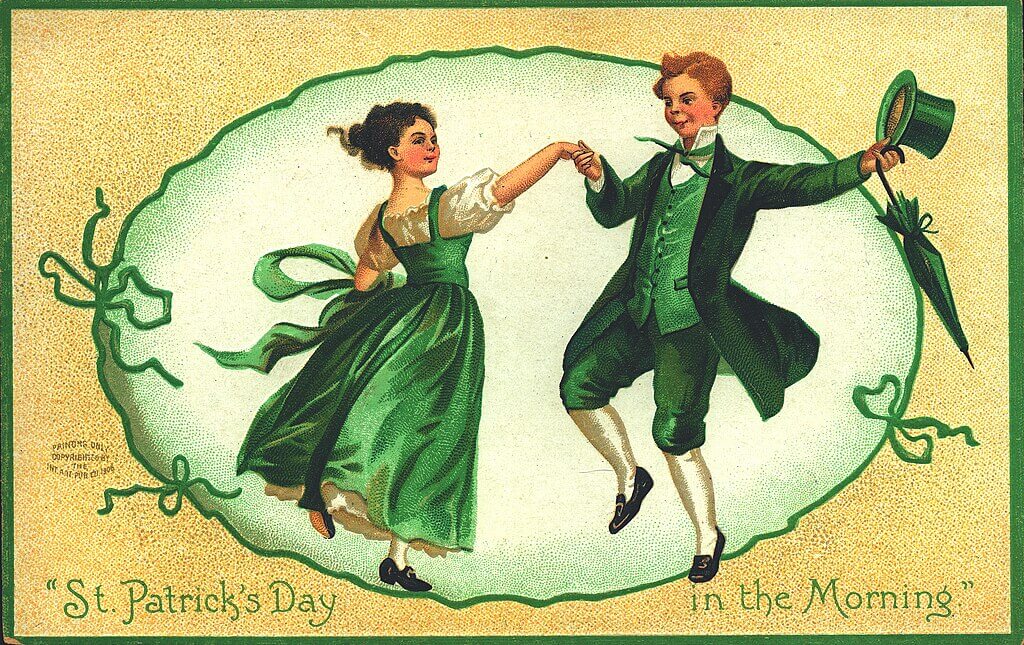
I won’t let St. Patrick’s Day pass without wearing something green and reaching for a glass of something that has been produced through fermentation or distillation. It is the least I can do for all the ways the Irish have enriched the world, but especially the English language, and me.

When it comes to writing, the Irish have what might be termed an ethnic advantage, from the literary game-changers in the last century — George Bernard Shaw, James Joyce, Samuel Beckett and Brendan Behan — to two of the top practitioners of novel-writing today, Sally Rooney, who is only 35, and the prolific and so-readable John Banville.

When it comes to poets, William Butler Yeats is, to my mind, seated among the immortals.

Yet, as I enjoy my St. Patrick’s Day libation, I shall reflect on the contradictions that are Ireland. These are summed up in a personal experience.

I was, for over 20 years, the American organizer of the Humbert Summer School in Ballina, Co. Mayo. One of my missions was to take Americans — often Irish Americans who had never been to their ancestral land — to Ireland and the school.

Summer schools in Ireland are akin to Renaissance weekends or Aspen Institute meetings in America. Some are literary, like the Yeats Summer School in Sligo, or political, like the Parnell Summer School in Co. Wicklow, or musical, like the Willy Clancy Summer School in Co. Clare.

Mine, alas, is defunct, but it was named after the French General Jean Joseph Humbert who landed in Killala Bay to help the United Irishmen’s rebellion against the British in 1798, which was celebrated in Thomas Flanagan’s novel “The Year of the French,” and the movie based on it.

The Humbert School was the creation of its director, John Cooney, a distinguished journalist and major historian. Its mission was to discuss Ireland’s future at home and abroad.

Before the start of one year’s summer school, I briefed my Irish American charge, Ray Connolly, on just how awfully the British, my people, had behaved in the northwest of Ireland, from colonization in 1611 to the 1798 rebellion, to the famine of 1846, when so many perished or fled in the great diaspora, to the notorious Black and Tans after World War I. They were a paramilitary force formed in 1920 to reinforce police posts, act as escorts, and conduct counter-insurgency operations. But their cruelty caused many Irish people to join the Irish Republican Army.

I spared nothing in the telling of Albion’s perfidy in Ireland.

After the weeklong summer school, on our drive to Dublin Airport and our flight back to Washington, we stopped in a pub. When the publican heard my English accent, he asked, ”How’s the weather over there?” I knew he meant in England. I had to explain that I was now an American and had been for years.

The publican threw his arms around me and declared, “God bless you. You never lost your accent.”

Our exchange confused Ray. He reminded me that I had recounted the full litany of English horror in the northwest of Ireland including, after the 1798 rebellion, how Gen. Charles Cornwallis, chagrined after his defeat in America, hanged 20 Irish rebels per day.

“That,” I said of the enthusiastic publican, “is part of the wonder of Ireland: its contradictions.”

Ireland’s relationship with Britain is a fine example of those.

Britain is a prime destination for work and for career opportunities for the Irish. They talk of London with affection, although they may still sing rebel songs with gusto, and mention the horrors of the past as though they were last week.

Under a treaty, the Common Travel Agreement (CTA), Irish citizens have the right of abode in England. For them, there is no frontier; although, I learn, that may change as people who have acquired Irish citizenship, but aren’t Irish-born, are abusing it, adding to the immigration woes in Britain.

If the CTA should end, Britain will lose much, just as America is set to lose Irish talent because of immigration restrictions.

When talking about the impact of Ireland on America – 23 presidents were of Irish descent — it should be noted that America has also had an impact on Ireland.

On the downside, there is fast food. When I asked a cab driver in Dublin about where to get good fish and chips, he said he preferred Kentucky Fried Chicken.

On the upside, there is the celebration of St. Patrick’s Day, which started in America.

But before Americans went crazy for all things Irish on March 17, it was a quiet religious day in Ireland. Now it is more of a celebration there, as it is here and much of the world. Sláinte!

Filed Under: King's Commentaries Tagged With: Americans, Army, British, citizenship, Cornwallis, English, Irish, rebellion, Renaissance, St. Patrick's Day, Yeats

An Authentic Dublin Pub Crawl in Celebration of St. Patrick’s Day

March 10, 2018 by Linda Gasparello Leave a Comment

People who are no more Irish than the King of Siam or the Paramount Chief of the Bumangwato will, come March 17, celebrate an island nation famous for its skill with words and its fondness for drink.

It all began, of course, in the 5th century with a Romano Christian missionary from Britain, Patrick, who brought Christianity to Ireland. As a bonus, he chased the snakes out of Ireland. Where the fondness for something brewed, distilled or fermented came from is not recorded, but it is an intrinsic part of Irish life.

Life in Ireland often revolves around having a drink. It is treated much as we would treat having a cup of coffee. In Dublin once, I ran into a friend who I had not seen in a year: a serious man with a big job in government. He thought, in the Irish way, that we should catch up over a glass of something, although it was just after 10 in the morning. “I think Murphys is open,” he said as naturally as someone in an American city would have said, “There is a Starbucks on the next corner.”

In Ireland St. Patrick’s Day was, until recent years, a somber religious festival. It was in America where the idea that the Irish could have a huge craic, as the Irish call a party, took hold.

Even so, the biggest celebrations, to my mind, are in Boston, Chicago and New York. But there are celebrations everywhere the Irish have set foot from Hanoi, Vietnam to Ushuaia, Argentina, off the tip of South America.

But if you are very lucky, you will celebrate in Dublin. And what better way than with an authentic pub crawl.

I know just a bit about pub crawling in Ireland because I was lucky enough to be involved in a wonderful Dublin pub crawl in 2012. It was not a bunch of celebrants struggling from one pub to another, but rather a work of planning art.

I was in Dublin for an engineering conference which coincided with the 60th birthday of one of our number, Sean O’Neill — by birth an American, but otherwise through and through Irish.

A pub crawl was organized by the engineers with precision: times, distances, and safety procedures.

There was a map and the 12 pubs were selected with fiendish skill. The early ones were fairly far apart. But as the crawl went on, they grew closer together, and the last two were next to each other — in consideration of possible loss of mobility.

We were urged to go with a buddy, eat something about halfway and, in case of pub fatigue, to call a taxi.

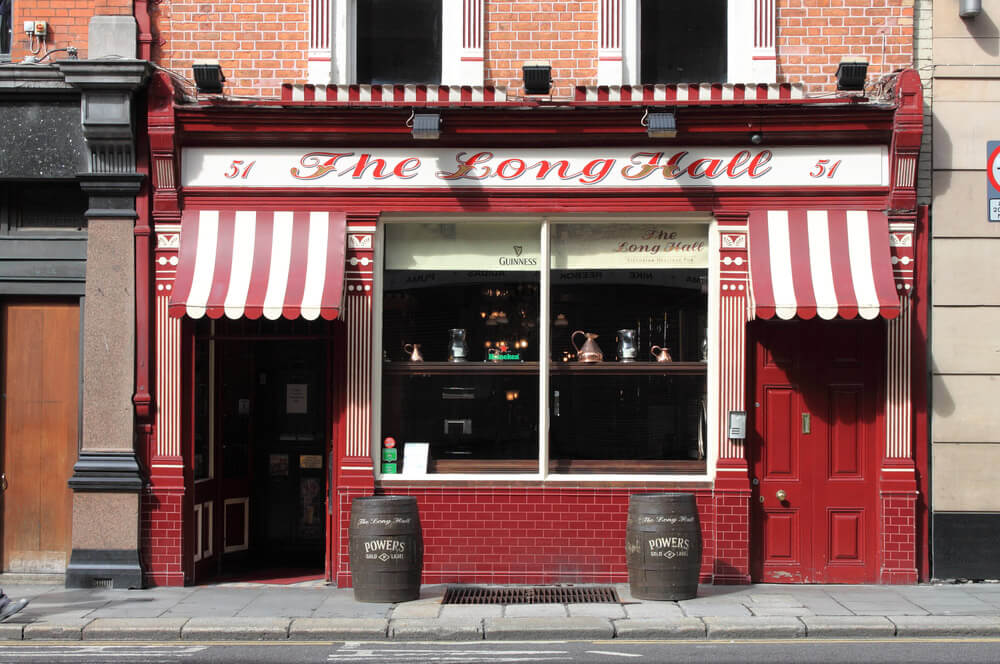
If you get to Dublin and want to try the engineers’ crawl, here are the pubs in order: Toners, O’Donoghues and Doheny & Nesbitts on Baggot Street; Dawson Lounge on Dawson Street; Kehoes on St. Anne Street; Davy Byrnes on Duke Street; O’Neills and O’Donoghues on Suffolk Street; The International Bar and Stags Head on Wicklow Street; The Long Hall on Georges Street; McDaids and Bruxelles on Harry Street.

I think I made it as far as The Long Hall, one of Dublin’s most famous bars, before I cried uncle, refused a last drink and hailed a taxi. Others persevered and, amazingly, lived to tell the tale.

You probably know that Ireland is so lush that its flora is supposed to support 40 shades of green.

Well, there is another shade of green not mentioned in the tourist brochures. It is the 41st shade and you see it in the bathroom mirror the day after a pub crawl. Surely, some of you will see it on March 18.


Photo: DUBLIN, IRELAND – SEPTEMBER 5, 2016: The Long Hall on September 5, 2016 in Dublin. The Long Hall is a famous landmark in Dublins cultural quarter visited by thousands of tourists every year. Editorial credit: Millionstock / Shutterstock.com

Filed Under: King's Commentaries Tagged With: drinking, holidays, Ireland, St. Patrick's Day

St. Patrick’s Day and the Computer-Aided Drinker

March 7, 2013 by White House Chronicle Leave a Comment

I’m going to get right to it: If you want to do it up right on St. Patrick’s Day, March 17, you really should go on a pub crawl. That's the time-honored way to enjoy a good deal of what the clergy in Ireland have been known to refer to as “the devil’s buttermilk.”
 
The important thing about a pub crawl is the crawl – visiting a number of establishments and not tarrying too long in any one. A real pub crawl in Dublin would begin as early as 2 p.m. and last until six or more establishments have been visited. Ideally, this should be accomplished on foot and in the company of friends, who can look out for each other in the the event that sudden loss of vertical stability should occur.
 
The crawl establishes a kind of discipline on the proceedings. You are advised to drink the native brew of Ireland, stout, usually Guinness, but there are other brands like Murphy’s; or beer, the most popular in Ireland is Smithwick's ale from Guinness, but other low- carbonation beers are quite acceptable. But for safety, stay with Guinness, it's slow to draw (properly done, it can take five minutes or longer to get the head just right) and you can’t drink it too fast.
 
As I've done on many a night in Ireland, along the way you might have a whiskey, Bushmills or Tullamore Dew. But these are, as Thomas Jefferson warned, “ardent spirits” and can cause an abrupt deterioration in vertical stability.
 
A good pub crawl can be undertaken anywhere in the world where liquor is sold. Remember it's not about getting drunk, but rather about good company and holding off inebriation; you parry with the demon drink, not succumb to him.
 
You may wonder how such indulgence, such frivolity, such selfishness, such pampering of the dark side of self, such willing abandonment of Christian rectitude, such sinning can take place during Lent? Rest easy, both the Anglican Communion (the Church of Ireland) and the Catholic Church give dispensation for drinking on St. Patrick’s Day. Probably, they calculate the sinner will be punished more on March 18 than he can offend the rules of God and man on March 17.
 
There are few parts of the world in which St. Patrick’s Day is not celebrated. Would you believe the wearing of the green and the flooding of the pubs is prevalent in Argentina?
 
For nearly 70 years, the pubs of Ireland were closed officially on the great day after over-celebration in the country in the early part of the 20th century. But the Irish started to feel left out of their own festival and overwhelmed by the greatest of all St. Patrick’s celebrations: the convulsion that shakes New York every year in memory of the man who brought Christianity to Ireland in the 4th century, and possibly drove the snakes out of Ireland.
 
I'm excited to report on the eve of this St. Paddy’s Day, science has wrested pub crawling from the poets and musicians and handed it over to mathematicians and engineers. At a conference in Dublin of largely PhD engineers that I was oh-so-lucky to attend last year, the engineers, having apologized that the timing was truncated and that the boozy perambulation couldn't start after lunch, but had to be delayed until evening, we were issued a pub crawl itinerary with engineering-type specs — and an awesome thing it was!
 
There were details of when the celebrants and “spiritual advisers” should arrive at each of the 13 pubs, how many drinks they should order at each pub, the precise time they should head to the next pub, and how to watch for danger and slowdown. It even suggested at which pub a sandwich should be eaten, and at which point of danger a taxi should be summoned and the whole project delayed a year.
 
The engineers laid out a vigorous tour of Dublin — one refueling station after another noted, no substitutions allowed. The engineered-pub crawl has a lot to be said for it; call it “structured imbibing” or “computer-aided drinking.” It even has a default position – home to bed. Cheers! — For the Hearst-New York Times Syndicate
 

Filed Under: King's Commentaries Tagged With: Bushmills, Dublin, Guinness, Ireland, Murphy's, pub crawl, Smithwick's, St. Paddy's Day, St. Patrick's Day, Tullamore Dew, whiskey

White House Chronicle on Social

  • Facebook
  • Twitter
  • Vimeo
  • YouTube
Loving Ireland on St. Patrick’s Day — for Its Contradictions

Loving Ireland on St. Patrick’s Day — for Its Contradictions

Llewellyn King

I won’t let St. Patrick’s Day pass without wearing something green and reaching for a glass of something that has been produced through fermentation or distillation. It is the least I can do for all the ways the Irish have enriched the world, but especially the English language, and me. When it comes to writing, […]

How Loneliness Became a Pandemic and What You Can Do

How Loneliness Became a Pandemic and What You Can Do

Llewellyn King

You don’t have to be sitting by yourself on an island to be lonely. Loneliness is everywhere. Studies from universities, governments and public health groups find that the world is in the grip of a loneliness pandemic. More than half the U.S. population is said to be suffering from loneliness. It is classified globally as […]

Inside the Civil War: New Letter Trove Takes You Among Soldiers, Widows, and the Enslaved

Inside the Civil War: New Letter Trove Takes You Among Soldiers, Widows, and the Enslaved

Llewellyn King

J. Mark Powell’s new book, “Witness to War,” tells the story of the Civil War objectively through the letters of everyday people who endured it. WASHINGTON, DC, UNITED STATES, February 24, 2026 /EINPresswire.com/ — J. Mark Powell, a journalist with the InsideSources syndicate, became fascinated with the Civil War when he was just 9 years […]

Absolute Power Corrupts Absolutely, Including at the Tech Giants

Absolute Power Corrupts Absolutely, Including at the Tech Giants

Llewellyn King

For me, the most remarkable thing about Facebook boss Mark Zuckerberg’s appearance at a Los Angeles court, to answer questions about the addictive aspects of social media, was that he was there at 8:30 a.m. wearing a suit. Sarah Wynn-Williams, in her excellent book about Facebook, “Careless People: A Cautionary Tale of Power, Greed and […]

Copyright © 2026 · White House Chronicle Theme on Genesis Framework · WordPress · Log in