White House Chronicle

News Analysis With a Sense of Humor

  • Home
  • King’s Commentaries
  • Random Features
  • Photos
  • Public Speaker
  • WHC Episodes
  • About WHC
  • Carrying Stations
  • ME/CFS Alert
  • Contact Us

Loving Ireland on St. Patrick’s Day — for Its Contradictions

March 6, 2026 by Llewellyn King Leave a Comment

I won’t let St. Patrick’s Day pass without wearing something green and reaching for a glass of something that has been produced through fermentation or distillation. It is the least I can do for all the ways the Irish have enriched the world, but especially the English language, and me.

When it comes to writing, the Irish have what might be termed an ethnic advantage, from the literary game-changers in the last century — George Bernard Shaw, James Joyce, Samuel Beckett and Brendan Behan — to two of the top practitioners of novel-writing today, Sally Rooney, who is only 35, and the prolific and so-readable John Banville.

When it comes to poets, William Butler Yeats is, to my mind, seated among the immortals.

Yet, as I enjoy my St. Patrick’s Day libation, I shall reflect on the contradictions that are Ireland. These are summed up in a personal experience.

I was, for over 20 years, the American organizer of the Humbert Summer School in Ballina, Co. Mayo. One of my missions was to take Americans — often Irish Americans who had never been to their ancestral land — to Ireland and the school.

Summer schools in Ireland are akin to Renaissance weekends or Aspen Institute meetings in America. Some are literary, like the Yeats Summer School in Sligo, or political, like the Parnell Summer School in Co. Wicklow, or musical, like the Willy Clancy Summer School in Co. Clare.

Mine, alas, is defunct, but it was named after the French General Jean Joseph Humbert who landed in Killala Bay to help the United Irishmen’s rebellion against the British in 1798, which was celebrated in Thomas Flanagan’s novel “The Year of the French,” and the movie based on it.

The Humbert School was the creation of its director, John Cooney, a distinguished journalist and major historian. Its mission was to discuss Ireland’s future at home and abroad.

Before the start of one year’s summer school, I briefed my Irish American charge, Ray Connolly, on just how awfully the British, my people, had behaved in the northwest of Ireland, from colonization in 1611 to the 1798 rebellion, to the famine of 1846, when so many perished or fled in the great diaspora, to the notorious Black and Tans after World War I. They were a paramilitary force formed in 1920 to reinforce police posts, act as escorts, and conduct counter-insurgency operations. But their cruelty caused many Irish people to join the Irish Republican Army.

I spared nothing in the telling of Albion’s perfidy in Ireland.

After the weeklong summer school, on our drive to Dublin Airport and our flight back to Washington, we stopped in a pub. When the publican heard my English accent, he asked, ”How’s the weather over there?” I knew he meant in England. I had to explain that I was now an American and had been for years.

The publican threw his arms around me and declared, “God bless you. You never lost your accent.”

Our exchange confused Ray. He reminded me that I had recounted the full litany of English horror in the northwest of Ireland including, after the 1798 rebellion, how Gen. Charles Cornwallis, chagrined after his defeat in America, hanged 20 Irish rebels per day.

“That,” I said of the enthusiastic publican, “is part of the wonder of Ireland: its contradictions.”

Ireland’s relationship with Britain is a fine example of those.

Britain is a prime destination for work and for career opportunities for the Irish. They talk of London with affection, although they may still sing rebel songs with gusto, and mention the horrors of the past as though they were last week.

Under a treaty, the Common Travel Agreement (CTA), Irish citizens have the right of abode in England. For them, there is no frontier; although, I learn, that may change as people who have acquired Irish citizenship, but aren’t Irish-born, are abusing it, adding to the immigration woes in Britain.

If the CTA should end, Britain will lose much, just as America is set to lose Irish talent because of immigration restrictions.

When talking about the impact of Ireland on America – 23 presidents were of Irish descent — it should be noted that America has also had an impact on Ireland.

On the downside, there is fast food. When I asked a cab driver in Dublin about where to get good fish and chips, he said he preferred Kentucky Fried Chicken.

On the upside, there is the celebration of St. Patrick’s Day, which started in America.

But before Americans went crazy for all things Irish on March 17, it was a quiet religious day in Ireland. Now it is more of a celebration there, as it is here and much of the world. Sláinte!

Filed Under: King's Commentaries Tagged With: Americans, Army, British, citizenship, Cornwallis, English, Irish, rebellion, Renaissance, St. Patrick's Day, Yeats

SCOTUS May Want to Check the Bible on Citizenship and Rights

January 23, 2026 by Llewellyn King Leave a Comment

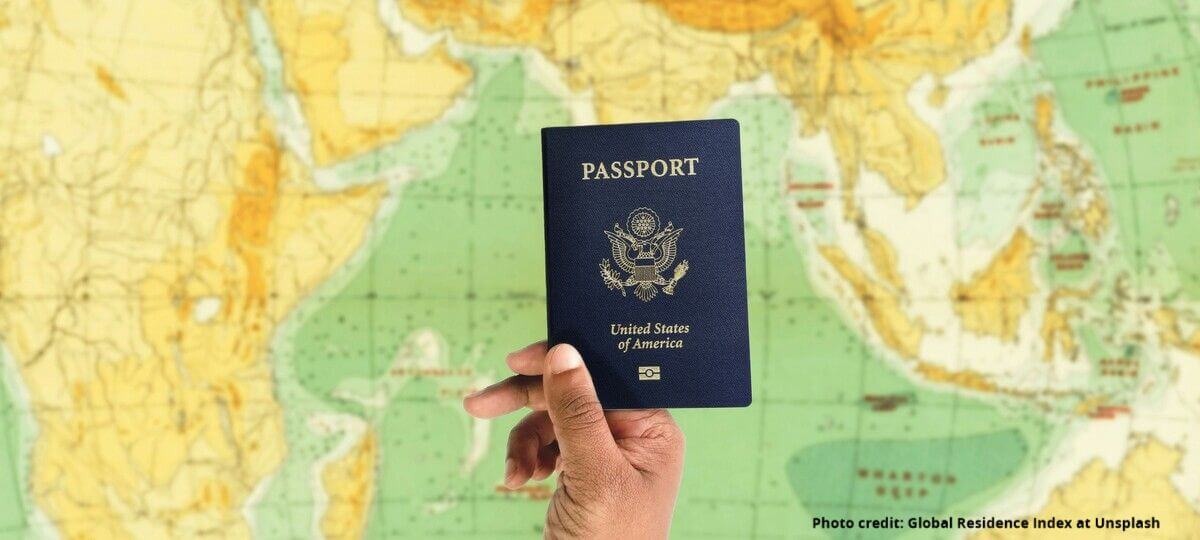
President Trump claims that birthright citizenship isn’t that: a birthright. He wants the authority to revoke the citizenship of U.S.-born children of immigrants here illegally and visitors here temporarily.

The Supreme Court will hear arguments on birthright citizenship this spring. It will likely hand down a ruling by summer.  Before the justices decide, they may want to cast their eyes over the Acts of the Apostles in the Bible.

They will learn anew how inviolate birthright citizenship was to Paul when he entered Jerusalem. He had to invoke his Roman citizenship to save himself from flogging and torture. On another occasion, Paul used his rights as a citizen to demand a trial.

Here is what befell Paul in Jerusalem in Acts 22: 22-29:

22 The crowd listened to Paul until he said this. Then they raised their voices and shouted, “Rid the earth of him! He’s not fit to live!”

23 As they were shouting and throwing off their cloaks and flinging dust into the air,

24 the commander ordered that Paul be taken into the barracks. He directed that he be flogged and interrogated in order to find out why the people were shouting at him like this.

25 As they stretched him out to flog him, Paul said to the centurion standing there, “Is it legal for you to flog a Roman citizen who hasn’t even been found guilty?”

26 When the centurion heard this, he went to the commander and reported it. “What are you going to do?” he asked. “This man is a Roman citizen.”

27 The commander went to Paul and asked, “Tell me, are you a Roman citizen?”

“Yes, I am,” he answered.

28 Then the commander said, “I had to pay a lot of money for my citizenship.

“But I was born a citizen,” Paul replied.

29 Those who were about to interrogate him withdrew immediately. The commander himself was alarmed when he realized that he had put Paul, a Roman citizen, in chains.

In the 1st century, Roman citizenship could be had by birth, purchased or granted by the emperor. But citizens born to their status had something of an edge over those, like the commander, who had bought their  citizenship.

A Roman citizen enjoyed many rights, which are also contained in the U.S. Constitution but are being ignored by Immigration and Customs Enforcement agents who are sweeping up people — some have turned out to be citizens and some have been deported in error.

These are the rights of a Roman citizen in the 1st century:

—Immunity from flogging and torture. These could be used to extract confessions, but were forbidden to be used against citizens.

—The right to a fair trial, which included the accused’s right to confront his accusers.

—The right to appeal directly to the emperor.

—Protection from degrading death, particularly crucifixion.

—Protection from illegal imprisonment. A citizen couldn’t be jailed if he hadn’t been convicted.

Trump is seeking a Supreme Court ruling to uphold his executive order (14161), ending universal birthright citizenship. The lower courts have restricted the order, and the president has asked SCOTUS to set that aside.

The 14th Amendment grants birthright citizenship to any child born under the jurisdiction of the United States. But Trump’s executive order, according to the New York City Bar, “purports to limit birthright citizenship by alleging that a child born to undocumented parents is not ‘within the jurisdiction of the United States.’  It thereby posits that birthright citizenship does not extend to any child born in the United States to a mother who is unlawfully present or lawfully present on a temporary basis and a father who is neither a U.S. citizen nor a lawful permanent resident.”

If Trump prevails, the unfortunate children will be unable to get birth certificates, register for school, receive healthcare or any public assistance. They must either seek citizenship from their parents’ country or, more likely, join the growing ranks of the world’s stateless people, punished for life for the crime of being born.

Victims to be exploited down through the decades of their lives.

The United Nations estimates that there are more than 4 million stateless people in the world, but that is a gross undercount, considering the number of refugees across Africa and in Latin America. War and drought are adding to the numbers daily.

If the justices want another biblical example, they may turn to the Old Testament and its several warnings that the sins of the fathers will be visited on the children for generations. As Exodus 20:5 puts it, “visiting the iniquity of the fathers on the children and the children’s children to the third and fourth generation.”

Those who support the Trump view may want to think about the iniquity they are promoting. No baby chooses where to be born, ever.

Filed Under: King's Commentaries Tagged With: Amendment, America, authority, Bible, citizenship, Exodus, Latin, Roman, SCOTUS, trump

Fear Is Afoot, Be Afraid America

October 10, 2025 by Llewellyn King Leave a Comment

There is enough fear to go around.

There is fear of the indescribable horror when the ICE men and women, their faces hidden by masks, grab a suspected illegal immigrant. Their grab could come at the person’s home or place of work, while picking up a child from school or standing in the hallway of a courthouse.

That person knows fear as never before. That person’s life, for practical purposes, may be over: loved ones left behind, hope shredded. He or she may be shipped to a place where they won’t be able to survive.

Fear is there because, maybe decades ago, they sought a better life and voted for it with their feet.

There is no time to argue, no time to ask why, no time to say goodbye. No time to prove your innocence or your U.S. citizenship. It is raw fear — the fear that secret police have always used.

There is the fear of those who work in government — once one of the securest jobs in the country — that they will be fired because their legitimate work in another administration is an affront to this one.

This hammer has come down in the Department of Justice, the FBI, the Department of Homeland Security and the Pentagon. The crime: supposedly being on the wrong side of history.

There is fear in the universities. Once a babel of free, even outrageous speech, they are cowed. Mighty Harvard, one of the shiniest stars in the education firmament, is dulled, and other universities fear they will be next. Everywhere academics worry that what they say in their classrooms might be reported as inappropriate — their careers ended.

There is fear in the law firms. A new concept is at work: an advocate is somehow guilty because of whom they defended. This violates the whole underpinning of law and advocacy, dating back to Mesopotamia, ancient Greece and Rome, now asunder in the United States.

Media is afraid. Disney, CBS and The Washington Post have bent before the fear of retribution, the fear that other aspects of their business will pay the price for freedom of speech. Journalists fear the First Amendment is abridged and won’t protect them.

There is fear, albeit of a lower order, across corporate America as it has become apparent that the government can reach deep down into almost any company, canceling contracts, withholding loan guarantees and, worse, ordering an “investigation.” That is a punishment that costs untold dollars and shatters good names, even if no prosecution follows.

Elected officeholders have reason to feel fear. President Donald Trump has suggested that Gov. JB Pritzker of Illinois and Mayor Brandon Johnson of Chicago should be in jail. Is his compliant DOJ working on that? Fear is unleashed for the elected. Doing your job is no protection.

If you have expressed an opinion that could be judged as subversive, the state could come after you. Suppose you walk in a demonstration, exercising your constitutional right to assemble and petition? Suppose you wrote something on social media, so easily traced with AI, which is now out of step with the times? Satire? Opinion? News? Facts that are out of fashion? If you have posted, be afraid.

If you take a flight these days, the TSA will ask you to look into a camera. Then government has a fresh picture of you in its active system, ready for facial recognition software to identify you. It will ID you if you should be walking in a demonstration or just be near one. Your own picture, so easily captured by modern technology, can convict you.

What is the purpose of that picture? It has no bearing on the flight you are about to take. The same thing is true when you reenter the country from abroad. Smile for Big Brother.

Surveillance is a favored tool of the authoritarian state. I have seen it at work in Cuba, in apartheid South Africa and in the Soviet Union. Successive U.S. administrations have been quick to criticize the increasing use of technology for surveillance in China. No more.

Troops are being ordered into cities where the locals don’t want them. They come under the promiscuous use of the Insurrection Act of 1807.

Does America fear insurrection? No, but there is fear of federal troops in our cities.

Filed Under: King's Commentaries Tagged With: America, authoritarian, citizenship, fear, government, ICE, illegal, immigrant, media, Pentagon, police, speech, surveillance

The Stateless in America Would Face a Kind of Damnation

September 12, 2025 by Llewellyn King Leave a Comment

I have only known one stateless person. You don’t get a medal for it or wear a lapel pin.

The stateless are the hapless who live in the shadows, in fear.

They don’t know where the next misadventure will come from: It could be deportation, imprisonment or an enslavement of the kind the late Johnny Prokov suffered as a shipboard stowaway for seven years.

His story ended well, but few do.

When I knew Johnny, he was a revered bartender at the National Press Club in Washington. By then, he had American citizenship, was married and lived a normal life.

It hadn’t always been that way. He told me he had come from Dalmatia, when that area was so poor people took their clothes to a specialist who would kill the lice in the seams with a little wooden mallet, which wouldn’t damage the cloth.

To escape that extreme poverty, Prokov became a stowaway on a ship.

So began his seven-year odyssey of exploitation and fear of violence. The captains took advantage of the free labor and total servitude of the stowaways.

Eventually, Prokov jumped ship in Mexico. He made his way to the United States, where a life worth living was available.

I don’t know the details of how he became a citizen, but he dreamed the American dream — and it came true for him.

An odd legacy of his years at sea was that Prokov had become a brilliant chess player. He would often have as many as a dozen chess games going along the bar in the National Press Club. He always won. He had had time to practice.

The United Nations says there are 4 million stateless people in the world, but that is a massive undercount. Many of those who are stateless are refugees and have no idea if they are entitled to claim citizenship of the countries they are desperate to escape from. Citizenship in Gaza?

Now the Trump administration wants to add to the number of stateless people by denying birthright citizenship to children born of illegal immigrants in the United States.

It wants to deny people — who are in all ways Americans — their constitutional right of citizenship. Their lives will be lived on a lower rung than their friends and contemporaries. They will be denied passports, maybe education, possibly medical care, and the ability to emigrate to any country that otherwise might have received them.

Instead, they will live their lives in the shadows, children of a lesser God, probably destined to have children of their own who might also be deemed noncitizens. They didn’t choose the womb that bore them, nor did they sanction the actions of their parents.

The world is awash in refugees fleeing war, crime and violence, and environmental collapse. Those desperate people will seek refuge in countries which can’t absorb them and will take strong actions to keep them out, as have the United States and, increasingly, countries in Europe.

There is a point, particularly in Europe, where the culture and established religion is threatened by different cultures and clashing religions.

But when it comes to children born in America to mothers who live in America, why mint a new class of stateless people, condemned to a second-class life here, or deport them to some country, such as Rwanda or Uganda, where its own people are already living in abject poverty?

All immigrants can’t be accommodated, but the cruelty that now passes for policy is hurtful to those who have worked hard and dared to seek a better life for themselves and their children.

It is bad enough that millions of people are seeking somewhere to live and perchance a better life, due to war or crime or drought or political follies.

To extend the numbers by denying citizenship to the children of parents who live and work here isn’t good policy. It is also unconstitutional.

If the Supreme Court rules in favor of the administration, it will add social instability of haunting proportions.

Children are proud of their native lands. What will the new second class be proud of — the home that denied them?

Filed Under: King's Commentaries Tagged With: America, citizenship, Dalmatia, Europe, immigrants, Mexico, refuge, stateless, trump, Washington

White House Chronicle on Social

  • Facebook
  • Twitter
  • Vimeo
  • YouTube
Loving Ireland on St. Patrick’s Day — for Its Contradictions

Loving Ireland on St. Patrick’s Day — for Its Contradictions

Llewellyn King

I won’t let St. Patrick’s Day pass without wearing something green and reaching for a glass of something that has been produced through fermentation or distillation. It is the least I can do for all the ways the Irish have enriched the world, but especially the English language, and me. When it comes to writing, […]

How Loneliness Became a Pandemic and What You Can Do

How Loneliness Became a Pandemic and What You Can Do

Llewellyn King

You don’t have to be sitting by yourself on an island to be lonely. Loneliness is everywhere. Studies from universities, governments and public health groups find that the world is in the grip of a loneliness pandemic. More than half the U.S. population is said to be suffering from loneliness. It is classified globally as […]

Inside the Civil War: New Letter Trove Takes You Among Soldiers, Widows, and the Enslaved

Inside the Civil War: New Letter Trove Takes You Among Soldiers, Widows, and the Enslaved

Llewellyn King

J. Mark Powell’s new book, “Witness to War,” tells the story of the Civil War objectively through the letters of everyday people who endured it. WASHINGTON, DC, UNITED STATES, February 24, 2026 /EINPresswire.com/ — J. Mark Powell, a journalist with the InsideSources syndicate, became fascinated with the Civil War when he was just 9 years […]

Absolute Power Corrupts Absolutely, Including at the Tech Giants

Absolute Power Corrupts Absolutely, Including at the Tech Giants

Llewellyn King

For me, the most remarkable thing about Facebook boss Mark Zuckerberg’s appearance at a Los Angeles court, to answer questions about the addictive aspects of social media, was that he was there at 8:30 a.m. wearing a suit. Sarah Wynn-Williams, in her excellent book about Facebook, “Careless People: A Cautionary Tale of Power, Greed and […]

Copyright © 2026 · White House Chronicle Theme on Genesis Framework · WordPress · Log in