White House Chronicle

News Analysis With a Sense of Humor

  • Home
  • King’s Commentaries
  • Random Features
  • Photos
  • Public Speaker
  • WHC Episodes
  • About WHC
  • Carrying Stations
  • ME/CFS Alert
  • Contact Us

The Fun Is Running Out for Trump’s Presidency

June 12, 2026 by Llewellyn King Leave a Comment

There is a powerful force that affects politics as much as it affects individual lives. It is fatigue.

We just get darn tired of something, be it a job, a relationship, a hobby or a routine. We have been devoted to it for years, and suddenly we want out; we want to do something else. What we loved doing has become boring and tedious. More work than fun.

A kind of national fatigue played a role in the collapse of the Soviet Union: People were tired of the system and its oppressiveness. Likewise, South Africa.

I was in and out of that country just before apartheid came to its timely death. Ordinary White people, including Afrikaners, said they had had enough; they were tired of the whole complex, cruel structure.

It is my contention that President Trump wants out — that for him, the fun is over. The old stimuli — his daily television domination, the adulation, the global recognition — once so important to him, are ebbing.

Michael Wolff, Trump’s biographer, and James Carville, the picaresque Democratic activist, have both speculated, along with several commentators, that Trump may not finish out his term. They imply that some external force, like illness, will cause him to leave office.

But I think he would like to do it by choice because he isn’t enjoying it anymore. The music has stopped.

Trump said during his first term that he had left a good life — by implication, a better life — before he became president. The first year of his second term was more to his liking than his whole first term. He roared back into office in 2025 with advantages he didn’t have in 2017.

Now he was the man, admired by some, feared by many. His whims or idiosyncrasies became policy. He took over America as though he had bought an apartment building and was knocking down walls and digging a swimming pool.

Trump had a palpable majority, and his base, which had developed a kind of religious commitment behind the slogan “Make America Great Again,” was solid.

In Congress, he had a majority, thin but blindly loyal.

The transformation was complete. The Republican Party had morphed into the Trump Party, faithful and unquestioning. He was careful to staff this second administration with men and women who accepted his liege. Additionally, he came in with a kind of manifesto in the form of the sweeping Project 2025, crafted by the sycophantic Heritage Foundation.

Trump bulldozed his way through his first 100 days, signing nearly 40 executive orders on his first day back in the White House. He made Elon Musk the foreman of an unconstitutional entity: the Department of Government Efficiency. It battered the bureaucracy but also established, from the start, Trump’s unbridled power.

“You’re fired!” moved from the fateful catchphrase on the TV series “The Apprentice,” which had made Trump a national celebrity, to a tool of government and a way of cowering the workforce.

In Congress, the withdrawal of Trump’s favor was feared as a career death sentence. Privately, Republican eyes rolled, but publicly, it was Trump all the way.

This year, the edifice of certainty is beginning to wobble.

Being president isn’t all plaudits, and some Trump voters are looking away, worried about the ravages of his private army in the form of ICE and the loss of America’s global stature. They are also concerned that the rich aren’t just getting richer; they are now an aristocracy, rich beyond measure, akin to the feudal lords.

Then came the Iran war, where miscalculation, aided by hubris and ignorance, has led to the real possibility that we will settle for less than we had before the first U.S. shot was fired.

In short, Trump took up arms against a sea of troubles and made them worse. Governing has proved to be more complicated than he dreamed.

It has long been a tenet of the right wing that there are simple solutions for complex problems. It is also the Trump creed.

I would wager the main thing keeping Trump from declaring victory and adjourning to a life of golf and self-congratulation would be that he desperately wants to finish his two acts of self-adulatory construction: the White House ballroom and the triumphal arch.

Trump has shown every indication that he sees his legacy not in Middle East peace or global security, but in the currency that made him: concrete and rebar.

Trump shows many signs of fatigue, of being tired of the job and its endless crises. Polls suggest many people are fatigued with him, too.

Filed Under: King's Commentaries Tagged With: apartheid, fatigue, fun, job, Musk, oppressiveness, Politics, Presidency, president, Republican, trump

The Collision Between Money and News — We Lose

May 29, 2026 by Llewellyn King Leave a Comment

Trillions, as in trillions of dollars, are being bandied about in the way millions were, then billions. But take a look at 1 trillion expressed numerically: 1,000,000,000,000. Awesome, isn’t it? Twelve zeros.

The national debt stands at $39 trillion, and the interest on that will top $1 trillion this year. Very soon, the first trillionaire will thunder past the post, presumably Elon Musk.

I have nothing against Musk. And I have nothing against successful people being rewarded for their talent.

Musk has done enormous things. An immigrant, he made his first fortune with PayPal. Since then, he has given the United States the solar revolution, the electric car, and a viable heavy-lift rocket that has made space exploration cheaper than when NASA alone was at the controls. His Boring Co. still holds promise.

It is assumed, as so often, that because a person is good at one thing, that same person must be good at everything else. Whoa! Musk’s limits as a manager and a visionary were exposed when he barged about streamlining the government for President Trump.

It was a case of a bridge too far for Musk. A disaster for America that eroded privacy, critically wounded many departments and saved no money.

Whereas much of what Musk has achieved has been beneficial, his purchase of Twitter, rebranded as X, was evidence of the harm that accompanies gigantic wealth. He wanted to control not just the medium, but also the news.

Musk — although it isn’t good that he has taken steps to control the message with X — isn’t the problem facing the media and the public’s right to know. When so much money is floating around, press freedom is in trouble.

The immediate threat comes not from Musk, but from two other men of gargantuan wealth: Larry Ellison, co-founder of the tech firm Oracle Corp., whose personal net worth is estimated at $245 billion, and his son, David.

Together, they are set to control the media to an extent not imagined and never seen. The media titans of yesteryear — Pulitzer, Hearst, Luce, Thompson, Sulzberger, Graham and Murdoch — are knee-high to the fearsome power that the Ellisons have, and which will more than double if (and it is more when than if) the merger of their Paramount Skydance Corp. with Warner Bros. Discovery is approved by regulators.

At present, the Ellisons control the CBS Television Network, CBS Sports, MTV, Nickelodeon, Comedy Central, Paramount Network and BET. They control CBS News, and Paramount+, which has 79 million streaming subscribers.

If the merger goes through, they will control CNN, HBO Max and Warner Bros. Studios — a treasure trove of entertainment.

In short, they will control a huge swath of American broadcast news, information dissemination, and movie and television culture.

Their declared purpose is to incorporate more technology and more AI across their astounding current and probably future empire. That is bad for journalism and worse for movies. The invasion of the bots.

I know how media control works. I have seen it firsthand: It isn’t what is said, but what is implied or what employees feel the owners of the outlet want. A casual remark can become policy; a hint of preference can become a hard rule.

If an Ellison family member were — of course, this is hypothetical — to say they hated rhubarb, you could bet the Food Network wouldn’t do a show episode on rhubarb pie making. If it were known that one of the owners of Paramount was a booster of nuclear power, movies such as “The China Syndrome” and “Silkwood” would never have been made.

In journalism, the story that isn’t covered is as important as the one that is covered. If a disease caused by a common product — asbestos is a good example — isn’t covered because the staff has heard that the media owners love that product or is invested in it, then you can bet it won’t be covered.

Consolidated corporate ownership is antithetical to free speech, creativity and open government. No news is bad news.

News isn’t suited to the corporate world; it isn’t a fit with those whose interest is adding zeros to bottom lines. It is the pursuit by an irregular army of often eccentric individuals, who turn over stones to find out what is beneath.

Likewise, individual ownership furthers the news objective, which for me was summed up by something Dan Raviv said when he was a correspondent for CBS Radio (recently shuttered by the Ellisons): “My job is simple. I try to find out what is going on and tell people.” 

Write that in the corporate prospectus.

News organizations need to be owned by news people, like Ted Turner, Bill Paley and, yes, Rupert Murdoch.

Filed Under: King's Commentaries Tagged With: AI, America, CNN, debt, money, Musk, NASA, Oracle, PayPal, technology, trump

Absolute Power Corrupts Absolutely, Including at the Tech Giants

February 20, 2026 by Llewellyn King Leave a Comment

For me, the most remarkable thing about Facebook boss Mark Zuckerberg’s appearance at a Los Angeles court, to answer questions about the addictive aspects of social media, was that he was there at 8:30 a.m. wearing a suit.

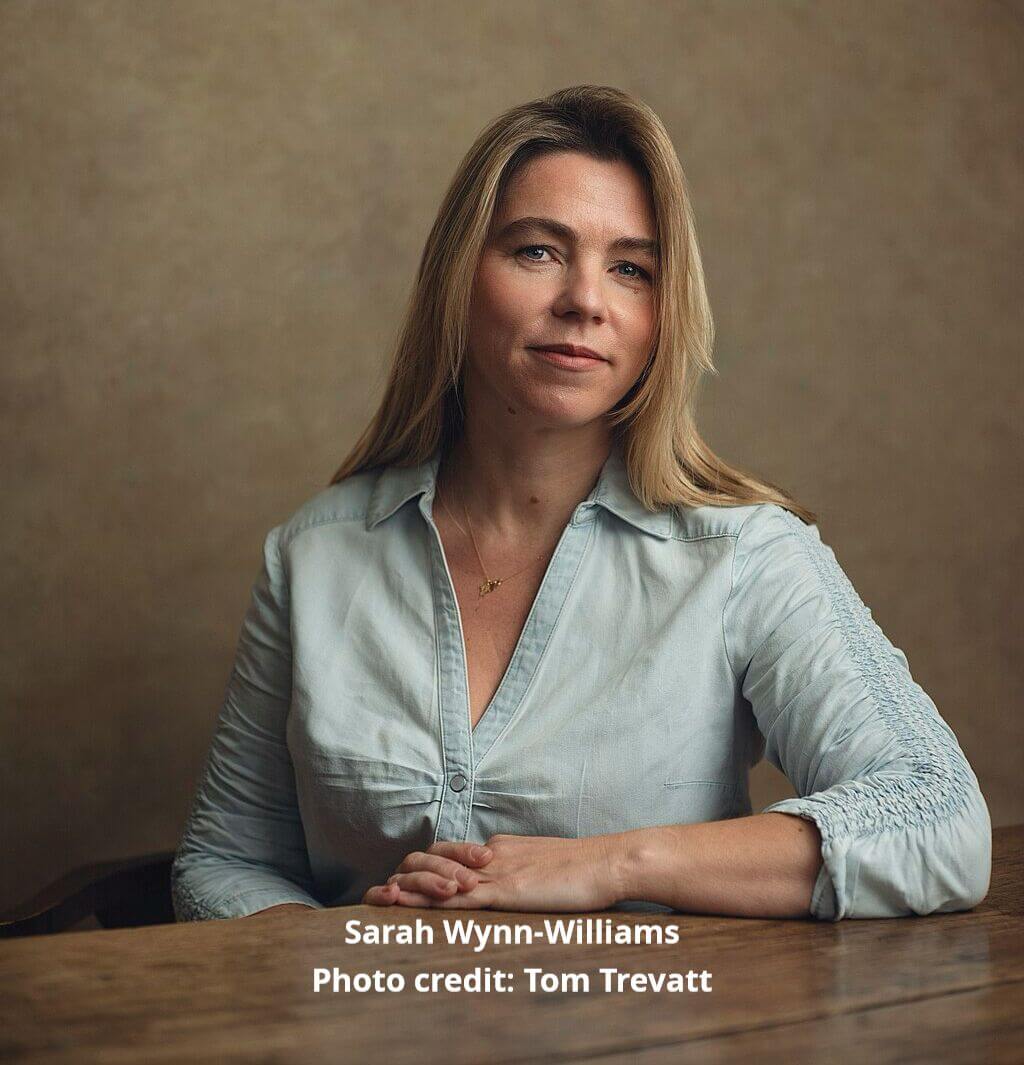
Sarah Wynn-Williams, in her excellent book about Facebook, “Careless People: A Cautionary Tale of Power, Greed and Lost Idealism,” said Zuckerberg doesn’t see anyone before noon because he has to sleep, having been up most of the night.

This had Wynn-Williams, who rose to head Facebook’s international relations team, sometimes telling heads of state that they would have to wait for the great man to alight from his bed at noon or later.

Zuckerberg could be uninterested or uninformed about the country from which he was trying to get favors for Facebook, she wrote. As Facebook had electorates in its thrall, countries’ leaders were prepared to defer to the sleeping titan.

This doesn’t mean that Zuckerberg is evil, but it does point to enormous self-regard. His sleeping routine is a de facto declaration: I am so rich and so powerful that I can command world leaders to rearrange their schedules to accommodate mine. They did, according to Wynn-Williams.

While the venerable observation by Lord Acton in 1887 that “power tends to corrupt, and absolute power corrupts absolutely” is nearly always directed at politicians and autocrats, it is as true for billionaires and their companies.

More so with the tech gargantuans who are a force in the financial markets and politics, and will control much of the future if their investments in artificial intelligence pay off. Among them are Meta (Facebook), Alphabet (Google), Amazon, Apple, Nvidia, Microsoft, Tesla, Anthropic and OpenAI.

Another point Wynn-Williams made in her book is that most of the heads of state whom Zuckerberg treated with minimal respect won’t be in power in 10 years, but Zuckerberg, who is 41, may be around for half a century. The long game is his, along with his colleague-companies and their CEOs, especially when they own a commanding amount of the stock, like Tesla’s Elon Musk.

The effect of Big Tech as a lobbying force is apparent: Any CEO has access to the White House and is, in turn, cultivated by it. Congress has a permanent welcome mat out to Big Tech lobbyists and their campaign contributions.

A more damaging impact might be what Big Tech does to new tech.

The biggies buy up every startup that looks as though it might become a mega company. All of the Big Tech companies are conglomerates, and history has shown that conglomerates discard unprofitable enterprises and favor the cash cows. Tech autocracy is no kinder than any other autocracy.

Startups are what keep America ahead of the world in tech, and they are keenly watched for any sign that they may grow into another agent of change. Whereas at the beginning of the tech boom, successful startups headed for an initial public offering, and now they calculate from the get-go which behemoth tech company will buy them. The circle is closed.

The big get bigger, and the startup is absorbed into a giant organization, where it might prosper or whither. Either way, it is out of reach, including regulatory reach. It is in the castle walls.

As we see with the fate of CBS and The Washington Post, Big Tech can play havoc with the media and our right to know what is going on. The money is so large that it is almost impossible for politicians not to seek the favor of the mighty techs and their Vesuvian cash flow.

The obverse of that is what they might do if they overreach, as they may be doing now with AI investments, and bring down the stock market.

Big Tech has showered us with wonders that have made life easier and fun, but there is a price. The price is that we have handed the future to a group of companies that, understandably, are interested in self-preservation first, as with all autocracy.

Filed Under: King's Commentaries Tagged With: AI, America, big tech, corrupt, Facebook, international, Musk, sleep, Wynn-Williams, Zuckerberg

The Trump Way Comes to The Washington Post

March 1, 2025 by Llewellyn King 1 Comment

As Juliet might have said, “O America, America, wherefore art thou America?”

What has become of us when the president, Donald Trump, who opposes big government, wants the government to have its hand in everything, from the operation of The Kennedy Center to the regulatory commissions, to gender identification, to traffic control in New York City, to the composition of the White House press pool?

Under the pretext of cutting three shibboleths (waste,  fraud and abuse), Trump is moving to bring everything he can under his control, to infuse every apparatus of the country with the Trump brand, which emerges as a strange amalgam of personal like and dislike, enthusiasm and antipathy.

He likes the brutal Russian dictator Vladimir Putin — he who orders assassinations outside of Russia and causes his opponents to fall out of windows — so much so that he is about to throw Ukraine under the bus. Short shrift for people who have fought the Russian invader with blood and bone.

He has a strange antipathy to our allies, starting with our blameless neighbor Canada, our supply cabinet of everything from electricity to tomatoes.

He shows a marked indifference to the poor, whether they are homeless in America or dying of starvation in Africa.

He and his agent, Elon Musk the Knife, have obliterated the U.S. Agency for International Development, ended our soft-power leadership in the world and handed diplomatic opportunities to China; while at home, housing starts are far behind demand, the price of eggs is out of sight, and necessary and productive jobs in government are being axed with a kind of malicious pleasure.

The mindlessness of Musk’s marauders has cut the efficiency he is supposed to be cultivating. It is reasonable to believe that government worker productivity is at an all-time low.

If there is a word this administration enjoys it is “firing.” The Trump-Musk duopoly relishes that word. It goes back to the reality television show “The Apprentice,” when its star, Trump, loved to tell a contestant, “You’re fired!”  Now a catchphrase from a canceled TV program is central to the national government.

Meanwhile, the extraordinary assemblage of misfits and socially challenged individuals in Trump’s Cabinet — and, it must be said, who were confirmed by the Republicans in the Senate — are doing their bit to disassemble their departments, fixing things that aren’t broken, breaking things because they hated their authors or because revenge is a policy. Look to the departments of Defense, Justice, Health and Human Services and Homeland Security — really all the departments — and you’ll find these hearties at work.

There is a quality of cruelty that is alien to the American ethos, that is un-American, running though all of this. When everything that isn’t broken is fixed, we may lose:

—Our standing in the world as the beacon of decency.

—Our role as a guarantor of peace.

—The trust of our allies.

—Our place as the exemplary of constitutional government and the rule of law.

—Our leadership in all aspects of science, from space exploration to medicine to climate.

Nowhere is the animus of Trump and its lust to control more evident than its hatred of the free press. The free flow of news, fact, and opinion, already damaged by the economic realities of the news business and its outdated models, is an anathema to Trump. A free press is a free country. There is no alternative.

This week, the White House and the press secretary, Karoline Leavitt, moved to destroy the norm of decades in the press room, where the press corps collectively through its elected body, the White House Correspondents’ Association, has assigned seats. The association also decides who will be a part of the small rotating group of journalists and photographers — the pool — who accompany the president. It has been effective and is time-honored.

Now Leavitt, a Trump triumphalist, will choose the pool and favor the inclusion of podcasters and talk-show hosts who are reliably enthusiastic about the president.

At The Washington Post — the local newspaper of government — editorial pages are to be defenestrated. The Post, which has had for decades the best editorial columnists in the nation, is to be silenced. Its owner, the billionaire Jeff Bezos, has told the editorial staff that going forward they will write only about personal liberties and free markets.

It is the end of an era of great journalism, the dimming of a bright light, the encroachment of darkness in the nation’s capital.

A newspaper can’t be perfect, and The Washington Post certainly is far from that. But it is a great newspaper, and its proprietor has been manipulated by the controlling fingers of the Trump machine: A machine that values only loyalty and brooks no criticism. A machine that is unmoved by the nation’s and world’s tears. A Romeo who doesn’t hear Juliet.

Filed Under: King's Commentaries Tagged With: America, Bezos, government, journalism, Leavitt, Musk, Putin, Republicans, trump, Washington Post

A Chainsaw Is the Woefully Wrong Tool for Government Reform

February 21, 2025 by Llewellyn King Leave a Comment

At the recent “Future of the Blue Economy” conference in Newport, Rhode Island, entrepreneurs and their investors were talking about breakthroughs, but the term they used — replacing “Sputnik moment” — was “SpaceX moment.”

That was a salute to the extraordinary precision engineering that enables the booster stage of Elon Musk’s SpaceX rocket to reposition itself on the launch pad after firing. It is inspiring to watch, but there must have been untold preparation, thought and planning to bring about that seemingly miraculous engineering feat.

All hail Elon Musk, boss of SpaceX!

Sadly, none of that precision preparation, thinking and planning has gone into Musk’s latest venture, the Department of Government Efficiency.

It has raged across the government, leaving a trail of havoc, shattered careers, broken departments, endangered missions: techno-barbarians running wild inside the government.

In the history of social engineering, nothing as vast and self-defeating has been attempted since Chairman Mao’s  Cultural Revolution set China back decades.

Prepare for a similar dividend from the President Trump-Musk efficiency team. If they had approached launching a rocket the same way they have sought to make the government more efficient under the mantra “waste, fraud and abuse,” they would have piled a jerry-built rocket atop a pile of explosives and lit a match. Result: a catastrophic failure.

There are things here which are beyond explanation. Trump has run businesses. He knows if you fire half the front desk staff in a hotel, things aren’t going to go smoothly. If you berate the staff and accuse them of waste, fraud and abuse, essentially stealing, morale will plunge. 

In the Soviet Union there was an adage: They pretend to pay us, and we pretend to work. An awful lot of government workers who haven’t lost their jobs but are disconsolate will be pretending to work for the rest of the Trump administration. Efficiency? Hardly. Many will efficiently do nothing.

Everything about the unleashing of the DOGE suggests that it had little preparation and little planning. Particularly, Musk and his crew knew nothing about the departments they were savaging. Hence, the embarrassment with the nuclear workers at the Department of Energy. Or the folly of shutting the window through which most of the world saw America’s goodness, the U.S. Agency for International Development.

We have as a society a tendency to believe that those who are good at one thing must be good at everything, something which might be called “success syndrome.”

This was on display during the energy crisis which erupted in the fall of 1973 with the Arab oil embargo and lasted through the Iranian revolution of 1979 and beyond, toppling governments and driving inflation. Many thought that proven inventors, like Edwin Link, the creator of the first flight simulator for pilot training, and Edwin Land, creator of the Polaroid camera, were expected to be able to invent us out of the oil shortage. They didn’t.

Good, patient science, regulatory reform and entrepreneurial courage did that.

Another myth is that if only you put a tough businessperson in the White House, someone who will apply their foot to the rear end of the bureaucracy, wondrous things will happen.

We have a businessperson and a brilliant inventor at the controls in Washington, and so far, the kicking of the bureaucracy with the aid of high-tech tools has produced chaos in the government workplace and devastating consequences globally.

Taken together the evidence that you can’t run a government as a private company and great inventors —even one so remarkable that he has made the greatest fortune ever — can’t reinvent government without some coherent planning.

Musk was given a chainsaw as a symbol at the CPAC meeting in Washington. They are useful but dangerous tools, as any emergency-room physician who has had to sew up an over-exuberant operator can tell you. Trump and Elon Musk appear to be attempting what should be delicate surgery with one.

A restraining of the bureaucracy may be overdue, but the bloodbath is going to weaken the patients, rendering them unfit for duty at a critical time.

A chainsaw moment is not a SpaceX moment.

Filed Under: King's Commentaries Tagged With: Blue Economy, Chainsaw, China, energy, Musk, rocket, Soviet Union, SpaceX, trump

Tech Conquers All, From Making a New Aristocracy to Making Taylor Swift

June 28, 2024 by Llewellyn King Leave a Comment

I sometimes write about the propensity for technology to be imperial, to conquer and to force itself on the world whether the world wants it or not. With AI taking hold, I have to say, “You ain’t seen nothing yet.”

The wise people who write about international trade say that globalization is dead, killed off by nationalism and protectionism.

Well, you might not be able to get a Big Mac in Russia these days, but I bet they know who Taylor Swift is. Tom Friedman may be a well-read New York Times columnist, but his penetration is nothing compared to that of the influencers on TikTok or maybe even Heather Cox Richardson on Substack.

Then there is the money.

The Computer Age has spawned a new class of ultra-rich, dwarfing the rich of the past, like the Rockefellers, the Carnegies and the Rothschilds. Names like Bezos, Gates, Zuckerberg and Musk will dominate the age.

The descendants of the great internet-based companies will form a new aristocracy with money so abundant that they can influence our lives culturally and politically.

Culture will be shaped by them via what they sponsor. The rich have always sponsored the arts, but now there will be so much money, dwarfing what Carnegie, Getty, Guggenheim and their millions wrought.

If a multibillionaire wants to weigh in politically with big money, both political parties and individual politicians will tailor their offerings to get some of that campaign cash. That is occurring now. But in the future, it will be occurring even more.

One could reasonably argue that the political class has already sold out to its backers. It isn’t the kind of government a candidate will provide so much as how much that worthy candidate raised to get elected.

I suspect we are only beginning to understand the effects of money in politics and how it may reshape the future. 

The people creating innovative technologies today have little idea where their inventions will take them. Did the guys who launched Uber in San Francisco ever think it would go nationwide, let alone sweep the world and wipe out many taxi fleets? One would have believed every county or region would have its own rideshare operator. But no. Uber went global, thanks to the controlling computer technology.

One of the realities of computer-based technology is that it picks winners and losers early on — and winners win bigger than anything seen before. Losers fade away, as they did after the first tranche of tech upheaval: the dot-com bubble.

Computer tech favors monopoly, and the monopoly in each market segment wins.

With AI coming into daily use and likely to command the way we live and work after a few decades, the companies that provide that service today — and will come to control it — will potentially dwarf the existing tech mega-giants. In theory, an AI company can employ AI to consolidate its authority in the field and vanquish competition.

If that happens, a single company will have greater wealth and greater social and political power than any aspirant for global domination ever has had.

The backstory to why early bots are error-riddled and why we get hilarious “hallucinations” is that the companies — the big techies — are so aware of the stakes that they are rushing to market their products before they have perfected them. They calculate that it is better to achieve some market penetration with an inferior product than to wait for the perfected one when a rival has become the bot of choice and technological world conquest is at hand. Never let the perfect get in the way of market share.

Consider the evolution of Google. When it perfected its search engine, it was one of a handful of search engines (remember Jeeves?). But it grabbed market share, and the rest is history. Microsoft’s Bing can do everything that Google does, but it has a third of the users. Google got the reputation and was first past the post.

Where does Taylor Swift fit in? Is she the greatest singer about the travails of love? Almost certainly not, but social media loved her.

Tech loved Taylor, and she is the brightest star ever seen in the firmament of tech-influenced culture — the equivalent in entertainment of world conquest. It is the future.i

Filed Under: King's Commentaries Tagged With: Bing, Google, innovative, Jeeves, Musk, Rockefellers, Substack, Taylor Swift, technology, Tom Friedman

White House Chronicle on Social

  • Facebook
  • Twitter
  • Vimeo
  • YouTube
Via AI, an Ancient Roman Historian’s Account of Trump II

Via AI, an Ancient Roman Historian’s Account of Trump II

Linda Gasparello

Via AI, an Ancient Roman Historian’s Account of Trump II If the Roman Emperor Caligula were alive today, you can bet that he would cheer the UFC fight on the South Lawn of the White House, which President Trump is hosting to mark his 80th birthday, and the nation’s 250th anniversary. Caligula, who reigned from […]

The Fun Is Running Out for Trump’s Presidency

The Fun Is Running Out for Trump’s Presidency

Llewellyn King

There is a powerful force that affects politics as much as it affects individual lives. It is fatigue. We just get darn tired of something, be it a job, a relationship, a hobby or a routine. We have been devoted to it for years, and suddenly we want out; we want to do something else. […]

Microgrids Offer Community Solution to Electricity Challenge

Microgrids Offer Community Solution to Electricity Challenge

Llewellyn King

You may have heard of microgrids in passing, maybe at a town meeting or when the future of your electricity supply is under discussion. Mostly, they aren’t headliners like data centers. However, microgrids are becoming an important part of the future electric infrastructure. They provide a valve to release some of the pressure building up […]

The Collision Between Money and News — We Lose

The Collision Between Money and News — We Lose

Llewellyn King

Trillions, as in trillions of dollars, are being bandied about in the way millions were, then billions. But take a look at 1 trillion expressed numerically: 1,000,000,000,000. Awesome, isn’t it? Twelve zeros. The national debt stands at $39 trillion, and the interest on that will top $1 trillion this year. Very soon, the first trillionaire […]

Copyright © 2026 · White House Chronicle Theme on Genesis Framework · WordPress · Log in