White House Chronicle

News Analysis With a Sense of Humor

  • Home
  • King’s Commentaries
  • Random Features
  • Photos
  • Public Speaker
  • WHC Episodes
  • About WHC
  • Carrying Stations
  • ME/CFS Alert
  • Contact Us

Women Face Massive Layoffs as AI Use Spreads in the U.S.

March 20, 2026 by Llewellyn King Leave a Comment

March is Women’s History Month and a time to take a look at how women are progressing, or otherwise.

Alas, the news for women in the United States isn’t good, and the future is foreboding as they are about to lose 6 million jobs to artificial intelligence. Work traditionally done by women — secretaries, receptionists, payroll clerks and customer service representatives — is likely to lose jobs. Except for healthcare, semi-skilled workers are the most vulnerable.

I must confess to a longtime interest in the women’s movement, particularly the path of women in journalism. In 1964, in New York, my first wife, Doreen, a stupendously gifted English journalist, and I created what we liked to believe was the very first women’s liberation magazine. Ms., co-founded by Gloria Steinem, didn’t launch until 1971.

Our magazine was “Women Now,” and we only got out one issue before we ran out of money. As I have said often, “It didn’t liberate any women but liberated all of our money,” which was utterly insufficient for the undertaking. However, I remained interested in the progress of women in society.

When I was at The Washington Post about six years later, I was elected president of the Washington-Baltimore Newspaper Guild. Women’s rights and their path in journalism were on the agenda, propelled as much by our talented business agent, Brian Flores, as by me.

The guild held conferences (including a national one in Chicago), formed study groups, and made the path of women an issue at the bargaining table. The Post’s editor, Ben Bradlee, asked if I was doing this “to improve my love life.” I wasn’t, and it didn’t.

Women could write themselves to glory, but it was a lot harder from the women’s pages or if you weren’t considered for reasons of your sex for a foreign assignment or war coverage. However, I think Marguerite Higgins, Martha Gellhorn and Dorothy Kilgallen were towering talents who circled above their contemporaries, male and female.

In the time I have been watching women’s issues, I have seen great progress and now backsliding.

I have seen progress in the numbers of women editors, film directors, board members and company heads. Yet many women are hired, I believe, because it is possible to pay them less, on the assumption that they will be supported by a partner or husband. The old thinking.

In the 1960s in Britain, jobs were advertised with one salary for men and another, a lower one, for women for the same work. In that sense, things have improved. But women worldwide are still losing ground in abhorrent ways. They encounter gender oppression, including honor killings in Muslim societies, female circumcision in parts of Africa, and femicide in some Caribbean and Latin American countries.

In the democracies, there is a backward movement for women as the bad ways of old are championed as “conservative” or “traditional.” Worse, reproductive rights have been scaled back or denied, and overt efforts to promote equality have been prohibited.

The unwelcome news isn’t at an end: Enter AI.

Several studies, including those by the United Nations and McKinsey & Co., conclude that women will bear the brunt of the first American AI-induced layoffs. This will be felt between now and 2030, and as many as 6 million women may have to find new jobs or quit the job market altogether.

In the years ahead, it is going to be harder for women than men as the first waves of what I call the “AI adjustment” hit the workplace. The political class needs to absorb this reality and to start thinking about the nature of work when AI starts snatching jobs by the millions.

So far, political talk has been to eschew the looming future — a future that, initially at least, threatens women most.

Women’s history is about to have a new chapter written.

Filed Under: King's Commentaries Tagged With: AI, gender, guild, healthcare, history, journalism, Layoffs, political, Washington Post, women

Requiem for The Washington Post

February 6, 2026 by Llewellyn King Leave a Comment

Think of a big-city newspaper as being analogous to a department store. You can get anything you want there, from breaking political news to dinner recipes. When you pick it up, you should be enchanted by the multiplicity of its offerings.

Think of big-city newspapers as you think of the way every city had its own particular and dearly loved emporium like Marshall Fields in Chicago, Bloomingdale’s in New York, and Garfinkel’s in Washington.

For decades, Washington’s great newspaper has been The Washington Post. In recent years, along with The New York Times and The Wall Street Journal, it has also been one of the three newspapers that can claim to be national.

The Post offered everything from history-changing exclusives to the daily horoscope. And great reporting and commentary.

Now it is going from being a great department store to a convenience store, selling bread, milk and cigarettes — actually, politics and business with limited international coverage.

Having once worked at the Post, I feel this personally, as though a part of my life is being taken away.

I am shattered by the folly and the waste. I am also alarmed that now The New York Times will be too powerful with its online dominance. It got the internet right early.

Jeff Bezos, who bought the Post from the Graham family, failed to catch the wave. Instead, he was seen as being more concerned with placating President Trump. Betrayal, said much of the readership, who cancelled their subscriptions or stopped believing in the paper, despite some courageous and insightful journalism.

The seeds of the Post’s commercial success were sown in 1954. At that time, afternoon newspapers were dominant and morning papers were struggling. In the morning, Washington had the Post and the Times Herald. In the afternoon, it had the Washington Evening Star and the Washington Daily News.

Eugene Meyer, a financier, bought the Post in 1933. By all reports, he thought of it as a diversion. I am told he liked to bring bottles of whiskey to the paper and have impromptu parties with the ever-thirsty staff.

In March 1954, Meyer bought the Times Herald and folded it into the Post.

What wasn’t known was that television would soon shift the balance between morning and afternoon papers, and that afternoon papers would go into permanent decline and extinction.

Both the Star and the News in Washington were battling each other for the read-at-home market. Soon, those readers would be watching television.

Under Meyer’s daughter, Katharine Graham, the Post reached unbelievable heights in journalism and in wealth. It appeared invincible.

Just as television had doomed afternoon papers, technology was to threaten all traditional publishing and broadcasting. New media, such as Facebook and Google, delivered personalized advertisements directly to consumers, cheaply and effectively.

As the red ink spread, it was up to Donald Graham, Katharine’s son, to find an angel, someone to stave off bankruptcy, and follow the early example set by the Times of virtual publishing. He persuaded Amazon’s billionaire founder, Bezos, to buy the Post to save it. Ironical?

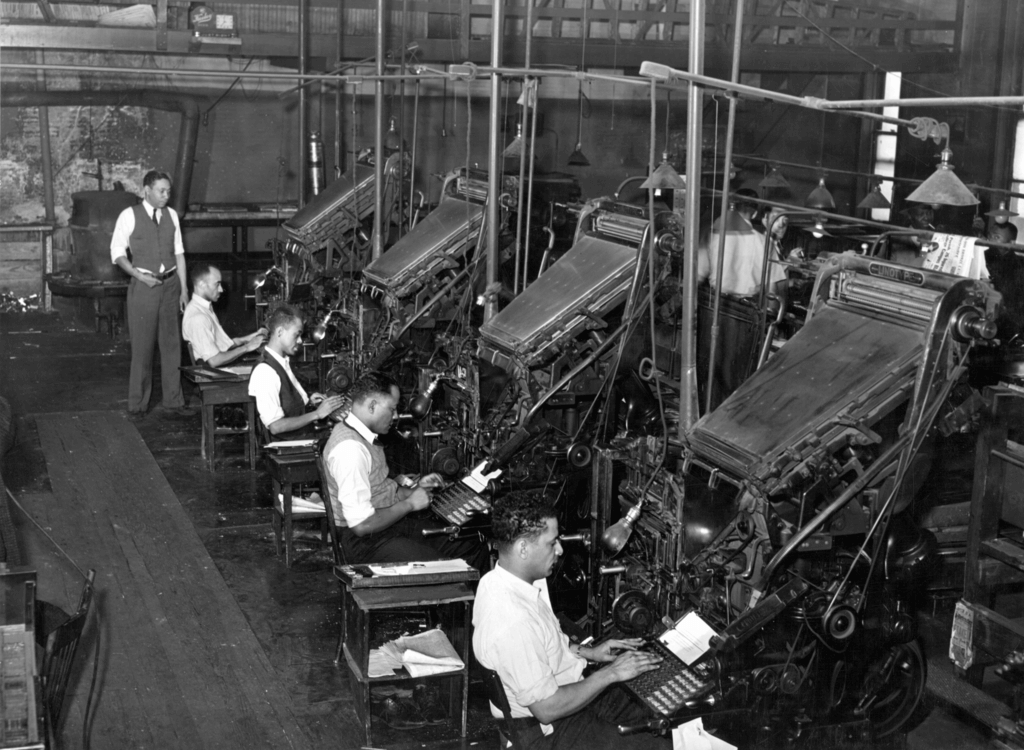
A word about Graham: I met him when he first came to the Post. I was asked to show him around the composing room. It was the beating heart of the paper, where the newsroom’s creative output was set in hot metal and assembled in steel frames, known as forms, that would become the pages.

I got on well with him, and we became friends. It must have been extraordinarily painful for him to sell the Post, to entrust it to a man with the money to keep it going until a new business plan paid off.

It began well. Bezos kept his distance until he, like other giants of business, felt he had to mollify Trump, ever a media critic.

The extent of Trump’s pressure became clear when Bezos canceled the publication of an editorial endorsing Kamala Harris for president. Emotions were running high, and it was seen by the Post faithful as betrayal: the hand of Trump in the temple of press freedom.

Subsequently, Bezos added insult by changing the direction of the Post’s admired opinion pages, undermining confidence in the readership and the staff.

You can change the product lineup in a retail outlet, but you will burn down the building if you do it in a newspaper.

The Washington Post of old was venerated for fearlessness; now it is despised as craven. It is gone, sunk, a wonderful memory for those who read it, and for those who worked there. R.I.P.

Filed Under: King's Commentaries Tagged With: Bezos, horoscope, international, Katharine Graham, national, New York Times, newspaper, political, recipes, Washington Post

Notebook: Friends Who Share Friends Are the Nicest People

July 4, 2025 by Llewellyn King Leave a Comment

I treasure the friends who share their friends. One of those friends, Virginia “Ginny” Hamill, has died. 

I met Ginny at The Washington Post in 1969, and we became forever-friends. 

Ginny had an admirable ascent from a teleprinter operator to an editor in The Washington Post/Los Angeles Times News Service. She was promoted again to the enviable job as the editor of the news service in London, where she bloomed — and met her future husband, John McCaughey.

Ginny brought wealth into my life — and later to that of my wife, Linda Gasparello — through the introductions to her friends from that London period. They included David Fishlock, science editor of the Financial Times; Roy Hodson, also of the FT; Deborah Waroff, an American journalist; and Guy Hawtin, a rakish newspaperman on his way to the New York Post.

They constituted what I called “The Set.” In London, New York and Washington, we worked at the journalism trade on many projects from newsletters to conferences and broadcasts. 

We also partied; it went with the territory.

I once wrote to Ginny and told her how instrumental she had been in all our lives through sharing her friends. I am glad I didn’t wait until obituary time to thank her for her generosity in friend-sharing.

******

I think for many, myself among them, it was a somber July 4. There are dark clouds crossing America’s sun. There are things aplenty going on that seem at odds with the American ideal, and the America we have known.

To me, the most egregious excess of the present is the way masked agents of the state grab men, women and children and deport them without due process, without observance of the cornerstone of law: habeas corpus. None are given a chance to show their legality, call family or, if they have one, a lawyer.

This war against the defenseless is wanton and cruel. 

The advocates of this activity, this snatch-and-deport policy, say, and have said it to me, “What do these people not understand about ‘illegal’?”

I say to these advocates, “What don’t you understand about want, need, fear, family, marriage, children and hope?”

The repression many fled from has reentered their luckless lives: terror at the hands of masked enforcers.

I have always advocated for controlled immigration. But the fact that it has been poorly managed shouldn’t be corrected post facto, often years after the offense of seeking a better life and without the consideration of contributions to society.

Elsewhere over this holiday, the media is under attack, the universities are being coerced, and the courts are diminished. 

America has always had blots on its history, but it has also stood for justice, for the rule of law, for freedom of the press, freedom of speech. Violations of these values have dimmed the Fourth. 

Nonetheless, happy birthday, America. You deserve better: It is guaranteed in the Constitution, one of the all-time great documents of history, a straight-line descendant of the Magna Carta of 1215. That was when the noblemen of England told King John, “Cut it out!” 

A few noblemen in Washington wouldn’t go amiss.

******

I was fortunate on my syndicated television show, “White House Chronicle,” along with my co-host, Adam Clayton Powell III, this week to interview Harvey Castro, an emergency room doctor. Castro, from a base in Dallas, has seized on artificial intelligence as the next frontier in healthcare.

He has written several books and given TEDx talks on the future of AI-driven healthcare. I have talked to several doctors in this field, but never one who sees the application of AI in as many ways from diagnosing ailments through a patient’s speech, to having an AI -controlled robot assist a nurse to gently transfer a patient from a gurney to a bed.

A man with infectious ebullience, Castro says his frustration in emergency rooms was that he got there too late: after a heart attack, stroke or seizure. He expects AI to change that through predictive medicine and early treatment. 

His work has caught the attention of the government of Singapore, and he is advising them on how to build AI into their medical system.

******

Like everyone else, I spend a lot of time in frustration-agony on the phone when I need to talk to a bank or insurance company and many other firms that have “customer service.” That phrase might loosely be translated as “Get rid of the suckers!”

I don’t know whether the arrival of AI agents will hugely improve customer service, but maybe you can banter with them, get them to deride their masters, even to tell you stuff about the president of the bank.

It might be easier talking to an AI agent than talking to someone with a script in another country before they inevitably, but oh, so nicely, tell you to get lost, as happened to me recently. 

You could enjoy a little hallucinatory fun with a virtual comedic friend, before it tells you to have a nice day, and hangs up.

Filed Under: King's Commentaries Tagged With: AI, American, customer service, England, Financial Times, Ginny, Magna Carta, Washington Post

How Trump and Technology Have Turned the Press Corps From Lions to Hyenas

April 25, 2025 by Llewellyn King Leave a Comment

Political messaging isn’t what it used to be. Far from it. It used to be that the front pages of The Washington Post and The New York Times were an agenda for action. This power was feared and used by successive presidents in my time, from Lyndon Johnson to Joe Biden, but not by Donald Trump.

Before Trump, there were several ways a president spoke to the nation. He either made a speech, held a press conference or leaked an idea to one of the two newspapers that counted in the Washington firmament, The Times and The Post. If that balloon floated upward, something formal followed.

Until Bill Clinton, that was often a speech at the National Press Club, a few blocks from the White House. Clinton never gave a major speech at the Press Club. That was the end of an era, the end of the Press Club as the forum of choice for presidents and heads of state.

In Clinton’s case, this wasn’t a failing of the Press Club system; it was just that it had become cumbersome and unnecessary. Clinton said it was simpler for him to talk to the nation from the White House formally in a press conference in the East Room. Less formally, he could walk into the Brady Briefing Room, where the press was on duty all day and the network cameras were ready to roll.

Technology was changing the way news came out of the White House. While Clinton preferred press conferences or informal presentations, the two dominant newspapers were essential tools to him, as they had been and would be to other presidents until technology again changed things.

I watched the system of trial-by-leak from the Johnson through the Biden years, although things were somewhat different under Bush. There was a new newspaper in town, The Washington Times, which was avowedly conservative, which caused George W. Bush’s staff to lean that way.

However, the new paper didn’t change the system in which a top White House correspondent would be leaked a story. If it failed, it wasn’t heard about again; it would either die in the aridity of silence, or it could be mildly denied as “speculation.”

None of this was ever laid out formally, but it worked and worked for a long time. It gave the president cover and the reporter a payoff with “access.”

With Trump, things are different, primarily because of his seemingly narcotic addiction to publicity but also because technology has bypassed the media of old: the newspapers and the hungry cameras.

Trump has Truth Social, and his aides have X. He makes announcements all the time, changes direction, denies former positions and doesn’t test ideas before sharing them. It is dangerous and giddy, but clearly, it delights Trump.

It has created the kind of yo-yo of yes-no-yes-perhaps that we have seen most recently with Trump’s statements about whether he would or wouldn’t try to fire the chairman of the Federal Reserve, Jerome Powell.

The now-nightly Niagara Falls of unformed presidential thinking on Truth Social has changed the role of the press corps.

From leading the day’s news to following it, the press corps has seen its role change and its significance diminished. The media giants are now forced to follow like hyenas, not hunt like lions. They are following the hunt, not heading it.

Whereas when ideas were tested through media, presidents could be saved from some of their worst inclinations, now there is no restraint, not even the thin membrane provided by a diligent press secretary, suggesting caution or at least preceding thought.

From his early days in real estate in New York, Trump has craved publicity, grooved on it, and seen it as an end in itself more than a means to an end.

In a naive moment when the National Press Building was in financial trouble, which was at one time owned mainly by the Press Club, I suggested to some colleagues that we sell the building to Trump — not Trump the politician but pre-political Trump.

Fortunately, some of my colleagues had dealt with Trump and knew about his media bullying — he would even call into New York radio talk shows and talk about himself as though he was someone else — and warned that our lives would be hell and the club would be used by Trump, if he could, to glorify himself.

Now, we see Trump converting the Oval Office, heretofore an inner sanctum, into a kind of television studio, himself enthroned at the center.

Filed Under: King's Commentaries Tagged With: Bill Clinton, National Press Club, New York Times, newspaper, political, press, technology, trump, Washington Post, X

The Trump Way Comes to The Washington Post

March 1, 2025 by Llewellyn King 1 Comment

As Juliet might have said, “O America, America, wherefore art thou America?”

What has become of us when the president, Donald Trump, who opposes big government, wants the government to have its hand in everything, from the operation of The Kennedy Center to the regulatory commissions, to gender identification, to traffic control in New York City, to the composition of the White House press pool?

Under the pretext of cutting three shibboleths (waste,  fraud and abuse), Trump is moving to bring everything he can under his control, to infuse every apparatus of the country with the Trump brand, which emerges as a strange amalgam of personal like and dislike, enthusiasm and antipathy.

He likes the brutal Russian dictator Vladimir Putin — he who orders assassinations outside of Russia and causes his opponents to fall out of windows — so much so that he is about to throw Ukraine under the bus. Short shrift for people who have fought the Russian invader with blood and bone.

He has a strange antipathy to our allies, starting with our blameless neighbor Canada, our supply cabinet of everything from electricity to tomatoes.

He shows a marked indifference to the poor, whether they are homeless in America or dying of starvation in Africa.

He and his agent, Elon Musk the Knife, have obliterated the U.S. Agency for International Development, ended our soft-power leadership in the world and handed diplomatic opportunities to China; while at home, housing starts are far behind demand, the price of eggs is out of sight, and necessary and productive jobs in government are being axed with a kind of malicious pleasure.

The mindlessness of Musk’s marauders has cut the efficiency he is supposed to be cultivating. It is reasonable to believe that government worker productivity is at an all-time low.

If there is a word this administration enjoys it is “firing.” The Trump-Musk duopoly relishes that word. It goes back to the reality television show “The Apprentice,” when its star, Trump, loved to tell a contestant, “You’re fired!”  Now a catchphrase from a canceled TV program is central to the national government.

Meanwhile, the extraordinary assemblage of misfits and socially challenged individuals in Trump’s Cabinet — and, it must be said, who were confirmed by the Republicans in the Senate — are doing their bit to disassemble their departments, fixing things that aren’t broken, breaking things because they hated their authors or because revenge is a policy. Look to the departments of Defense, Justice, Health and Human Services and Homeland Security — really all the departments — and you’ll find these hearties at work.

There is a quality of cruelty that is alien to the American ethos, that is un-American, running though all of this. When everything that isn’t broken is fixed, we may lose:

—Our standing in the world as the beacon of decency.

—Our role as a guarantor of peace.

—The trust of our allies.

—Our place as the exemplary of constitutional government and the rule of law.

—Our leadership in all aspects of science, from space exploration to medicine to climate.

Nowhere is the animus of Trump and its lust to control more evident than its hatred of the free press. The free flow of news, fact, and opinion, already damaged by the economic realities of the news business and its outdated models, is an anathema to Trump. A free press is a free country. There is no alternative.

This week, the White House and the press secretary, Karoline Leavitt, moved to destroy the norm of decades in the press room, where the press corps collectively through its elected body, the White House Correspondents’ Association, has assigned seats. The association also decides who will be a part of the small rotating group of journalists and photographers — the pool — who accompany the president. It has been effective and is time-honored.

Now Leavitt, a Trump triumphalist, will choose the pool and favor the inclusion of podcasters and talk-show hosts who are reliably enthusiastic about the president.

At The Washington Post — the local newspaper of government — editorial pages are to be defenestrated. The Post, which has had for decades the best editorial columnists in the nation, is to be silenced. Its owner, the billionaire Jeff Bezos, has told the editorial staff that going forward they will write only about personal liberties and free markets.

It is the end of an era of great journalism, the dimming of a bright light, the encroachment of darkness in the nation’s capital.

A newspaper can’t be perfect, and The Washington Post certainly is far from that. But it is a great newspaper, and its proprietor has been manipulated by the controlling fingers of the Trump machine: A machine that values only loyalty and brooks no criticism. A machine that is unmoved by the nation’s and world’s tears. A Romeo who doesn’t hear Juliet.

Filed Under: King's Commentaries Tagged With: America, Bezos, government, journalism, Leavitt, Musk, Putin, Republicans, trump, Washington Post

My Newspaper Days (Television, too)

November 29, 2024 by Llewellyn King 3 Comments

On Dec. 13, I will receive an award and give a dinner talk at the National Press Club in Washington, recognizing my 68 years as a journalist and my 58 years as a member of the club.

This recognition is from a club subsection, known as the Owls. Silver Owls are those who have roosted at the club for 25 years or longer; Golden Owls, 50 years or more; and Platinum Owls, 60 years or longer.

You may think the hot type days in newspapers are long past, along with black-and-white television. They may be, but the denizens of that time live on — or some of us do. 

We will crowd the storied National Press Club ballroom to raise a glass to the time when headlines had to fit to an exact letter count, when wire services moved the news over teleprinters at 64 words a minute: It could be the biggest story in the world, but it would be moved slower than the speed of reading. 

The trick was to break the news into very short takes and move it on several printers. The principal teleprinter of the news services, UPI, AP and Reuters, was equipped with a “bulletin” bell which rang when the biggest news, like an assassination, broke.

In the composing room, where “metal” (you dared not call it lead, even though it was predominantly lead with some tin and antimony) was cast into type and into “furniture,” the rules and the spacing bars that went between the lines of type, craftsmanship ruled.

At one side of that great hive were the Linotype machines, operated by skilled people who could change fonts and type sizes by levering up or down the brass boxes that contained the dies of the type. They were the kings and queens of that art, secure and unflappable. Each Linotype machine contained a thousand parts, according to the Museum of Printing in Haverhill, Massachusetts.

In a rush the printers (note to laymen: printers set and handled the type), the people who ran the presses were pressmen, could assemble a whole page in minutes. If news had broken or, heaven forfend, a page had been “pied” (dropped, type all over the floor) then everything had to be reset and assembled.

Television — when I first worked in it in London, in the days of black-and-white — had its own foibles and culture, and the love of a glass of something.

The equivalent of the printers were the film editors, craftsmen and women all. One of the most skilled, who had had a long career in movies, would entertain us at the in-house bar in the BBC news studios in North London, by swinging a full pint mug of beer over his head without spilling any.

With the same dedication, he would slice and link the celluloid on deadline. He was the man who would save the day, especially if film came in late. Tape was in its infancy.

In the newsrooms on newspapers, tactically just one floor above the composing room, there were the journalists — that irregular army of misfits and egotists who made up a subculture unique to themselves. In Britain, they were referred to somewhere as “the shabby people who smell of drink.” That was true of journalists all over the world in those days. I can attest, bear witness. I was there.

Among the journalists, writers, editors, cartoonists, columnists, photographers, designers, secretaries and librarians were a cast of characters that was almost always the same in every newsroom, print or television. There was the Beau Brummell, the lover, the agony aunt, the gossip, the budding author, and the drunk (who wrote better than anyone else and was tolerated because of that). Then sadly, the gambler.

It seemed to me the drinkers had camaraderie and laughter, the gamblers just losses.

That began to change about 1970, when I was at The Washington Post. There were still drinkers who did the deed at the New York Lounge, a hole in the wall next to the more famous but less used by us Post Pub. But the drinking was definitely down. Among the younger members of the staff, pot was the recreational drug. The older ones still favored a drink.

In London, the big newspapers and the BBC maintained bars in their offices. It made it easy to find people when they were needed.

At the venerable New York Herald Tribune after the first edition closed at 7:30 p.m., the entire editorial staff, it seemed, went downstairs and around the block to the Artist (cq) and Writers, also called Bleaks. It wasn’t known for the quality of its carbonated water, unless that was mixed with something brown.

At the Baltimore News-American, there was a secret route through the mechanical departments, enabling thirsty scribblers to reach the nearest bar undetected. 

At the Washington Daily News, which belonged to the Scripps Howard chain of newspapers, the editor was known to favor the nearest bar, an Irish establishment called Matt Kane’s.

At the National Press Club celebration, we will raise one to the days of wine and roses, great stories and wordsmithing, and the fabulous adventure of it — the bad food, terrible hours, poor pay, long stakeouts, days far from home, and always, as my late first wife and great journalist, Doreen King, said, “the inner core of panic” about getting things right. We do care, more than our readers and viewers know. 

There is, for all of its tribulations, no greater, more exciting place to be than in a newsroom as big news is breaking.

You are there, inside history.

Filed Under: King's Commentaries Tagged With: hot type, journalists, Linotype, London, National Press Club, newspaper, Reuters, television, Washington Post, writers

Talking Heads Are the Salt and Fat Diet of Television News

September 22, 2017 by Llewellyn King Leave a Comment

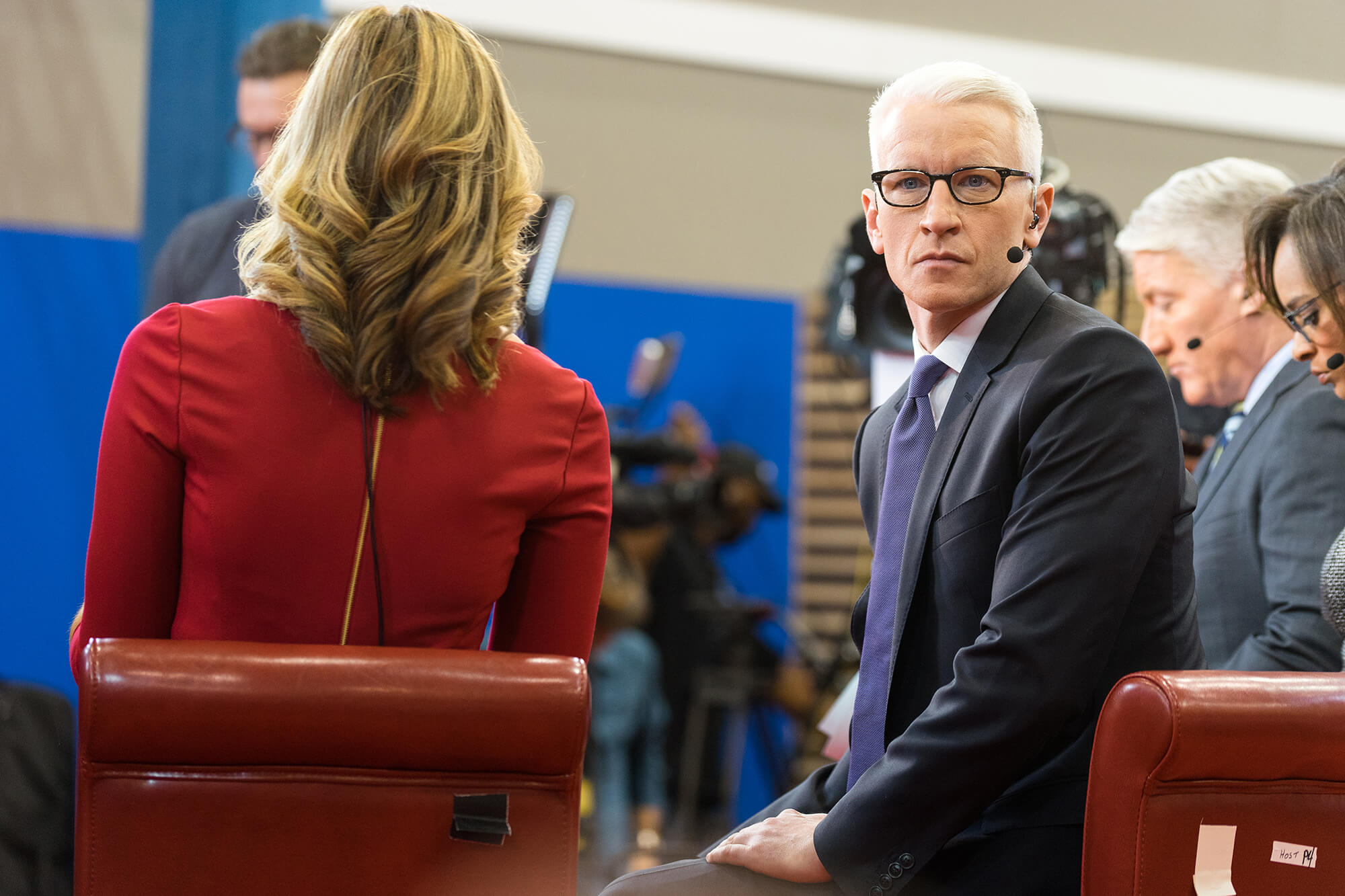
Guess you’ve noticed: There are no politicians on the politics-obsessed cable news channels. Instead, there are journalists talking about politicians and politics; rafts of journalists organized into “panels” to comment, in seconds, on events.

Twenty years ago, it was different. So much so that I started a television program with the avowed intention of letting the public see who was writing the political news in the newspapers. We are still on the air, but with fewer journalists commenting.

In that seemingly distant time (which was, in reality, not very long ago), the principal political talk shows were “The McLaughlin Group,” under the pioneering John McLaughlin; “Inside Washington,” formerly “Agronsky & Company,” with Gordon Peterson; and the long-lived “Washington Week in Review” with Ken Bode.

They were weekly, half-hour programs and mine, “White House Chronicle,” joined the roster as a distant “also ran.” We aimed at introducing print journalists to a TV audience. Other programs had set round tables that included Tribune Media’s Clarence Page, because he was a delight to work with — as we found on our program — and because he was informed and entertaining.

Women were fewer and they were led by Elizabeth Drew of The New Yorker, Eleanor Cliftof Newsweek, Cokie Roberts of NPR, and syndicated columnist Georgie Anne Geyer.

Cable news meant CNN, then still trying to be magisterial.

Fast forward and television is chock-full of journalists talking about the news in what is now a staple of cable television; and rather than occupying half an hour a week these “panels,” as the hosts call them, are on pretty well 24/7.

The New York Times publishes under the slogan “All the News That’s Fit to Print.” On television, it’s all the news that can be talked about — and they do, endlessly. I think that is pretty entertaining and most of the talking heads seem to have really good sources; they are on the news — all the politics that can be talked about. It is the fat and sugar diet of TV.

What is missing are the subjects. Few members of Congress, with the exception of the leaders, are seen or talked about by name on television. They have been cleared from the television politics smorgasbord. Even the talking heads do not name them. The ubiquitous panelists talk about “my sources” or “a conservative congressman” or “a Democratic member.” No names. No faces.

There are reasons aplenty for this. One, now that there is more party discipline, except for people like Sen. John McCain, R-Arizona, it is known what the party the line will be: It is there in the talking points — and that makes for little news and boring television.

Another is that while journalists go for instant analysis, a cable television staple, politicians are scared of “stepping in it.” Search technology is so fearsome now that almost anything any politician says can be retrieved and put on the screen. That is fodder for future “gotcha” moments. The late Tim Russert of “Meet the Press” was a master of this. “In 2003, you said” and there it was, right on the screen, the politico making a regrettable remark.

Also, there is always the question of what the public wants (ratings to the TV industry). The public appears to be more interested in journalists debunking political leaders than the nuts and bolts of legislation or even what is happening in, say, science or the rest of the world. Salt and fat gets the eyeballs.

The late Arnaud de Borchgrave lamented that in his day, aspiring reporters longed to be foreign correspondents, now they yearn to cover Capitol Hill and the White House. Ralph Nader — who was once a prized “get” in the parlance of television bookers — has just issued a paper regretting the dominance of political chatter in the news space. Maybe he will be asked to talk about it on television, but it is unlikely.

On the upside, there are some awesome new talents, and more women in the Washington journalistic firmament — even if some of us like it when journalists, in the words of radio veteran Dan Raviv, just set out to “find out what’s happening and tell people.” No salt, no fat, just the facts.

Filed Under: King's Commentaries Tagged With: CNN, Congress, Inside Washington, journalism, The McLaughlin Group, Washington Post, Washington Week in Review

White House Chronicle on Social

  • Facebook
  • Twitter
  • Vimeo
  • YouTube
Don’t Let AI Get Away Without Helping You: Iterate

Don’t Let AI Get Away Without Helping You: Iterate

Llewellyn King

I haven’t had a good relationship with the Age of Computing. I don’t understand computers, but I believe they understand me. And that is the problem. The first time I used an ATM machine, I expected it to sneer at my balance — and to do it aloud, so everyone in range could hear. It […]

Democratic Graybeards Detail Tools Trump May Use To Negate Midterms

Democratic Graybeards Detail Tools Trump May Use To Negate Midterms

Llewellyn King

After two long, dark years, there is an optimism afoot among Democrats, many independents, and a few old-school Republicans that the clouds will part and the sun will shine brightly again on Nov. 4. Most votes in the midterms will be counted, and Democrats believe the House will have flipped Democratic with a decent majority. […]

Summer Is Too Important for Politics to Steal

Summer Is Too Important for Politics to Steal

Llewellyn King

If you can get your mind off the wars in the Middle East and Ukraine, if you can stop checking your 401(K), which seems to have taken off for the dark side of the moon, if you can turn off the cable news channels and do a quick personal inventory, noting that your arms, legs […]

Tech Giants Will Boost Nuclear but Won’t Help With Your Bill

Tech Giants Will Boost Nuclear but Won’t Help With Your Bill

Llewellyn King

There is an abiding faith that if someone is good at one thing, they must be good at many things. At heart, it is a belief that outside the metaphorical box, there is much greater ability than inside it. This is once again on display with widespread enthusiasm for the idea that the looming shortage […]

Copyright © 2026 · White House Chronicle Theme on Genesis Framework · WordPress · Log in