White House Chronicle

News Analysis With a Sense of Humor

  • Home
  • King’s Commentaries
  • Random Features
  • Photos
  • Public Speaker
  • WHC Episodes
  • About WHC
  • Carrying Stations
  • ME/CFS Alert
  • Contact Us

Absolute Power Corrupts Absolutely, Including at the Tech Giants

February 20, 2026 by Llewellyn King Leave a Comment

For me, the most remarkable thing about Facebook boss Mark Zuckerberg’s appearance at a Los Angeles court, to answer questions about the addictive aspects of social media, was that he was there at 8:30 a.m. wearing a suit.

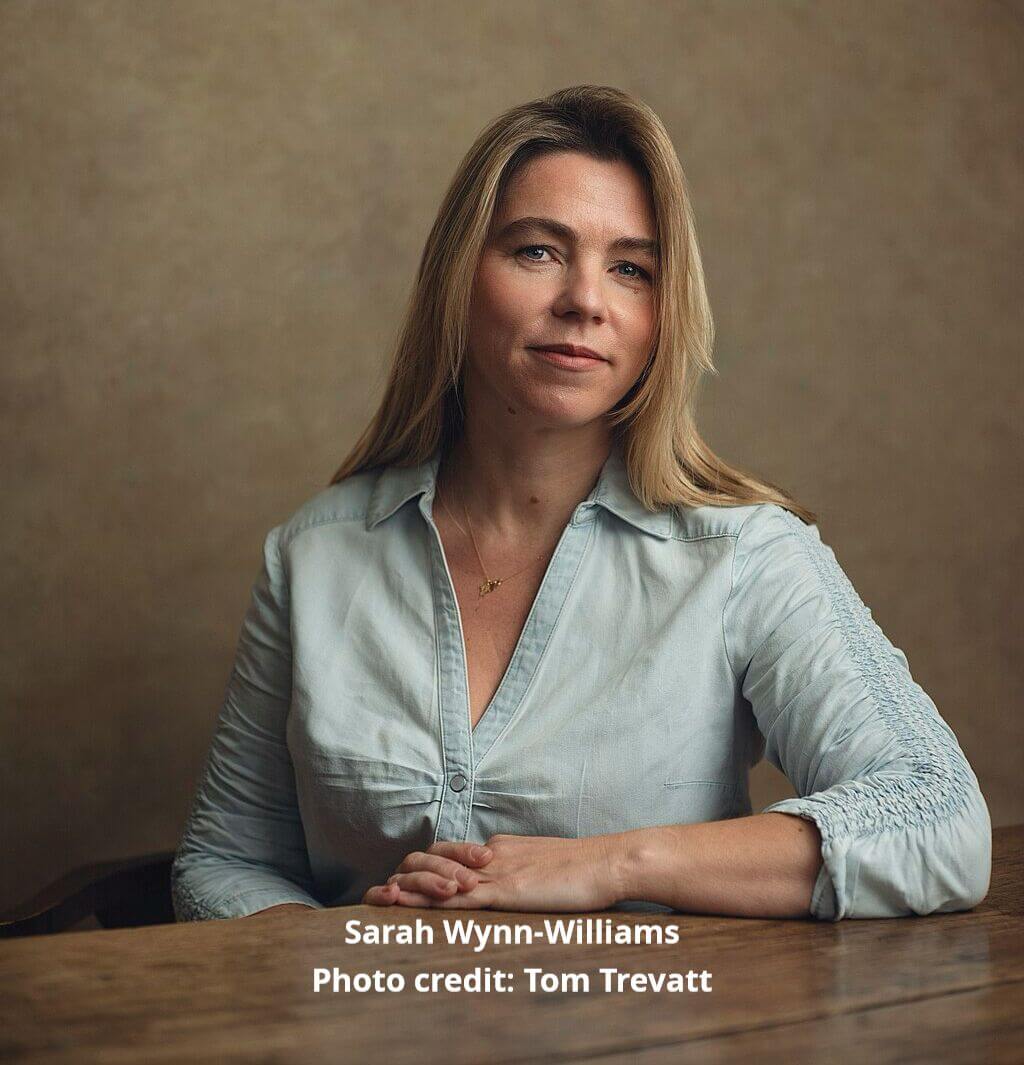
Sarah Wynn-Williams, in her excellent book about Facebook, “Careless People: A Cautionary Tale of Power, Greed and Lost Idealism,” said Zuckerberg doesn’t see anyone before noon because he has to sleep, having been up most of the night.

This had Wynn-Williams, who rose to head Facebook’s international relations team, sometimes telling heads of state that they would have to wait for the great man to alight from his bed at noon or later.

Zuckerberg could be uninterested or uninformed about the country from which he was trying to get favors for Facebook, she wrote. As Facebook had electorates in its thrall, countries’ leaders were prepared to defer to the sleeping titan.

This doesn’t mean that Zuckerberg is evil, but it does point to enormous self-regard. His sleeping routine is a de facto declaration: I am so rich and so powerful that I can command world leaders to rearrange their schedules to accommodate mine. They did, according to Wynn-Williams.

While the venerable observation by Lord Acton in 1887 that “power tends to corrupt, and absolute power corrupts absolutely” is nearly always directed at politicians and autocrats, it is as true for billionaires and their companies.

More so with the tech gargantuans who are a force in the financial markets and politics, and will control much of the future if their investments in artificial intelligence pay off. Among them are Meta (Facebook), Alphabet (Google), Amazon, Apple, Nvidia, Microsoft, Tesla, Anthropic and OpenAI.

Another point Wynn-Williams made in her book is that most of the heads of state whom Zuckerberg treated with minimal respect won’t be in power in 10 years, but Zuckerberg, who is 41, may be around for half a century. The long game is his, along with his colleague-companies and their CEOs, especially when they own a commanding amount of the stock, like Tesla’s Elon Musk.

The effect of Big Tech as a lobbying force is apparent: Any CEO has access to the White House and is, in turn, cultivated by it. Congress has a permanent welcome mat out to Big Tech lobbyists and their campaign contributions.

A more damaging impact might be what Big Tech does to new tech.

The biggies buy up every startup that looks as though it might become a mega company. All of the Big Tech companies are conglomerates, and history has shown that conglomerates discard unprofitable enterprises and favor the cash cows. Tech autocracy is no kinder than any other autocracy.

Startups are what keep America ahead of the world in tech, and they are keenly watched for any sign that they may grow into another agent of change. Whereas at the beginning of the tech boom, successful startups headed for an initial public offering, and now they calculate from the get-go which behemoth tech company will buy them. The circle is closed.

The big get bigger, and the startup is absorbed into a giant organization, where it might prosper or whither. Either way, it is out of reach, including regulatory reach. It is in the castle walls.

As we see with the fate of CBS and The Washington Post, Big Tech can play havoc with the media and our right to know what is going on. The money is so large that it is almost impossible for politicians not to seek the favor of the mighty techs and their Vesuvian cash flow.

The obverse of that is what they might do if they overreach, as they may be doing now with AI investments, and bring down the stock market.

Big Tech has showered us with wonders that have made life easier and fun, but there is a price. The price is that we have handed the future to a group of companies that, understandably, are interested in self-preservation first, as with all autocracy.
Filed Under: King's Commentaries Tagged With: AI, America, big tech, corrupt, Facebook, international, Musk, sleep, Wynn-Williams, Zuckerberg

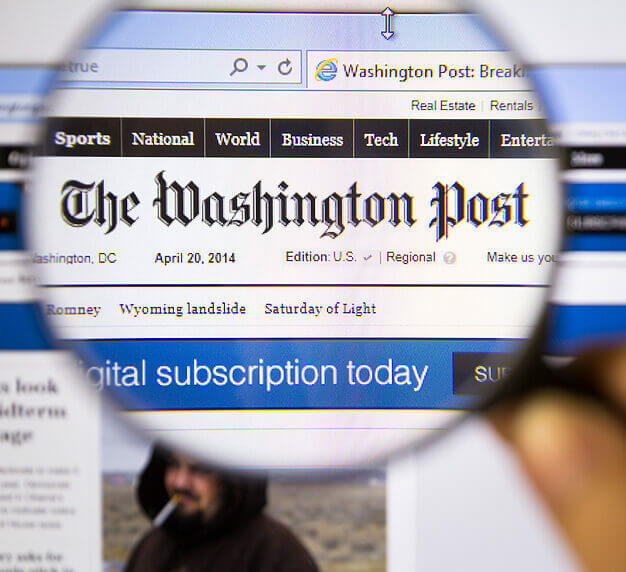
Requiem for The Washington Post

February 6, 2026 by Llewellyn King Leave a Comment

Think of a big-city newspaper as being analogous to a department store. You can get anything you want there, from breaking political news to dinner recipes. When you pick it up, you should be enchanted by the multiplicity of its offerings.

Think of big-city newspapers as you think of the way every city had its own particular and dearly loved emporium like Marshall Fields in Chicago, Bloomingdale’s in New York, and Garfinkel’s in Washington.

For decades, Washington’s great newspaper has been The Washington Post. In recent years, along with The New York Times and The Wall Street Journal, it has also been one of the three newspapers that can claim to be national.

The Post offered everything from history-changing exclusives to the daily horoscope. And great reporting and commentary.

Now it is going from being a great department store to a convenience store, selling bread, milk and cigarettes — actually, politics and business with limited international coverage.

Having once worked at the Post, I feel this personally, as though a part of my life is being taken away.

I am shattered by the folly and the waste. I am also alarmed that now The New York Times will be too powerful with its online dominance. It got the internet right early.

Jeff Bezos, who bought the Post from the Graham family, failed to catch the wave. Instead, he was seen as being more concerned with placating President Trump. Betrayal, said much of the readership, who cancelled their subscriptions or stopped believing in the paper, despite some courageous and insightful journalism.

The seeds of the Post’s commercial success were sown in 1954. At that time, afternoon newspapers were dominant and morning papers were struggling. In the morning, Washington had the Post and the Times Herald. In the afternoon, it had the Washington Evening Star and the Washington Daily News.

Eugene Meyer, a financier, bought the Post in 1933. By all reports, he thought of it as a diversion. I am told he liked to bring bottles of whiskey to the paper and have impromptu parties with the ever-thirsty staff.

In March 1954, Meyer bought the Times Herald and folded it into the Post.

What wasn’t known was that television would soon shift the balance between morning and afternoon papers, and that afternoon papers would go into permanent decline and extinction.

Both the Star and the News in Washington were battling each other for the read-at-home market. Soon, those readers would be watching television.

Under Meyer’s daughter, Katharine Graham, the Post reached unbelievable heights in journalism and in wealth. It appeared invincible.

Just as television had doomed afternoon papers, technology was to threaten all traditional publishing and broadcasting. New media, such as Facebook and Google, delivered personalized advertisements directly to consumers, cheaply and effectively.

As the red ink spread, it was up to Donald Graham, Katharine’s son, to find an angel, someone to stave off bankruptcy, and follow the early example set by the Times of virtual publishing. He persuaded Amazon’s billionaire founder, Bezos, to buy the Post to save it. Ironical?

A word about Graham: I met him when he first came to the Post. I was asked to show him around the composing room. It was the beating heart of the paper, where the newsroom’s creative output was set in hot metal and assembled in steel frames, known as forms, that would become the pages.

I got on well with him, and we became friends. It must have been extraordinarily painful for him to sell the Post, to entrust it to a man with the money to keep it going until a new business plan paid off.

It began well. Bezos kept his distance until he, like other giants of business, felt he had to mollify Trump, ever a media critic.

The extent of Trump’s pressure became clear when Bezos canceled the publication of an editorial endorsing Kamala Harris for president. Emotions were running high, and it was seen by the Post faithful as betrayal: the hand of Trump in the temple of press freedom.

Subsequently, Bezos added insult by changing the direction of the Post’s admired opinion pages, undermining confidence in the readership and the staff.

You can change the product lineup in a retail outlet, but you will burn down the building if you do it in a newspaper.

The Washington Post of old was venerated for fearlessness; now it is despised as craven. It is gone, sunk, a wonderful memory for those who read it, and for those who worked there. R.I.P.

Filed Under: King's Commentaries Tagged With: Bezos, horoscope, international, Katharine Graham, national, New York Times, newspaper, political, recipes, Washington Post

White House Chronicle on Social

  • Facebook
  • Twitter
  • Vimeo
  • YouTube
Loving Ireland on St. Patrick’s Day — for Its Contradictions

Loving Ireland on St. Patrick’s Day — for Its Contradictions

Llewellyn King

I won’t let St. Patrick’s Day pass without wearing something green and reaching for a glass of something that has been produced through fermentation or distillation. It is the least I can do for all the ways the Irish have enriched the world, but especially the English language, and me. When it comes to writing, […]

How Loneliness Became a Pandemic and What You Can Do

How Loneliness Became a Pandemic and What You Can Do

Llewellyn King

You don’t have to be sitting by yourself on an island to be lonely. Loneliness is everywhere. Studies from universities, governments and public health groups find that the world is in the grip of a loneliness pandemic. More than half the U.S. population is said to be suffering from loneliness. It is classified globally as […]

Inside the Civil War: New Letter Trove Takes You Among Soldiers, Widows, and the Enslaved

Inside the Civil War: New Letter Trove Takes You Among Soldiers, Widows, and the Enslaved

Llewellyn King

J. Mark Powell’s new book, “Witness to War,” tells the story of the Civil War objectively through the letters of everyday people who endured it. WASHINGTON, DC, UNITED STATES, February 24, 2026 /EINPresswire.com/ — J. Mark Powell, a journalist with the InsideSources syndicate, became fascinated with the Civil War when he was just 9 years […]

Absolute Power Corrupts Absolutely, Including at the Tech Giants

Absolute Power Corrupts Absolutely, Including at the Tech Giants

Llewellyn King

For me, the most remarkable thing about Facebook boss Mark Zuckerberg’s appearance at a Los Angeles court, to answer questions about the addictive aspects of social media, was that he was there at 8:30 a.m. wearing a suit. Sarah Wynn-Williams, in her excellent book about Facebook, “Careless People: A Cautionary Tale of Power, Greed and […]

Copyright © 2026 · White House Chronicle Theme on Genesis Framework · WordPress · Log in