White House Chronicle

News Analysis With a Sense of Humor

  • Home
  • King’s Commentaries
  • Random Features
  • Photos
  • Public Speaker
  • WHC Episodes
  • About WHC
  • Carrying Stations
  • ME/CFS Alert
  • Contact Us

A British Immigrant’s Defense of Immigration

July 10, 2026 by Llewellyn King Leave a Comment

Migration, people moving to new lands, is as old as human history, and as fraught. Today it is a global problem complete with layered hypocrisy, cruelty and, always, hope among those on the move. War and extreme poverty collude in driving people to seek a livable future.

There is no simple solution, no slogan that encompasses a fair and reasonable course of action for the receiving country.

I moved from a British African colony, Southern Rhodesia, to the homeland, Britain, when that was our birthright, and to America a few years later. I did that because it was the place I wanted to be, the happening place, the place of all possibility and challenge.

I didn’t plan to stay, and now it is more than 60 years later. And, yes, I was elated to become a citizen.

In those days, if you were British, immigration was no harder than filling in some forms and swearing that you weren’t a communist and wouldn’t live in “moral turpitude” when you got to America. That reprehensible state wasn’t described.

To me, America was more than a country; it was, and remains, a state of mind.

At its best, America is generous, caring, open and empathetic to the world and its hurts. Yet, how human a country! It is replete with hideous mistakes from the Palmer Raids, to McCarthyism and the Red Scare, to the Vietnam War. The gash of slavery hasn’t healed, and racism has left its mark.

America’s genius is that it realizes itself as a work in progress. 

Our major weakness, it always seemed to me, was the obverse of our strength: wishing our ways on others; wanting them to see the light we see. 

Like so many others, my attitudes are conflicted, hypocritical and without a simple, elegant defense. About 30 years ago, I first raised the issue of immigration’s effect on the nation. My concern then was that Spanish was becoming a second language. If that were to happen, I feared the country would enter into the same debilitating, two-nation status that has divided Canada and Belgium.

Also, I have argued against the way immigration has left its mark on Europe, especially from North African migrants who have set up enclaves where there is no attempt to integrate and where their religion has maintained them in isolation; angry minorities in their urban strongholds. That undermines the value of the journey both to the migrant and the host country.

I have come to believe that Spanish isn’t the threat it appeared at that time, and that our ability to absorb and prosper as a result of immigration is at a real and present danger of being wasted, denying us the talent flow that has made us a beacon to the world.

Never forget that every deportation is a human disaster: a life and a family sent into an unknown purgatory.

Recently, I had a weeklong stay at a Rhode Island hospital and marveled at doctors who were from distant lands, including Iran and Arab countries. In the late reaches of one night, I had a crisis. My room was flooded with nurses and their assistants, all helping and caring. From their accents, I was certain that at least four of my angels weren’t born here. I was glad of them.

Just as I am glad that we lead the world in high tech and, at the apex of its leadership, sit immigrants. They dominate at the top tech behemoths.

Not every immigrant has added to America’s greatness; some have brought with them creeds that are hard to accommodate, some have brought crime. Overall, each wave of immigrants has lifted America and its people to new heights.

From those early settlers to the German filmmakers, to the Scandinavians who planted the Great Plains, to the Irish who have informed our culture, to the Italian builders, to the German filmmakers, who came in the 1920s and 1930s and created the Hollywood we know and treasure, to the Jewish refugees from Europe who gave us everything from great music to the magic of Broadway, to high science and lifesaving medical research.

When I first arrived in New York, I wrote to a friend, “This is an extraordinary place, less of a mixing bowl and more of a stew, where all of the ingredients remain intact and yet work together in a kind of wondrous unity.” I wouldn’t withdraw or amend a word of that more than 60 years later.

People move because they aspire to a better life for themselves and their families. Grabbing those who slipped in and sending them to all they sought to leave behind is, to this grateful immigrant, un-American.

We are a big country, big-hearted, too, and we have room for these big contributors to our future.

Filed Under: King's Commentaries Tagged With: America, British, Communist, deportation, Europe, history, immigration, Iran, Irish, Italian, Jewish, Spanish

Women Face Massive Layoffs as AI Use Spreads in the U.S.

March 20, 2026 by Llewellyn King Leave a Comment

March is Women’s History Month and a time to take a look at how women are progressing, or otherwise.

Alas, the news for women in the United States isn’t good, and the future is foreboding as they are about to lose 6 million jobs to artificial intelligence. Work traditionally done by women — secretaries, receptionists, payroll clerks and customer service representatives — is likely to lose jobs. Except for healthcare, semi-skilled workers are the most vulnerable.

I must confess to a longtime interest in the women’s movement, particularly the path of women in journalism. In 1964, in New York, my first wife, Doreen, a stupendously gifted English journalist, and I created what we liked to believe was the very first women’s liberation magazine. Ms., co-founded by Gloria Steinem, didn’t launch until 1971.

Our magazine was “Women Now,” and we only got out one issue before we ran out of money. As I have said often, “It didn’t liberate any women but liberated all of our money,” which was utterly insufficient for the undertaking. However, I remained interested in the progress of women in society.

When I was at The Washington Post about six years later, I was elected president of the Washington-Baltimore Newspaper Guild. Women’s rights and their path in journalism were on the agenda, propelled as much by our talented business agent, Brian Flores, as by me.

The guild held conferences (including a national one in Chicago), formed study groups, and made the path of women an issue at the bargaining table. The Post’s editor, Ben Bradlee, asked if I was doing this “to improve my love life.” I wasn’t, and it didn’t.

Women could write themselves to glory, but it was a lot harder from the women’s pages or if you weren’t considered for reasons of your sex for a foreign assignment or war coverage. However, I think Marguerite Higgins, Martha Gellhorn and Dorothy Kilgallen were towering talents who circled above their contemporaries, male and female.

In the time I have been watching women’s issues, I have seen great progress and now backsliding.

I have seen progress in the numbers of women editors, film directors, board members and company heads. Yet many women are hired, I believe, because it is possible to pay them less, on the assumption that they will be supported by a partner or husband. The old thinking.

In the 1960s in Britain, jobs were advertised with one salary for men and another, a lower one, for women for the same work. In that sense, things have improved. But women worldwide are still losing ground in abhorrent ways. They encounter gender oppression, including honor killings in Muslim societies, female circumcision in parts of Africa, and femicide in some Caribbean and Latin American countries.

In the democracies, there is a backward movement for women as the bad ways of old are championed as “conservative” or “traditional.” Worse, reproductive rights have been scaled back or denied, and overt efforts to promote equality have been prohibited.

The unwelcome news isn’t at an end: Enter AI.

Several studies, including those by the United Nations and McKinsey & Co., conclude that women will bear the brunt of the first American AI-induced layoffs. This will be felt between now and 2030, and as many as 6 million women may have to find new jobs or quit the job market altogether.

In the years ahead, it is going to be harder for women than men as the first waves of what I call the “AI adjustment” hit the workplace. The political class needs to absorb this reality and to start thinking about the nature of work when AI starts snatching jobs by the millions.

So far, political talk has been to eschew the looming future — a future that, initially at least, threatens women most.

Women’s history is about to have a new chapter written.

Filed Under: King's Commentaries Tagged With: AI, gender, guild, healthcare, history, journalism, Layoffs, political, Washington Post, women

A New Rolls-Royce, Just in Time for the Holidays

November 10, 2017 by Llewellyn King 1 Comment

Rolls-Royce Motor Cars has a new Phantom on the market. It’s just the eighth model with that marque to be produced since Henry Royce himself designed the car way back in 1925. It has been the top of the Rolls line ever since. The big, beautiful one: a land yacht of a car.

Once a “Roller” was somehow able to signal prudence as well as wealth. After World War II, when Britain was getting back on its feet, the big cars (usually black in color) pulled up at Claridge’s, The Connaught, The Dorchester, The Savoy, or one of the other great London hotels, and declaimed Britain’s returning health, quietly suggesting “Britain is back.”

In Hollywood, they signaled status. When they pulled into the Beverly Hills or the Beverly Wilshire hotels, the message was not subdued. It shouted, “I am someone in this town!” There were cheaters, of course: Those who rented a Rolls for a premiere or some other must-be-seen-at event.

Things went somewhat off the rails when the newly minted plutocrats of the Middle East took to treating the great cars as though they were no more than Volkswagen Beetles, sometimes just abandoning them in the desert as a new toy came along.

Even in the days when a Rolls was intended to convey solidity as well as wealth, there were exceptions, like Nubar Gulbenkian, the heir to the original Middle East oil fortune. He broke from tradition and owned ostentatious yellow Rolls. In the Swinging Sixties, there were more colored Rolls — even a movie, “The Yellow Rolls Royce,” written by Terence Rattigan, starring Ingrid Berman and Rex Harrison.

To get the full Rolls effect, you want to be chauffeured and lounge in the back: It’s as big a tiny house in the Phantom.

Alexander Korda, the Hungarian-born British film producer and director, used to sit in the front next to his chauffeur. Upper-class London eyebrows were raised — but then he was in show business.

But the bucks-to-burn oil crowd of the ’70s didn’t really help the prestige quotient of the car. They became a sign of flamboyance and a target for social activists. Gauche vulgarians took over: oil sheiks and rock stars.

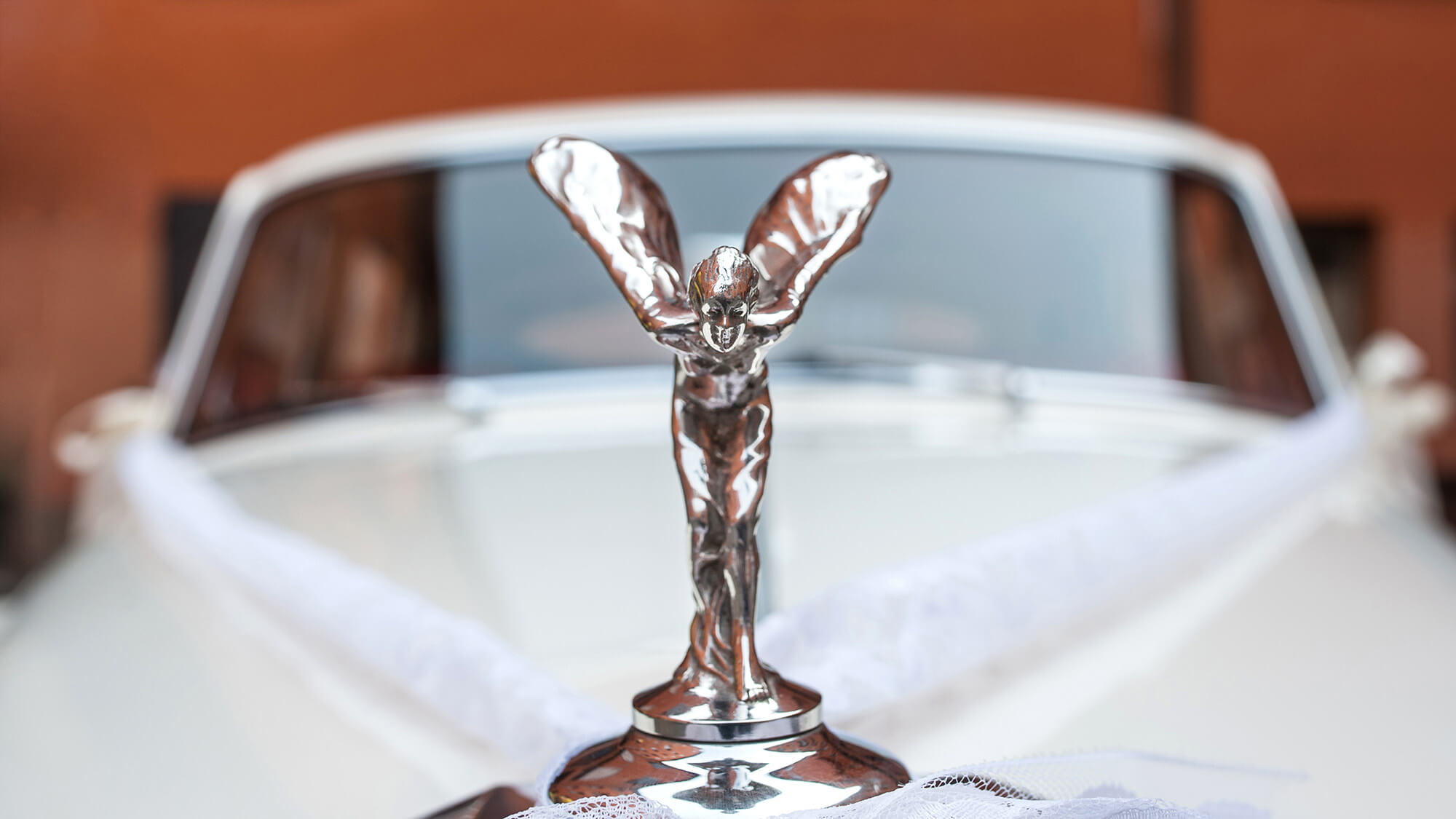
Owning a Rolls has its own challenges. People who own them and don’t have a driver to stay with the car when out and about — whether in Hollywood, New York or London — find the Roller is a liability. Do you entrust this mobile bank vault to a parking lot? People steal the famous hood ornament, Spirit of Ecstasy, as a challenge.

Well, if you still want to get into the 2018 Phantom VIII, you can get the ready-to-drive-away model, complete with 12 cylinders of thirsty power and, allegedly, the quietest ride ever in a car for about $435,000. That’s with sumptuous carpets, wonderful leather and wood to get you tree-hugging all over again. Also, it’s pretty fast for a car that weighs nearly 6,000 pounds. It’s regulated to 150 mph. But if you take the regulator off, you can get 186 mph out of it.

Yet there’s something sad, about this latest luxury-and-engineering extravaganza: It seems designed for another time.

BMW, which now owns Rolls-Royce Motor Cars, is about to launch a Rolls-Royce SUV and it may eclipse its sedans. It should claim the market for the fun-in-the-desert crowd as well as those from LA, who like to tool around the canyons east of Malibu.

Worse, the writing is on the wall for internal combustion engines in China (a big, new Rolls market), Britain, Germany and France, which have threatened to ban them by mid-century.

Budget note: You can get into a lesser Rolls, like the entry-level Silver Ghost, for half the price of the Phantom VIII. But if you want to signal that you have Trumpish wealth, a Rolls-Royce coupe Sweptail was custom-built for $13 million.

Just the car to go with the $92 million condo in New York.

I drive a Kia Soul. It cost $15,000 new and it does what the Rollers do: It goes from place to place, just like the Phantom VIII.

Filed Under: King's Commentaries Tagged With: automobile, cars, history, luxury

White House Chronicle on Social

  • Facebook
  • Twitter
  • Vimeo
  • YouTube
Foreign Aid That Works — the Malawi Story

Foreign Aid That Works — the Malawi Story

Llewellyn King

In 2005, Gordon Brown, British chancellor of the exchequer, later prime  minister, was in Washington, seeking to raise $50 billion annually in  additional international aid for Africa. I hosted a press event for Brown at the National Press Club, and I  asked him how all this money would get to the people who needed it? […]

Is Rubio Starting a Nuclear Arms Race in the Middle East?

Is Rubio Starting a Nuclear Arms Race in the Middle East?

Llewellyn King

The Trump administration has announced and appears to be crowing over an agreement with Saudi Arabia to help the kingdom not only to build nuclear power plants but also to enrich the uranium fuel. There is no reason for the Saudis to enrich uranium. There are plenty of willing suppliers of enriched uranium and more […]

Soft Power, the Secret Sauce of the British Empire

Soft Power, the Secret Sauce of the British Empire

Llewellyn King

When President Trump, on the first day of his second term, closed the U.S. Agency for International Development and began dismantling the Voice of America, he also severely curtailed what had been America’s soft power dominance in the world. With those actions, we abandoned something of inestimable value: the ability to project Americanism, our ideals. […]

A British Immigrant’s Defense of Immigration

A British Immigrant’s Defense of Immigration

Llewellyn King

Migration, people moving to new lands, is as old as human history, and as fraught. Today it is a global problem complete with layered hypocrisy, cruelty and, always, hope among those on the move. War and extreme poverty collude in driving people to seek a livable future. There is no simple solution, no slogan that […]

Copyright © 2026 · White House Chronicle Theme on Genesis Framework · WordPress · Log in