White House Chronicle

News Analysis With a Sense of Humor

  • Home
  • King’s Commentaries
  • Random Features
  • Photos
  • Public Speaker
  • WHC Episodes
  • About WHC
  • Carrying Stations
  • ME/CFS Alert
  • Contact Us

9/11 — The Tragedy That Didn’t Have To Happen

September 11, 2026 by Llewellyn King Leave a Comment

There is a terrible truth about 9/11: It didn’t have to happen. Something as simple as a hardware store lock could have deterred the perpetrators.

The arguments against hardening cockpits were numerous, and now seem unconvincing to the point of being risible.

They included: It would cost too much; the public had to see the captain go walkabout during the flight; first responders couldn’t get to the pilots after a crash; air pressure wouldn’t be stable between the cockpit and the passenger cabin; and the pilots wouldn’t be able to go to the toilet.

Long before 9/11, airplane hijackings were a well-established tool for terrorists, asylum-seekers, extortionists, or simply those who were unbalanced.

Generally the hijackers made their way unhindered to the cockpit, with or without a hostage, and forced the pilots to fly to a country estranged from the one they started from — like Cuba for hijackers from the United States or Western Countries for Soviet defectors.

There was no mystery about hijacking and the vulnerability of pilots. What differentiated the 9/11 hijackings was the fiendish planning, complete with flying lessons and, finally, the ease with which they did their evil.

After all the deaths, the untold suffering, the billions of dollars that have gone into airport security, including the establishment of the Transportation Security Administration, the question remains why something wasn’t done before 9/11 to secure the cockpits. They are now impenetrable, they are bulletproof and can even withstand a small bomb.

A White House science adviser told me long after the tragedy, “We should have done more.”

Pilots and informed people suggested over the years that cockpits should be hardened, others went further and petitioned the Federal Aviation Administration. But the cockpits remained open, accessible and vulnerable, inviting heinous crime.

The failure to harden cockpits after early hijackings is a tragedy of multiple derelictions, from the airlines through the FAA, the White House, the FBI (which investigates terrorists and airline crime); the National Transportation Safety Board; the aviation unions, even the Occupational Safety and Health Administration — an airliner is a workplace.

The system failed because the voices from numerous places calling for hardened cockpits were too soft, too scattered, and not united. A strong statement, a loud voice, a repetitive complaint or more media coverage might have made the difference.

Since 9/11 public service announcements on public transport of all kinds have cried out, “If you see something, say something.” People saw something from many angles but said little.

General aviation is a catch-all phrase for everyone who flies everything, from crop dusters to corporate jets, from aerial-mapping aircraft to single-engine Cessnas, even those who fly cadavers overnight, a small industry.

They hangout between flights in dismal places called “pilot lounges.” In these lounges — usually a room with a few couches and vending machines for coffee and snacks — the talk is about aviation and how to fix some aspect of it.

The thing about the men and women of general aviation is that they are in a sense the heart of aviation: They fly because they would rather do that than anything else. They can’t imagine another life. And they, for assorted reasons, haven’t landed jobs with airlines or major overnight delivery services.

In these lounges, long before 9/11, there was always a groundswell of opinion about hijackers, and they all asked rhetorically, “Why don’t they lock the damn cockpits?” I heard a version of that phrase often when I was a private pilot.

Of all of those who could share some blame, the most culpable are the airlines. They didn’t want to alarm the passengers, spend the money or inconvenience the flight crew. But mostly, no airline wanted to be first.

From time to time, there was talk of doing something about the ease with which ill-wishers could penetrate the cockpit on commercial flights. Often doors were open and passengers could go to the flight deck, if they asked.

I have happy memories of being allowed into the cockpit of the French Concorde and being cheerily greeted by the pilot, who was reading Le Monde, “At 60,000 feet and Mach 2, what am I going to do?” Sensibly, he was leaving the flying to the autopilot.

We will forever mourn the 2,977 innocent people who died on 9/11, and all those who have died in its aftermath.

Aviation is very safe because it prides itself on its culture of safety. On Sept. 9, 2001, that culture was absent. That culture reduced to hoping for the best rather than locking the damn door.
Filed Under: King's Commentaries Tagged With: aviation, cockpits, flight, hardware, hijackers, lock, passengers, terrorists, tragedy

My Maiden Flight Without a Necktie

August 28, 2026 by Llewellyn King Leave a Comment

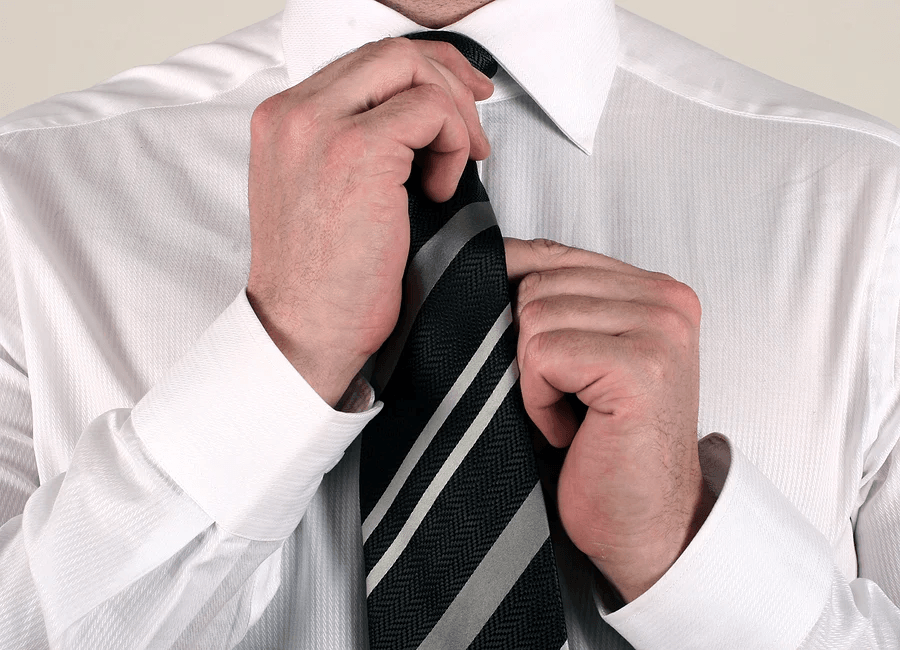
Friday, Aug. 14, was a seminal day for me. For the first time in my long life, I boarded a flight without a necktie. In seven decades of flying, I have never done that.

Truth is, I felt underdressed on the flight from Providence, R.I., to Jacksonville, Fla., as if I were wearing my pajamas at the White House. Oh, the shame of it. 

Men don’t wear neckties anymore. No matter that they look incomplete in a suit with an open-neck shirt, as though they hadn’t finished dressing.

Also with age, the neck loses any appeal it might have had. Nora Ephron, brilliant journalist, author, filmmaker and sometime wife of Watergate reporter Carl Bernstein, wrote a book titled “I Feel Bad About My Neck,” about the ravages of age.

Anyway, gentlemen, you looked a lot better with a necktie than with the neck open in a shirt clearly designed to be closed. A pocket square adds color, but also draws attention to the egregious omission: something around the neck.

Sitting tieless on the aisle was a traumatic, maybe even a life-changing experience for me — this sense of being partly naked in a very public place. I was wearing a blazer, shirt, long pants and socks, not the weekend-at-the-beach garb. Even so, my self-respect was in the tank.

I will say without hesitation that the necktie is a useless piece of clothing, unless you use it to wipe your eyeglasses — a no-no. It doesn’t keep you warm or keep rain off. You could use it to tie up a burglar after you have subdued him. Or you could use it as a dog leash, especially if you are walking the dog on Park Avenue.

Day in and day out, the necktie, no matter how fine the silk, how great the designer’s name, or how overpriced this strip of cloth may be, has no purpose besides acting as a security blanket for your correspondent.

I had an English master in secondary school who turned up one day with an old necktie holding up his trousers. He averred that this was an old English tradition.

Indeed so. At English public schools (private in British tradition), boys sometimes wore neckties in lieu of belts, and it was tolerated. Sometimes this was because a belt had been lost or failed, or the lad was just seeing whether he could get away with it.

From time to time, quite a few men went in for the tie that upholds.

Fred Astaire, that master of urbanity, often danced around with a necktie through his belt loops, knotted at the hip in a dashing way. Don’t try that at home — his eclectic-dancing style, that is.

I first wore a necktie and learned to tie it in primary school. It was part of the first day and remained a part of every day until I left school, got a suit on credit, and launched myself into the grown-up world — with just one necktie.

If a boy in my senior school were to wear his uniform without a necktie, he would be summoned by the headmaster for “four of the best.” If you aren’t familiar with the English nomenclature, that is four strokes with the cane, administered by the headmaster himself. Check that out with a Freudian scholar, if you like.

These days I favor bow ties, thanks to Tucker Carlson. Years ago, before he joined Fox and became part of the bric-à-brac of American politics, he wore a bow tie. When I was going to interview him on television, I donned one and, as they say, the rest is history.

The makeup artist said it made me look sexy, and I am susceptible to suggestions like that. All these years later, it is bow ties for me — even though women and men say they love my bow tie because it reminds them of their grandfathers.

Bow ties can’t hold up your pants, but they do hoist your self-esteem. I wonder why Tucker doesn’t wear them anymore.

Filed Under: King's Commentaries Tagged With: American, Astaire, British, English, flight, Fox, necktie, Nora Ephron, security

White House Chronicle on Social

  • Facebook
  • Twitter
  • Vimeo
  • YouTube
Spot the Illegals — a Chilling, Sad Neighborhood Game

Spot the Illegals — a Chilling, Sad Neighborhood Game

Llewellyn King

Here is a disturbing game: Try to spot the illegal immigrant. Is it the waitress, the winning one from Bulgaria, or is it the charming emergency room doctor from Pakistan, or is it one of the Mexican men working on the housing site at the corner? Maybe it is the Haitian caregiver in your home, whom […]

The Question That Must Be Answered: How Dangerous Is AI?

The Question That Must Be Answered: How Dangerous Is AI?

Llewellyn King

Races have winners and losers — at least so I have always thought. At some point, the competition ends and a winner is identified, whether it is first-past-the-post as in a horse race, or first in the marketplace as in a commercial race. Think about VHS and Betamax. Similarly, we knew who won the space […]

9/11 — The Tragedy That Didn’t Have To Happen

9/11 — The Tragedy That Didn’t Have To Happen

Llewellyn King

There is a terrible truth about 9/11: It didn’t have to happen. Something as simple as a hardware store lock could have deterred the perpetrators. The arguments against hardening cockpits were numerous, and now seem unconvincing to the point of being risible. They included: It would cost too much; the public had to see the […]

Medicare for All Is the Wrong Fix for the Healthcare Crisis

Medicare for All Is the Wrong Fix for the Healthcare Crisis

Llewellyn King

As Charles Dickens might have said, “It is the best of times in medicine, it is the worst of times in healthcare.” It is a time of great medical discovery with artificial intelligence, it is a time of the poorest outcomes for the sick. One of America’s most distinguished pediatric cardiologists says the nation is in […]

Copyright © 2026 · White House Chronicle Theme on Genesis Framework · WordPress · Log in