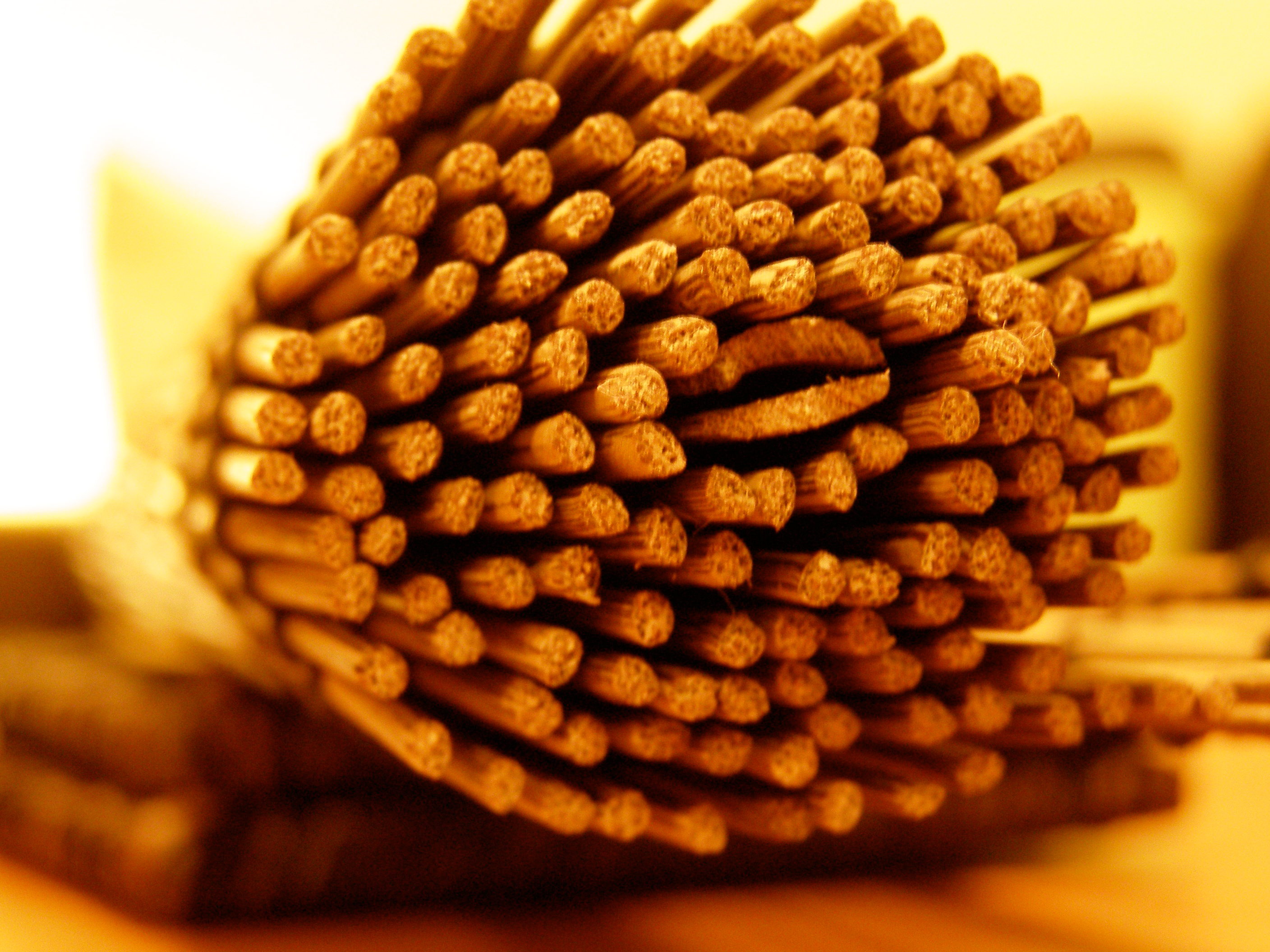
In a time of new materials, a very old one is sneaking into our lives. You may have noticed that bamboo is making an appearance everywhere. There are bamboo floors – I hear there is one in the Holman Lounge of the National Press Club in Washington, D.C.— cutting boards and walking sticks.
But Troy Wiseman, a Chicago entrepreneur, sees future growth for bamboo in clothing, paper and activated charcoal — which has hundreds of industrial and medical uses. And he sees it as the next big, green forest products industry.
Bamboo is a grass whose fiber is similar to timber. After a six-year, initial growing period, it can be harvested yearly. It can be cultivated on land abused by clear-cutting, poor crop rotation and over-grazing. For the soil, bamboo is a healing grass.
The Chinese have known of the wonders of bamboo for centuries. They construct houses from it, eat it (Giant Pandas will eat nothing else), make baskets, chopsticks, hats and weapons from it. In Hong Kong, bamboo scaffolding is used to erect skyscrapers; in Mainland China, this practice has been limited to five stories.
Yet in the West, bamboo has traditionally been thought of as a curiosity, not a valuable agricultural commodity. Wiseman, who is chief executive officer of EcoPlanet Bamboo Group, aims to change that with large-scale bamboo production, which also has positive environmental and social impacts.
There are around 1,200 species of bamboo, and some have given it a bad name. Gardeners have reason to be wary of bamboo which, if they plant the wrong variety, can grow like kudzu and is a virulent invasive species.
Wiseman’s company plants better-behaved “clump” bamboo that is native to and approved by the country he is operating in. EcoPlanet Bamboo has established two plantations in Ghana, and one each in South Africa and Nicaragua. He is negotiating to make a big land purchase in Asia that will produce bamboo for clothing, paper and activated charcoal, and will convert the plant remains into fuel for electric generation.
Wiseman describes himself as a “capitalist with a conscience,” and has the enthusiasm of a tent preacher when it comes to the business opportunities and the social and environmental benefits of bamboo farming. For bamboo plantations, you ideally need hot, wet weather – the very areas where old-growth forests are most under threat.
He describes the financial rewards, the jobs for third-world laborers, and the saving of forests as “my three bottom lines.” But he is quick to emphasize, “Don’t get me wrong, we’re a capitalist company. We’re about profit, but there’s a right way to do it.”
As a businessman, Wiseman can claim a record. He told me in an interview that he had co-founded the global B.U.M. clothing line which went public, a private equity-based financial services firm, which financed, among other things, a company that made “turducken,”which is a dish consisting of a deboned chicken, stuffed into a deboned duck, which is stuffed into a deboned turkey.
A competitive wrestler in his youth, Wiseman says he is more excited about grappling with the challenges of bamboo than anything else. He says he has interest from a large number of Fortune 500 companies, including retailer Costco and paper giant Kimberly Clark. Bamboo has natural anti-bacterial properties, which is why bamboo cutting boards are desirable in the kitchen — my wife has one. But these properties, it is believed, will make bamboo fiber popular for bandages, diapers, tissues, sanitary napkins and underwear.
I have not knowingly worn bamboo-fiber clothes, but bamboo and I have a history. As a boy, before the days of hobby shops, I made kites using bamboo slats for the frames. Bamboo was light, strong and available. Little did I know that I was continuing a fine Chinese tradition of kite making and flying. My kites were rather primitive — bamboo frame, brown paper sail, and glue made with egg white or flour paste — but they flew.
Now I am captivated not by kites, but whether the world has overlooked a valuable and beneficial source of wood and fiber substitute. Troy Wiseman thinks so, and I am inclined to believe it. Incidentally, my bamboo walking stick (which cost $24 at Walgreens) is light, good-looking and maybe a trendsetter. — For the Hearst-New York Times Syndicate