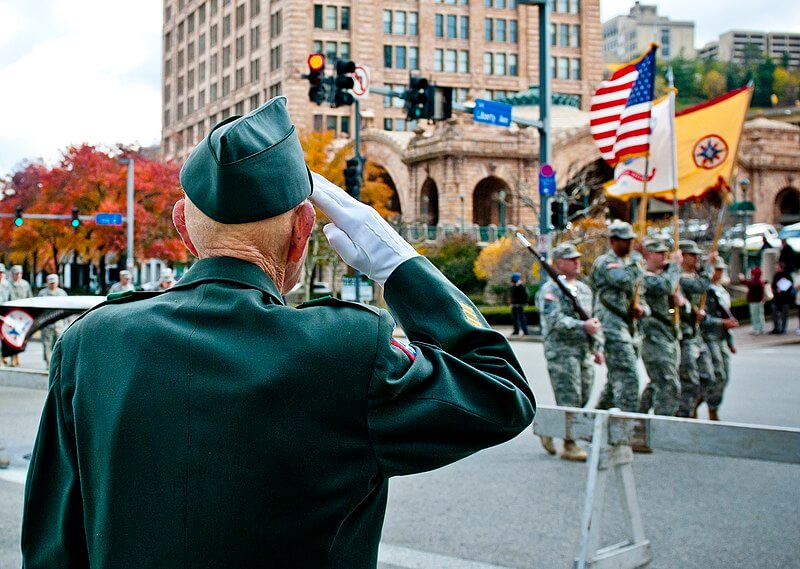
For those who serve in the military, that is the ultimate bonding time: Camaraderie beyond imagining and sharing beyond compare. Laughing, fearing, hurting, hoping, and, sometimes, dying together. A time when the future is just a day ahead, a command away and if in combat, a time when death can arrive in an instant.
When men and women survive in the military, their greatest struggle lies ahead: Reentering civilian life.
Coming home, demobilized, set adrift in a sea of indifference, the veteran is separated from the ties that bind, in a world of alien values, mixed signals, and terrible, inescapable, nightmarish loneliness. This is compounded by the stresses of finding accommodation, work, and a purposeful life.
Our returning veterans are committing suicide at a greater rate than at any other time in our history. In recognition of Veterans Day, I talked with Frank Larkin, who works to connect Americans, especially those who have worn or are wearing the uniform, with veterans through a simple call and to help vets navigate their lives after service.
Larkin is a former Navy SEAL, a former U.S. Senate sergeant at arms, a former U.S. Secret Service agent, and he has worn the uniform of two police departments. But mostly, he is the grieving father of Ryan, a Navy SEAL who saw duty in Iraq and Afghanistan and who took his own life five years ago.
“I couldn’t save my own son,” he told me in an emotional moment during the interview I did with him on “White House Chronicle” on PBS.
Currently, Larkin is chief operating officer of the Troops First Foundation and chairman of the Warrior Call Initiative.
Larkin said “isolation” is the biggest pressure on former troops. They are cut off from the world they know – which he called “their tribe” — and plunged into one they don’t know, alone with their memories. These can amount to what Larkin calls “moral damage,” things that they have done and seen in the battle space which they can’t share with the civilian world. Things that have changed them.
Larkin said of his own son, “He came back changed. I could see it, but I couldn’t reach him, nor could my wife who is a medical professional.”
There are physical injuries as well. Post-Traumatic Stress Disorder is the best known, but there are others. For example, Larkin said, today’s weaponry may be damaging troops, especially in training. Blast waves and repeated recoil shaking may be causing Traumatic Brain Injury (TBI), which is different from the brain injury suffered by football players. With TBI, there are minute tears in the brain which can’t be detected with normal brain scans.
These blast or shock waves from high-velocity weapons are a constant in training. Larkin noted that when a soldier fires a Carl Gustav shoulder-mounted rocket launcher, “It’s like getting your head blown off.”
After World War II, there were ticker tape parades. Every warrior was a hero. Everyone had served or knew someone who had served. The war had been a common shared experience. Most men and a lot of women had “done their bit” in the parlance of the Greatest Generation.
That began to change with Korea, and especially with Vietnam; returning troops weren’t celebrated and those wars weren’t a matter of national pride.
Then the draft ended, Larkin reminded me, and going to war ceased to be a shared experience. It became a discrete occupation, although U.S. troops have been at war or in harm’s way for two decades now. But without the draft, it is out of mind, out of sight, out of caring. Many of us don’t know a single veteran in these days of the volunteer army. We respect them in absentia, sometimes just on Veterans Day.
If all isn’t well with mental health out there in the battle space of civilian life, it isn’t well inside the military either. Suicide among serving men and women, is at record highs too.
More veterans have died from suicide than died in Vietnam combat, Larkin said. His initiative, Warrior Call, advocates that a simple phone call can save a life. “‘How are you doing? I’m thinking about you, buddy,’ is all you have to do,” Larkin said.
Veterans Day has become about sales and discounts, less and less about those who have borne and battle and now must bear the aftermath, often in terrible isolation.