White House Chronicle

News Analysis With a Sense of Humor

  • Home
  • King’s Commentaries
  • Random Features
  • Photos
  • Public Speaker
  • WHC Episodes
  • About WHC
  • Carrying Stations
  • ME/CFS Alert
  • Contact Us

The Myth of Immigrant Assimilation

March 26, 2016 by Llewellyn King 1 Comment

By Llewellyn King

In the aftermath of the Brussels attacks, critics are blaming Belgium for not assimilating immigrants from the Middle East and North Africa.

The fact is that Europe does not do assimilation. Europeans widely practice what might be called “anti-assimilation.” Instead of engagement with their immigrants, they practice a kind of look-the-other-way stance.

Muslim immigrants on the whole do not seek to integrate into European societies, but rather to demand that European societies adopt their ways. In Belgium, which has three official languages, Dutch, French and German, there are constant demands that Arabic become a fourth. Muslims in Britain, and throughout Europe, demand shari’a, or Islamic law, for their communities. Muslims in Europe, and the United States, demand that Eid al-Adha (Feast of the Sacrifice) be accorded the same recognition as a public holiday as Christmas.

Muslim defenders, after the bombings in Brussels, insist that Western countries with large Muslim minorities should do more to integrate them into national life. But this integration mostly means that the host culture should bow to the insurgent one.

In ancient lands, like Britain and France, this is an affront; as though the extraordinary traditions of those countries should be shoved aside to accommodate the cultural demands of an a very antagonistic minority. That is asking too much.

Europe has mostly dealt with the challenge by hoping that new generations born in Europe and subjected to the influence of European education, the arts and media will become little Europeans: little Frenchmen, little Belgians, little Englishmen, versed in European history and imbued with European values. There are such people throughout Europe, from those of Turkish descent in Germany to those of Indian descent in Britain and North African descent in France.

But by and large the Muslim minorities remain separate, unequal and belligerently hostile to the countries that have given them shelter and opportunity. Rather than the generations born in Europe adopting European norms, they have ended in an unfortunate place where they are outcasts by their own inclinations and by the difficulties posed by European societies, which are quietly nationalistic, closed, eyes-averted.

If anything, the separation has grown worse for generations that know no life other than the one they lead in Europe. This is often marginal, lived in ghettos like the banlieues, the suburbs to the north of Paris, the troubled Brussels neighborhood of Molenbeek, or Bradford in the north of England.

The original immigrants could look back to what they had escaped, whether it was war and persecution in Algeria, in the case of those who migrated to France, or the grinding poverty that prevailed in Pakistan, in the British case. People move for safety or for a better life. They do not move because they want a new food or a new religion: They want the old food and the old religion in a better place.

Trouble is that three or four generations on, the immigrant descendants may not feel they are in a better place. They are isolated, largely unemployed and subjected to the preaching of murderous extremists.

Once in Brussels, my wife and I were walking down a side street not far from the Grand Place. My wife, who lived in the Middle East and speaks Arabic, remarked that we had left Europe within a few streets and entered North Africa.

As we passed some young men standing outside a cafe, she heard one say to another in Arabic, “What are they doing here? They don’t belong here.”

When the London suburb of Brixton was becoming a black enclave, favored by West Indian immigrants, I lived nearby. “Don’t go there. Maybe they will leave one day,” my neighbors said when I wanted to go there.

No-go areas are not always that: they also are not-want-to-go areas. Someone has to want assimilation, if that is the answer. — For InsideSources


Filed Under: King's Commentaries Tagged With: assimilation, banlieues, Belgium, Bradford, Brussels, Brussels attacks, England, Europe, France, immigrants, immigration, integration, King Commentary, London, Molenbeek, Muslims, Paris, Paris attacks

Britain’s Woes and England’s Fears

March 14, 2016 by Llewellyn King Leave a Comment

By Llewellyn King

England’s problem is English: the language it gave to the world.

In particular, it’s a problem because so many people in the world speak English and would like to live in England, maybe hundreds of millions of them. “We are here because you were there,” says a sign held by an India-born woman at a demonstration. The British Empire isn’t all wound up.

The immigrant stream into England has two principal sources. One stream is from former British possessions, like India, Nigeria and Pakistan. These immigrants are English speakers. In England, they’ll have medical care, welfare, and law and order — and it’s where they feel entitled by history.

The other immigrant stream is from Eastern Europe. These immigrants enter England under the terms of the United Kingdom’s membership in the European Union. They want to live and work in England for economic reasons. Once there, they tend to stay and live in expatriate communities.

London, the great sprawling metropolis along the Thames River, is now home to 50 expatriate communities, each with more than 10,000 members. More than 300 languages are spoken in London. According to the 2011 census, 37 percent of the city’s population wasn’t born in Britain. If the United States during the late 19th and early 20th centuries was a melting pot, London is that and even more so today.

The UK immigration problem is primarily an English problem. It’s not a Scottish, nor a Welsh, nor a Northern Irish one. England and London are where the immigrants head. Accommodation is at a premium in London, and the situation is getting worse with property speculation an industry in itself.

But immigrants nesting in London isn’t just a problem of migration. It’s also a problem of population density for England. The capital bursts at the seams as the north of the country languishes. Think booming Washington D.C. and hurting West Virginia, so close and so faraway.

The immigration problem is one of two issues that dominate the run-up to a June 23 referendum on whether Britain should stay in the EU. The second issue is of sovereignty, and the belief in Britain — mostly England – that Brussels, the seat of the European administration, is setting up rules and regulations that are untenable.

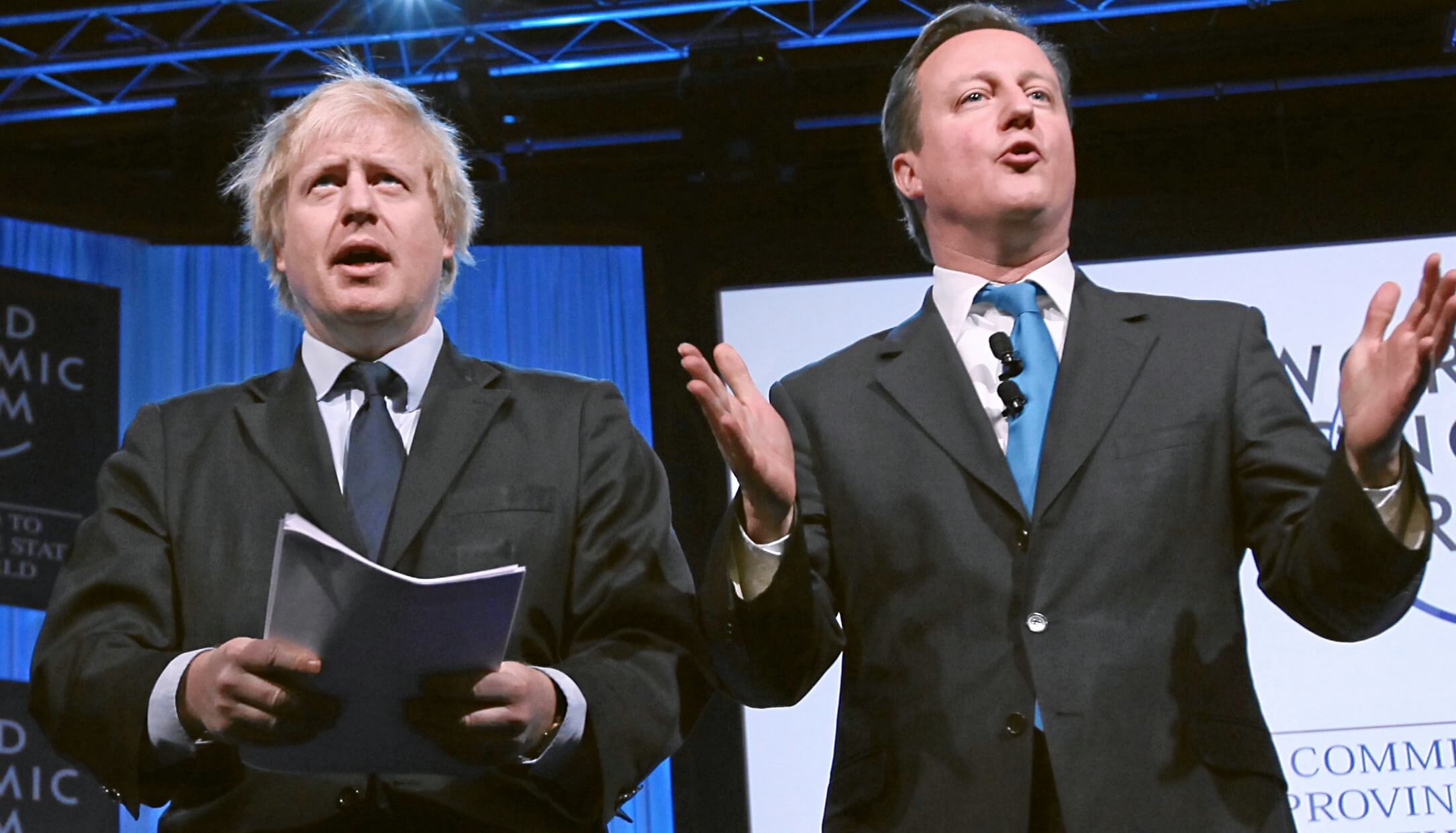
British Prime Minister David Cameron favors Britain staying in Europe with greater control of its borders and freedom from some Europe-wide mandates. Many members of his Conservative Party want out, including about half of his cabinet. Industry wants in by and large, as do professional groups and the important financial sector.

But the desire to leave Europe, known as “Brexit,” may be gaining with the support of Boris Johnson, London’s popular mayor. Polls have “in” just ahead of “out” and closing.

Pulling out has ramifications for the very integrity of the United Kingdom. Feeling against Europe is very much an English phenomenon and isn’t shared in Scotland, where calls for new referendum on its future as part of the United Kingdom will surely follow a vote for Britain to quit Europe. The last vote in September 2014 went against Scottish independence, 55.3 percent to 44.7 percent. Since then, the nationalistic feeling in Scotland has grown, and Scottish nationalists favor membership in Europe. Wales seems to want in.

Britain’s immigrant problem is more severe than ours in the United States. The population stands at 64.9 million and is rising. The island is 600-miles-long and 271-miles-long at its widest point.

It is one small island that has always left a large imprint on the world, and left its language as its lingua franca. It’s troublesome in today’s world of shifting populations, when hundreds of millions think of you as the mother country. — For InsideSources


Filed Under: King's Commentaries Tagged With: Brexit, British Conservatives, Conservative Party, England, English language, immigration, London, London Mayor Boris Johnson, Prime Minister David Cameron, Scotland, Scottish Nationalist Party

A Third Way for Immigration: More and Less

March 16, 2015 by Llewellyn King Leave a Comment

Mark Jason, director of the Immigration Tax Inquiry Group, is trying to fix immigration.

Mark Jason, director of the Immigrant Tax Inquiry Group, is trying to fix immigration.

Is there a big, new idea about immigration? Is there a way of looking at the issues beyond polarization? Is there a way of stabilizing the lives and the living conditions for the estimated 11 million illegal immigrants who hide in the shadows of society, living in fear, and costing the United States as much as $100 billion a decade in services and lost taxation revenue?

Is there a way of making those who employ undocumented workers, or those with dubious papers, from falling into unintended criminality themselves? Is there a “third way?”

The Immigrant Tax Inquiry Group (ITIG), based in Malibu, Calif., has been pondering the implications of taxation in the immigration debate. It was formally established as a not-for-profit foundation in 2010.

ITIG’s idea is big — a new front, in effect. It brings the immigrants out of the shadows, identifies them and gives them respect, while mitigating the impact on the rest of us. It also soothes those who want nothing to do with paths to citizenship.

As I understand it, the ITIG proposal is simple: cater to the illegal worker by issuing a 10-year, renewable work permit and taxing the employer at 5 percent of the wage for employing one of these workers. This would bring the undocumented worker, and his or her family, out of the shadows, provide revenue for their cost to society, and enable them to have dignity and security without citizenship. I can attest, from my own reporting, that not every immigrant wants citizenship and a vote.

The plan has been incubating for decades among a coterie of thinkers who want a practical humane solution to the problem.

Mark Jason, executive director of ITIG, knows something about immigrants. He was educated partly in Mexico and has worked there to improve conditions so fewer people will take the long walk north.

Over the years, Jason, has discussed his ideas with people as disparate as Ronald Reagan (a family friend, when Reagan was governor of California), Cesar Chavez, the National Farm Workers Association founder and leader, and recently retired Rep. Henry Waxman (D-Calif.).

Jason told me Reagan was interested, although this was before he became president and enacted his own immigration plan in 1986, which was straight amnesty. Chavez, he said, was more concerned with conditions in the fields than with the legal status of immigrants, partly because many farm workers come on contract. Waxman, who was a prolific legislator, liked Jason’s ideas and encouraged him to “think big.”

The ITIG plan is put forward in a detailed report on the Web, complete with revenue projections in graphs and charts.

Jason has worked as a tax consultant, an IRS agent and a farmer in Mexico, where he helped establish a honeydew melon farm near Puerto Vallarta. The farm has three missions: produce and export melons (350 tons in 2014), teach the local farmers better practices, and end the incentive to leave.

What frustrates Jason is the difficulty he has had in getting his ideas circulated in the immigration debate. Although the report by ITIG is detailed and clearly represents an important new dimension in the debate, it has not yet gotten traction in Congress nor, more surprisingly, among immigrant advocacy groups.

The plan, under which workers would get a 10-year work permit, get drivers licenses where states allow it, and travel freely between the United States and their country of origin. It would also convey the benefits enjoyed by American families on the immigrant family, such as education and the protections of the law.

Jason is using his own resources to push the plan. “It is not a panacea, but a practical way to get people out of the shadows and into the economy,” he says.

He sees his plan as the solution not to the whole immigration dilemma but as a recognition of reality; as a way of protecting society from the cost of a shadow population. Jason believes it creates an asset where there is a liability — but real legal status is not changed.

Jason told me his wife fell in love with him because “she said I liked to fix things.”

Immigration is a big job for a handyman, but Mark Jason is at work.  — For the Hearst-New York Times Syndicate

Filed Under: King's Commentaries Tagged With: California, Cesar Chavez, immigration, Immigration Tax Inquiry Group, ITIG, King Commentary, Mark Jason, National Farm Workers Association, President Ronald Reagan, Rep. Henry Waxman

London Murder May Move History

May 27, 2013 by White House Chronicle Leave a Comment

The murder of a British soldier in Woolwich, the working-class district of London, may be one of those murders that move history. The repercussions will echo down through the years affecting British politics, immigration, attitudes to Europe, possibly the survival of the United Kingdom as now constituted and the social progress of Asian and African minorities there. Immigrants now comprise 11.9 percent of the population.

These things, which were in flux, may now transit to turmoil. And Prime Minister David Cameron's differences with his own Conservative Party could lead to his ouster, unless he can use the murder as a kind of call to order in his rebellious ranks.

There are two big but related issues that have already roiled British politics and now may be forced to a head. The first is immigration. Always a thorny issue for Conservatives, it has been front and center since a big victory in local elections this month by the upstart United Kingdom Independence Party (UKIP) led by Nigel Farage.

Farage's platform is anti-immigration, not only from Africa, Asia and the Caribbean but also from the European Union. He calls for Britain to the leave the European Union and essentially seal Britain's borders against all comers.

UKIP's local government success led to backbench Conservatives — more than 100 of them — to seek an immediate referendum on Britain’s leaving Europe. They were joined in public support by Tory grandees, who had heretofore supported the prime minister.

One way or another, things will be harder for immigrants no matter when their families arrived in Britain. These divide essentially into longtime immigrant groups from Africa, Asia and the Caribbean, and eastern Europeans, allowed in as a result of European Union labor law.

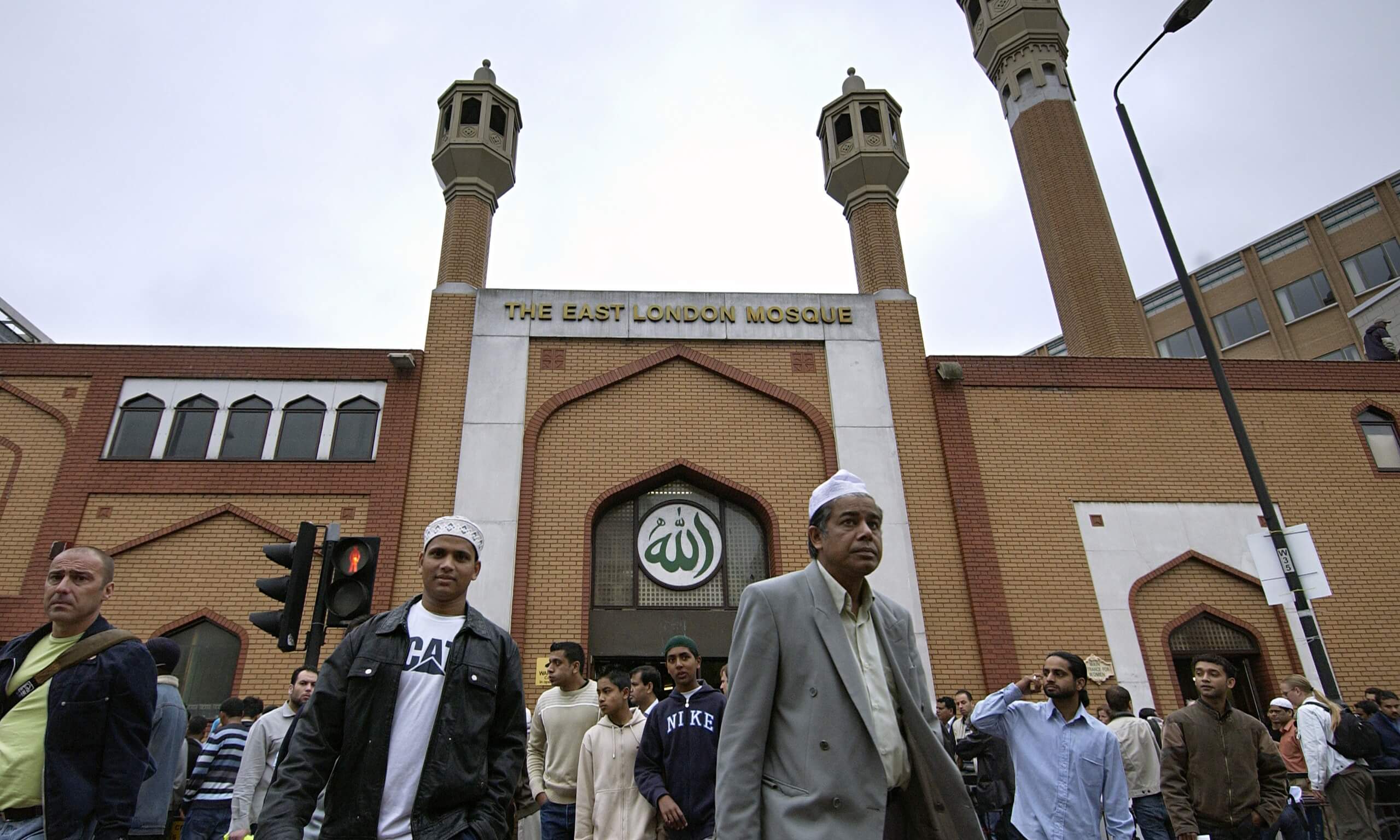
There is also a sharp division between Muslim immigrants and those who practice other religions. Muslim immigration has grown to the point of domination in some areas – like Bradford, in the north of England, and Birmingham in the Midlands. Muslim immigrants — now 4.8 percent of the population, and Islam the second-largest religion after Christianity in the United Kingdom — have established states within their adopted state with Islamic education, very visible mosques, and a palpable sense of their homelands being where they came from ancestrally rather than where they live now.

The Internet and cell phones have made this duality easier to practice. Sadly, the Muslim community in the United Kingdom has prospered far less than the Hindu community, where millionaires and some billionaires abound.

British resentment of the Muslims extends to the treatment of women, halal slaughter of animals, instances of honor killings and many foiled terrorist plots since the subway bombing of 2005.

In Qatar, I ran into a young English Muslim woman wearing a veil and dressed in traditional Arabic clothing. Hearing her speak, I said: “Hi, you’re English.” She rounded on me, replying angrily that although she was born and raised in England that did not make her English.

Understandably, this active refusal to assimilate breeds resentment among the Anglos. The trouble is everyone of color is assumed to be Muslim in the eyes of the Anglos, and the working class in particular.

Hence the rise of right-wing extremists, like the skinheads and the fascistic British National Party, and the more seductive UKIP. The Labor and Liberal parties are sidelined for now, without the visceral appeal that the Tories feel they may ceded to the UKIP.

Meanwhile, there is another shadow on the horizon: Scottish nationalists may push their own referendum on whether to leave the United Kingdom. Their leader, Alex Salmond, sees trouble in the south as opportunity in the north.
 
 
If things go really badly, Cameron could be seen in history as the prime minister who lost both Europe and Scotland – or rallied the country and saved the day. The murder in Woolwich, ghastly in its barbarity, will have consequences beyond that place. — For the Hearst-New York Times Syndicate

Filed Under: King's Commentaries Tagged With: Alex Salmond, British National Party, Conservative Party, David Cameron, immigration, Muslim, Nigel Farage, UKIP, United Kingdom, United Kingdom Independence Party, Woolwich

The Danger Posed by ‘The Enemy Within’

January 7, 2010 by White House Chronicle Leave a Comment

In a time of terrorism, the enemy within is the most pernicious.

He is the terrorist who can strike at any time. He is the good neighbor who harbors hate. He is he loner who craves to be part of something larger than his own life promises.

Most disturbingly, he is probably a third or fourth generation immigrant.

He is the lethal misfit.

He is also the unique product of the modern world: The immigrant who doesn’t assimilate into the society in which he lives, but connects with the world of his ancestors through technology. He may be a Nigerian youth living in London, Madrid, or Houston, but in his mind he lives in Nigeria because technology makes it possible to do so.

Britain is filled with pockets of immigrants who choose not to assimilate, enjoy the privileges of British society, and deny their nationality.

A few years ago I met a young woman in Doha, Qatar, who covered her head with a scarf and spoke with an English accent.

“Oh, you’re English,” I said, thinking we might talk about the old country.

Stiffly, she said, “I was born there, but I am an Arab.”

Before taking a job with Al Jazeera’s Web site in Doha, she had never been out of England. But psychologically, she had grown up in the Middle East and was indifferent to the culture and the people who had taken in her family and educated her with tax money. She closed her ears in school and opened them in her local mosque. She is typical of immigrant children from Houston to Rome and from Toronto to Sydney, alienated by their own intent, angry and vulnerable.

When America’s immigrants were pouring in through Ellis Island, N.Y., they were coming to a new life; and however hard, it was going to be an American life. Sentimentally, they might sing rebel Irish songs in Boston, dance the polka in St. Paul, Minn., and mix the marinara sauce in Hoboken, N.J., but the tickets that brought them here were one-way tickets. The only contact with the world they had left was by slow, sea-borne letters.

Now, with technology, all immigrants’ tickets to America are essentially roundtrip tickets. Immigrants no longer have to consider assimilation as a worthy or a necessary goal.

There are reasons of national unity to work against the Balkanization of America. However, the clear and present danger is from those likely to fall prey to the malicious excesses of politics or religion.

It is frightening that a wealthy young man from Nigeria, Umar Farouk Abdulmuttalab, tried to blow up an inbound airliner on Christmas Day. But the home-grown rebel–like the five, middle-class young men who are now being held in Pakistan–is more concerning.

Gradually, screening of passengers will improve and the intelligence community will handle information better. In the meantime what are we, and other nations like Britain, to do about our citizens who hate the lands that have given them so much? Spy on our neighbors? Inform on our friends?

If we do those things, the enemy within will have won; and if we don’t, the enemy within may win with an act of terrorism. –For the Hearst-New York Times Syndicate

Filed Under: King's Commentaries Tagged With: al-Qaeda, immigration, Nigeria, terrorism, Umar Farouk Abdulmuttalab

  • « Previous Page
  • 1
  • 2

White House Chronicle on Social

  • Facebook
  • Twitter
  • Vimeo
  • YouTube
Brain Injuries From Blasts Driving Young Vets to Suicide

Brain Injuries From Blasts Driving Young Vets to Suicide

Llewellyn King

We all get a warm glow when we hear the airline gate agent inviting active-duty service members to board early. What isn’t said, isn’t known, is that some of those young men and women will die eventually by their own hands, and at nearly three times the rate of civilians in the same under-34 age […]

The ‘New Weather’ Reality Will Change the Nation, Defy Politics

The ‘New Weather’ Reality Will Change the Nation, Defy Politics

Llewellyn King

I have never done political consulting. So it was novel to me when a candidate in the midterms asked me what he should be worried about in 2027. I repeated what Harold Macmillan, British prime minister from 1957 to 1963, is believed to have said, “Events, dear boy, events.” Actually, I had a little list […]

How U.S. Natural Gas Came Back from the Dead

How U.S. Natural Gas Came Back from the Dead

Llewellyn King

The Trump administration is proud of America’s dominance in natural gas. The nation is the world’s largest producer and a net exporter. We produce a quarter of the world supply of the fuel, which has become fundamental to electricity production. Forty-three percent of our electricity is generated from natural gas. According to the Energy Information […]

Foreign Aid That Works — the Malawi Story

Foreign Aid That Works — the Malawi Story

Llewellyn King

In 2005, Gordon Brown, British chancellor of the exchequer, later prime  minister, was in Washington, seeking to raise $50 billion annually in  additional international aid for Africa. I hosted a press event for Brown at the National Press Club, and I  asked him how all this money would get to the people who needed it? […]

Copyright © 2026 · White House Chronicle Theme on Genesis Framework · WordPress · Log in