
White House Chronicle

News Analysis With a Sense of Humor

  • Home
  • King’s Commentaries
  • Random Features
  • Photos
  • Public Speaker
  • WHC Episodes
  • About WHC
  • Carrying Stations
  • ME/CFS Alert
  • Contact Us

Memories of PDVSA: The Same Problems, Just Worse Now

January 9, 2026 by Llewellyn King Leave a Comment

In 1991, the state oil company of Venezuela, Petroleos de Venezuela, S.A., known as PDVSA, invited the international energy press to visit.

I was one of the reporters who flew to Caracas and later to Lake Maracaibo, the center of oil production, and then to a very fancy party on a sandbar in the Caribbean.

They were, as a British journalist said, “putting on the dog.”

At that time, PDVSA executives were proud of the way they had maintained the standards and practices which had been in force before nationalization in 1976. The oil company was, we were assured, a lean, mean machine, producing about 3.5 million barrels per day.

They were keen to claim they had maintained the same esprit under state ownership as they had had when they were privately owned by American companies.

They had kept political interference at arm’s length, executives claimed.

PDVSA’s interest then, as it has always been, was more investment, particularly in its natural gas, known as the Cristobal Colon project.

In President Donald Trump’s takeover of Venezuela’s moribund oil sector, natural gas hasn’t been much mentioned — although there may eventually be more demand for natural gas from Venezuela than for its oil.

We had a meeting with Venezuela’s president, Carlos Andres Perez, who was called CAP. He painted a rosy future for the country and its oil and gas industry.

CAP believed the oil revenues would modernize the country. Particularly, he said that technology was needed to make the heavy oil more accessible and manageable.

And there’s the rub. While everyone is quick to point out that Venezuela’s oil reserves are the largest in the world, all oil isn’t equal.

Venezuela’s oil is difficult to deal with. It doesn’t just bubble out of the ground. Instead, 80% of it is highly viscous, more like tar than a free-flowing liquid. And it has a high sulfur content.

In other words, it is the oil that most oil companies, unless they have special production and refining facilities, want to avoid. It takes special coaxing to extract the oil from the ground and ship it.

Venezuelan oil has a high “lifting cost” which makes it expensive to begin with. At present, that cost is about $23 per barrel compared to about $13 per barrel for Saudi Arabian oil.

During the energy crisis, which unfolded in the fall of 1973 with the Arab oil embargo, U.S. utilities considered pumping it with a surfactant (a thinner) to Florida and burning it directly in boilers like coal.

As evidence that the oil operation hadn’t been damaged by nationalization, executives proudly told us that PDVSA produced more oil with 12,000 employees than the state oil company of Mexico, PEMEX, produced with 200,000.

In other words, the Venezuelans had been able to resist the temptation to turn the oil company into a kind of social welfare program, employing unneeded droves of people.

Now I read the workforce of PDVSA stands at more than 70,000 and oil production has slipped to about 750,000 barrels a day.

By 1991, the oil shortage which had endured since the Arab oil embargo had eased, and PDVSA was worried about its future and whether its heavy oil could find a wider market.

Particularly, it was worried about the day when it would run out of the lighter crudes and would be left only with its viscous reserves.

Two oil companies have been shipping oil to the United States during the time of revolution and sanctions: Citgo, a PDVSA-owned operator of gas stations in the United States, and Chevron. Both have waivers issued by the United States, although Citgo is under orders to divest and is set to be bought by Elliott Company (owned by Paul Singer, a Trump supporter), which may play a big role going forward in Venezuela as its expertise is in lifting.

About that party on a sandbank. Well, PDVSA wanted to show the press that it could spend money as lavishly as any oil major.

We were flown in a private jet to an island, then transported on speedboats to a sandbank, where a feast worthy of a potentate was set up under tents. The catering staff had been taken off the sandbank, so the effect was that the party had miraculously emerged from the Caribbean Sea.

Filed Under: King's Commentaries Tagged With: American, British, Caracas, Caribbean, Chevron, embargo, oil, PDVSA, Saudi, trump, Venezuela

The U.S. Commands the Heights of Science — for Now

September 26, 2025 by Llewellyn King Leave a Comment

Pull up the drawbridge, flood the moat and drop the portcullis. That, it would seem, is the science and research policy of the United States circa 2025.

The problem with a siege policy is that eventually the inhabitants in the castle will starve.

Current actions across the board suggest that starvation may become the fate of American global scientific leadership. Leadership which has dazzled the world for more than a century. Leadership which has benefited not just Americans but all of humanity with inventions ranging from communications to transportation, to medicine, to entertainment.

An American president might have gone to the United Nations and said, “As we the people of America have given so much to the world, from disease suppression to the wonder of the internet, we should expect understanding when we ask of you what is very little.”

This imaginary president might have added, “The United Nations is a body of diverse people, and we are a nation of diverse people.

“We have been a magnet for the talent of the world from the creation of this nation.

“We are also a sharing nation. We have shared with the world financially and technologically. Above all, we have shared our passion for democracy, our respect for the individual and his or her human rights.

“At the center of our ability to be munificent is our scientific muscle.”

This president might also have wanted to dwell on how immigrant talent has melded with native genius to propel and keep America at the zenith of human achievement — and keep it there for so long, envied, admired and imitated.

He might have mentioned how a surge of immigrants from Hitler’s Germany gave us movie dominance that has lasted nearly 100 years. He might have highlighted the energy that immigrants bring with them; their striving is a powerful dynamic.

He might have said that striving has shaped the American ethos and was behind Romania-born Nikola Tesla, South Africa-born Elon Musk or India-born and China-born engineers who are propelling the United States leadership in artificial intelligence. The genius behind Nvidia? Taiwan-born Jensen Huang.

I have been reporting on AI for about a decade — well before ChatGPT exploded on the scene on Nov. 30, 2022. All I can tell you is wherever I have gone, from MIT to NASA, engineers from all over the world are all over the science of AI.

The story is simple: Talent will out, and talent will find its way to America.

At least that was the story. Now the Trump administration, with its determination to exclude the foreign-born — to go after foreign students in U.S. universities and to make employers pay $100,000 for a new H-1B visa — is to guarantee that talent will go somewhere else, maybe Britain, France, Germany or China and India. Where the talent goes, so goes the future.

So goes America’s dominant scientific leadership.

At a meeting at an AI startup in New York, all the participants were recent immigrants, and we fell to discussing why so much talent came to the United States. The collective answer was freedom, mobility and reverence for research.

That was a year ago. I doubt the answers would be as enthusiastic and volubly pro-American today.

The British Empire was built on technological dominance, from the marine chronometer to the rifled gun barrel to steam technology.

America’s global leadership has been built, along with its wealth, on technology, from Ford’s production line to DuPont’s chemicals.

Technology needs funding, talent and passion (the striving factor). We have led the world with those for decades. Now that is in the balance.

President Donald Trump could make America even greater: beat cancer, go to Mars, and harness AI for human good.

Those would be a great start. To do it, fund research and attract talent. Keep the castle of America open.

Filed Under: King's Commentaries Tagged With: American, democracy, diverse, freedom, immigrant, research, science, technology, United Nations, United States

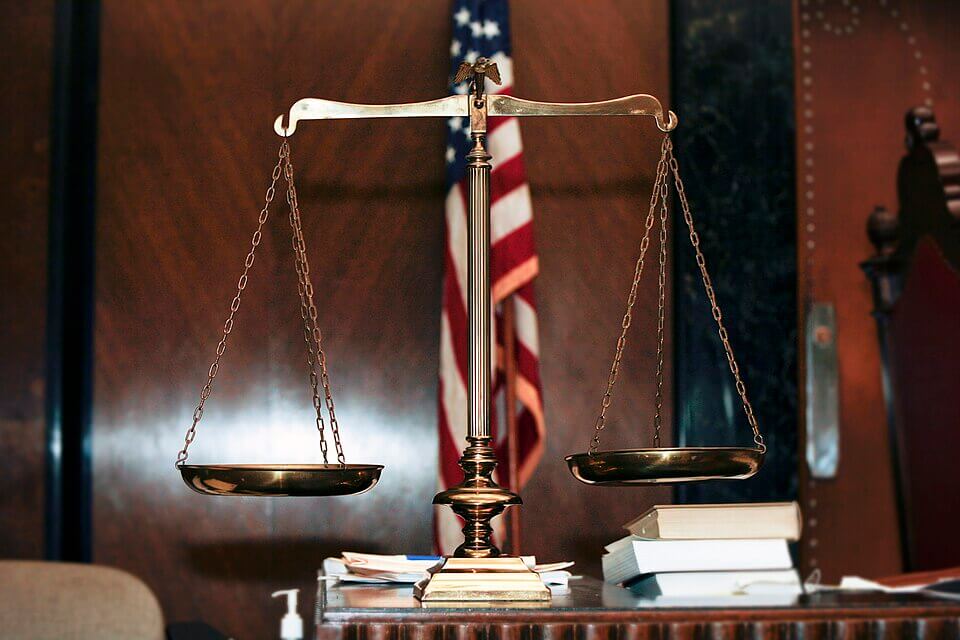
Notebook: Requiem for American Justice

July 19, 2025 by Llewellyn King Leave a Comment

I have loads of my words to eat, a feast of kingly proportions.

I don’t know when I started, but it must have been back when I was traveling on the speaking circuit. It doesn’t matter.

This tale of getting it wrong starts in London, where I was asked to address a conference on investing in America. Most of the questions weren’t — as I imagined they would be — about investment and returns on it, or taxes, or the exportability of profits. Instead, the questions were about the U.S. legal system; how litigious we are and what that is like.

My response was that our courts are fair, there is less day-to-day litigation than you might think, and the courts can serve you as well as those who dispute your actions. I said, “Don’t be afraid of litigation. It could be your friend.”

Next stop: New Delhi. The question was how can we get more U.S. investment? My answer: Fix your courts. They are famous for how slow they are to reach a decision. Americans are used to predictable legal speed.

In Moscow, during the halcyon Mikhail Gorbachev days, I was asked about how to get U.S. companies to invest in Russia. My answer: Make sure the courts work fairly and, above all, are clear of politics.

In Ireland, I debated Martin McGuinness, the late IRA leader. It went well, despite my English accent. My contribution was to tell McGuinness that if there ever is a united Ireland, make sure the constitution doesn’t hide anything under the mat (I was thinking of slavery in America) and make sure the court system looks to that constitution, not to politics.

Why am I eating on my words? Why am I shoveling them down my throat by the (Imperial) bushel?

The front page of The Washington Post for July 18 tells the story: Three pieces there add up to up a requiem for American justice.

Exhibit 1, this headline: “In deadly raid DOJ eyes 1-day sentence.”

Exhibit 2: “Thousands here legally have 60 days to leave.”

Exhibit 3: “Brazil judge in Trump’s sights.”

Two of these shameful reports show that neither the judicial process nor the laws of the United States are sacrosanct anymore.

The third shows that the Trump administration not only doesn’t respect our own judicial processes, but also those of other countries.

The perversion of justice isn’t a domestic matter anymore.

******

The Trump budget cuts are moving through the system, like a virus. There are clusters of damage and some slow lower infection, but nonetheless are capable of inflicting severe harm.

I was reminded of this when at a Newport Classical Music Festival concert last week, the deputy chairman announced that they needed $40,000 to make up for the termination in National Endowment for the Humanities’ funding.

Now you could argue that Newport Classical will get by, and divine music will continue to echo through the Gilded Age mansions — known as “cottages” — without the government’s help.

But what about less-affluent places where concerts, plays and ramp-on for young people in the arts will be reduced or ended due to a lack of government support?

******

Some things take a long  time to invent.

Take cup holders in cars. No technology was needed but it wasn’t until the 1980s that a convenience store chain realized that their hot coffee needed a place of rest in cars.

They came up with a plastic device that hooked over a window. Okay unless you opened the window inadvertently, in which case the coffee or other liquid would land squarely in the customer’s lap. Ouch!

Detroit saw the possibilities and soon you were urged to buy an automobile based on how many drinks could be stowed safely in built-in cup holders during travel. Not to be outdone by Detroit, and all the other car manufacturers, recreational boats were next to secure drinks in holders.

One has to wonder why this wasn’t done in carriages or stagecoaches a long time before the automobile?

******

I flew from Rhode Island to Washington this week and I am writing this on my return trip on the train — unquestionably, a superior way of making this trip.

Of course, predictably, the plane was late, but I was feeling smugly superior. I had scored a first-class seat. My wife found me a first-class fare that was cheaper than coach. I think the term of art for this is: Go figure.

For my lucky break up front, I had nice service and a choice of protein bars or Biscoff cookies. For this people pay a lot of money?  Go figure.

Filed Under: King's Commentaries Tagged With: American, Brazil, Gorbachev, Justice, New Delhi, Politics, requiem, trump, Washington

Notebook: Friends Who Share Friends Are the Nicest People

July 4, 2025 by Llewellyn King Leave a Comment

I treasure the friends who share their friends. One of those friends, Virginia “Ginny” Hamill, has died. 

I met Ginny at The Washington Post in 1969, and we became forever-friends. 

Ginny had an admirable ascent from a teleprinter operator to an editor in The Washington Post/Los Angeles Times News Service. She was promoted again to the enviable job as the editor of the news service in London, where she bloomed — and met her future husband, John McCaughey.

Ginny brought wealth into my life — and later to that of my wife, Linda Gasparello — through the introductions to her friends from that London period. They included David Fishlock, science editor of the Financial Times; Roy Hodson, also of the FT; Deborah Waroff, an American journalist; and Guy Hawtin, a rakish newspaperman on his way to the New York Post.

They constituted what I called “The Set.” In London, New York and Washington, we worked at the journalism trade on many projects from newsletters to conferences and broadcasts. 

We also partied; it went with the territory.

I once wrote to Ginny and told her how instrumental she had been in all our lives through sharing her friends. I am glad I didn’t wait until obituary time to thank her for her generosity in friend-sharing.

******

I think for many, myself among them, it was a somber July 4. There are dark clouds crossing America’s sun. There are things aplenty going on that seem at odds with the American ideal, and the America we have known.

To me, the most egregious excess of the present is the way masked agents of the state grab men, women and children and deport them without due process, without observance of the cornerstone of law: habeas corpus. None are given a chance to show their legality, call family or, if they have one, a lawyer.

This war against the defenseless is wanton and cruel. 

The advocates of this activity, this snatch-and-deport policy, say, and have said it to me, “What do these people not understand about ‘illegal’?”

I say to these advocates, “What don’t you understand about want, need, fear, family, marriage, children and hope?”

The repression many fled from has reentered their luckless lives: terror at the hands of masked enforcers.

I have always advocated for controlled immigration. But the fact that it has been poorly managed shouldn’t be corrected post facto, often years after the offense of seeking a better life and without the consideration of contributions to society.

Elsewhere over this holiday, the media is under attack, the universities are being coerced, and the courts are diminished. 

America has always had blots on its history, but it has also stood for justice, for the rule of law, for freedom of the press, freedom of speech. Violations of these values have dimmed the Fourth. 

Nonetheless, happy birthday, America. You deserve better: It is guaranteed in the Constitution, one of the all-time great documents of history, a straight-line descendant of the Magna Carta of 1215. That was when the noblemen of England told King John, “Cut it out!” 

A few noblemen in Washington wouldn’t go amiss.

******

I was fortunate on my syndicated television show, “White House Chronicle,” along with my co-host, Adam Clayton Powell III, this week to interview Harvey Castro, an emergency room doctor. Castro, from a base in Dallas, has seized on artificial intelligence as the next frontier in healthcare.

He has written several books and given TEDx talks on the future of AI-driven healthcare. I have talked to several doctors in this field, but never one who sees the application of AI in as many ways from diagnosing ailments through a patient’s speech, to having an AI -controlled robot assist a nurse to gently transfer a patient from a gurney to a bed.

A man with infectious ebullience, Castro says his frustration in emergency rooms was that he got there too late: after a heart attack, stroke or seizure. He expects AI to change that through predictive medicine and early treatment. 

His work has caught the attention of the government of Singapore, and he is advising them on how to build AI into their medical system.

******

Like everyone else, I spend a lot of time in frustration-agony on the phone when I need to talk to a bank or insurance company and many other firms that have “customer service.” That phrase might loosely be translated as “Get rid of the suckers!”

I don’t know whether the arrival of AI agents will hugely improve customer service, but maybe you can banter with them, get them to deride their masters, even to tell you stuff about the president of the bank.

It might be easier talking to an AI agent than talking to someone with a script in another country before they inevitably, but oh, so nicely, tell you to get lost, as happened to me recently. 

You could enjoy a little hallucinatory fun with a virtual comedic friend, before it tells you to have a nice day, and hangs up.

Filed Under: King's Commentaries Tagged With: AI, American, customer service, England, Financial Times, Ginny, Magna Carta, Washington Post

White House Chronicle on Social

  • Facebook
  • Twitter
  • Vimeo
  • YouTube
The Rule of Law Is the Foundation of Civilization

The Rule of Law Is the Foundation of Civilization

Llewellyn King

The men you see in masks on your television savagely arresting people may not seem like your affair. But they are your affair and mine, and that of every other American. U.S. Immigration and Customs Enforcement operates outside of the law. It doesn’t disclose charges, and no one arrested sees a court of law. ICE […]

Memories of PDVSA: The Same Problems, Just Worse Now

Memories of PDVSA: The Same Problems, Just Worse Now

Llewellyn King

In 1991, the state oil company of Venezuela, Petroleos de Venezuela, S.A., known as PDVSA, invited the international energy press to visit. I was one of the reporters who flew to Caracas and later to Lake Maracaibo, the center of oil production, and then to a very fancy party on a sandbar in the Caribbean. […]

A Conversation With 2026 on America’s Meaning to the World

A Conversation With 2026 on America’s Meaning to the World

Llewellyn King

Come on in, 2026. Welcome. I am glad to see you because your predecessor year was not to my liking. Yes, I know there is always something going on in the world that we wish were not going on. Paul Harvey, the conservative broadcaster, said, “In times like these, it helps to recall that there […]

Postcard from the Queen Mary 2: Holiday Cruise to the Caribbean

Postcard from the Queen Mary 2: Holiday Cruise to the Caribbean

Linda Gasparello

My husband, Llewellyn King, and I chose a Christmas-to-New Year’s cruise on the Queen Mary 2, titled Caribbean Celebration, because there were so many days at sea. We love the feelings of lethargy, languor and disengagement that fill us on those days. But the sea days — and there were three since we left New […]

Copyright © 2026 · White House Chronicle Theme on Genesis Framework · WordPress · Log in