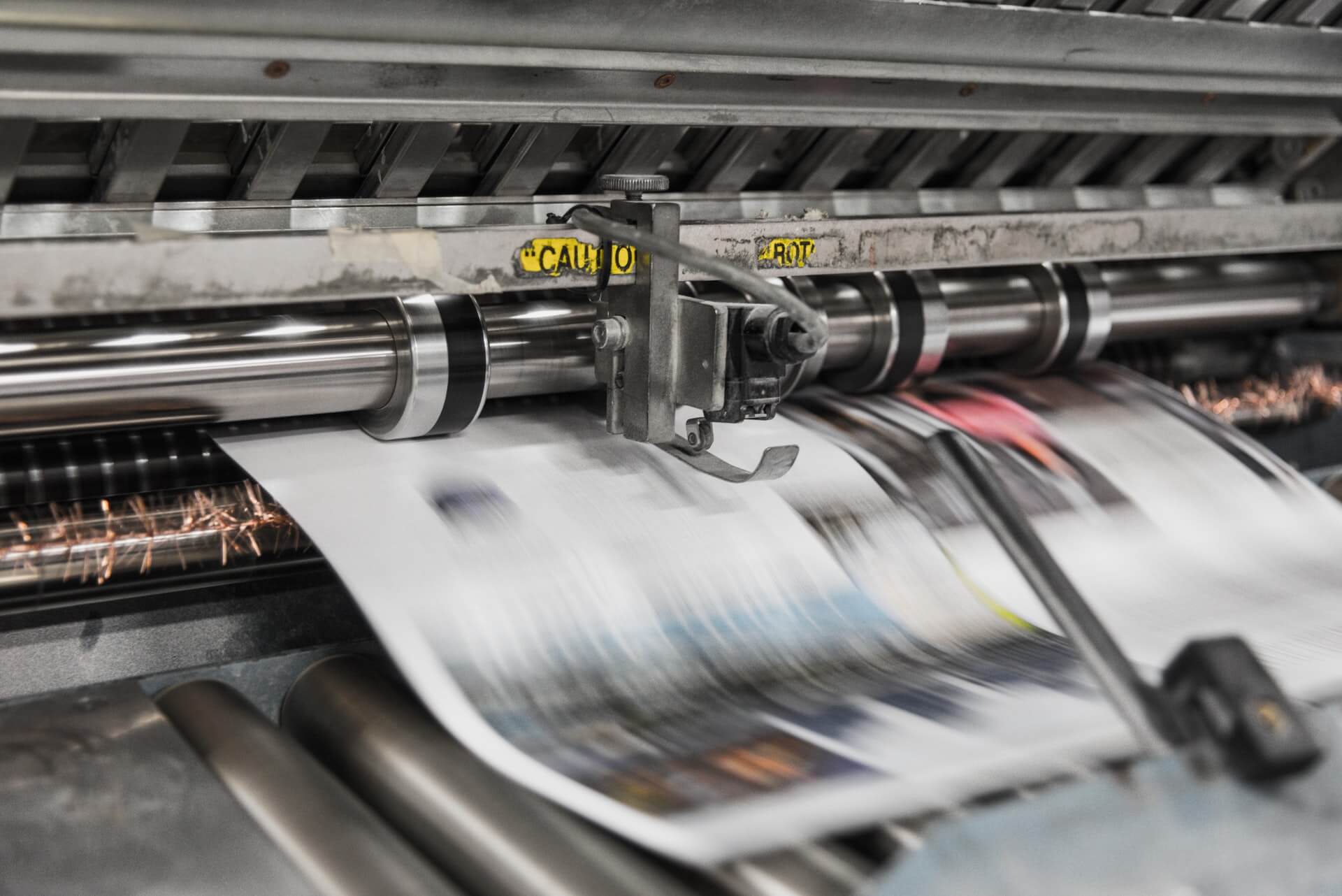
Newspapers are on death row. The once great provincial newspapers of this country, indeed of many countries, often look like pamphlets. Others have already been executed by the market.
The cause is simple enough: Disrupting technology in the form of the internet has lured away most of their advertising revenue. To make up the shortfall, publishers have been forced to push up the cover price to astronomical highs, driving away readers.
One city newspaper used to sell 200,000 copies, but now sells fewer than 30,000 copies. I just bought said paper’s Sunday edition for $5. Newspapering is my lifelong trade and I might be expected to shell out that much for a single copy, but I wouldn’t expect it of the public to pay that — especially for a product that is a sliver of what it once was.
New media are taking on some of the role of the newspapers, but it isn’t the same. Traditionally, newspapers have had the time and resources to do the job properly; to detach reporters to dig into the murky, or to demystify the complicated; to operate foreign bureaus; and to send writers to the ends of the earth. Also, they have had the space to publish the result.
More, newspapers have had something that radio, television and the internet outlets haven’t had: durability.
I have a stake in radio and television, yet I still marvel at how newspaper stories endure; how long-lived newspaper coverage is compared with the other forms of media.
I get inquiries about what I wrote years ago. Someone will ask, for example, “Do you remember what you wrote in 1980 about oil supply?”
Newspaper coverage lasts. Nobody has ever asked me about something I said on radio or television more than a few weeks after the broadcast.
I was taken aback when, testifying before the Senate Foreign Relations Committee decades ago, a senator asked me about an article I had written years earlier and forgotten. But he hadn’t and had a copy handy.
There is authority in the written word that doesn’t extend to the broadcast word, and maybe not to the virtual word on the internet in promising, new forms of media like Axios.
If publishing were just another business — and it is a business — and it had reached the end of the line, like the telegram, I would say, “Out with the old and in with the new.” But when it comes to newspapers, it has yet to be proved that the new is doing the job once done by the old or if it can; if it can achieve durability and write the first page of history.
Since the first broadcasts, newspapers have been the feedstock of radio and television, whether in a small town or in a great metropolis. Television and radio have fed off the work of newspapers. Only occasionally is the flow reversed.
The Economist asks whether Russians would have supported President Vladimir Putin’s invasion of Ukraine if they had had a free media and could have known what was going on; or whether the spread of COVID in China would have been so complete if free media had reported on it early, in the first throes of the pandemic?
The plight of the newspapers should be especially concerning at a time when we see democracy wobbling in many countries, and there are those who would shove it off-kilter even in the United States.
There are no easy ways to subsidize newspapers without taking away their independence and turning them into captive organs. Only one springs to mind, and that is the subsidy that the British press and wire services enjoyed for decades. It was a special, reduced cable rate for transmitting news, known as Commonwealth Cable Rate. It was a subsidy, but a hands-off one.
Commonwealth Cable Rate was so effective that all American publications found ways to use it and enjoy the subsidy.
United Press International created a subsidiary, British United Press, which flowed huge volumes of cable traffic through London. Time Inc. had a system where its cable traffic was channeled through Montreal to take advantage of the exceptionally low, special rates in the British Commonwealth.
That is the kind of subsidy that newspapers might need. Of course, best of all, would be for the mighty tech companies to pay for the news they purloin and distribute; for the aggregators to respect the copyrights of the creators of the material they flash around the globe. That alone might save the newspapers, our endangered guardians.
 Follow
Thank you for this apt and otherwise excellent and important column. It is all too true in my experience as a former reporter for the Hartford Courant, once the premier news source in Connecticut.
I have seen others write on this topic, but never (to my recollection) in such a compelling manner.