What happened to the kingmakers of journalism?
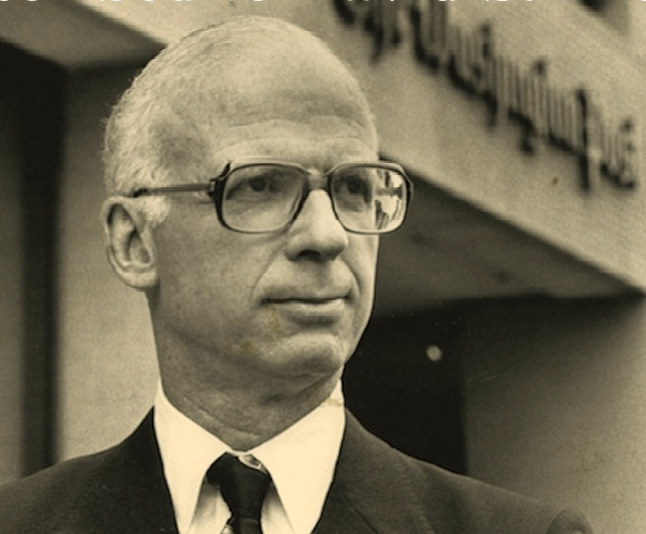
They seem to have died in 2011 with David Broder of The Washington Post. In an age when columnists could still influence the flow of events, Broder stood out as much for what he wasn’t as for what he was.
He wasn’t, for example, a flashy writer. He didn’t have George Will’s turn of phrase. He didn’t add to the language like another kingmaker a generation before him, Walter Lippmann. Lippmann gave us “Great Society,” “Cold War” and “stereotype.”
What set Broder apart was the depth of his political reporting.
I worked with Broder at the Post, and he was relentless. If you were into politics, you were grist to his mill. From precinct captains to senators, they were all of interest to Broder, all worthy of his probing; all had a tale to tell, and Broder wanted to hear it.
Journalists at the Post used to drink in a genuinely downmarket bar called The New York Lounge, next to the better-known Post Pub, which, ironically, was eschewed by most of the editorial staff. Incongruously, Broder would be found there occasionally with some political apparatchik, notebook out and drinking a Diet Coke.
A reporter who traveled with Broder described how when they arrived in a midwestern city at 10 p.m., Broder got on the phone to see who of the local political establishment was up. It could have been a candidate or the local state party chairman; all were worth talking to in Broder’s world.
Whereas some newspaper grandees talked to presidents and the power elite (Lippmann helped Woodrow Wilson write his Fourteen Points, Joe Alsop shared sessions with Lyndon Johnson on the Vietnam War, and George Will rehearsed Ronald Reagan for his debates with Jimmy Carter), Broder reported relentlessly at all levels.
For all but the very end of his career, Broder worked as a reporter who wrote two columns a week. This industrious reporting underpinned the columns. They were magisterial and analytical.
You didn’t pick them up to be entertained but to get insight. That is where Broder’s strength lay, and that is what made him a kingmaker. Other political journalists and writers read Broder and were informed by him.
He told them which way the wind was blowing, and that filled their sails and influenced their work. Broder informed the political universe.
That is how he affected the careers of many a political grandee. He said in his studious and understated way, “Look at so-and-so.” And they looked, and then they wrote, and the landscape was changed.
I recall vividly a lunch at the Financial Times headquarters in London in 1975. Apart from FT people who included, as I recall, David Fishlock, the science editor, there was Virginia Hamill from The Washington Post News Service and Bernard Ingham, who was to become Margaret Thatcher’s press secretary.
The talk was about who would win the Democratic nomination. I had flown in from Washington the day before and had read Broder in the Post, so I blurted out, “Jimmy Carter.” The group was askance and wanted to know why I had such a crazy idea. I replied, “Because Broder has discovered him.”
Broder’s influence was subtle but pervasive. He was the reporter’s reporter, the columnist’s columnist.
In the time since Broder’s death, everything has changed. There is so much commentary based on little reporting and politics is dominated by click-bait politicians — for example, Donald Trump, Alexandria Ocasio-Cortez, Marjorie Taylor Greene and Lauren Boebert.
Analysis has been replaced with tribal bellowing, and social media has taken the debate off the editorial pages and handed it to influencers, who wouldn’t have gotten a letter to the editor published before the internet.
While dwelling on the kingmakers of old, it is worth mentioning the king-humblers, particularly Robert Novak. Novak got the goods.
Again, Novak wasn’t a great writer but was the source of hard gossip. If you wanted to point to wrongdoing in high places, a call to Novak would set the wheels of justice, or at least the downfall would be in motion.
Novak, a friend, thought you should tell readers what they didn’t already know — and he did, often changing career trajectories for politicos.
 Follow
Leave a Reply