White House Chronicle

News Analysis With a Sense of Humor

  • Home
  • King’s Commentaries
  • Random Features
  • Photos
  • Public Speaker
  • WHC Episodes
  • About WHC
  • Carrying Stations
  • ME/CFS Alert
  • Contact Us

Can Our Waterways Provide a New Source of Baseload Power?

May 30, 2025 by Llewellyn King Leave a Comment

This article first appeared on Forbes.com

Virginia is the first state to formally press for the creation of a virtual power plant. Glenn Youngkin, the state’s Republican governor, signed the Community Energy Act on May 2, which mandates Dominion Energy to launch a 450-megawatt virtual power plant (VPP) pilot program.

Virginia isn’t alone in this endeavor, but it is certainly the most out front. There are many incipient VPPs clustered around utilities across the country.

A virtual power plant is the ultimate realization of something that has been going on for a long time as utilities have been hooking up various power sources, managed conservation and underused generation, known as distributed energy resources (DER). These, according to even small utilities, can contribute up to and possibly over 10 percent electricity to a utility system.

Organized and formalized and with enough coverage, DER becomes a VPP. Sometimes the terms are used interchangeably.

A virtual power plant not only depends on managed conservation and underused generation but also on some imaginative use of resources, like hooking up transportation fleets to discharge their batteries onto the grid when they aren’t in use. Electric school buses are frequently cited as playing a role in future VPPs. Conservation and solar roofs with related batteries are the backbone of DER and VPPs. Eventually, they are expected to be common to most utilities or consortia of utilities.

In Owings Mills, Maryland, an engineer and inventor with a slew of patents to his name, Key Han, dreams of a different kind of VPP, one which could, if widely deployed, provide a new source of baseload power.

Han, CEO and chief scientist at DDMotion, has pioneered speed-converter technology which, if widely deployed, would produce inexpensive, reliable energy in sufficient quantity to be described as baseload. Indeed, he said in an interview, “It would be a huge new source of baseload.”

Han’s technology converts variable energy inputs into constant speed outputs. For example, the flow of water in a stream is variable but with his speed-converter  technology, the energy in the flow can be captured and converted to a constant speed output.

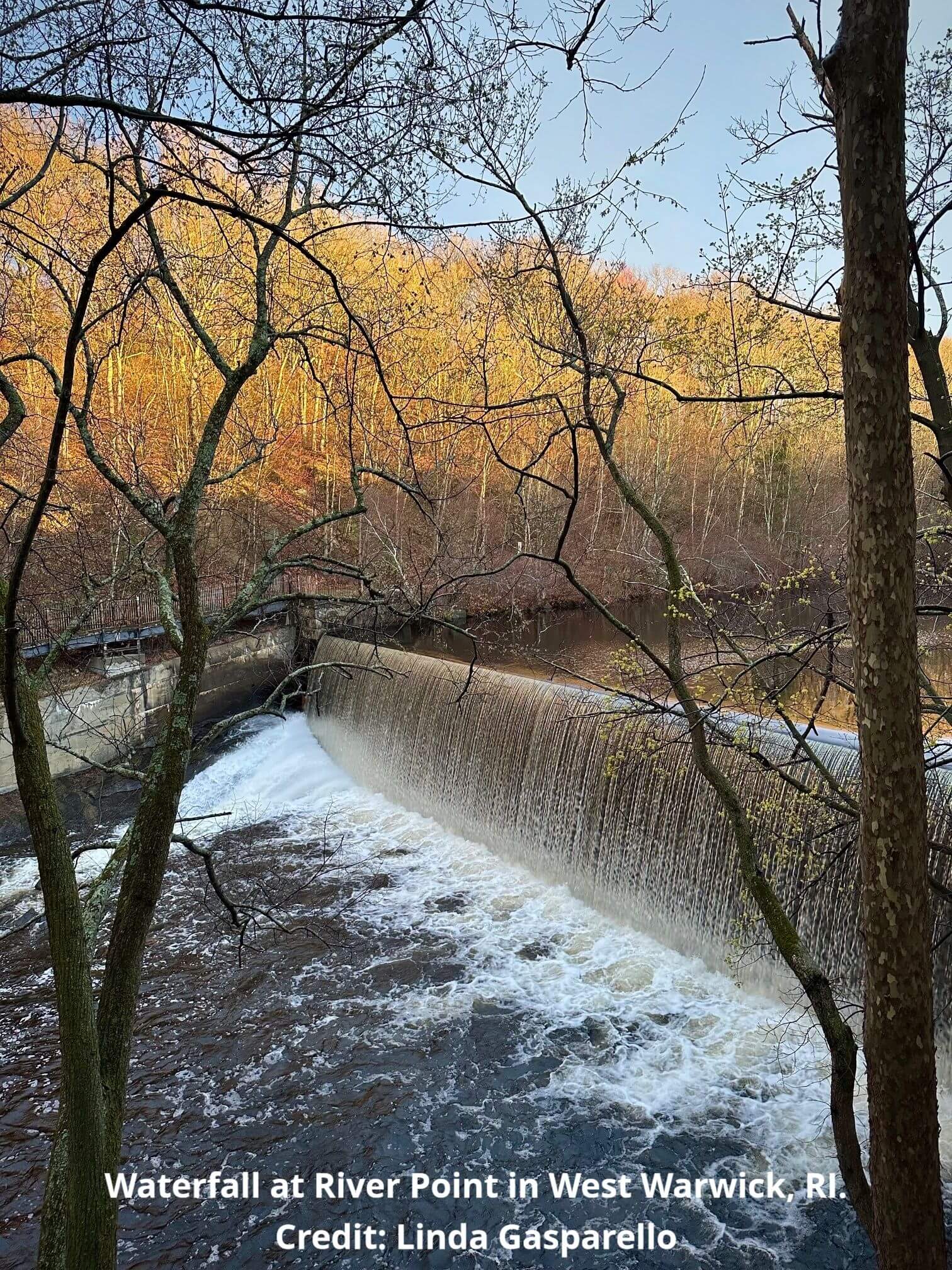
With his technology, grid-quality frequency can flow from many sources without extensive civil engineering or major construction, he told me. In particular, Han cited non-power dams, like the ones in New England which were built in the 19th century to drive the textile mills.

“A simple harnessing module with a generator behind the spillway coupled with my technology can produce frequency that is constant and ready to go on the grid. If you have enough of these simple, low-cost generators installed, you have created a new baseload source, a virtual power plant of a different and exceptionally reliable kind,” Han said.

Another use of the same DDMotion technology would remedy what is becoming a growing problem for wind and solar generators: the lack of rotating inertia. Inertia is essential for utility operators to fix sudden changes in frequency caused by changes in generation or consumption (50 cycles in Europe and 60 cycles in the United States).

Lack of inertia has been blamed for the widespread blackout on the Iberian Peninsula and is becoming an issue for utilities with a lot of solar and wind generation, so called inverter power. This refers to the grooming with an inverter to power to grid-quality alternating current from its original direct current.

Here, again, his technology can inexpensively resolve the inertia problem for wind and solar generation, Han said. Either using a mechanical system or an electronic one, wind and solar systems could provide rotating inertia.

Increasingly, utilities are looking for untapped sources of power which can be bundled together into VPPs.

Renew Home, a Google-financed company, claims 3 gigawatts of electricity savings, which it says makes it the leader in VPPs. It relies on managing end-use load primarily in homes with load shedding of high energy-consuming devices during peaks. This is accomplished by using special thermostats and smart meters.

Industry experts believe artificial intelligence will be a key to extracting the most energy out of unconventional sources as well as fine tuning usage.

VPPs are here and many more are coming.
Filed Under: King's Commentaries Tagged With: DDMotion, Dominion, Electric, Key Han, power, Renew Home, technology, Virginia, virtual, VPPs, Waterways, Youngkin

The Husband and Wife Who Founded Memorial Day

May 25, 2018 by Linda Gasparello 1 Comment

(Channeling Gen. John A. “Black Jack” Logan)

WASHINGTON — It’s Memorial Day. I see you’re walking from Logan Circle to Constitution Avenue to watch the parade honoring all the nation’s veterans.

I’ll be there, too. In spirit.

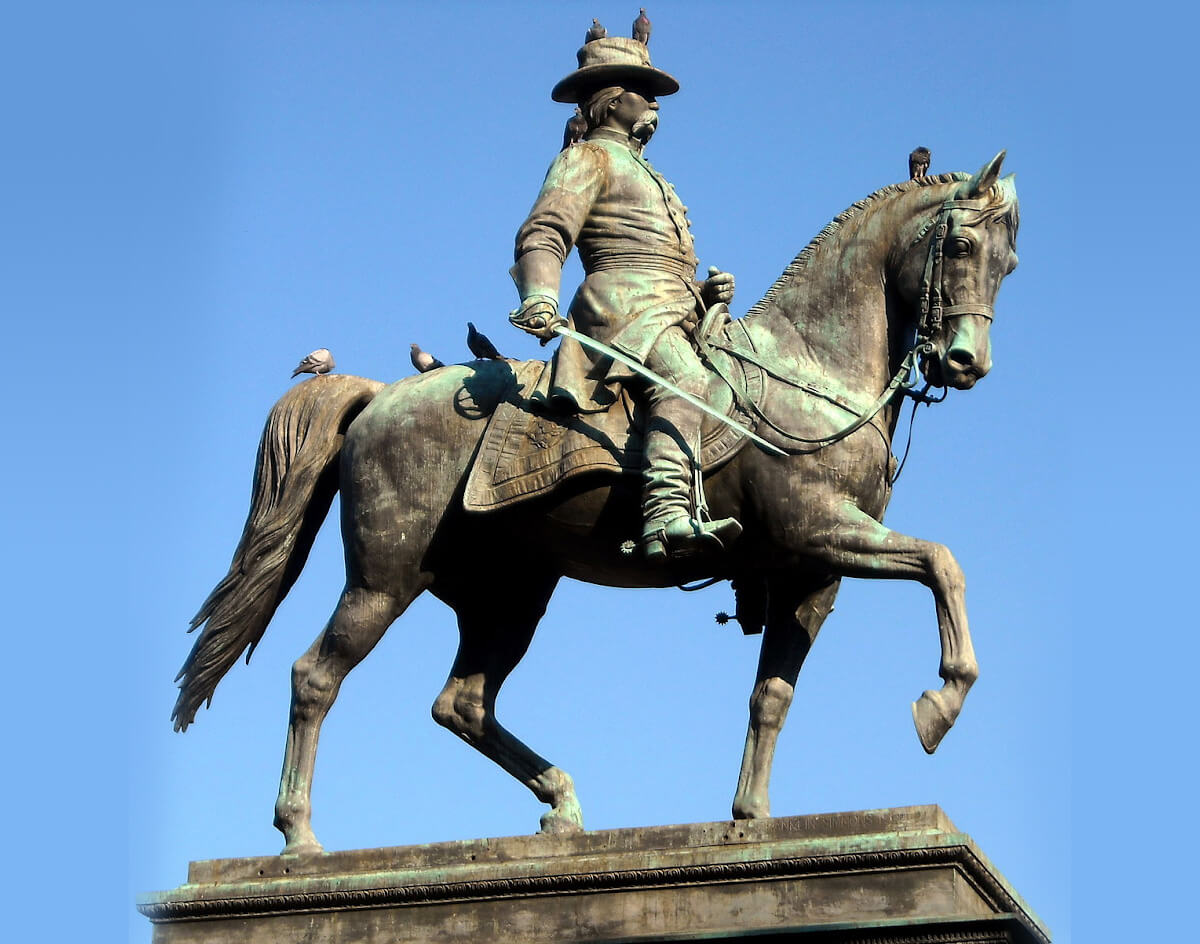
Do you see the bronze statue in the circle? That’s me: Gen. John A. Logan, sitting erect on my horse, my sword drawn and the ends of my thick mustache flying in the wind. I was nicknamed “Black Jack” for my swarthy complexion, boot-black hair, eyes and that mustache.

At the outset of the Civil War, I won re-election to the U.S. House of Representatives as a Jacksonian Democrat from Illinois’s 9th Congressional District, a region that had partisan and divided loyalties. I tried to take a neutral stance, but I ended up fighting to preserve the union. I rose from colonel to major general, distinguishing myself in eight major campaigns. Many historians consider me to be best of the Union Army’s “political” generals.

Gen. Ulysses S. Grant offered me a brigadier generalship in the postwar U.S. Army, but I returned to politics, winning three more U.S. House elections as a Republican from Illinois, and an advocate of African-American civil rights and public education.

Later I won three U.S. Senate elections, which spurred me to run for higher offices. I was a vice-presidential candidate on the Republican ticket that lost the general election in 1884, and I failed twice to become my party’s presidential nominee.

Enough about my political career. If you can dally, I’d like to tell you about the origin of this national holiday, which involves me and my wife, Mary, an indefatigable Washington hostess and a prodigious writer and public speaker.

In March 1868, when I was a congressman and commander in chief of the Grand Army of the Republic, an organization of Union veterans, my wife and I were invited to tour the battlefields of Virginia. Unfortunately, I couldn’t accompany her on what she called a “pilgrimage” in her May 30, 1903, article in The Los Angeles Times, headlined “Memorial Day: A Noted Woman’s Story of Its Origin and Growth.”

She wrote that on her visit to the oldest church in Petersburg, Va., whose bricks had been brought from England, “as we passed through the rows of graves, I noticed that many of them had been strewn with beautiful blossoms and decorated with small flags of the dead Confederacy.”

When I met her at the train station, she told me about this “sentimental idea” and I said, by her account, “What a splendid thought! We will have it done all over the country, and the Grand Army shall do it! I will issue an order at once for a national Memorial Day for the decoration of the graves of all of these noble fellows who died for their country.”

While I’d known about the Decoration Day observances in the South (and mentioned them in a speech in 1866), my wife’s enrapture with the idea likely got me moving on an annual national day to honor the fallen.

On May 5, 1868, at Grand Army headquarters in Washington, I issued General Order No. 11, designating that May 30 “for the purpose of strewing with flowers or otherwise decorating the graves of comrades who died in defense of their country during the late rebellion. … It is the purpose of the Commander-in-Chief to inaugurate this observance with the hope it will be kept up from year to year …”

Now, on your way to the parade. But I hope you’ll take the time, as I said in my order, to visit the graves of our heroic dead and “garland the passionless mounds above them with the choicest flowers of springtime.”

Filed Under: Gasparello's Articles Tagged With: American South, Decoration Day, holidays, Memorial Day, Ulysses S Grant, Virginia

White House Chronicle on Social

  • Facebook
  • Twitter
  • Vimeo
  • YouTube
Watch Out When the Political Class Forgets Cause and Effect

Watch Out When the Political Class Forgets Cause and Effect

Llewellyn King

Anyone who has spent time in criminal court knows this: One of the characteristics of lawbreakers is a poorly developed sense of cause and effect. At the low end, the folly of the defendants is always on display. The young man who takes a gun with him on a night of drinking. He has increased […]

The Electricity Future for New England: Uncertainty and High Prices

The Electricity Future for New England: Uncertainty and High Prices

Llewellyn King

These days, in terms of resources, New England is poorly positioned to make electricity. As Gregg Cornett, president of Rhode Island Energy, told me in an interview, it doesn’t sit on abundant coal reserves and natural gas — the critical fuel in today’s electricity generating mix — or hide beneath the surface, waiting for the […]

A Revolutionary Calls Out the Utility Industry

A Revolutionary Calls Out the Utility Industry

Llewellyn King

The demand for electricity continues to rise, and there is a wide recognition that there is going to be pressure on the grid as never before, and that it is time to think about the grid in new ways.  We need to think about how it operates, how it might operate, and the technologies — including artificial intelligence as […]

My Happy Place Is on a Train, Including Amtrak

My Happy Place Is on a Train, Including Amtrak

Llewellyn King

This is being written on Amtrak’s Northeast Regional Train 171, in coach, en route from Providence, R.I., to New York. I am in my happy place. I am a trainman. Given a choice, I would ride the rails over any other mode of transport — except flying, when I owned a plane. Something happens to […]

Copyright © 2026 · White House Chronicle Theme on Genesis Framework · WordPress · Log in