White House Chronicle

News Analysis With a Sense of Humor

  • Home
  • King’s Commentaries
  • Random Features
  • Photos
  • Public Speaker
  • WHC Episodes
  • About WHC
  • Carrying Stations
  • ME/CFS Alert
  • Contact Us

The Decline in the Art of Creative Swearing

October 9, 2026 by Llewellyn King Leave a Comment

Mark Twain wrote an essay on the decay in the art of lying. His conclusion was that you had better have a damn good memory.

Oscar Wilde wrote an essay — in the form of a philosophical dialogue — on the same subject, but he was trying to prove that art didn’t need to be based on the real world.

I have the temerity to offer this: the decay in the art of swearing.

As a boy, I read in Richard Dana’s book “Two Years Before the Mast” that the captain could swear for minutes without repeating himself. Ever since, I have been fascinated by swearing and those who maintain it as — dare I say it — an art form.

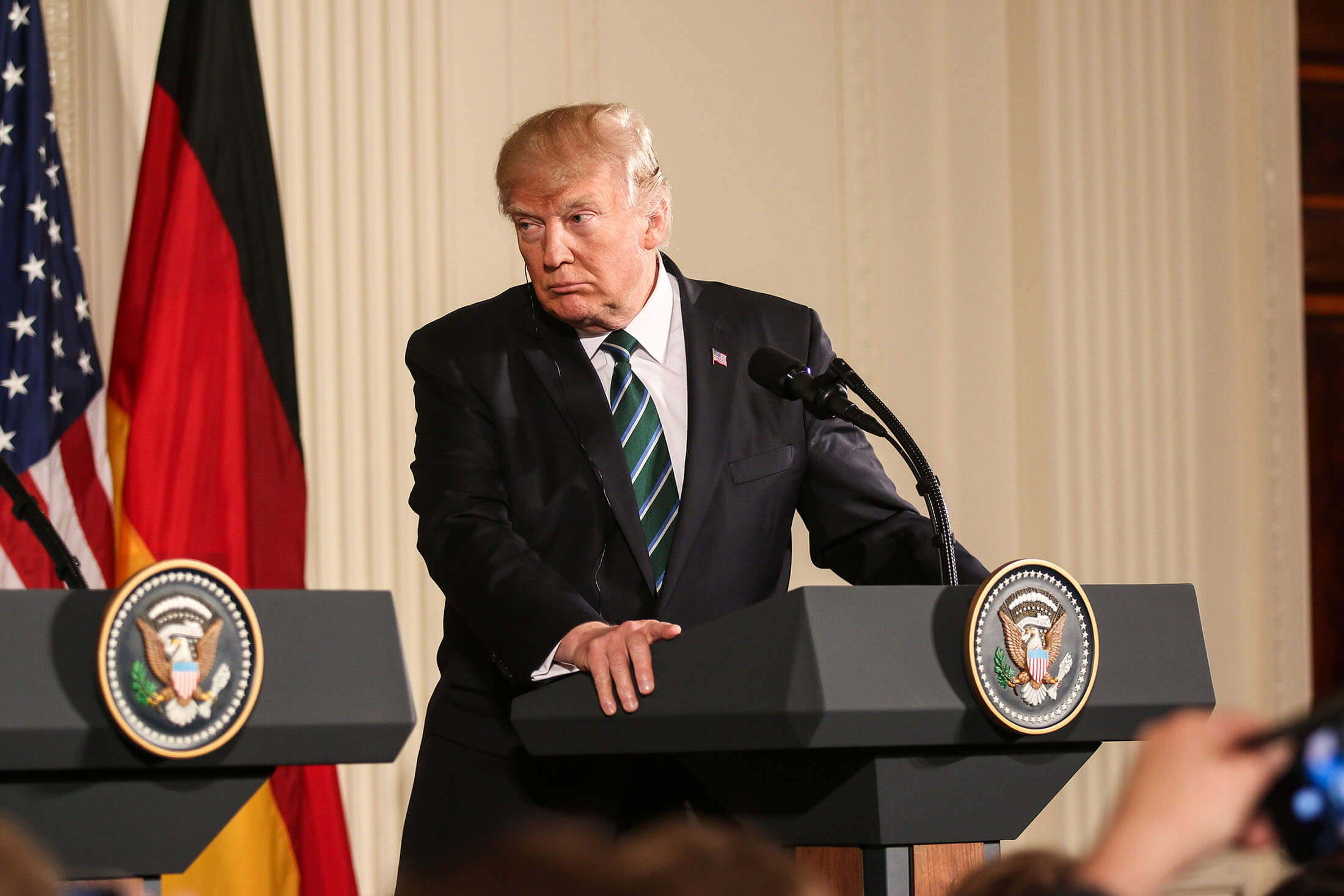
At the heart of the decline is the lack of respect for the f-word. In its day, it was the capstone, shocking and bound to offend. Ergo, it had to be used sparingly and calculatedly. Now it is everywhere, in movies, on BBC television, in Congress and from the lips of the president of the United States. Shame.

If this keeps up, the f-word will be no more upsetting than bloody, which was a true shocker when George Bernard Shaw used it in the 1913 play “Pygmalion,” but is now no more shocking than any other adjective.

Bugger is another word that has become inoffensive. Once a shocker with kiloton-explosive quality, it has been defused.

Here are some great swearers I have known and who kept alive the creative art of profanity.

—Stockard Channing has an exquisite command of the language and with, as you would expect from one of our great actresses, impeccable timing.

Decades ago, she and I were both guests at The Ashram, an exclusive health resort in California. I have fond memories of the two of us trying to jog down the beach in Malibu while she let loose a powerful and profane description of some of Hollywood’s executives. Invigorating.

—Ben Bradlee, the legendary executive editor of The Washington Post, knew how to use the f-word as a tool of editorial management. He dropped it straight and true, like a guillotine blade, on any stupid idea or meandering argument.

I saw this with deadly effect when, in an editorial conference (a daily event in newspapers), the coterie of assistant managing editors got overly excited about a Post reporter’s struggle in the Middle East. Bradlee listened, then declared, “F-word, this sounds like a story about how we didn’t get the story.” Quite so.

—James Schlesinger, the great public servant who in turn was chairman of the Atomic Energy Commission, director of the CIA, secretary of defense and secretary of energy, liked to shock in formal situations. He used to use his command of profanity to bring pompous discussions down to earth.

Once I was visiting with him at the CIA, and we were shooting the breeze as we often did, when his aide came in and said, “Sir, the admiral has been waiting a long time to see you.”

Schlesinger signaled to me to stay put. “It’s good for (strong expletive) admirals to wait.”

That was in the early days of his tenure at the agency, and clearly he wanted word to get around that he was the absolute authority at Langley — and he was anywhere he held office. Awesome.

The master of what I think of as narrative swearing was my friend Guy Hawtin, a distinguished journalist with the Financial Times and the New York Post, who abandoned the wicked ways of journalism for the Episcopal priesthood.

Hawtin, who resembled the actor Peter Ustinov, could put English words together any time, anywhere, but his memorable tirade of swearing and invective happened to be in the hallowed ground of New York’s Algonquin Hotel. The perfect set. Our lunch wasn’t meant as a reprise of the famous Algonquin Round Table of the 1930s, though we sat at a round table. Our mutual friends David Fishlock, the FT’s science editor, and John McCaughey, a former FT subeditor, were also there.

The FT editor had dismissed Hawtin, leaving considerable bad blood. When Fishlock suggested that the editor was doing a good job, Hawtin launched into a brilliantly sustained angry monologue — the finest display of serial swearing this connoisseur had ever heard before or since.

Sitting alone in a corner was the real, older Peter Ustinov. He raised a hand with his thumb and index finger making a circle. Approval.

Our politicians aren’t adding to the art. They should have their mouths washed out with soap — my mother’s remedy for potty-mouth.

Filed Under: King's Commentaries Tagged With: California, Hollywood, journalism, language, Mark Twain, Middle East, Oscar Wilde, politicians, Schlesinger, Swearing

The New Language of the New Trumpian Politics

May 5, 2017 by Llewellyn King Leave a Comment

President Trump may or may not have done good things in his first 100 days in office. But have no doubt, he has affected the language of politics, uprooted the tried-and-true meanings of the past for a new more ambiguous, fluid and hazier speech.

These words and phrases are the language of the day:

Takeaways: These are the facts which you try and sort out from the presidential utterances. Takeaways mostly are the nuggets, the nub, the likely policy in the mattress of words. Takeaways are nearly as good as facts, but not quite as tricky. Takeaways don’t have to be facts, they can be hints, even insults or praise, which indicate which way the presidential wind is blowing; whether it is a zephyr or a gale, a wind of change or just hot air.

Double down: This is when President Trump or his staff cling to a position for a while. For example, the president has doubled down on his demand for wall along the southern border. He has not wavered in his desire to see masonry separating us from Mexico, from the bad hombres there who have never heard of airplanes, boats or Canada. A fence won’t do; nor will an electronic barrier. It has to be a wall, like Hadrian’s Wall, separating England from Scotland, or the Great Wall of China or the Berlin Wall. History loves walls. History doesn’t do fences.

Walk back: Walking back statements, positions, accusations and policies is a kind of wiggle room on steroids. If it stirs up a storm, walk it back. If the historical facts you’ve quoted are pure nonsense, walk them back. If your international agenda has changed, walk back the old one.

Take the strange matter of Chinese currency manipulation. Candidate Trump was going to straighten out that one. But when he needed the Chinese to pressure North Korea, he walked back the issue of currency manipulation. He also did a few backward steps on Chinese incursion into the South China Sea.

Historians might note that in relation to China, President Trump has traded away a lot for little or nothing. The Chinese aren’t going to topple the dictatorship of Kim Jong-un in North Korea, or even cut off a lot of their trade with him. “Smart cookies” are in Beijing, too.

Fake news: This is the new aspirin of politics. Take two and recant in the morning. Fake news is, by presidential dictate, anything you don’t like on the news; or the entire purveyor of the news, like CNN or The New York Times. Fake has not yet lost its old meaning: It means made up, false, fictitious.

In the Land of Trump, there are no facts, except those on which he has doubled down, and which might be walked back at some time in the future.

Enemies of the people: That means journalists. All of them, if they don”t work for Fox News — and a few of those are suspect.

Now the president, the negotiator-in-chief, the man who can look across the table at an adversary and get the wretch to sign and concede, is taking on the Arab-Israeli conflict. Trump may not have negotiated the Russians into submission or the Chinese into compliance, but no matter. When at first you don’t succeed, go for the big one. Double down.

Maybe Trump and his son-in-law, Jared Kushner, will walk through the Valley of Failed negotiations and succeed. But no matter. It’s a no-brainer. You can walk that one back, littering the way with accusations of intransigence and ill will. One doesn’t have to walk back failure in the Middle East. That one walks itself.

Author’s note: I’ll walk back all my negative comments as needed or, perchance, double down on them. They are, of course, fake and have been penned by a certifiable enemy of the people.

Filed Under: King's Commentaries Tagged With: Donald Trump, fake news, glossary, headlines, Jared Kushner, journalism, language, lexicon, Politics

The Virtue of the Unwanted

April 29, 2010 by White House Chronicle 1 Comment

A young man drops over a fence in Arizona. He is so thin that his pants hang on the bones of his pelvis. His face is worn. He is scared.

He is a child of the oppression of poverty.

Now, uneducated and unskilled, he plans to make his way in a country where he is not wanted, and where he does not speak the language. Yet he hopes to get a life–even half a life–better than the one he left.

But the new streets of his life are not paved with gold. At any time, he can be arrested. He must live in the shadows.

He is an illegal immigrant.

Illegal, unwanted. It is an indelible stain, a sin that cannot be expiated.

He is a criminal. He is unworthy of medical treatment, social services, working or raising a family.

If he drives a car and works, he compounds his illegal status. If he marries and raises a family, his family can be sundered if a suspicious policeman demands identity papers from him.

All the days of his life here, he will be illegal. No statute of limitations will save him from his apartness from the mainstream. As a stateless person, he is an easy victim for exploitation by extortioners, crooked lawyers and exploitative employers.

Yet some illegal immigrants prosper in the shadows of society. They start businesses and accumulate cars, houses and successful children. A woman who runs a housecleaning service is putting her son through a prestigious university, where he is studying computer science. A man has a landscaping business with tractors, trucks and a large workforce.

These people left their native Mexico as desperate youths. Decades later, they are living the American dream in all but the paperwork.

They are vulnerable and they are frightened, as the debate has grown uglier and the law enforcement more draconian.

These are the Americans who never were and, under Arizona law, never can be. Their lives are written in invisible ink.

These are people who, in a different context, we admire: people of courage and self-determination. Through no fault of their own, they were born on the Mexico side of the Rio Grande. In an effort to improve their own lives, they have surrendered to a life apart, a life under threat. They are the exiles who cannot go home and may not be able to stay.

Yet America is under threat of conquest through immigration. There is no end in sight to those who would flood into our homeland from all of Latin America, and much of the rest of the world. But it is Mexico, in particular, that concerns us.

Guess what? We are lucky that our immigration threat is from that country and we can build a better border barrier.

Every successful, and semi-successful, country in the world has a problem with illegal immigrants. South Africa has about 3 million from Zimbabwe alone. Venezuela has millions from the rest of Latin America.

Western Europe is being swamped by North African illegal immigrants, who bring a very alien culture and an aggressive religion with them. They pour into Greece, Italy, Malta and the Canary Islands at a far faster rate than they can be handled. North Africans pose a much greater threat to Europe than do Latin Americans to the United States.

Illegal immigration is one of the great crises of the 21st century. But the real problem is language. The spread of a second language–assisted by broadcasters, motor vehicle departments, schools and greedy businesses–creates a parallel society in which people living in the shadows can function and assist the survival of other illegals.

A country grows within a country.

Dual-language countries are countries divided—think of Belgium and Canada. We resist illegal immigrants but make it easy for them not to assimilate.

This is folly. “One nation under English” might not be a bad slogan.

Filed Under: King's Commentaries Tagged With: Arizona, illegal immigrants, language

White House Chronicle on Social

  • Facebook
  • Twitter
  • Vimeo
  • YouTube
A Novel Adventure Through William & Mary’s Extraordinary Past

A Novel Adventure Through William & Mary’s Extraordinary Past

Llewellyn King

The venerable College of William & Mary, located in Williamsburg, Virginia, might want to beef up its admissions office staff because a tidal wave of students may soon hit the campus. Founded in 1693, it is the second-oldest college, after Harvard University (1636). It is the setting — indeed, the star — of an astounding […]

We Need to Hear What the Democratic Socialists Have in Mind

We Need to Hear What the Democratic Socialists Have in Mind

Llewellyn King

Historically, in parts of the British Isles, there were shortages of family names, which is why a disproportionate number of the Welsh are called Evans, Jones or Williams. Yes, my first name is Welsh, but I believe we were of untrammeled English stock with possibly a smidgen of Dutch. I mention these things because names, […]

The Decline in the Art of Creative Swearing

The Decline in the Art of Creative Swearing

Llewellyn King

Mark Twain wrote an essay on the decay in the art of lying. His conclusion was that you had better have a damn good memory. Oscar Wilde wrote an essay — in the form of a philosophical dialogue — on the same subject, but he was trying to prove that art didn’t need to be […]

Democratic Lightheadedness Won’t Erase Trump’s Stain

Democratic Lightheadedness Won’t Erase Trump’s Stain

Llewellyn King

It sounds like an admonition from a senior detective to a junior colleague: Assume nothing. Right now, across America, a lot of political assuming is going on, mostly among Democrats. The first assumption is that the Democrats will win the midterms. It is dangerous to assume the winner of any race until the winning post […]

Copyright © 2026 · White House Chronicle Theme on Genesis Framework · WordPress · Log in