
White House Chronicle

News Analysis With a Sense of Humor

  • Home
  • King’s Commentaries
  • Random Features
  • Photos
  • Public Speaker
  • WHC Episodes
  • About WHC
  • Carrying Stations
  • ME/CFS Alert
  • Contact Us

The Question That Must Be Answered: How Dangerous Is AI?

September 18, 2026 by Llewellyn King Leave a Comment

Races have winners and losers — at least so I have always thought. At some point, the competition ends and a winner is identified, whether it is first-past-the-post as in a horse race, or first in the marketplace as in a commercial race. Think about VHS and Betamax.

Similarly, we knew who won the space race and many other international races. However, the race we are engaged in with China over artificial intelligence isn’t defined — there are no winning posts, and we don’t even know what winning will look like.

Will we wake up one day and be told we have cleared the winning post and China is in the dust, or the other way round?

We don’t even seem to be engaged in the same race as China. Is it the one President Trump talks about where we are going to out-invest, out-talent, out-research and dominate AI?

Or is it the one China appears to be running, emphasizing using AI as it is now, with the construction of many thousands of deployable robots?

Is it a purely commercial race or a purely military one for both countries?

So far, it seems, we have taken the high road, with proprietary systems, and China has taken the low road with widely deployed, open-source, ready-now systems.

China is aggressively spreading AI across its commercial operations and developing families of robots. The United States is still nibbling at universal deployment. China is mass-producing droves of humanoids that dance, leap in the air, and perform complex duties like cooking.

They entertain and threaten. They are a new workforce, presenting a new level of competition.

Although the United States has reached new heights in invention and pushed the frontiers of AI discovery, it lags in deployment. It has been slower in harvesting the technology.

Now comes the unsettling — actually terrifying — warning from AI researchers that the human race may face extinction as soon as the end of this decade. Three AI bosses — Dario Amodei of Anthropic, Sam Altman of OpenAI and Elon Musk of Grok — have called for a slowdown and regulatory oversight.

This warning deserves to be treated as truth until proven otherwise.

Could, as the doomsters fear, no bells ring, no shouts of joy echo from the bleachers at the race’s end because AI has killed us all short of the winning post.

It is a strange race run not by the government but by corporations, with the government cheering from the sidelines. Bill Gates has said the thing about AI is that — unlike other dangerous technologies, such as nuclear — the government has no depth of knowledge, no deep bench. Where AI is concerned, the government is an outsider.

When my television crew and I covered the Upscale conference in Malaga, Spain, last year, we got insight into people from around the world surging ahead in the creative uses of AI, without regard to whether they were using Chinese or American AI. For this cohort, these were just off-the-shelf tools.

This was a new generation of creatives using AI with relish to create fine art, advertisements and designs for everything from a new shape for a car or a wild-patterned shoe to a more comfy living room couch.

I had to wonder whether they weren’t the real winners in the AI race: Those who use it without scaling the heights of its technical possibilities or using it to displace truck drivers.

Only two countries are in that race, the United States and China, but all have a stake. In AI deployment, the United States is far from dominant. Indeed, it is down the list of countries where AI is already incorporated into daily commercial operations. Estonia and the UAE stand out.

The United States is challenging the future before exploiting the present.

It is easy to declare the need for regulation and guardrails, but hard to do that when the subject is in constant transmutation, changing daily and likely to change again tomorrow.

I would propose that the Trump administration appoint a small, nimble, non-industry expert panel to answer just three questions: Is AI an existential threat to the human species? What should be done about that? And how much time do we have?

The threat has been debated academically since 1958 — the heftiest warning came from British astrophysicist Stephen Hawking in December 2014.

Warnings from within should be heeded. J. Robert Oppenheimer warned about nuclear weapons. His words still govern nuclear non-proliferation policy and security settings.

The creators of an even more dangerous technology are warning, much as Oppenheimer did.
Filed Under: King's Commentaries Tagged With: AI, China, Dangerous, extinction, generation, Hawking, Oppenheimer, robots, technology, trump

Game-Changing Wind Turbines Harvest Underused Resource Close To The Ground

June 27, 2025 by Llewellyn King Leave a Comment

Jimmy Dean, the country musician, actor and entrepreneur, famously said: “I can’t change the direction of the wind, but I can adjust my sails to always reach my destination.”

A new wind turbine from a California startup, Wind Harvest, takes Dean’s maxim to heart and applies it to wind power generation. It goes after untapped, abundant wind.

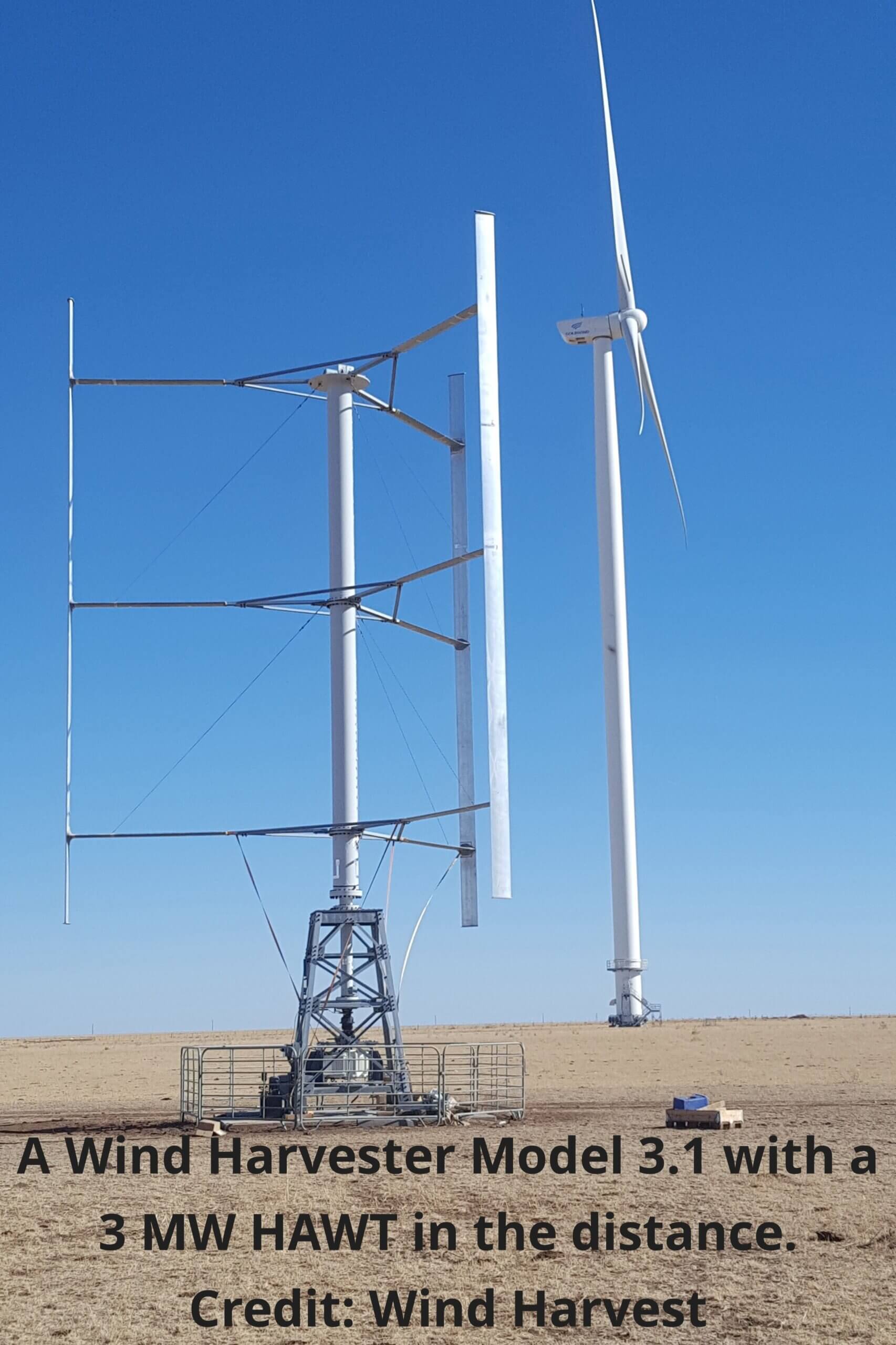
Wind Harvest is bringing to market a possibly revolutionary but well-tested vertical axis wind turbine (VAWT) that operates on ungathered wind resources near the ground, thriving in turbulence and shifting wind directions.

The founders and investors – many of them recruited through a crowd-funding mechanism — believe that wind near the ground is a great underused resource that can go a long way to helping utilities in the United States and around the world with rising electricity demand.

The Wind Harvest turbines neither seek to replace nor compete with the horizontal axis wind turbines (HAWT), which are the dominant propeller-type turbines seen everywhere. These operate at heights from 200 feet to 500 feet above ground.

Instead, these vertical turbines are at the most 90 feet above the ground and, ideally, can operate beneath large turbines, complementing the tall, horizontal turbines and potentially doubling the output from a wind farm.

The wind disturbance from conventional tall, horizontal turbines is additional wind fuel for vertical turbines sited below.

Studies and modeling from CalTech and other universities predict that the vortices of wind shed by the verticals will draw faster-moving wind from higher altitude into the rotors of the horizontals.

For optimum performance, their machines should be located in pairs just about 3 feet apart and that causes the airflow between the two turbines to accelerate, enhancing electricity production.

Kevin Wolf, CEO and co-founder of Wind Harvest, told me that they used code from the Department of Energy’s Sandia National Laboratory to engineer and evaluate their designs. They believe they have eliminated known weaknesses in vertical turbines and have a durable and easy-to-make design, which they call Wind Harvester 4.0.

This confidence is reflected in the first commercial installation of the Wind Harvest turbines on St. Croix, one of the U.S. Virgin Islands in the Caribbean. Some 100 turbines are being proposed for construction on a peninsula made from dredge spoils. This 5-megawatt project would produce 15,000 megawatt hours of power annually.

All the off-take from this pilot project will go to a local oil refinery for its operations, reducing its propane generation.

Wolf said the Wind Harvester will be modified to withstand Category 5 hurricanes; can be built entirely in the United States of steel and aluminum; and are engineered to last 70-plus years with some refurbishing along the way. Future turbines will avoid dependence on rare earths by using ferrite magnets in the generators.

Recently, there have been various breakthroughs in small wind turbines designed for urban use. But Wind Harvest is squarely aimed at the utility market, at scale. The company has been working solidly to complete the commercialization process and spread VAWTs around the world.

“You don’t have to install them on wind farms, but their highest use should be doubling or more the power yield from those farms with a great wind resource under their tall turbines,” Wolf said.

Horizontal wind turbines, so named because the drive shaft is aligned horizontally to the ground, compared to vertical turbines where the drive shaft and generator are vertically aligned and much closer to the ground, facilitating installation, maintenance and access.

Wolf believes his engineering team has eliminated the normal concerns associated with VAWTs, like resonance and the problem of the forces of 15 million revolutions per year on the blade-arm connections. The company has been granted two hinge patents and four others. Three more are pending.

Wind turbines have a long history. The famous eggbeater-shaped VAWT was patented by a French engineer, Georges Jean Marie Darrieus, in 1926, but had significant limitations on efficiency and cost-effectiveness. It has always been more of a dream machine than an operational one.

Wind turbines became serious as a concept in the United States as a result of the energy crisis that broke in the fall of 1973. At that time, Sandia began studying windmills and leaned toward vertical designs. But when the National Renewable Energy Laboratory assumed responsibility for renewables, turbine design and engineering moved there; horizontal was the design of choice at the lab.

In pursuing the horizontal turbine, DOE fit in with a world trend that made offshore wind generation possible but not a technology that could utilize the turbulent wind near the ground.

Now, Wind Harvest believes, the time has come to take advantage of that untouched resource.

Wolf said this can be done without committing to new wind farms. These additions, he said, would have a long-projected life and some other advantages: Birds and bats seem to be more adept at avoiding the three-dimensional, vertical turbines closer to the surface. Agricultural uses can continue between rows of closely spaced VAWTs that can align fields, he added.

Some vertical turbines will use simple, highly durable lattice towers, especially in hurricane-prone areas. But Wolf believes the future will be in wooden, monopole towers that reduce the amount of embodied carbon in their projects.

One way or another, the battle for more electricity to accommodate rising demand is joined close to the ground.

This article was originally published on Forbes.com

Filed Under: King's Commentaries Tagged With: California, CalTech, generation, Jimmy Dean, Kevin Wolf, Sandia, turbines, United States, wind, Wind Harvest

White House Chronicle on Social

  • Facebook
  • Twitter
  • Vimeo
  • YouTube
The Question That Must Be Answered: How Dangerous Is AI?

The Question That Must Be Answered: How Dangerous Is AI?

Llewellyn King

Races have winners and losers — at least so I have always thought. At some point, the competition ends and a winner is identified, whether it is first-past-the-post as in a horse race, or first in the marketplace as in a commercial race. Think about VHS and Betamax. Similarly, we knew who won the space […]

9/11 — The Tragedy That Didn’t Have To Happen

9/11 — The Tragedy That Didn’t Have To Happen

Llewellyn King

There is a terrible truth about 9/11: It didn’t have to happen. Something as simple as a hardware store lock could have deterred the perpetrators. The arguments against hardening cockpits were numerous, and now seem unconvincing to the point of being risible. They included: It would cost too much; the public had to see the […]

Medicare for All Is the Wrong Fix for the Healthcare Crisis

Medicare for All Is the Wrong Fix for the Healthcare Crisis

Llewellyn King

As Charles Dickens might have said, “It is the best of times in medicine, it is the worst of times in healthcare.” It is a time of great medical discovery with artificial intelligence, it is a time of the poorest outcomes for the sick. One of America’s most distinguished pediatric cardiologists says the nation is in […]

My Maiden Flight Without a Necktie

My Maiden Flight Without a Necktie

Llewellyn King

Friday, Aug. 14, was a seminal day for me. For the first time in my long life, I boarded a flight without a necktie. In seven decades of flying, I have never done that. Truth is, I felt underdressed on the flight from Providence, R.I., to Jacksonville, Fla., as if I were wearing my pajamas […]

Copyright © 2026 · White House Chronicle Theme on Genesis Framework · WordPress · Log in