By Linda Gasparello
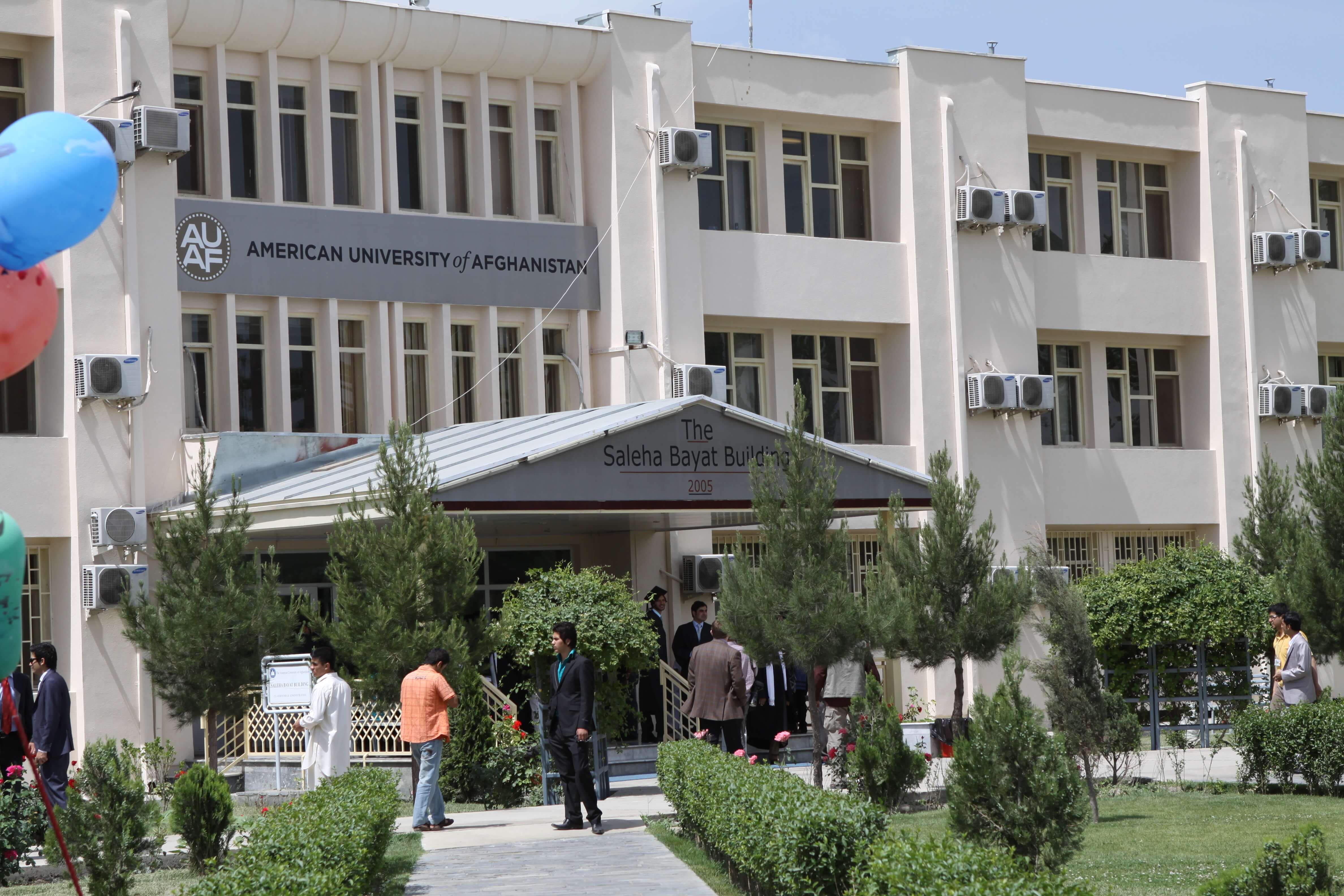
The attack on the American University of Kabul opens a new chapter on impeding access to liberal education in Afghanistan. It is a chapter that could be opened in as many as 18 American universities across the Middle East and North Africa.
The American University, located on five acres in the Afghan capital, opened in 2006. It is the only private, not-for-profit and co-educational university in the war-devastated country. It offers its 1,700 full- and part-time students a liberal arts and sciences curriculum taught in English. Many receive U.S. government-funded scholarships.
In 2008 then-first lady Laura Bush — who made access to education in Afghanistan one of her causes — helped to secure $42 million in funding from the U.S. Agency for International Development for the American University. The State Department reportedly considers it to be an important symbol of the partnership between the United States and Afghanistan, and it has educated many Afghan government and non-government group officials who are trying to build a modern country.
Other American universities in the Middle East and North Africa – between nine and 18 – that receive U.S. government support also promote critical thinking and a liberal arts and sciences curriculum. The oldest of these, the American University in Beirut, has been doing so since its founding by American missionaries in 1866 as the Syrian Protestant College. Its mission statement says, “The university believes deeply in and encourages freedom of thought and expression and seeks to foster tolerance and respect for diversity and dialogue.”
As Michelle Evans, student life coordinator at the American University in Cairo (AUC), the second-oldest American-brand institution in the Middle East, told U.S. News & World Report, “The mission and values of an American university is to cultivate a well-rounded, independent thinker who is ready for the challenges of the world.”
As a graduate student on a U.S. government-funded scholarship to AUC in the late 1970s, I saw how important it was to have such an institution in a country that was trying to modernize. AUC students were exposed to so many more courses and ideas than students at the national universities, including Cairo University, who took classes only within their discipline. I felt they would be the most ready and able to carry out the “opening up” (or infitah) to the West that President Anwar Sadat was beginning in 1977.
Remarkably, as strongholds of Western education and values, AUC and other universities did not suffer lethal attacks during the civil wars in Lebanon, Arab anger at President George W. Bush’s invasion of Iraq, or the Arab Spring. But there have been attacks on them, and I experienced one at AUC in 1977.
On a January afternoon, I was enjoying coffee with friends in the interior garden of the university when we heard a faculty member shout,“There’s a riot outside. Go home! Go home now!” Rioters pelted the university with stones, breaking windows. The stoning stunned everyone because the university — and America — was held in such high esteem in Egypt. The school’s librarian, a well-born Egyptian matron, said to me, “Who would do such a thing?”
We soon learned just who.
Thousands of poor Egyptians took to the streets in anger over Sadat’s economic liberalization, specifically a government decree lifting price controls on bread and other basic necessities, acceding to an International Monetary Fund request. The countrywide Bread Riots lasted for two days, and rioters destroyed 120 buses and hundreds of buildings in Cairo alone. But the American University was spared.
The Bread Riot protesters threw rocks; today’s Islamists, motivated by ideology, will toss bombs.
The attack on the American University of Kabul was a seminal event. Now the venerated American universities in the Middle East and North Africa will be even more vulnerable than they already are. — For InsideSources