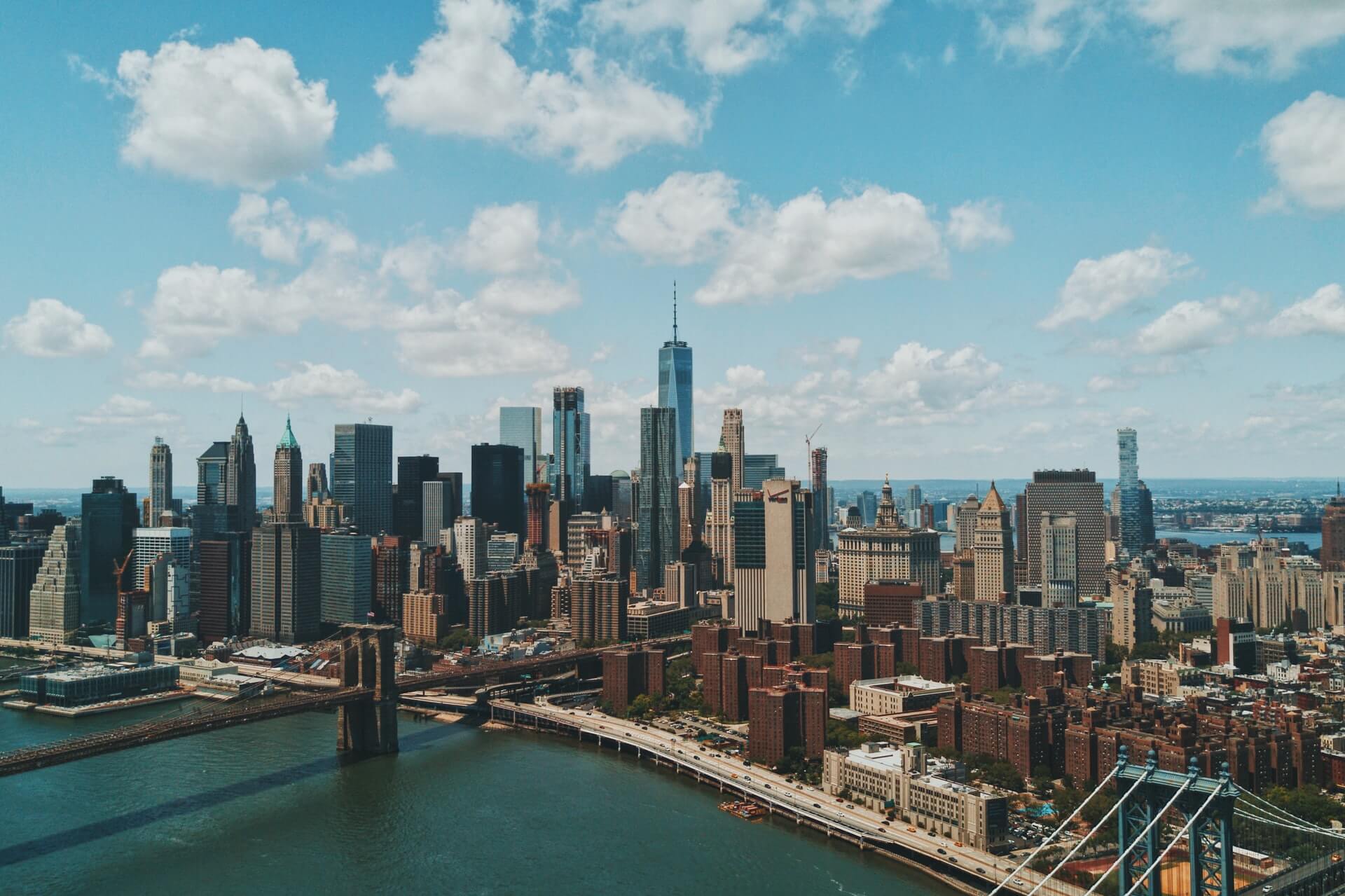
NEW YORK — Alistair Cooke, the great British journalist who wrote his weekly “Letter from America” — a paean to the United States — for 58 years, reserved some of his most lavish praise for Manhattan.
When Nikita Khrushchev, the Soviet leader, visited America and wanted to see Disney World, Cooke told him he’d never see anything as extraordinary as the Manhattan skyline.
I was reminded of this long-ago admonishment recently, when I had the opportunity to see Manhattan from the water, cruising around the island on a friend’s yacht, looking at that skyline, those fingers of buildings, thrusting toward heaven in a forest of architectural and engineering creativity that has no equal on earth. Dubai may aspire but it doesn’t compete.
Manhattan is awe on steroids.
I’ve savored and, at times, detested it for decades.
I suffered its awfulness at the bottom when many newspapers closed and I, an immigrant with no resources, found work as a busboy at the Horn & Hardart on 42nd Street — one of the food service automats which were once a feature of New York City.
They were where the hapless could sit unbothered for long hours without buying anything beyond coffee; where they could stay warm and sheltered in the winter.
I’ve also savored Manhattan in good times, staying at the Carlyle Hotel, one of the best hotels in the world, up there with the Ritz in Paris and Brown’s in London.
It was said when I lived there in the 1960s that New York was a city for the extraordinarily rich and the extremely poor. I found work in Washington and stayed south; New York became a place to visit.
If it was a hard place to be poor in 1965, the extremes of poverty and wealth only increased with time.
More great buildings, enabled by engineering that allowed them to be planted in smaller plots of land, sprouted in Manhattan. Spindle apartment buildings and sprawling waterfront office developments were built with money that flowed in from hedge funds, tech companies, Russian oligarchs, Chinese billionaires and Middle Eastern oil-garchs.
On Sept. 11, 2001, the Big Apple felt its vulnerability to a hostile, premeditated attack. Now it is facing its greatest crisis, one that will wound it mortally if not fatally: COVID-19.
New York City has an uncertain future. People are moving out, selling their expensive co-ops at a loss, and buying in less-crowded places on Long Island, in the Hudson Valley, Connecticut and even farther afield.
As I looked in wonder at the city of striving people, epitomized by its buildings which themselves seem to strive to go ever higher, I wondered whether New York is over, destined to a slow death; its apartments in the clouds likely to be abandoned, and its trove of office space to sit empty as a new generation grows into the idea that working from home — home far away — is the norm, the new way to think about work.
The New York Times has looked at the problem and its writers can’t, it seems, bring themselves to answer the question: Is it over?
The city’s impending tragedy will be played out in other cities, but it is in New York that it will be most visible, most painful; the dream most shattered.
Sure, you might say, it was built on greed and now it must pay the price. But it was also built on much else: immigration, diversity, financial acumen, theater, fine art, sweat and toil — and that most human of emotions: aspiration.
I hope the new normal will allow cities to recover and New York to swagger forward as it has in the past: difficult to live in and difficult to live without. It’s a miracle of a city, a big shiny apple.
 Follow
Leave a Reply