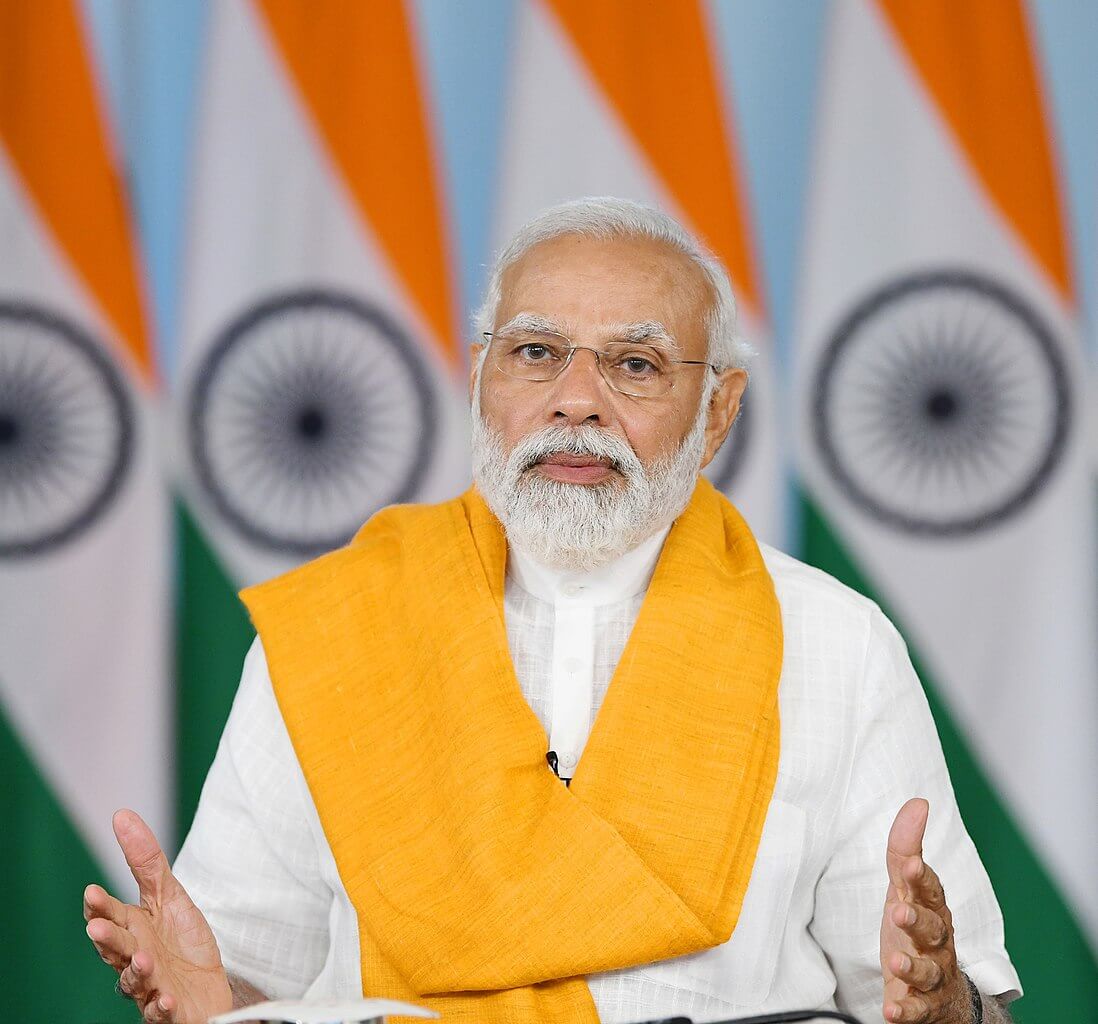
By the diplomatic hoopla in Washington that greeted Indian Prime Minister Narendra Modi, it would seem that intrepid U.S. explorers had just discovered India and were celebrating him in the way Britain treated tribal leaders in the 19th century: Show them the big time. Then co-opt them to vow allegiance.
In this century, the U.S. equivalent of the big time is a state visit and endless professions of friendship. Experience says Modi won’t bite.
Historically, India has been reluctant to accept the embrace of the West. Although it is democratic, capitalist and has the largest diaspora, India’s affections have been hard to capture.
Since independence from Britain in 1947, India has sought global status by standing aloof and leaning toward countries and regimes that are anathema to the West. Its first prime minister, Jawaharlal Nehru, fostered the concept of a third force in the world: a constellation of unaligned nations with India at the center.
It showed a perverse affection for the Soviet Union — which was hardly nonaligned — and didn’t reflect the values of India: free movement of people, free press, capitalism and democracy.
Years ago, a retired executive editor of the Times of India, whom I knew socially, told me, “There are maybe a million Indians living in the United States and only a handful who live in the Soviet Union, but our leaders have always leaned toward them. It is a puzzle.”
There are now 4.2 million Indians living in the United States.
At the same time, Indians migrated across the world and made inroads into professions from Canada to New Zealand. In Britain, they are prominent in politics and the prime minister, Rishi Sunak, is of Indian descent.
In the United States, executives of Indian descent run some of the largest tech companies, including IBM, Google and Microsoft.
Indians are a huge force in English literature. Every year Indian writers feature on the prize lists for best new English novels. Whereas the computers most of us use may have been made in China, much of the software was written in India.
Indian words abound in English: Pajamas, ketchup, bungalow, jungle, avatar, verandah, juggernaut and cot are just a few.
The effect of Indian culture on the world is evident from curry and rice to polo to yoga.
Yet, India remains a distant shore, elusive and obvious at the same time. A country of enormous talent that lags economically. It now has the fifth-largest economy in the world. With 1.4 billion people of obvious ability, the question must be, why does it still have crushing poverty?
Andres Carvallo, professor of innovation at Texas State University, told the “Digital 360” webinar, for which I am a regular panelist, he thought it was partly because India lagged in essential electricity production, pointing out that China has four times the electricity output of India.
But is this symptom or cause? I have been puzzling over why India doesn’t do better for decades. It seems to me that the causes are multiple, but some can be laid at Britain’s feet — not because the British were occupiers in India but because of some of the good things they left there that have perversely remained time-warped.
One of India’s ambassadors to Washington told me with pride that every occupier had enriched India and left something of value behind, from Alexander the Great to the Moguls and, of course, Britain and the Raj.
But the Brits also left behind a sluggish bureaucracy to the point of sclerosis and a legal system that is independent but takes an eternity to reach a decision. Additionally, some of the ideas prevalent in British Labor Party thinking — and long since abandoned — took hold in India and have been extremely detrimental. These included protectionism, a state’s role in the economy, and a fear of competition from abroad.
I believe that protectionism is the greatest evil. It discouraged competition, innovation and creativity. It inadvertently allowed a few families to concentrate too much wealth and economic power and to work to protect that.
India is more open now, but it needs to be vigilant against the evils that go with protectionism, which is still part of its DNA.
At one time, you could buy a brand-new Indian made-car — Fiat or Morris design — which was 30 years out of date. No need to innovate; just make the same car year after year.
If it liberalizes its economy, India may one day outpace China. Meantime, do luxuriate in those Indian words that have so spiced up English.
 Follow
Leave a Reply