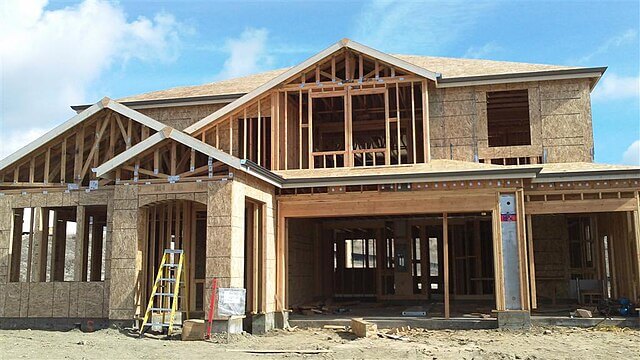
The housing crisis, which is spread across the United States, is most easily measured in the human cost. At the low end that is families, working families, forced to go without a roof, to live in cars, on the streets, and in tent cities or municipal shelters.
But there are other costs, mostly to young people; costs like getting married and having to live with parents or living in a group house long past the age when that is an adventure.
A big cost of the housing crisis is labor mobility.
One of the great strengths of the American workforce has been its preparedness to relocate to the work, unlike parts of Europe where the workers have demanded that the work come to them.
It was this mobility that fed the growth of California and today is feeding the growth of Texas, although housing stress — particularly in Austin, the dynamic capital — is beginning to be a problem.
Mobility is a feature that made America America: its restlessness, its sense of seeking the frontier and moving there.
According to Dowell Myers, professor of policy, planning and demography at the University of Southern California, whom I recently interviewed on the television program,“White House Chronicle,” in 1985, 21 percent of the population relocated every year, now it is down to 8 percent.
According to Myers and other experts, the housing shortage has been building since the Great Recession of 2008 to 2009. This has been multifaceted and includes a shortage of money available for lending to builders, labor shortages, supply chain disruptions, but particularly local exclusionary laws.
To my mind, and to architects and developers I have spoken to, those laws are the biggest problem: the mostly smug, leafy suburbs don’t want new townhouses or apartments. That introduces underlying issues of class and race. In the suburbs, two of the most dreaded words are “affordable housing.”
The answer is to build “luxury” housing rather than designated low-income housing, according to Myers. It is a view I have espoused for years. Build upscale housing that caters to the middle class and as people move up, more housing will become available at the bottom. It is capitalism at its simplest: supply and demand at work. At present we have too much demand and not enough supply.
An extraordinary thing about the housing crisis which is crippling the nation and changing its social as well as its labor dynamics, is why isn’t this a prominent issue in this presidential election year.
It is an issue that could bolster candidates because there are things at the federal level which can be done. Here is a problem that affects all. Where are the political solutions coming from the top? Where are the political reporters asking the candidates, “What are you going to do about housing, a here-and-now crisis?”
Public housing comes pre-stigmatized. The answer is the market. It isn’t a free market because it is inhibited by the fortress-suburb mentality, but there is enough room for the market to accelerate, to build more houses with just a little federal incentive.
Some of the most attractive homes in New England are in converted mills and factories. These grand structures have been turned into what realtors call “residences.”
The use of the word residences, instead of apartments, denotes something desirable. So be it: If it works, do it.
Much of the rehabilitation of the industrial properties in New England, and across the country, has gone in tandem with tax incentives. In one case, these were enough for the developers to produce 250 apartments from one mill in Rhode Island. Up and down the country there are abandoned industrial properties that require little zoning hassle to be repurposed.
USC’s Myers, who says every kind of housing is needed, points out that building for those who can afford to buy works in another way: It inhibits gentrification and the social upheaval, as the poor are pushed out of their old neighborhoods, something which, by the way, has been very apparent in Washington, D.C.
The use of urban space is changing, shopping centers are failing and office buildings are losing their luster, and that means housing opportunities. Repurposing isn’t the only answer, and a lot of new housing is needed, but there is huge evidence that repurposing works from the factories of New England to the lofts of Manhattan — desirable housing has been created from the debris of the past.
Building anything anywhere isn’t a simple matter, but once the financial incentives are gotten right, things begin to move. It will take decades to fix the housing problem, but that should be accelerated now.
 Follow
Leave a Reply