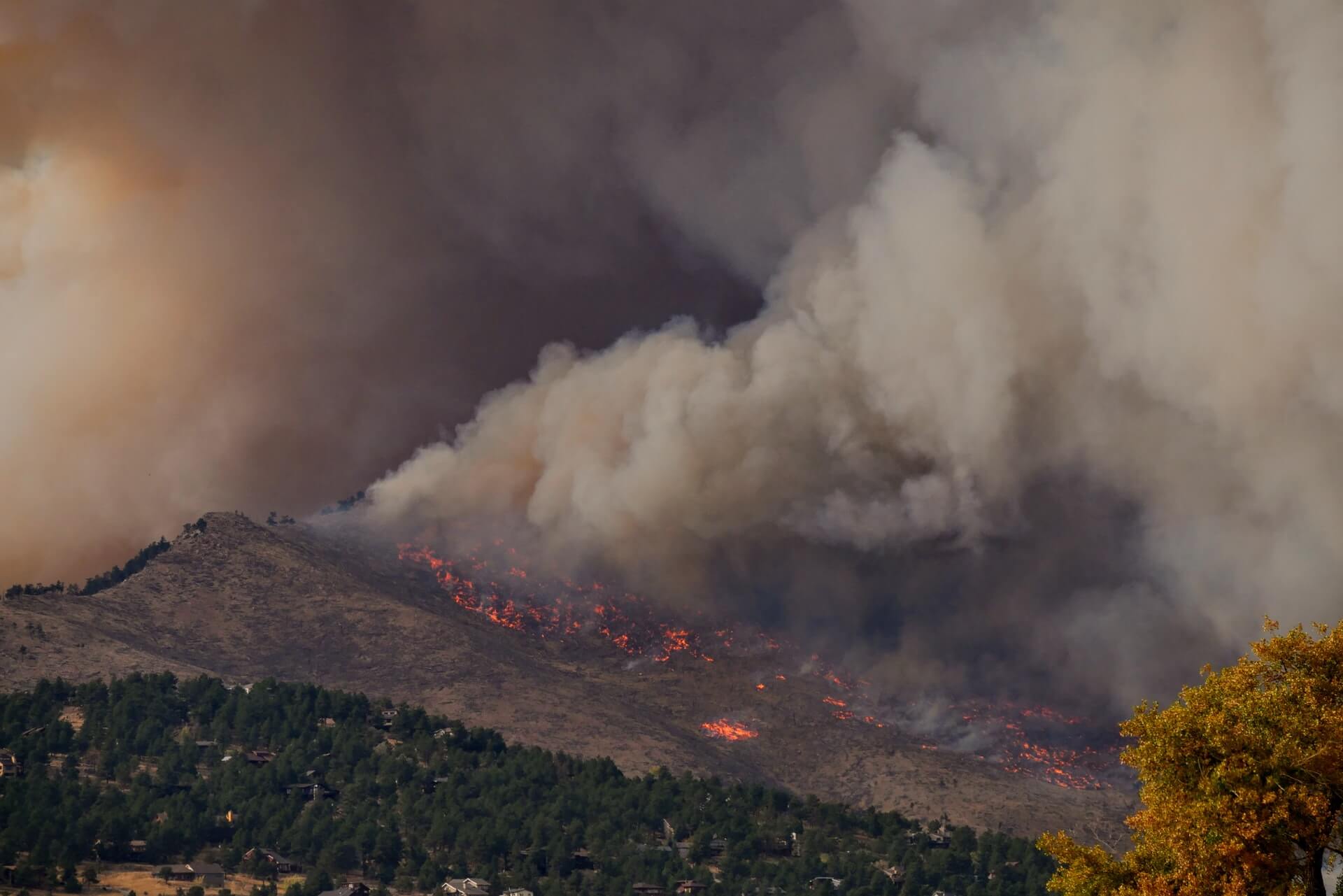
Did the fire at the end of Walt Disney’s iconic animated movie “Bambi” prejudice the country against forest management with controlled burning? Maybe so.
The U.S. Energy Association in February presented a virtual media briefing on the fire threat in the West and the Southwest this year. The prognosis, especially from the weather forecasting company AccuWeather, was grim.
Now that prognosis is being borne out as terrible fires again scorch those regions. Fire is now a year-round danger.
Enter forest scientists, who believe the solution to rampant wildfires is scientifically managed, pre-emptive burning. But this fire management practice isn’t without controversy. The memory of Bambi and his father, trapped by a raging forest fire, can spill into politics, with fierce advocates for prescribed burning often at odds with those who believe fire should be suppressed.
The epicenter of the science of forest management with fire isn’t in the West but in the East — in the Red Hills, stretching from Tallahassee, Fla., to Thomasville, Ga. This is the home to the research stations of the Tall Timbers Institute, which studies and practices prescribed burning to save the long-leaf pine forests and their abundant populations of game birds and other wildlife.
It can be argued that a small game bird, the Northern bobwhite quail, has been responsible for preserving a huge acreage of forest land in the Red Hills. The name Red Hills is more poetic than accurate as the land is undulating rather than hilly. However, the name is enshrined in Martin Luther King Jr.’s “I Have a Dream” speech.
The area is home to some of the largest private estates — still called plantations — in the nation. They have been preserved and lovingly tended for hunting since the 19th century.
Conservation began in the 1920s to preserve the habitat of the quail, fell off in the 1930s, and came roaring back in the 1950s when philanthropist Henry Beadel gave 2,200 acres to establish five ecological research stations. This has grown to 4,000 acres.
The theory of deliberate burning is that it keeps down the forest-floor “fuel” that makes wildfires so deadly and unmanageable. The prescribed burns are carefully organized, considering the weather, the vegetation and the escape routes for the fauna.
During these burns, the fires sweep through without damaging the soil. The trees are left standing — because the fires are fast and very hot — but the forest floor is cleared.
Tall Timbers researchers showed me and a small group of visitors the product of a new burn on the previous day, where there was lingering smoke, and the revived, flourishing areas that were burned one, two, and three years earlier. These researchers have a passion for their work and their conservation with fire.
The institute is active on more than 500,000 acres in Georgia and Florida and leads the country in remedial burning. California is now tentatively trying to burn on a limited scale, learning from Tall Timbers.
But Tall Timers conservation extends well beyond fire.
They explained the real threat to forests is urban sprawl, and they are active — vigorously so — in persuading Red Hills-area landowners to write easements into their deeds to preserve what the Nature Conservancy has called one of America’s “Last Great Places.”
And the movement is growing. “We have been working with nonprofits in the West,” said Morgan Varner, fire research director at Tall Timbers. Varner said Florida leads the country in preservation of great tracts of untrammeled forest and savannah managed with prescribed burning.
As we toured through Tall Timbers, one could marvel at the resiliency of both the flora and fauna. Animals and birds, which naturally flee fire, also enthusiastically return after the fires have done their work. Bambi went back.
 Follow
Leave a Reply