Last week, British bestselling author Simon Winchester wondered aloud whether we have too much information — so much so that it impedes our thinking.
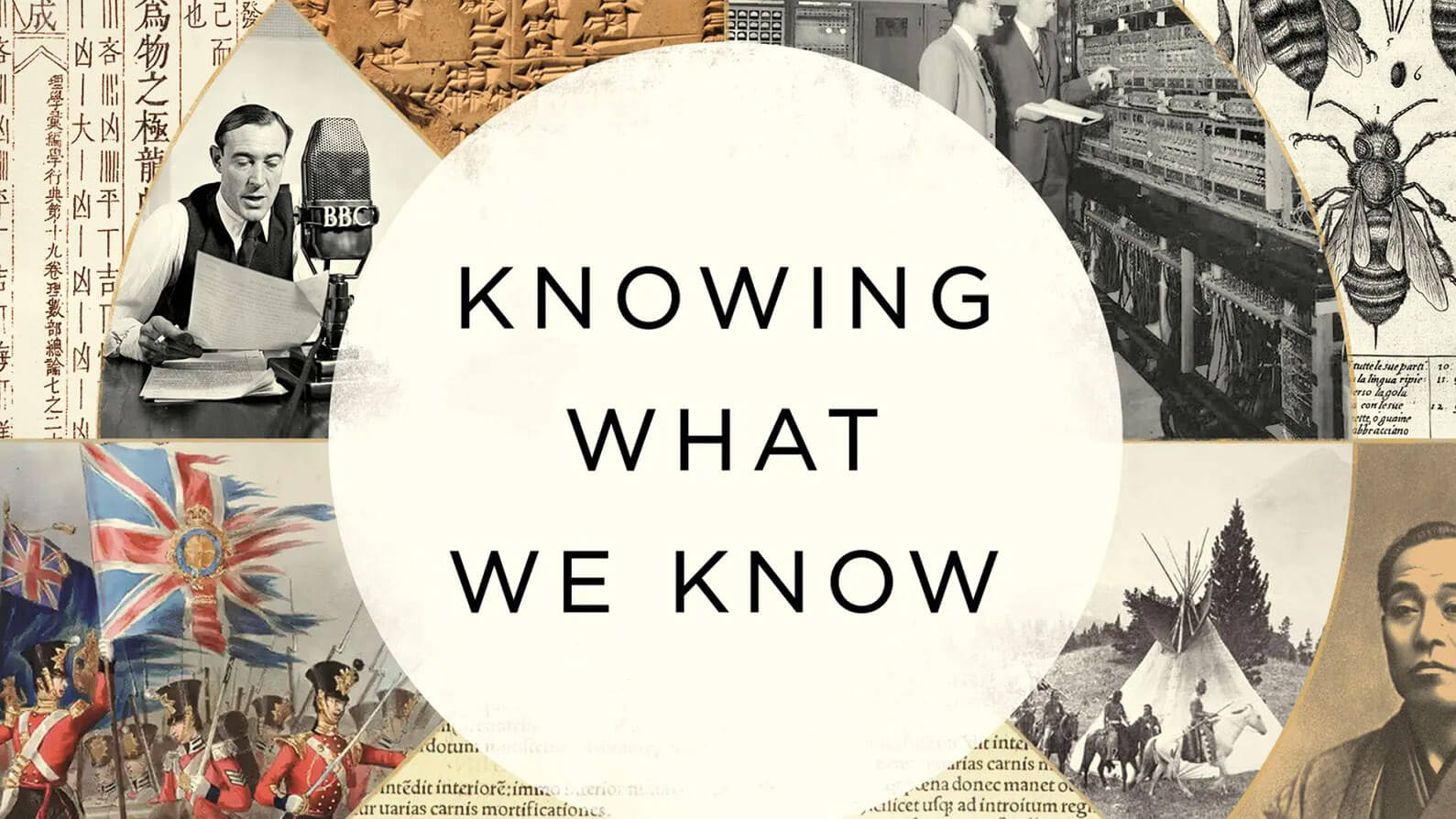
At the Providence Athenaeum in Rhode Island, he spoke about his new and compelling book, “Knowing What We Know: The Transmission of Knowledge From Ancient Wisdom to Modern Magic.”
Winchester wondered whether the great minds of antiquity, who gave us what was to become Western civilization, weren’t assisted by having no legacy; weren’t boxed in by previous thinkers.
These men — including but not limited to Aristotle, Plato, Socrates, Euclid, Archimedes, Hippocrates, Thucydides and Sophocles — were the founding fathers of Western philosophy, science, history and theater.
The list is awesome, and the idea of a kind of zero-sum game in thinking is intriguing. How did they do it, starting with so little knowledge in circulation around the Mediterranean about 2,500 years ago?
Winchester — who apologized for a tendency to get off the subject — mused on whether they would have been able to reach such towering intellectual heights if they had their heads stuffed full of what passes as knowledge in today’s world.
Of course, Winchester, a great purveyor of knowledge — and a lot of fun stuff — doesn’t believe we should turn into know-nothings, he just raises an interesting question: How did it happen?
Winchester first worked as a journalist for the British newspapers the Guardian and then the Sunday Times. His journalism took him around the world from Northern Ireland’s Troubles to the numerous slums of Bangalore (now Bengaluru).
In his book, he tells the story of how one woman changed the lives of otherwise hopeless children in the Bangalore slums by teaching them to read and speak in English, an official language of India. The results were that these urchins went on to great success inside and outside India and in many callings.
In fact, not only is Winchester’s book about learning, but it is also hugely endorsing of scholarship. He reveres libraries, and during his remarks he ran through a list of the great libraries of the world from the library of the Assyrian King Ashurbanipal to the Great Library of Alexandria to the eccentric London Library, of which he is fond, less famous than the British Library.
In pondering the effects of knowledge, Winchester mentioned parenthetically how we are losing our sense of direction. This hit home for me, as my wife had a sharp sense of direction until she started using Google Maps.
In Africa, when I was a boy, the Africans could tell time with accuracy by a quick glance at the sun. This fascinated me. But when they got watches, that skill seemed to decline. Also, farmers everywhere used to determine the pH of soil by testing it on their tongues. Now they must send it to a lab.
My favorite historical story about immaculate creation through ignorance is about James IV of Scotland, an erudite and progressive monarch. During his rule, compulsory education was introduced in 1495, and the Royal College of Surgeons of Edinburgh was established in 1505.
James IV also had a keen interest in language and religion. He thought infants without parental or other influence would naturally grow up speaking Hebrew. To prove his point, he sent two infants in the care of a deaf and dumb woman to the island of Inchkeith. Some reports were that as they grew, the children could communicate with each other with grunts and their own words, but they spoke no language — let alone Hebrew.
Let me assure you that Simon Winchester, writer of books which inform (like the one about the assembling of the Oxford English Dictionary, “The Professor and the Madman,” which became a runaway success around the world), doesn’t propagate absurd theories, but they intrigue him. Ditto myself.
If you want great information, superb anecdotes and splendid writing, I suggest you read Winchester’s “Knowing What We Know.” You will know even more when you have read this work and your mind won’t be cluttered, just better stocked.
 Follow
Leave a Reply