Electricity is the sexiest thing you can’t see. It’s the tie that binds modern society together; makes life comfortable, even livable; and keeps everything humming, from computers to production lines. Without it civil disorder and a swift descent into hard-to-imagine chaos. Just look at Puerto Rico after Hurricane Maria, then start multiplying.
Electricity comes to us courtesy of the grid — or as Jim Cunningham, executive director of Protect Our Power, explains, the generating stations, high-voltage transmission lines, poles, wires, substations, transformers and meters that make up the matrix known as the grid.
The oft-mentioned “smart grid” is the use of sophisticated metering and measuring technologies, close to the point of use, which increase efficiency and manage the troughs and peaks in electricity demand. At 2 a.m., there’s less demand than at 6 p.m. But if you can move some demand to that slack period, efficiency increases both for the electric consumer and the electric provider. Win-win.
But the more sophisticated the grid, the more vulnerable to cyberattack it becomes. That’s a great existential threat.
Cyber is the new war space. Every new computer online, every laptop connected to the system can be the point at which the system is breached.
That’s why a novel word has crept into electric-speak: resiliency. It’s trumpeted by Secretary of Energy Rick Perry and throughout the administration. It also is a great concern inside the electric industry.
Where once the industry was concerned with reliability, it’s now concerned with resiliency, which embraces several things, one of which is the ability to deter cyberattacks and to restore power quickly if an attack takes a part or more of the grid down.
The historical philosophy of the industry has been quick response, as when catastrophic weather has brought about a supply interruption. Prevention where possible, quick response always.
Wherever computer experts gather these days, in my experience, cybersecurity of the grid has come up. The think tanks, universities and national security agencies all worry about cyberattacks.
They worry about them a lot more than they do about the other existential threat that deserves mention in any discussion of the resilience of the electric grid: electromagnetic pulses. This is a threat from a nuclear detonation in the atmosphere, which would fry computers and bring down the grid.
That concern is, among most experts, orders of magnitude less urgent than what is seen as the clear-and-present danger of a cyberattack.
Suedeen Kelly, a former three-term commissioner of the Federal Energy Regulatory Commission, the federal body that regulates wholesale power transactions and reliability, sees the big threat as coming from “Russia, China and possibly North Korea.” She is now a Washington lawyer with Jenner & Block and counsel to Protect Our Power.
The industry looks to a creation of its own for grid security standards: the North American Electric Reliability Corporation (NERC). While respected, it’s also criticized. I’ve heard NERC standards questioned in the science world, inside the utilities themselves, and in the computer-science departments of universities. As the policy centers of the electric industry are connected like a grid of their own, there’s a general desire for anonymity.
Now the Department of Energy has joined the fray. Secretary Perry has announced the administration will create a new office in the department called the Office of Cybersecurity, Energy Security and Emergency Response (CESER). In the FY2019 budget request, President Donald Trump proposes $96 million for this initiative.
Unfortunately, resilience, doesn’t just mean security of supply to the Trump administration. It also means saving economically stranded, coal-fired and nuclear plants. And that complicates CESER’s mission.
Worries are abruptly rising about security of electricity supply just when broad vistas of new opportunity are opening for the electric industry. Electric vehicles are beginning to take their place on the highways, and trucks won’t be far behind. The Navy wants electric ships and Boeing, Google and others are working on electric aircraft.
Neutrons are inheriting the earth, if only we can keep the bad guys from turning off the lights.
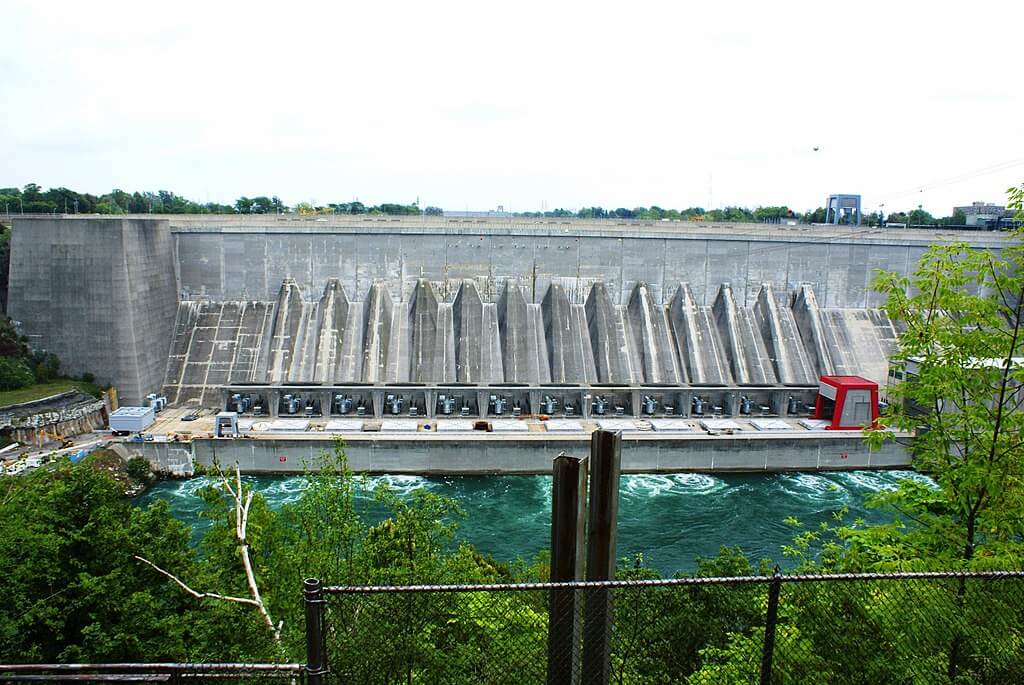
Photo: Robert Moses Niagara Hydroelectric Power Station, New York, United States. Credit: Kokkarani GNU Free Documentation License
 Follow
Just saw your show in Rhode Island PBS station . Your reference to the issue of lack of power in Puerto Rico is “mainly because of crime” is so wrong! Do research and you find that the main reason is UTIER. Union de Trabajadores de la Industria Electrica y Riego.
They traveled with the US electrical workers all over the island telling them how to do the electrical work because “our electricity is different than in the USA” UTIER workers would not allow US workers to repair broken wood lamp post because they (USA) did not know how to do it. The lamp post behind my brother’s home is broken and held together by a rope.
In no publication/newspapers/internet sources that I have read ( among the 10 I read daily) there is reference about crime and the lack of electrical power in Puerto Rico. I have family and friend and have not heard anything regarding your statement.
I have been in Puerto Rico 4 times since Maria hit the island and have never heard anything about crime and lack of power.
I am amazed that someone like you, with all your connections and knowledge believes that “crime” is factor #1 in Puerto Rico’s lack of power.
MIGUEL VIDAL, CPA, MST