Freedom of the press, in my view, has two parts. First there is the freedom to publish, to criticize and to petition. Then there is the critical issue of the freedom to gather the news — not just to report it but also to gather it.
Without the freedom to gather the news, the freedom to print it, broadcast it or comment on it becomes pyrrhic. The official line predominates.
Right now, the freedom to report the news at the White House is under attack and the public’s right know is being impinged. What you get: all the news that can be leaked.
Covering the news at the White House has gotten progressively harder since the days of Lyndon Johnson and Richard Nixon, the first administrations I covered.
The Trump administration has attacked the press, ridiculed it and is starving it of critical access. Now there is talk of doing away with the daily press briefing, honored and needed. It is where the government is asked what it is doing and ideally tells the people. It is America’s answer to the much admired “Question Time” in Britain’s House of Commons.
It has never been easy to cover the White House, and history is littered with the ways in which presidents sought to affect the way in which they were covered. Jack Kennedy, a darling to some reporters, so hated the coverage he was getting from The New York Herald Tribune that for a while he forbade it in the White House.
Lyndon Johnson worked over the press corps the way he worked over members of Congress: punishment and reward.
At The Washington Daily News, Wauhillau La Hay worried aloud — often in my presence — that the file from the Scripps-Howard Washington bureau (it was an afternoon newspaper owned by Scripps-Howard) would make it hard for her to cover the social side of the White House, her assignment.
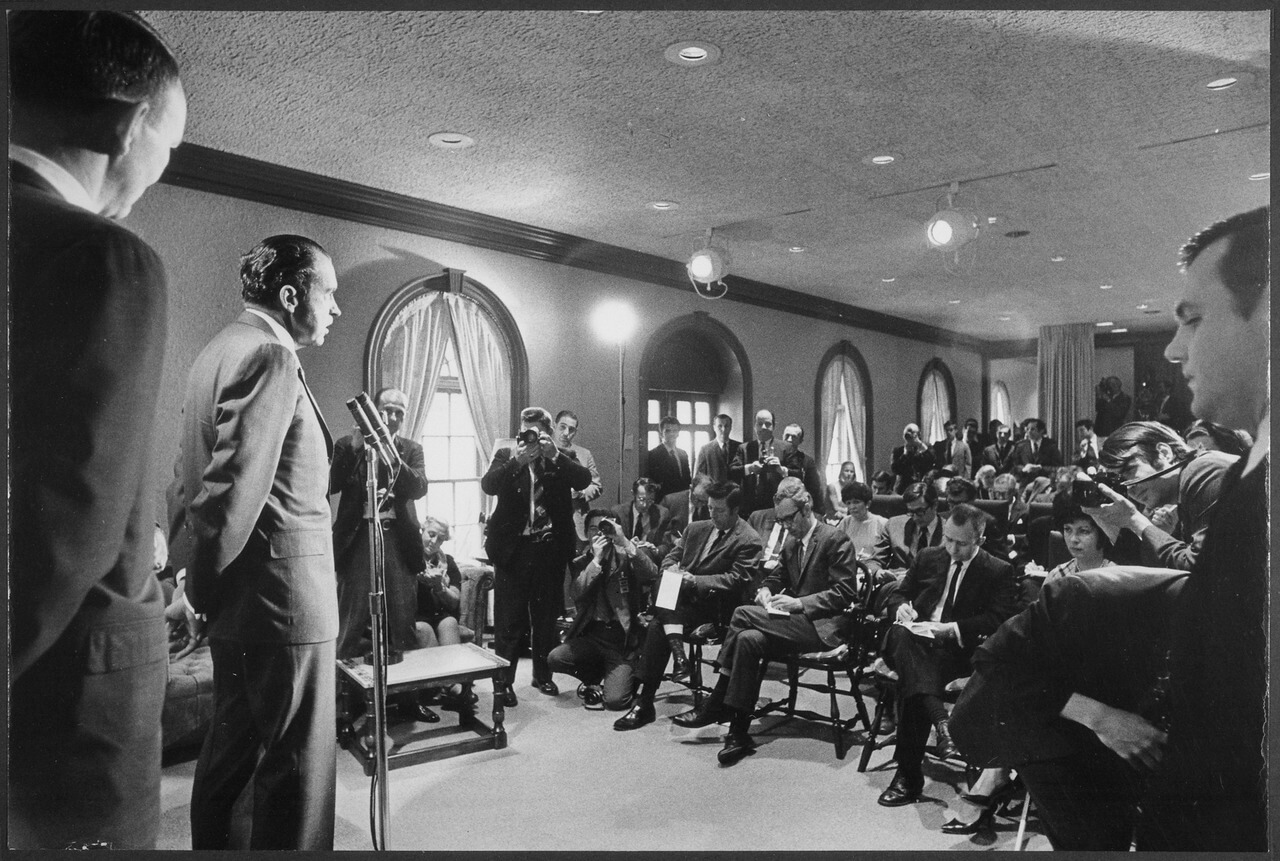
Richard Nixon believed that the press was out to get him and his famous enemies list was real. Yet he ran a surprisingly open White House, as had Johnson.
Compared to what was to follow, it was wide open. Once a reporter got through the gate you were a free agent to roam much of the grounds and to visit the West Wing, if you had someone to see. More important, you got one-on-one interviews with principles without some minder from the press office sitting in and acting as a double agent, reporting back on both the journalist and the interviewee.
After your interview, you were sometimes invited into the office of another staffer. As often as not, they wanted to know what you knew as much as you wanted to know what they knew, even during Watergate.
The best information is the information you get face-to-face, one-on-one. That has become very difficult as time has rolled on. Personally, I found the George H.W. Bush open enough. I remember going over to see his chief of staff, John Sununu, without problem. I phoned him, got a time and went over. No press office involvement. Once, he asked me if I would like to write a speech for the president. I averred.
Excessive leaking is a symptom, a cry from within the belly of the beast that all is not well. At this point the leakers are patriots, not criminals.
In recent administrations, the only way for White House reporters to get into conversations with White House staffers has been to travel with the president overseas: a very expensive stab in the dark. A European trip can cost more than $20,000, and few news outlets can afford the gamble. Even if you are in the pool and sitting on Air Force One, nothing is guaranteed.
If, as has been suggested, the daily briefings stop, more leaks are inevitable. If you cannot seek the information directly, you have to try to get it otherwise. If the front door is closed, a ladder up to the window is the next step. At the same time, relationships become more devious. Like an illicit love affair, no public acknowledgment in public places.
If the right to gather the news is abridged, the whole concept of a free press is diminished. The diminishment is underway.
Government in the dark is the government of authoritarians; not the kind of government one expects from a nation that prohibits the “abridging” of the press in its Constitution. Shame.
Photo: Richard M. Nixon press conference. General Services Administration. National Archives and Records Service. Office of Presidential Libraries. Office of Presidential Papers. (01/20/1969 – ca. 12/1974); President (1969-1974 : Nixon). White House Photo Office. (1969 – 1974)
 Follow
thanks