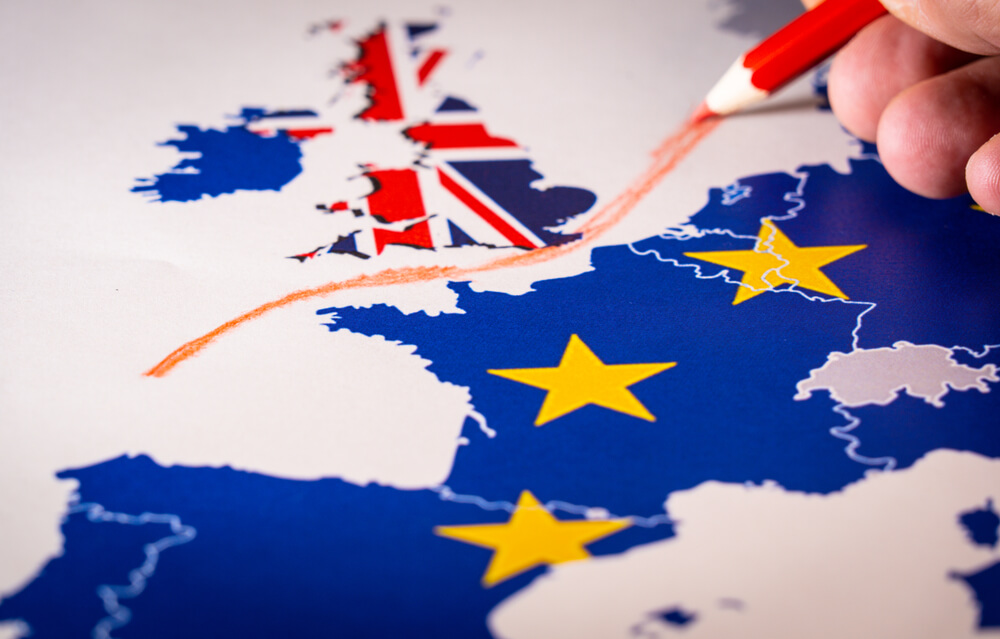
Confused about Brexit? Then let me tell you about my father. He was born when the British Empire was still in bloom and being British was to inherit a divine state of grace. It was an exceptionalism. You carried the long and varied history of Britain with you. It was your honor and your obligation.
My father was born in Southern Rhodesia (now Zimbabwe) and only visited Britain briefly. But he was quintessentially British and, more than that, English.
He was neither well-lettered nor well-traveled; he earned his living with his hands as a mechanic. But his commitment to “King and Country” was absolute. He believed in Britain as the source of all good things, from justice to innovation.
That’s why when war broke out in 1939, he volunteered immediately for the Rhodesian regiment that was forming. He was rejected because he couldn’t fully straighten his left arm, which he had broken as a child.
No matter. He sold all the family’s possessions and with my mother, my 3-year-old brother and me, just months old, we took a six-day train journey with very little money to the South African port of Durban. He figured that The Royal South African Navy would be less interested in medical status than the infantry. He was right and he went to sea. Hugely important to him: he could serve.
In London in 1962, I worked for Lord Beaverbrook, the Canadian press lord who had been a big part of the war effort, a close friend of Churchill, and a man violently opposed to Britain joining the precursor to the European Union, the Common Market. My job was to help the effort to keep Britain out with the help of the influential Beaverbrook press — think Rupert Murdoch media — and to mobilize support against anything to do with the nascent European project.
The men and women I met were socially and intellectually far more accomplished than my father, but they had the same flame, the same basic belief in British exceptionalism. They believed in honor, duty, justice, but also that Britain, especially England, had an exceptional role in history: It was chosen. It’s a belief so deep that it’s primal, coming from a far place in the psyche.
The overt arguments we assembled were economic: Beaverbrook said, and I believed, the British farmer would be hurt, British trade would suffer and the precious empire — now in its new non-imperial guise as the Commonwealth — would be imperiled. Beaverbrook was wrong and, of course, I was wrong, and so were the Britain-first people we spoke for and sometimes recruited.
When Britain finally joined Europe in 1973, the farmers, and the economy in general were to bloom. Britain became Europe’s financial hub as well as the point of entry into Europe for global companies. Its own exports to Europe boomed: At one time, and perhaps still, half the pizza shells in Italy were made in Britain.
Now that economic order is to be disrupted, damaged or destroyed. Britain is going back to a glorious place that only existed in myth: the pre-European days when, without glory, it was still recovering from loss of empire and World War II.
When I try to imagine why this is happening, I find the arguments about “sovereignty, freedom and faceless bureaucrats in Brussels” even more empty than Beaverbrook’s fictions that I once peddled. I hear instead the brave music of a distant drum, the echoes of past victories, inventions and achievements, “Rule Britannia” in a minor key.
Winston Churchill said of the Seven Years War, “mankind was not to be spared the rigors of the human pilgrimage.” Neither, alas, it seems, is Britain.
As to my father, he lived many years in the independent African country Botswana teaching his trade and harboring in his home newborn African babies, who were fatherless and whose mothers had to work. He, unlike his sentimental compatriots, realized that times had changed, and that the Britishness of yesteryear was, well, of a time gone by and best left to BBC costume dramas like “Downton Abbey.”
 Follow
I say old chap. Hear, hear. Jolly good.