Joe Biden at war and Joe Biden at peace aren’t the same person. When it comes to the Russia-Ukraine war and energy policy, the U.S. president is severely conflicted.
Central to Biden’s strategy has been to cut off Russia’s huge revenues from exporting natural gas to Europe. He has unambiguously declared that the shortfall Europe will have in natural gas supplies from Russia will, in time, be remedied with other sources, especially with liquefied natural gas (LNG) exports from the United States.
So far so good. But Biden has always favored the environmental vision of the left wing of his own party and its implacable resistance to all forms of carbon-based fossil fuels because of their contribution to global warming.
Europe imports one-third of the natural gas it needs for electric generation, heating, and other domestic uses by pipeline from Russia. Particularly vulnerable is Germany, which depends on half of its gas imports from Russia: a dependency which it has happily allowed to grow year after year.
That was worsened when Germany turned its back on nuclear, aided by its influential Greens, after Japan’s Fukushima disaster in 2011.
Charlie Riedl, executive director of the Center for LNG at the Natural Gas Supply Association, said on the PBS program “White House Chronicle,” it will take several years to boost U.S. LNG exports to Europe and will need substantial infrastructure investment.
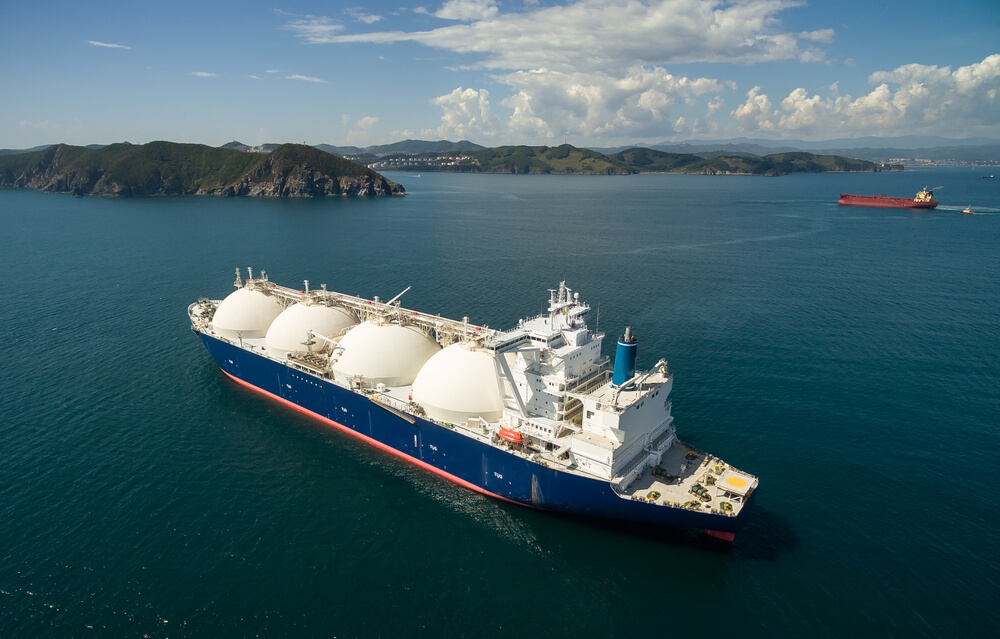
The United States has six operating export LNG terminals and a seventh nearly ready to enter operation. Europe has 26 main receiving terminals and eight smaller ones. Each new U.S. terminal has a price tag of around $20 billion, Riedl confirmed. Similarly, tankers must be available and gas exporters, like Qatar, are increasing their tanker fleets.
The impediments to building new natural gas infrastructure in the United States are formidable. On the same broadcast, Sheila Hollis, acting executive director of the U.S. Energy Association, a non-partisan, non-lobbying group that embraces all energy, explained, “I don’t think there is any easy way to make anything happen of this magnitude in the country, regardless of what infrastructure you’re building, or which industry’s infrastructure.
She went on to say, “I do think it will remain an ongoing saga of slogging your way through the morass of regulations, both state and federal of every conceivable variety, and the strong opposition that comes from entities like financing communities and universities that may have a particular interest in reducing CO2; and because of the magnitude, it is one that will be lit on in the regulatory setting, in the judicial setting, and in the legislative setting, both state and federal, because that is the nature of the beast.”
Moreover, Hollis said, there are environmental justice sensitivities: “Who gets the work? Where will the facilities be sited? And there will be extreme attention to environmental issues at the facilities and the pipelines.”
Biden is caught between his own plans to cut fossil fuel use in electric supply in the nation and his commitment to Europe that the United States will be a reliable supplier of fuel for their electricity needs over the long haul.
Commitment is important to the gas industry which is whipsawed between demands for natural gas and attempts to limit its use by obstructing development. New natural gas infrastructure will need to operate over several decades to recover investment — at odds with the Biden plan to reduce fossil fuel generation in the United States by 2030 and get to net-zero by 2050.
A bright spot: The industry is confident that sometime in the future, carbon can be removed from natural gas at the time of combustion. This technology is called carbon capture, utilization, and storage (CCUS) and envisages getting the carbon out of the combustion effluent before it goes into the air. It can then be used as a building material and for future gas and oil well stimulation.
According to USEA’s Hollis, the Department of Energy is working with its national laboratories and is making solid progress in perfecting the technology. Energy aficionados believe increasingly that a breakthrough is at hand.
If that is so, then Biden can shush his environmental critics and approach the future with more confidence, giving gas companies and utilities the durable assurances they need.
Meanwhile, Biden is bullish on future gas in Europe and bearish on gas in the United States. As in the Johnny Mercer song, “something’s gotta give.”
 Follow
Leave a Reply