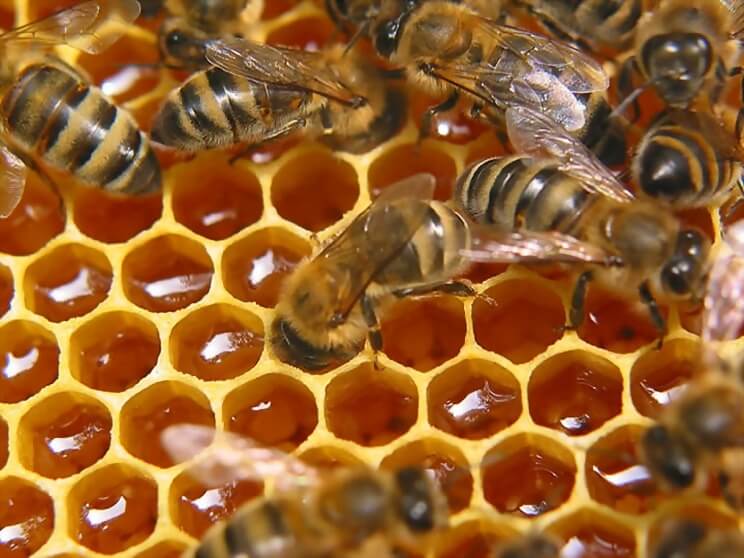
We call ourselves “beekeepers,” but it’s been suggested that perhaps a better description would be “bee hosts.” We don’t really “keep” them at all. They’re free to leave whenever they want, and sometimes they do.
But we provide a place where a colony of honeybees can be warm, dry, well-fed, and protected from predators. We dedicate our time and resources to financing, building and maintaining bee residences: hives. We purchase protective equipment as required, food and medicines, to assure our charges stay healthy and productive. In return, we get the joy and satisfaction of a success in a challenging and rewarding hobby, as well as honey, beeswax, and other products of our hives.
Want to give it a go? Here are some steps you can take:
First, locate some other beekeepers where you live. I’m writing this in Wakefield, R.I. in November 2017. By now, there are few areas in the United States that do not have an active beekeeping association of some kind, and the same is true nearly all over the world. Nearly all associations have web sites, and some sort of educational outreach program to teach beekeeping. Many have active mentor programs that will hook you up with an experienced beekeeper. My local beekeeping association provides 12 ½ hours of instruction for about $75 and has an active mentoring program for new beekeepers.
Do some personal research, in libraries or on the Internet. Find out what you’re getting into. “Beekeeping for Dummies,” for example, is a very readable book that provides an excellent overview of the skills and equipment you’ll need, and the problems you’re likely to face. No resource is perfect, but once you “catch the bug”, so to speak, a visit to Randy Oliver’s site (see below) will give you an idea of what you should expect from a quality beekeeping course, and the syllabus identifies more texts that will help you learn more about being a good host for your bees:
http://scientificbeekeeping.com/scibeeimages/BEGINNERS-OUTLINE-PDF.pdf
Take the beekeeping course offered by your local beekeeping association if possible; otherwise, take one elsewhere, but try to find a course near where you live. Your local environment will have special characteristics that in some cases will make your job easier, and in some cases, harder. Where I live, for example, there are few hive beetles to prey on our hives, and the Gulf Stream tends to moderate the winters compared to more inland locations 200 miles to the west. Were I to undertake beekeeping in Atlanta or Montreal, I’d face a whole different set of challenges, such as Africanized bees (in Atlanta) or icy cold winters (in Montreal).
Once you understand why beehives are built the way they are, you’ll need to build a hive for your bees to live in. Happily, if you’re not a woodworker, hives can be purchased online from beekeeping suppliers. Several of the larger ones in the United States are at the links below. It’s also not uncommon for local supply houses to exist, and your beekeeping association can help with locating them.
http://www.brushymountainbeefarm.com/
Any of the above suppliers will supply not only the hive components, but also the protective gear you’ll need to work safely with stinging insects, the equipment to harvest, store, and bottle your honey, and the foods, medicines and devices you will use to protect your charges from pesticides and disease.
Finally, you will need the bees themselves. The easiest way to acquire them, as bizarre as this may sound, is simply to order them, by the pound no less, from a bee supplier. While it’s possible to get them in other ways, ordering and buying a “package” from your local supplier is by far the most common way for new beekeepers to break into the hobby. Most packages come with about 20,000 worker bees, one queen, and enough food to permit the bees to survive the journey from the supplier’s facility to your local distribution point. You can learn how to get packages of bees from your class instructor or your local beekeeping association.
People have been hosts to colonies of honeybees since before the pyramids were erected. That’s a very long line of joyful, interesting, helpful, frustrated and committed people and you’re welcome to join it.
We walk a rocky, challenging, but ultimately satisfying road. Remember they are insects and sometimes they live, sometimes they die. Sometimes we know why, sometimes we realize we might have prevented a lost colony, and sometimes we never figure it out. But if you work at it, the successes are sweet and, in the long run, they eclipse the failures.
Stephen H. Burke, a Rhode Island lawyer, is secretary of the Rhode Island Beekeepers Association. He is also a beekeeping instructor at the University of Rhode Island. His e-mail is steve@stephenhburkelaw.com.