The political chaos in Britain — and the situation in British politics is chaotic — can be laid at the base of two interventions by direct government usurping representative government.
The first is the intervention of polling. Polling, although useful and indeed invaluable most of the time, does restrict the free operation of representative government. The public state of mind the polling day affects the actions of its elected representatives and can inhibit new ideas as they evolve. In the defense of polls, they are reality check when politicians give way to intoxication with their own thinking. Polls are here to stay; an organic part of the political landscape.
Yet the deliberative process can be inhibited by them. It is no accident that the U.S. Senate is regarded as a great deliberative forum: With six years between elections, there is time to work through a problem — at least there should be.
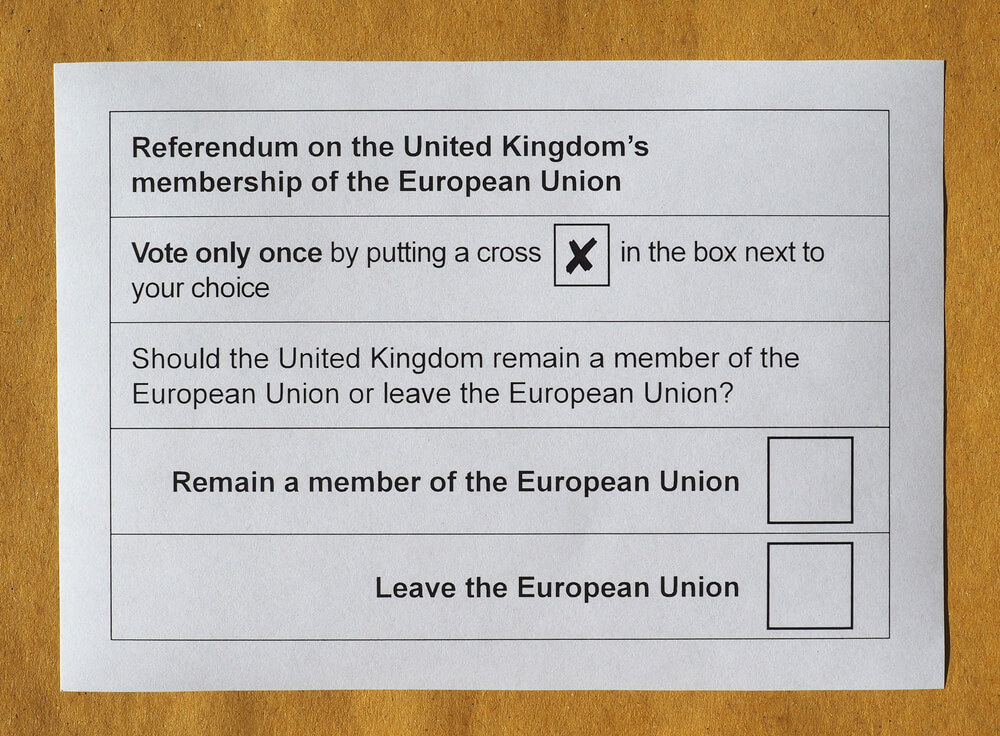
Former Prime Minister David Cameron called a referendum on Britain’s membership in the European Union because his pollster assured him that the public would support him, as they had voted by a large majority for Britain to remain in the European Economic Community, as it was then known, in 1975. Britain’s membership began in 1973.
A poll is a snapshot and reflects not only the feeling of the populace at the time but also the basis of what it thinks it believes or, in fact, does believe.
Cameron did not allow for campaigning and the emotional appeal of inflamed nationalism, plus some pretty hefty fibs from the current Prime Minister Boris Johnson and his allies in the Brexit camp.
Had the EU membership issue been left to simmer, as it has simmered for decades, it might eventually have been decided by the elected representatives of the people in Parliament or just simmered on, either to dissipate or develop into an election issue at a later time.
But this has always been a particularly difficult issue for Parliament where the two main parties were split on it. Neither of them, Labor and Conservative, was wholly for Europe or against it. Successive Labor and Conservative governments have stayed firmly in Europe, although complaining all the way — as did Margaret Thatcher during her time as prime minister.
The EU referendum was an intrusion of direct government into the workings of parliamentary representative government — a referendum, not favored in Britain’s unwritten constitution, a sort of legal blithe spirit of practice, precedent, tradition and habit, trailing all the way back to the Magna Carta.
The constitution, long believed to gain its strength from its flexibility, now is flexed to a point of full crisis. Polls gave Cameron overconfidence in looking to a referendum to settle a nettlesome issue. It did, but not in the way Cameron and the polls predicted.
Polls are not going away. Recently I visited Quinnipiac University in Hamden, Conn., home to the influential Quinnipiac Poll, where I conducted a television interview. Conclusion: Those pollsters know what they are doing, and they do it with science and without prejudice. Douglas Schwartz, director of the Quinnipiac Polling Institute, and his staff are employed by the university. The polling arm takes no outside funding, shielding the poll from allegations of political favoritism or manipulation.
It should be recognized by politicians that polls are only a snapshot, a second in time, of evolving public opinion. They do not handle complex issues well and referendums, which are polls taken to extreme, are unreasoning.
It can be argued, and I will not argue against you, that politicians now have abandoned thinking, reasoning and compromising in favor rigidities on both sides of the Atlantic. Yet politicians, in doing their jobs in session, remain a better way of deciding great issues than the whole populace in a committee of the whole.
Britain is in crisis not because it is a democracy, but because it tried something undemocratic and antithetical to its own traditions. The nation that ruled much of the world appears unable to rule itself.
 Follow
Leave a Reply